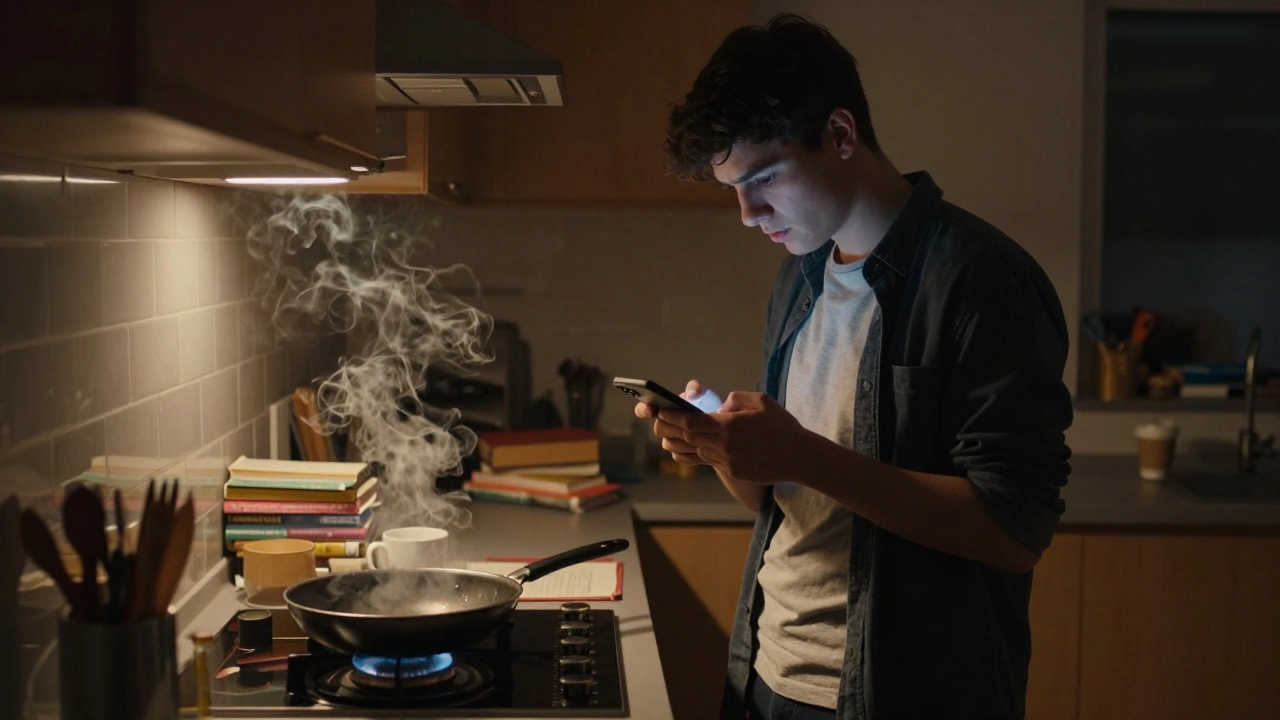
The Hidden Dangers of Student Kitchens
Move into a shared house in London, Manchester, or Edinburgh, and you quickly realize that the kitchen is the most dangerous room in your new home. It sounds dramatic, but the statistics back it up. According to data from the Health and Safety Executive (HSE), domestic fires are significantly more common in rental properties occupied by young adults compared to owner-occupied homes. For students, this isn't just about burnt toast; it's about preventing life-altering accidents.
You might think you know how to boil water or chop an onion, but living alone or with flatmates introduces variables you didn't have at home. The pressure of deadlines, late-night studying, and budget cooking often leads to shortcuts. These shortcuts are where things go wrong. Whether it's leaving a pan unattended while checking social media or storing leftovers improperly, small habits create big risks. This guide breaks down exactly what you need to do to keep yourself and your flatmates safe from fires and foodborne illnesses.
Fire Prevention: The Golden Rules
Fires are the most immediate threat in any kitchen. In the UK, electrical faults and cooking errors are the leading causes of residential fires. You don't need expensive equipment to stay safe; you just need discipline. The first rule is simple: never leave cooking unattended. If you're making pasta, stand next to the stove. If you step away for even thirty seconds, turn the heat off.
Grease fires are particularly deadly and common among students who love frying food. Never throw water on a grease fire. Water explodes when it hits hot oil, spreading burning liquid everywhere. Instead, slide a metal lid over the pan to smother the flames or use a fire blanket. Every student household should have one. Check if your landlord provided one; if not, buy one. They cost less than a night out and could save your life.
- Keep flammables away: Towels, paper towels, and curtains should be kept at least two feet away from the hob.
- Check appliances: Look for frayed cords on kettles, toasters, and microwaves. If you see sparks or smell burning plastic, stop using it immediately.
- Clean regularly: Grease buildup on extractor fans and hobs is highly flammable. Wipe surfaces after every cook session.
Electrical safety is another major concern. Student kitchens are often packed with multiple devices plugged into a single socket. Avoid daisy-chaining extension leads. Plug high-wattage appliances like microwaves or kettles directly into wall sockets. If your kitchen has an Residual Current Device (RCD), test it monthly by pressing the 'Test' button. This device cuts power instantly if it detects a fault, preventing electric shocks and fires.
Understanding Foodborne Illnesses
While fires cause acute trauma, foodborne illnesses cause chronic misery. Getting sick from bad food can knock you out for days, missing lectures and exams. In the UK, common culprits include Salmonella, E. coli, and Campylobacter. These bacteria thrive in environments where hygiene is poor. You don't need a lab coat to understand them; you just need to respect how they spread.
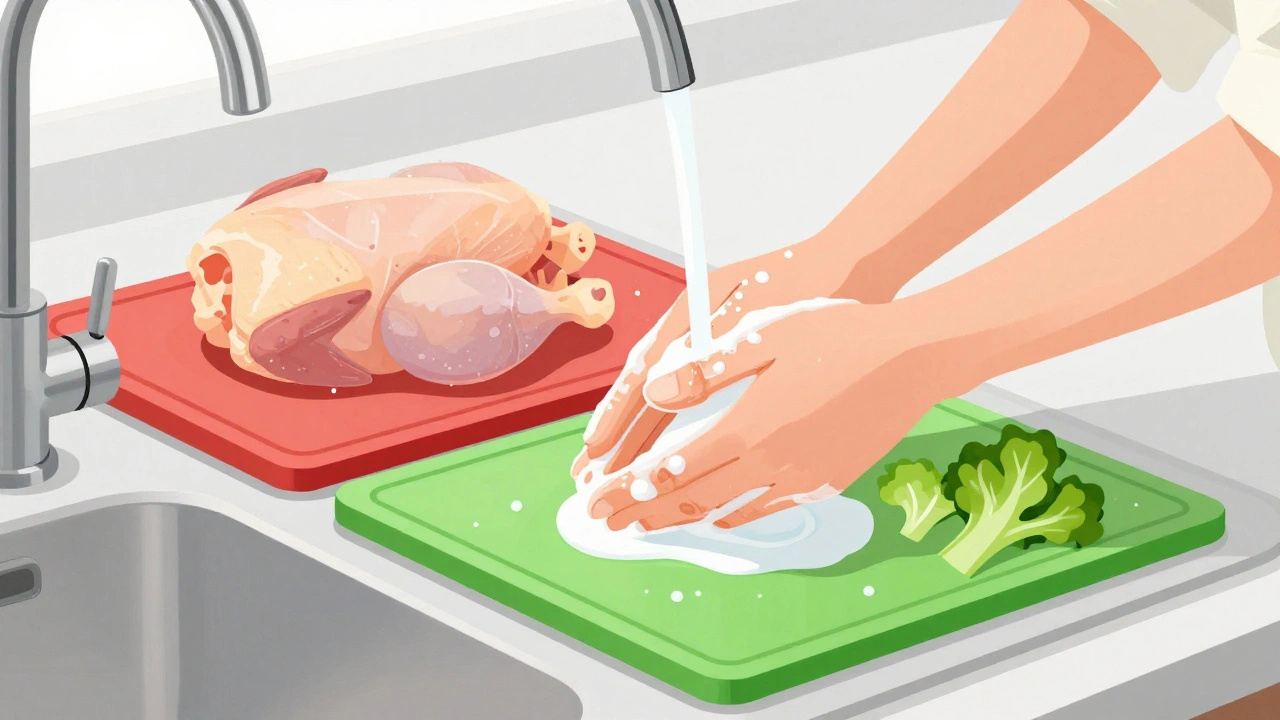
Cross-contamination is the biggest mistake students make. This happens when raw meat juices touch ready-to-eat foods. Imagine chopping chicken on a board, then washing it quickly before slicing bread for sandwiches. Even a rinse isn't enough. Bacteria survive on surfaces. Use separate boards for raw meat and vegetables. Color-coding helps: red for raw meat, green for salads, brown for cooked meat. If you only have one board, wash it thoroughly with hot soapy water after handling raw meat before using it for anything else.
Handwashing is non-negotiable. Wash your hands for at least twenty seconds with soap and warm water before handling food, after touching raw meat, and after using the bathroom. Alcohol gel doesn't kill all types of germs found in kitchens, especially those resistant to alcohol. Stick to soap and water. It takes less time than you think and makes a massive difference in reducing illness risk.
Temperature Control: The Danger Zone
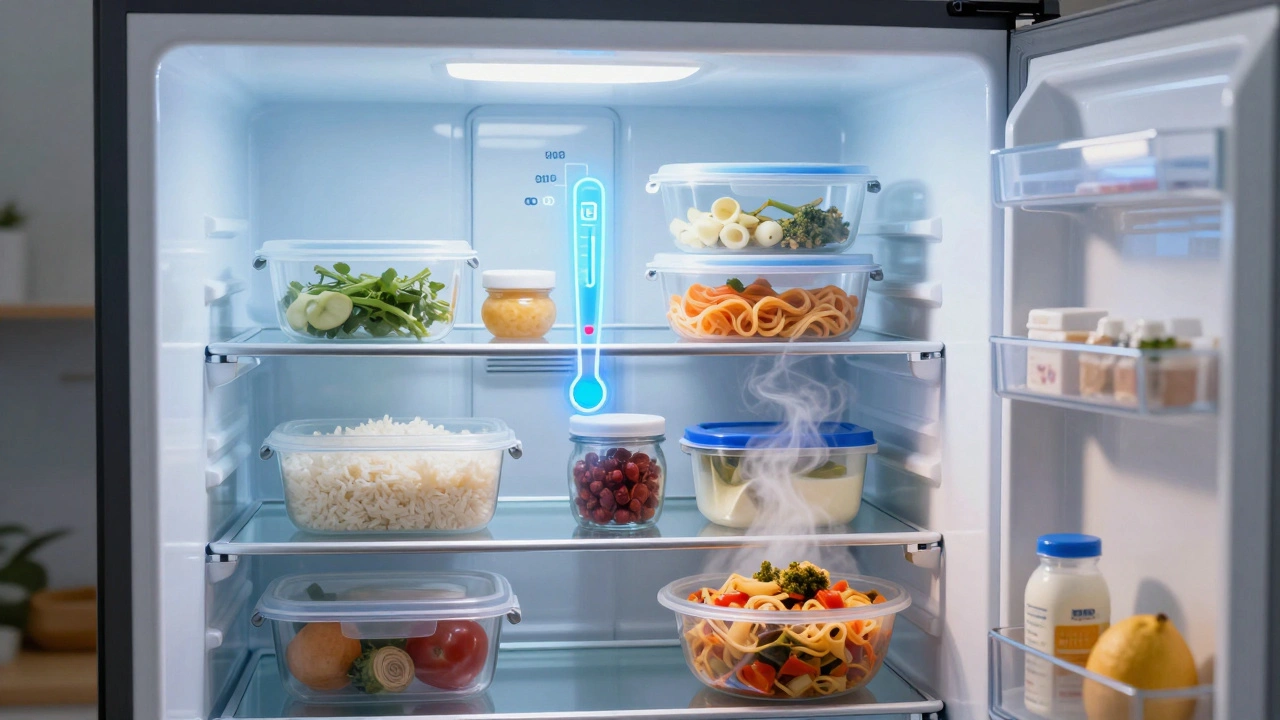
Bacteria grow fastest between 5°C and 63°C. This range is known as the Danger Zone. Keeping food out of this zone is critical for safety. Your fridge should be set to 5°C or below. Check this temperature with a thermometer once a month. Most people guess their fridge is cold enough, but it often isn't, especially if it's crammed full.
Never leave cooked food out for more than two hours. If it's hotter than 21°C outside (common in UK summers), reduce that time to one hour. When reheating leftovers, ensure they are piping hot throughout. Steam rising from the center is a good visual cue. Microwaves can heat unevenly, so stir food halfway through reheating to eliminate cold spots where bacteria survive.
| Food Item | Fridge Life (Days) | Freezer Life (Months) | Reheating Safe? |
|---|---|---|---|
| Cooked Rice | 1-2 | Not recommended | Yes, if steaming hot |
| Cooked Chicken | 3-4 | 4 | Yes |
| Dairy Products | Use-by date | Varies | No |
| Leftover Pasta | 3-5 | 2 | Yes |
Thawing food safely is another area where mistakes happen. Never thaw meat on the counter. Bacteria multiply rapidly at room temperature. Thaw food in the fridge overnight, under cold running water, or in the microwave using the defrost setting. If you thaw meat in the microwave, cook it immediately afterward. Don't refreeze partially cooked meat.
Creating a Safe Kitchen Environment
Your physical environment plays a huge role in safety. Good lighting prevents accidents. Ensure your worktops are well-lit. If your kitchen has dim lighting, add task lights above the sink and hob. Slippery floors are a hazard, especially when carrying hot pots. Clean spills immediately. Keep mats dry and secure them so they don't slide.
Storage matters too. Store heavy items on lower shelves to avoid straining your back or dropping things on your head. Keep sharp knives in a block or on a magnetic strip, not loose in a drawer where you might cut yourself reaching for a spoon. Always carry knives blade-down and close to your body.
Ventilation is often overlooked. Cooking releases fumes and moisture that can damage walls and promote mold growth. Use your extractor fan while cooking. Open windows if possible. Good airflow reduces the buildup of carbon monoxide from gas stoves, although modern stoves are safer, older models can still pose risks. Install a Carbon Monoxide Alarm if you have a gas boiler or heater nearby.
Emergency Preparedness
Hope for the best, prepare for the worst. Every student household needs a basic first aid kit. Include plasters, antiseptic wipes, burn gel, and bandages. Know how to treat minor burns: run cool (not ice-cold) water over the burn for ten minutes. Do not apply butter or cream. For cuts, clean the wound and cover it.
Know your emergency numbers. In the UK, dial 999 for emergencies requiring police, fire, or ambulance services. Save your local GP surgery number and the non-emergency NHS number (111) in your phone. If you live in a university hall, find out where the nearest health center is located during orientation week.
Practice a fire escape plan with your flatmates. Identify two ways out of the kitchen. Meet outside at a designated spot. Don't use elevators during a fire. Stay low if there's smoke, as fresh air is closer to the floor. Test your smoke alarms weekly. Push the test button and listen for a loud beep. Replace batteries annually.
Building Habits That Last
Safety isn't a one-time checklist; it's a habit. Start small. Make handwashing automatic. Clean as you cook. Check expiry dates before buying groceries. Involve your flatmates in these practices. Create a shared responsibility chart for cleaning the kitchen. When everyone contributes, the space stays safer and cleaner.
Educate yourself continuously. Watch short videos on proper knife skills or food storage techniques. Follow reputable sources like the Food Standards Agency (FSA) for updates on food recalls or safety advice. Knowledge empowers you to make better decisions in the kitchen.
Remember, accidents happen to everyone. The goal isn't perfection; it's awareness. By understanding the risks and taking proactive steps, you protect yourself and your community. A safe kitchen allows you to focus on what really matters: your studies, your friends, and your future.
What should I do if I start a small fire in the pan?
Turn off the heat source immediately. Slide a metal lid over the pan to cut off oxygen. Never use water on a grease fire. If the fire spreads, evacuate the building and call 999.
How long can I leave cooked rice out at room temperature?
No more than one hour. Cooked rice can harbor Bacillus cereus spores that survive cooking and multiply quickly at room temperature, causing food poisoning. Refrigerate it promptly.
Is it safe to reheat Chinese takeaway food?
Yes, if reheated properly. Ensure the food is piping hot all the way through. Only reheat once. If it smells off or looks slimy, discard it. Do not reheat fried rice repeatedly due to bacterial risks.
What temperature should my fridge be set to?
At or below 5°C. Use a thermometer to verify. If your fridge lacks a thermometer, place a bottle of water inside; if it freezes solid, the temp is too low. Adjust settings accordingly.
Can I use dish soap to wash fruits and vegetables?
No. Rinse produce under running water instead. Dish soap is not meant for consumption and can leave harmful residues. For firm produce, use a clean brush to scrub surfaces.