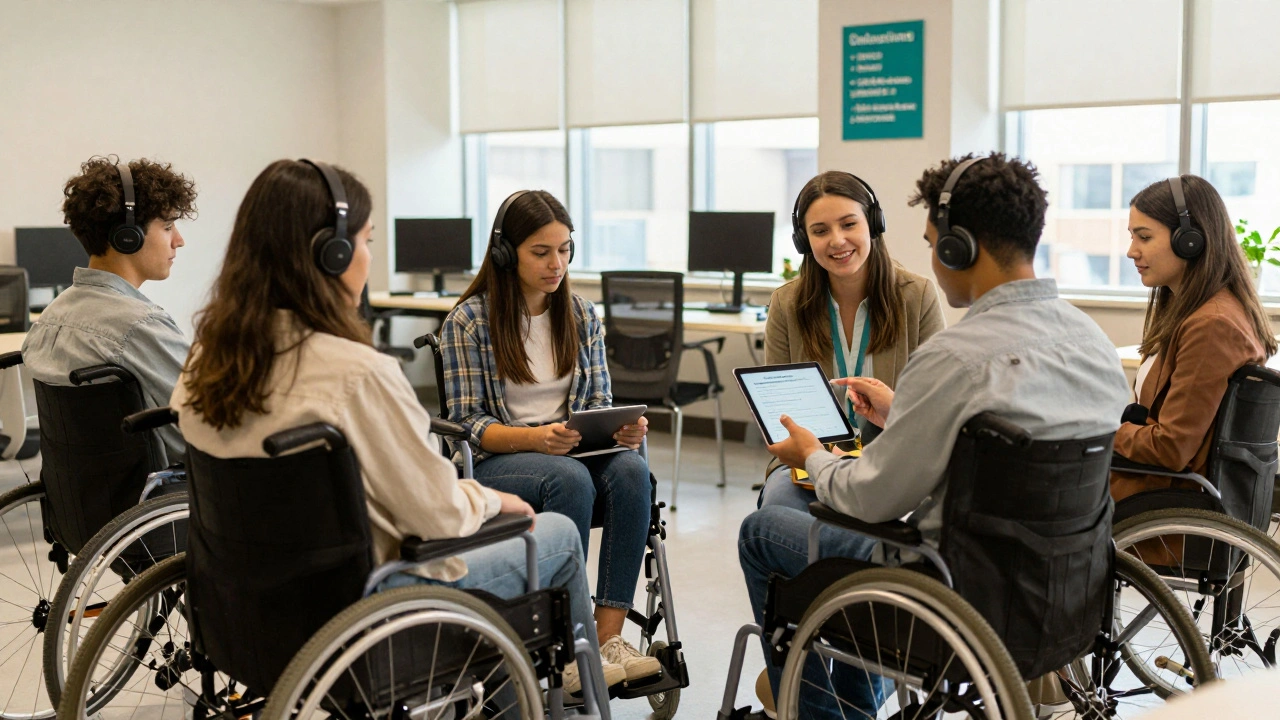
Studying abroad is already a big leap-adding a disability into the mix makes it even more complex. For international students with disabilities in the UK, success doesn’t come from luck. It comes from knowing what support exists, how to ask for it, and when to push back if it’s not enough. Many assume universities automatically provide help, but that’s not true. You have to request it. And the process? It’s not always clear.
What Counts as a Disability in the UK?
The UK follows the Equality Act 2010, which defines disability broadly. It’s not just about mobility or vision. If you have a physical, mental, or sensory condition that lasts at least 12 months and affects your daily activities, you’re covered. That includes chronic illnesses like Crohn’s disease or MS, autism, ADHD, anxiety, depression, dyslexia, hearing loss, and even long-term effects from past injuries.
Here’s the catch: what counts as a disability in your home country might not be recognized the same way in the UK. For example, some students with learning differences from countries with less developed support systems don’t realize they qualify. Don’t assume your diagnosis won’t be accepted. Universities in the UK are legally required to assess every case individually.
How Support Works: The Disabled Students’ Allowance (DSA)
The biggest lifeline for international students is the Disabled Students’ Allowance-but there’s a major limitation. DSA is only available to students from EU countries who started their course before January 1, 2021, or those with refugee status. Most other international students don’t qualify for government funding. That doesn’t mean you’re on your own.
Universities still have legal obligations under the Equality Act. They must make "reasonable adjustments" to ensure you’re not at a disadvantage. That means: extra time on exams, accessible lecture halls, note-takers, screen readers, flexible deadlines, or even housing accommodations. The key word here is "reasonable." It doesn’t mean unlimited resources, but it does mean they can’t say no just because it costs money.
For example, a student from Nigeria with visual impairment at the University of Manchester received a funded screen reader, a personal assistant for campus navigation, and digital textbooks in accessible formats-all arranged through the university’s disability service, not DSA. How? Because the law requires it.
What Adjustments Can You Actually Get?
Adjustments vary by need and institution, but here’s what most students successfully receive:
- Exam accommodations: Extra time (usually 25% or 50%), quiet rooms, use of laptops or speech-to-text software.
- Learning support: One-on-one study skills tutors, note-takers, or mentors who help break down complex material.
- Technology: Free access to software like Dragon NaturallySpeaking, JAWS, or MindView. Some universities even lend out tablets or specialized keyboards.
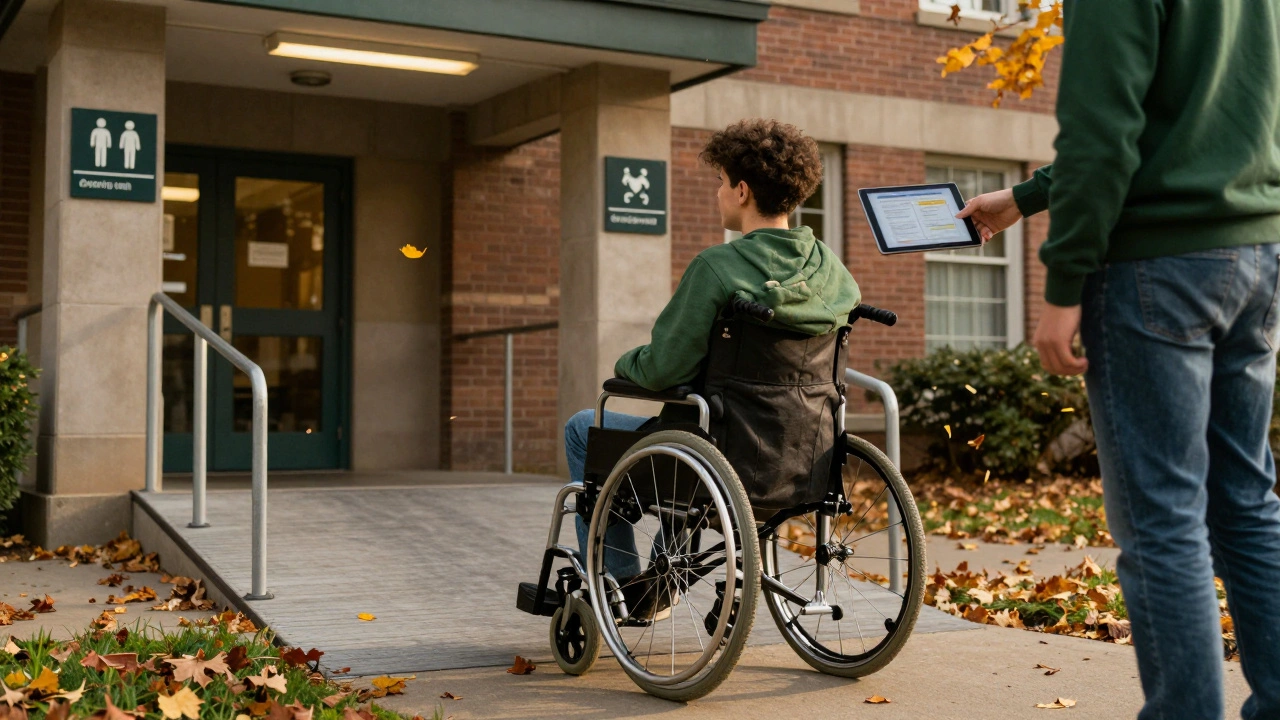
- Physical access: Ramped entrances, accessible dorm rooms, elevators, and adapted bathrooms. If your housing isn’t suitable, the university must find alternatives.
- Flexible attendance: For students with fluctuating conditions like chronic fatigue or mental health issues, universities can allow missed classes without penalty if medical documentation is provided.
One student from Brazil with severe anxiety told her university she couldn’t sit in large lectures. The result? She was offered recorded lectures, the option to attend smaller group sessions, and access to a quiet room during breaks. No extra cost. No fight. Just the university doing what the law says they must.

How to Request Support
Don’t wait until orientation. Start early. Here’s how to get the support you need:
- Find your university’s disability service. Every UK university has one. Search "[University Name] disability support" on their website. Look for pages labeled "Disabled Students" or "Equality and Diversity."
- Book an assessment. Most universities offer a free, confidential assessment with a disability adviser. Bring medical documentation from home-even if it’s not in English, they’ll help you get it translated.
- Be specific about what you need. Don’t just say "I have ADHD." Say: "I need extended time on exams because I process information slower. I also need a quiet room and permission to take short breaks during long tests."
- Follow up in writing. After your meeting, send an email summarizing what was agreed. Keep copies. This creates a paper trail.
- Ask for a plan. Request a written Support Plan. This document outlines exactly what adjustments you’ll receive, who’s responsible, and how long they last. It’s your legal protection.
Many international students delay this step because they’re afraid of being seen as "troublemakers." But universities expect this. They’ve trained staff just for this purpose. You’re not asking for special treatment-you’re asking for equal access.
Common Mistakes International Students Make
Here’s what trips people up:
- Waiting until exams fail. If you wait until you get a bad grade to ask for help, it’s too late. Adjustments must be arranged before assessments begin.
- Not bringing documentation. Even if your diagnosis isn’t from the UK, bring medical records, letters from doctors, or school reports. Translation services are free at most universities.
- Thinking "it’s not that bad." If you struggle with reading speed, staying focused, or managing stress, those are valid reasons for support. You don’t need to be severely disabled to qualify.
- Not knowing your rights. Some students accept poor accommodations because they think it’s normal. It’s not. If your request is denied, you have the right to appeal.
One student from India with dyslexia was told by her university that "we don’t provide readers for non-DSA students." She appealed, citing the Equality Act. Within two weeks, she had a trained note-taker assigned. The university didn’t know they couldn’t deny her.
What If You’re Denied?
If your request is turned down, don’t give up. First, ask for a written explanation. Then, escalate. Most universities have a formal appeals process. Contact your student union-they have trained advocates who know how to navigate these systems. If all else fails, you can file a complaint with the Office of the Independent Adjudicator for Higher Education (OIA), an independent body that handles student complaints in the UK.
In 2024, the OIA upheld 78% of complaints from international students about disability support. That’s not a coincidence. It means universities are still getting it wrong-and you have power to fix it.
Real Stories, Real Support
A student from Saudi Arabia with a mobility impairment at the University of Edinburgh was initially placed in a dorm with no elevator. He contacted the disability office, showed photos of his wheelchair, and requested a ground-floor room. Within five days, he was moved. He later said: "They didn’t make it easy, but they didn’t make it impossible either."
Another student from Kenya with PTSD at the University of Glasgow received permission to submit assignments late without penalty and was allowed to take exams in a private room with a familiar proctor. She said: "I didn’t know I could ask. Now I help other students do it too."
Final Advice: Know Your Rights, Speak Up
International students with disabilities are not a burden. They’re students who deserve the same chance to succeed as anyone else. The UK legal framework is strong. The problem isn’t the law-it’s awareness. Too many students never ask because they think they won’t be heard.
You are not asking for a favor. You are claiming a right. Universities have budgets, staff, and legal obligations. If you’re willing to take the first step-sending that email, booking that appointment, showing that medical letter-you’re already ahead of most.
Don’t wait for someone to offer help. Go find it. And if they say no? Ask again. And again. Because in the UK, your disability doesn’t define your potential-it just means you need a different path to get there. And that path? It’s already there. You just have to walk it.
Do international students get free assistive technology in the UK?
Yes, if you’re enrolled in a UK university and have documented disability, you’re entitled to free assistive technology-even if you’re not eligible for DSA. Universities must provide tools like screen readers, speech-to-text software, or specialized keyboards as part of reasonable adjustments. You don’t need to pay for them.
Can I get help with housing if I have a disability?
Absolutely. UK universities are required to provide accessible housing options for students with disabilities. This includes ground-floor rooms, adapted bathrooms, wider doorways, and emergency call systems. If your assigned housing isn’t suitable, you can request a transfer. The university must respond within a reasonable timeframe.
What if my disability isn’t recognized in the UK?
The UK’s Equality Act 2010 doesn’t rely on foreign diagnoses. If your condition lasts 12 months and affects your daily life, it qualifies. Universities assess each case individually. Bring medical records, even if they’re not in English. They’ll help you get them translated and evaluated.
Do I need to reapply for support every year?
Usually not. Once you have a written Support Plan, it typically lasts for the duration of your course. However, if your needs change-say, your condition worsens or you develop a new one-you should contact the disability service to update your plan. They’ll adjust support accordingly.
Can I get help with mental health as an international student?
Yes. Mental health conditions like anxiety, depression, PTSD, and ADHD are covered under UK disability law. Universities can offer counseling, flexible deadlines, quiet study spaces, and exam accommodations. You don’t need to be hospitalized or on medication to qualify. Just having a diagnosis from a licensed professional is enough.