
You land in the UK with your student visa, ready to explore London or Oxford. You pick up a part-time job at a coffee shop or a library to cover your living costs. Everything seems fine until you get your first payslip. Suddenly, you see deductions labeled 'Income Tax' and 'National Insurance.' You might panic. Did you do something wrong? Is this a penalty?
Relax. This is normal. But understanding how it works is crucial for keeping more of your money and avoiding headaches with HMRC, the UK government agency responsible for tax collection and benefit payment. As an international student, navigating the UK tax system can feel like learning a new language. This guide breaks down exactly what you need to know about National Insurance Numbers (NIN) and the PAYE system so you can work confidently.
The Basics: Do International Students Pay Tax?
The short answer is yes, if you earn above a certain threshold. The UK does not exempt international students from income tax simply because they are studying abroad. However, the rules depend heavily on your residency status and how much you earn.
Most international students fall under the category of non-resident for tax purposes during their first few years. This means you only pay tax on income earned within the UK. If you have income from your home country, that is generally not taxed by the UK. Once you stay in the UK for 183 days or more in a tax year, you may become a tax resident, which changes your obligations significantly.
It is also important to distinguish between Income Tax and National Insurance. While both are deducted from your paycheck, they serve different purposes. Income Tax funds public services like healthcare and education. National Insurance contributes specifically to your state pension and certain benefits like maternity pay. For most students, National Insurance is mandatory if you earn over £242 per week (as of the 2025/2026 tax year), regardless of age.
What is a National Insurance Number?
Your National Insurance Number (often called a NINO or NIN) is a unique identifier assigned to you by the UK government. It looks like QQ123456C. Think of it as your financial fingerprint in the UK. Without it, your employer cannot correctly report your earnings to HMRC, and your contributions will not be linked to your personal record.
Why does this matter for you? First, without a NINO, employers must deduct tax at the highest emergency rate (usually 50%). This means you lose a significant chunk of your paycheck unnecessarily. Second, these contributions count toward your State Pension. Even if you plan to leave the UK after graduation, having a record of contributions can be beneficial if you return later or if your home country has a social security agreement with the UK.
How to Apply for a National Insurance Number
Getting a NINO is straightforward, but timing is key. You should apply as soon as you arrive in the UK and have proof of your right to work. Here is the step-by-step process:
- Gather your documents. You will need your passport, your BRP (Biometric Residence Permit) or digital immigration status, and proof of address (like a bank statement or university letter).
- Call the NI number line. Dial 0800 141 2075 from a UK phone. This service is free. Explain that you are an international student with permission to work.
- Attend an interview. In many cases, HMRC will ask you to attend an interview at a local Jobcentre Plus. Bring all your original documents. They verify your identity and your right to work.
- Receive your number. After the interview, you will receive your NINO by post within a few weeks. Keep this safe; you will need it for every job application.
If you start working before you get your number, tell your employer immediately. They will use an emergency tax code, but once you provide your NINO, they will adjust your deductions and refund any overpaid tax.
Understanding the PAYE System
In the UK, most employees pay tax through the PAYE system, which stands for Pay As You Earn. This is an automatic deduction system. Your employer calculates how much tax and National Insurance you owe each payday and sends it directly to HMRC. You do not need to file a separate tax return for this income unless you have other sources of revenue.
Here is how PAYE affects your wallet:
- Tax-Free Allowance: Everyone gets a Personal Allowance. For the 2025/2026 tax year, this is £12,570. This means you pay £0 in Income Tax on the first £12,570 you earn.
- Tax Bands: Earnings between £12,571 and £50,270 are taxed at 20%. Above that, rates increase.
- National Insurance Thresholds: You pay Class 1 National Insurance if you earn more than £242 per week. The rate is typically 8% on earnings between £242 and £967 per week.
Check your payslip carefully. It should show your gross pay, tax deducted, National Insurance deducted, and net pay. If the numbers look wrong, contact your employer's payroll department first. They often make simple coding errors that can be fixed quickly.
Common Pitfalls for International Students
Even with clear rules, mistakes happen. Here are the most common issues international students face:
Working illegally. Your student visa usually allows you to work up to 20 hours per week during term time and full-time during vacations. Exceeding this limit breaches your visa conditions and can lead to deportation. Always track your hours.
Self-employment confusion. Some jobs offer "cash in hand" or classify you as self-employed to avoid taxes. This is risky. If you are genuinely employed, you should be on PAYE. Self-employment requires registering with HMRC separately and filing annual returns. Only choose this route if you are running your own business, like freelance design work.
Ignoring tax refunds. If you worked only part-time and stayed below the Personal Allowance, you might have paid tax unnecessarily. At the end of the tax year (April 5th), check if you are owed a refund. You can claim this online via the HMRC website.
| Feature | Income Tax | National Insurance |
|---|---|---|
| Purpose | Funds public services (healthcare, schools) | Funds state pension and specific benefits |
| Threshold (2025/26) | £12,570 per year (Personal Allowance) | £242 per week |
| Rate | 20% on basic band | 8% on standard earnings |
| Who pays it? | Deducted by employer (PAYE) | Deducted by employer (PAYE) |
| Refundable? | Yes, if overpaid | No, but counts toward pension |
When Do You Need to File a Tax Return?
For most international students working part-time jobs under PAYE, you do not need to file a tax return. The system handles everything automatically. However, there are exceptions. You must file a Self Assessment tax return if:
- You earned more than £100 from untaxed sources (like dividends or rental income).
- You were self-employed and earned more than £1,000.
- You received a high salary (over £100,000), which reduces your Personal Allowance.
- HMRC specifically asks you to file one.
If you fall into these categories, you have until January 31st following the end of the tax year to file online. Late filing incurs penalties, so set reminders.
Leaving the UK: What Happens to Your Taxes?
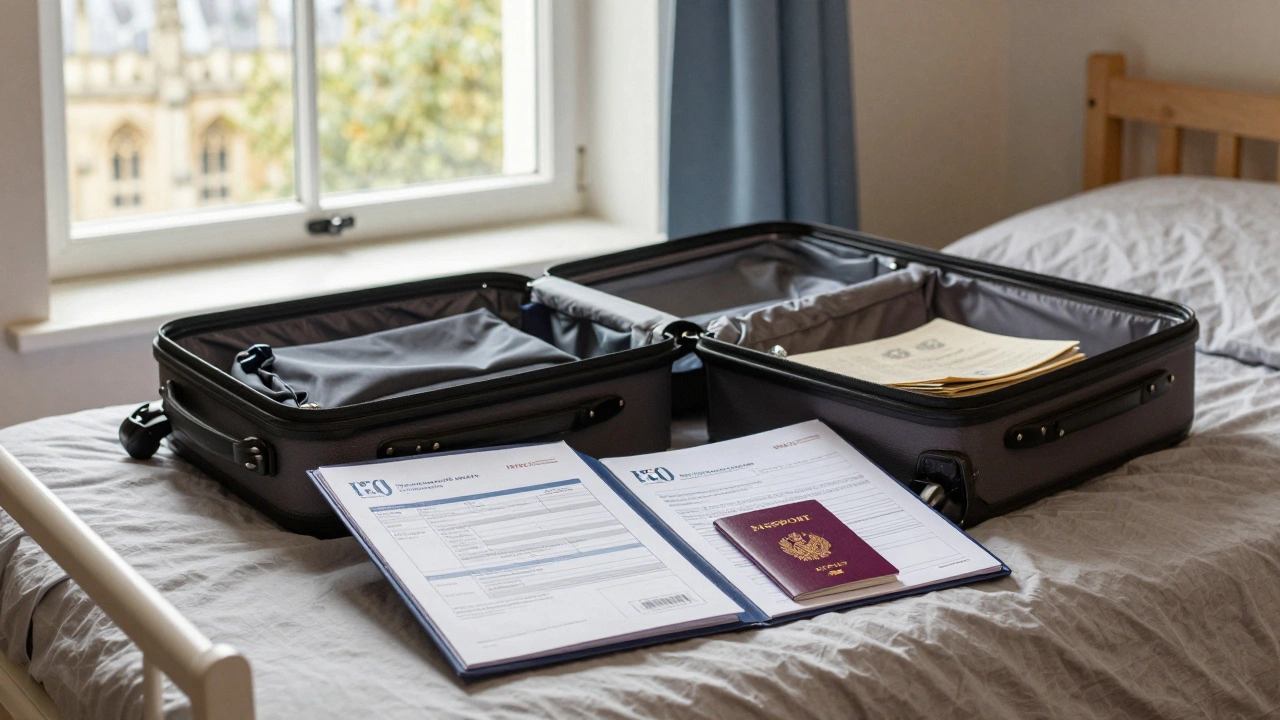
When your studies end and you prepare to leave the UK, your tax affairs do not just disappear. If you believe you have overpaid tax during your final year, you can submit a P85 form to HMRC. This tells them you are leaving the UK and no longer earning taxable income here. It helps trigger any final refunds.
Keep copies of all your payslips and P60 forms (end-of-year certificates). These prove your earnings and tax payments. You may need them for future visa applications or if you return to the UK later. Never throw away these documents.
Can I get my National Insurance contributions refunded when I leave the UK?
Generally, no. National Insurance contributions are not refundable. They go toward your entitlement to the UK State Pension and certain benefits. However, if you have a double taxation agreement between the UK and your home country, you might be able to transfer your contribution credits rather than get cash back.
Do I need a National Insurance Number to open a bank account?
No, you do not need a NINO to open a basic bank account. Most banks require your passport, student visa, and proof of address. However, you will need a NINO to start working legally, as employers must have it to process your payroll correctly.
What happens if I work without a National Insurance Number?
Your employer must still hire you, but they will use an emergency tax code. This usually results in higher tax deductions (up to 50%) until you provide your actual NINO. Once you give them the number, they will adjust future payments and you can claim back any overpaid tax.
Is my scholarship or stipend taxable?
Scholarships used strictly for tuition fees and essential study costs are usually tax-free. However, if you receive additional maintenance grants or stipends that exceed your direct educational expenses, that excess amount may be subject to Income Tax. Check with your university's finance office for specific guidance.
How long does it take to get a National Insurance Number?
The process varies. Calling the hotline takes a few minutes. The interview appointment might be scheduled weeks ahead depending on your location. After the interview, receiving the physical letter with your number typically takes 2 to 4 weeks. Start early to avoid delays.