
The Reality of Healthcare as an International Student
Moving to the United Kingdom for your studies involves more than just booking flights and finding accommodation. One of the biggest worries for most incoming students is handling illness when you are far from home. You arrive knowing little about how medical systems work here. Does insurance cover everything? Do you need a doctor's appointment immediately? These questions create unnecessary stress before you even unpack your bags. By understanding the National Health Service, you can stop worrying about hidden costs and focus on your education.
The system here works differently compared to many countries. While some places rely entirely on private insurance, the UK offers public services funded through taxes and specific levies. If you are on a student visa, you have paid extra money specifically for this right. Ignoring this benefit leads to paying out-of-pocket unnecessarily. This guide explains exactly what is covered, how to access it, and the administrative steps you must complete upon arrival.
Understanding the Immigration Health Surcharge
| Visa Type | Annual Cost (Approx.) | Total for 2 Years |
| Student Visa | £776 | £1,552 |
| Work Visa | £624 | £1,248 |
You cannot skip this fee. When applying for your Tier 4 or Student Route visa, the Home Office requires you to settle the Immigration Health Surcharge upfront. In 2024 and continuing into 2026, this rate has adjusted upwards significantly. You aren't just buying health insurance; you are paying for full access equivalent to a permanent resident. Without proof of payment, your visa application is rejected immediately.
This surcharge applies to the entire duration of your visa, plus two months added on top. So, if you are studying for 18 months, you calculate the fee based on a slightly longer period. Always double-check the official government calculator before submitting your application form. Mistakes here cause delays in travel dates. Once paid, the reference number links directly to your visa vignette.
How to Register with a General Practitioner
Your first task after checking into your accommodation is finding a local doctor. In the UK, these doctors are called General Practitioners or GPs. They act as the gatekeeper for all non-emergency care. You cannot simply walk into a hospital for a check-up; the GP coordinates referrals to specialists.
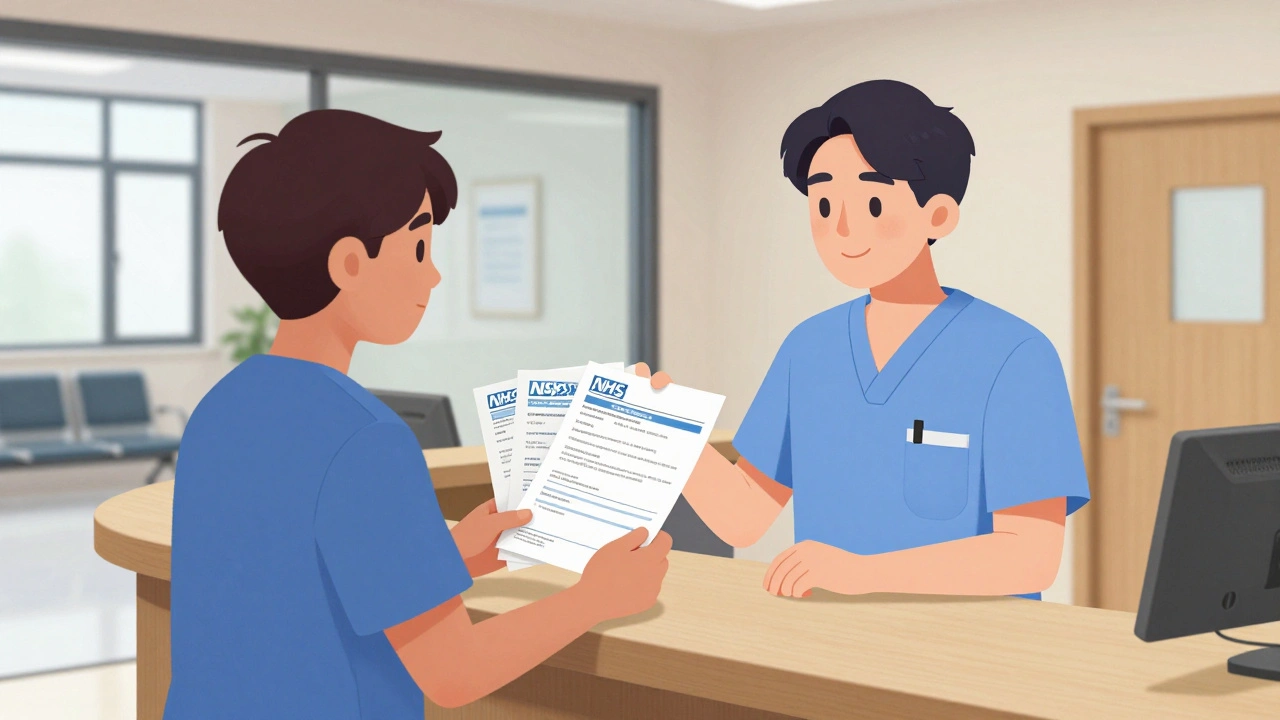
To register, visit a surgery within your area. Look online for "GPs near me" or ask your university accommodation office for recommendations. Bring three documents with you:
- Proof of Identity: Your passport containing your visa sticker or biometric residence permit.
- Proof of Address: A tenancy agreement, council tax bill, or utility statement showing your home address.
- Referral Letter: If you had ongoing treatment abroad, bring medical records translated into English.
Many universities run their own health centers. This is often faster than waiting lists for local surgeries. If your campus has a clinic, use it during term time. It saves travel time and staff understand student schedules better. Remember, appointments operate on a strict queue system. If you feel acutely ill, call the surgery early in the morning rather than expecting same-day face-to-face visits.
Coverage Details: What is Free and What Costs Money?
Students often assume the NHS covers every medical expense. That is a dangerous misconception. The system prioritizes urgent and necessary treatment over elective services. Here is the breakdown of what you keep in your pocket versus what is free:
Fully Covered Services: Consultations with your GP, emergency hospital admissions, maternity care, and mental health support via community teams. If you end up in the Accident & Emergency department, the triage and immediate life-saving treatment cost nothing regardless of your status.
Services Requiring Payment: Dental care, optical exams, and prescriptions in England. This varies wildly depending on which part of the UK you live in. Scotland, Wales, and Northern Ireland offer free prescriptions for residents, but England charges a set fee per item. Currently, this is around £9.65 per script. If you need multiple medications monthly, this adds up quickly. Always ask your doctor for a single-month repeat prescription to reduce trips and fees.
Pregnancy and child care provide special exemptions. Even if you pay the surcharge, you still need specific entitlements to avoid fees for family-related care. Ask the receptionist about exemption certificates immediately if your circumstances change.
Navigating Emergencies and Private Care
If you suffer chest pains, severe bleeding, or loss of consciousness, dial 999 immediately. Do not worry about phone credit or identity checks in that moment. Paramedics treat based on medical need. However, for minor injuries like sprains or rashes, the Urgent Treatment Centre (UTC) is a better option. Wait times there are usually shorter than at major hospitals.
Some students opt for Private Health Insurance alongside their visa surcharge. Why would someone do this? The NHS waits for non-urgent surgeries can stretch weeks or months. Private cover lets you see consultants and schedule operations much faster. It is optional but useful if you have pre-existing conditions excluded from standard coverage or simply value speed.
Note that private care does not replace the visa requirement. You still must pay the immigration surcharge. Think of private insurance as a convenience add-on, not a substitute for public compliance. Many international offices at universities negotiate group rates with providers like Bupa or Cigna, offering better terms than buying individually.

Mental Health Support for Students
Academic pressure often peaks during exam seasons. Mental health services fall under the NHS umbrella, yet accessing them requires specific steps. Your university counseling service is your first point of contact. They offer free sessions specifically for registered students. Unlike the general NHS, these counselors are familiar with academic stress triggers.
If issues become severe, your GP refers you to Improving Access to Psychological Therapies (IAPT). This is a government-funded service available to anyone residing in the UK. You can self-refer in some areas without needing a doctor's note. Therapy typically includes Cognitive Behavioral Therapy techniques to manage anxiety and depression. It is crucial to seek help early before symptoms affect your coursework attendance.
Common Pitfalls and How to Avoid Them
New students often encounter administrative friction due to lack of local documentation. For example, trying to claim residency for free prescriptions without a proper address is impossible. Landlords sometimes delay providing tenancy agreements, leaving students stuck between billing cycles. Always secure your housing contract before the move date.
Another common error is ignoring blood tests ordered by the GP. If you need blood work done at a lab, you may have to wait days for results. Private laboratories exist for faster turnaround if you need them for visa renewal or physical clearance. Don't let paperwork delay your ability to travel back home.
Do I need to pay for seeing a doctor in the UK?
Consulting a General Practitioner (GP) is completely free. Appointments, diagnoses, and referrals cost nothing as long as you have paid your Immigration Health Surcharge.
How do I register with a UK doctor?
You must visit a GP surgery in person with proof of ID and proof of your local address. Most surgeries require you to fill out a registration form on-site.
Are prescriptions free for international students?
No, prescriptions in England carry a fee unless you qualify for specific exemptions. In Scotland, Wales, and Northern Ireland, prescriptions are generally free for everyone.
Can I see a specialist directly?
Usually no. You need a referral from your GP to see a specialist consultant unless you purchase private health insurance that bypasses this step.
What happens if I get sick on a weekend?
Call the NHS 111 helpline. Nurses will assess your condition and direct you to an Open Access Clinic or Urgent Treatment Centre that remains open outside business hours.