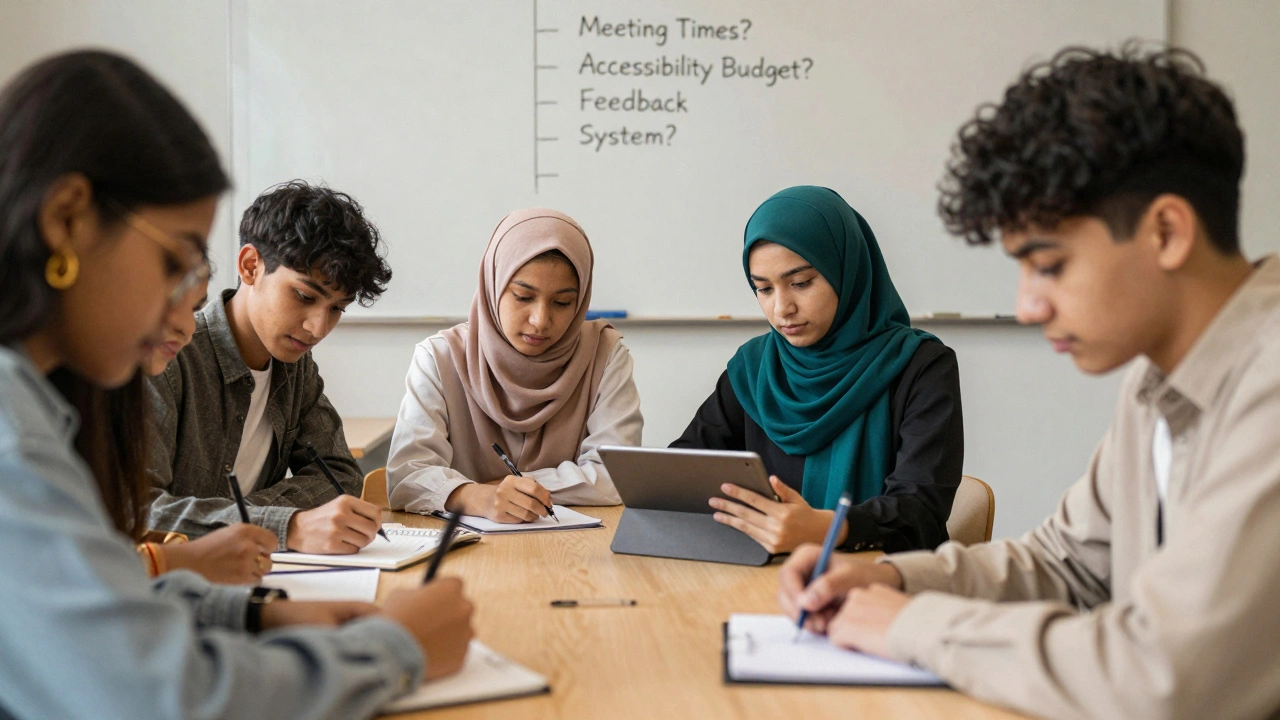
When you walk into a student society meeting for the first time, what do you feel? Welcome? Confused? Excluded? For too many students in the UK, the answer isn’t ‘welcome’-it’s ‘I don’t belong here.’ Student societies are supposed to be the heart of campus life, where people find friends, build skills, and discover their passions. But without intentional effort, they can become echo chambers of the same backgrounds, same voices, same norms. The gap between policy and practice is wide. And fixing it isn’t about posters on walls or checkbox training. It’s about changing how decisions are made, who’s in the room, and what happens when someone speaks up.
Why Inclusivity Isn’t Just a Nice Idea
Universities in the UK have been pushing for inclusivity for over a decade. The Equality Act 2010 legally requires institutions to eliminate discrimination and promote equal opportunity. But laws don’t change culture. A 2024 survey by the National Union of Students found that 43% of students from minority backgrounds had left a society because they felt unwelcome. That’s not a small number. That’s nearly half of all students from underrepresented groups who gave up on something that should’ve been theirs.
It’s not just about race or gender. It’s about neurodiversity-students with autism or ADHD who can’t handle loud, chaotic meetings. It’s about faith-Muslim students who can’t join late-night parties because of religious obligations. It’s about class-students who can’t afford £15 membership fees or £30 weekend trips. Inclusivity isn’t about making everyone the same. It’s about making space for differences to exist without punishment.
What Policies Actually Look Like (And Why Most Fail)
Most student societies have a policy document. It’s usually a copy-paste from the student union template. It says things like: ‘We welcome all students regardless of background.’ But that’s not a policy. That’s a wish.
Real policies have teeth. They answer questions like:
- What happens if someone makes a racist comment at a meeting?
- How are meeting times chosen-do they consider students with part-time jobs or childcare?
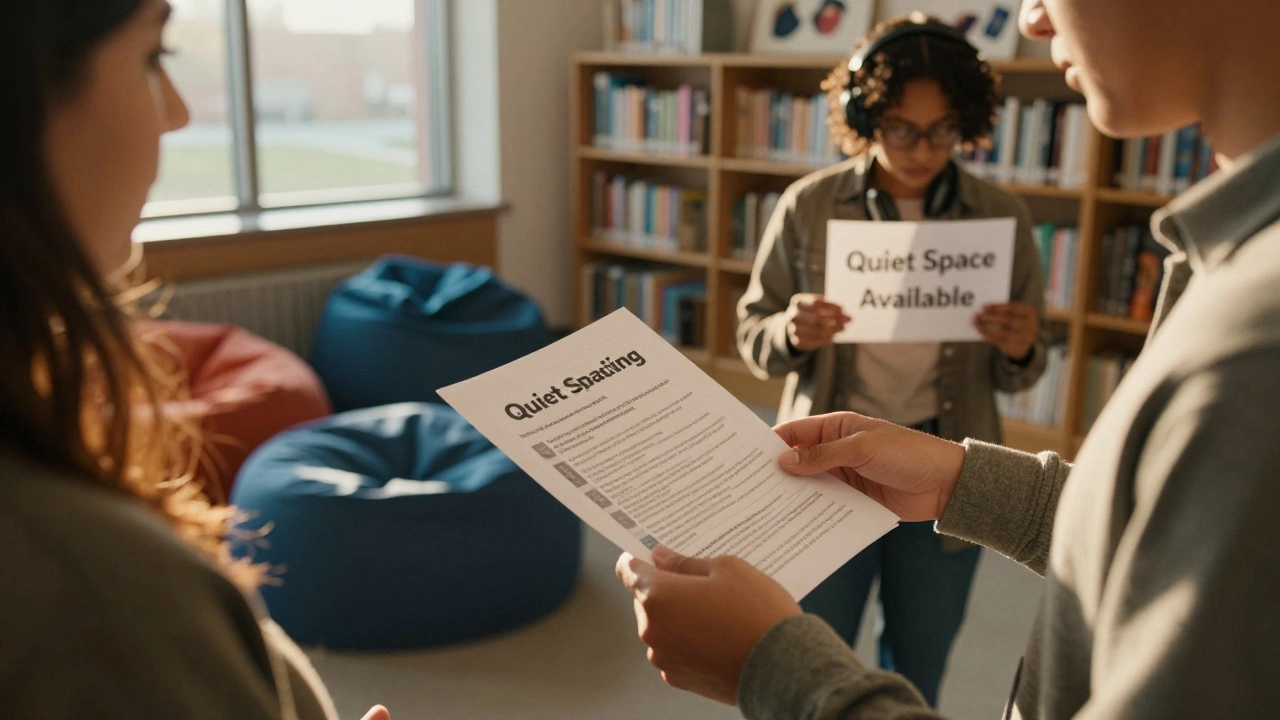
- Is there a budget line for accessibility-sign language interpreters, quiet rooms, low-cost events?
- Who reviews complaints, and are they trained to handle them?
The University of Manchester’s Film Society updated their policy in 2023 after a student reported being mocked for wearing a hijab during a screening. Their new policy now requires all committee members to complete an anti-bias workshop before taking office. They also set aside £500 a term for accessible events-like hosting screenings with subtitles or holding events on Sundays for students who can’t attend on Fridays due to religious observance. That’s the kind of policy that moves the needle.
Training That Actually Works
Most diversity training is a PowerPoint slideshow shown once a year. It’s boring. It’s vague. And it’s forgotten by lunchtime. Effective training isn’t about guilt. It’s about skills.
At Queen Mary University of London, the Debating Society runs monthly 90-minute workshops led by students who’ve experienced exclusion firsthand. One session might focus on how to run a meeting so neurodivergent members can participate without being overwhelmed. Another might teach how to use inclusive language-like saying ‘people who menstruate’ instead of ‘women’ when talking about period products. These aren’t lectures. They’re role-plays. Students act out real scenarios: someone interrupts a non-native English speaker, a student with mobility issues can’t reach the snacks table, someone makes a joke that makes others uncomfortable.
What makes it stick? Feedback. After each session, participants fill out a quick form: ‘What did you learn?’ ‘What will you change next week?’ The committee shares the results publicly. That accountability changes behavior.
Practice: Where Policies Go to Live or Die
Policies and training mean nothing without daily practice. Here’s what real inclusion looks like in action:
- Rotating leadership: At Leeds Beckett’s LGBTQ+ Society, no one holds the same role for more than one term. This prevents power from settling in the same hands and gives new voices a chance to lead.
- Anonymous feedback: The Engineering Society at Imperial College London uses a simple Google Form with no names attached. Students can report issues without fear. Last year, this led to the removal of a mandatory ‘boys’ night out’ event that made female and non-binary members feel isolated.
- Flexible participation: The Music Society at the University of Edinburgh lets members contribute without attending meetings-submitting song ideas via voice notes, helping with social media, or even just sending a playlist. You don’t have to be in the room to be part of the group.
- Budget transparency: Every society now publishes how their funds are spent. If £200 goes to a fancy dinner but nothing to accessible transport, students call it out. That’s how change happens.
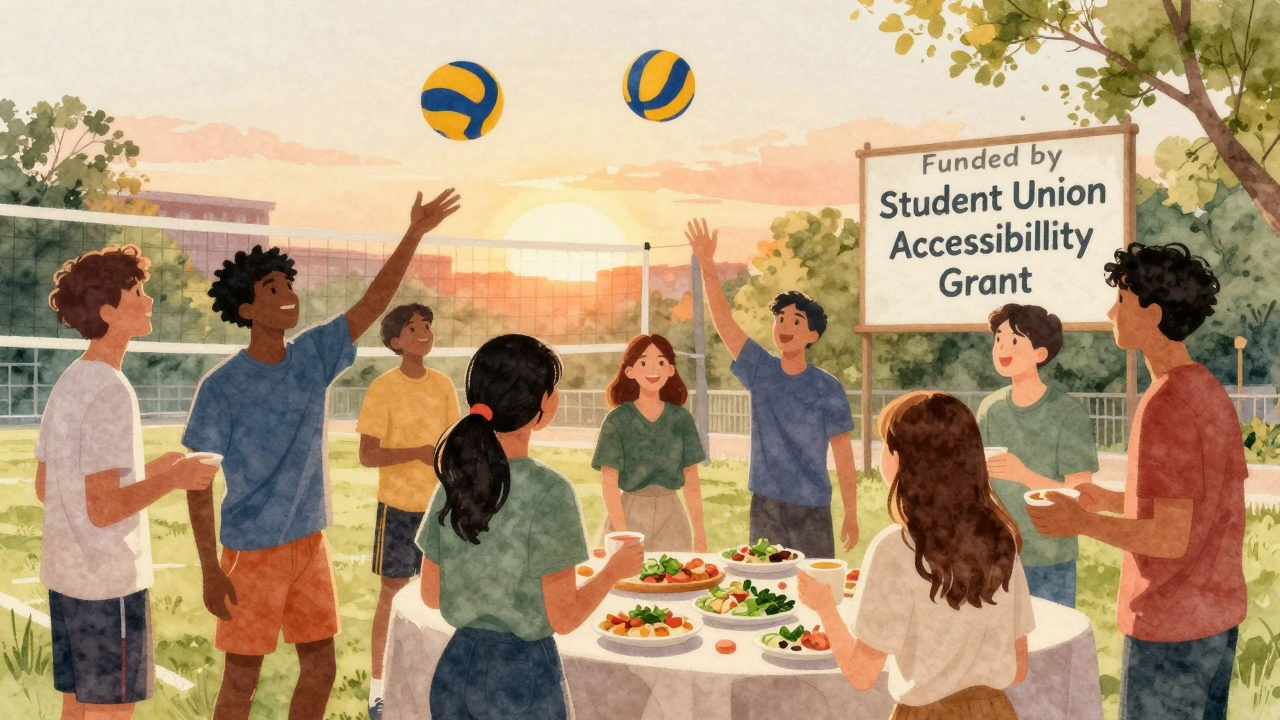
One of the most powerful changes came from the Sports Society at Glasgow Caledonian University. They noticed that Muslim women were dropping out of volleyball. Instead of assuming they weren’t interested, they asked. The answer? No modest sportswear options. So they bought hijabs and leggings with funding from the student union. Membership rose by 60% in six months.
What Doesn’t Work
Don’t fall for these traps:
- Tokenism: Inviting one Black student to speak at an event doesn’t make you inclusive. It makes you performative.
- ‘We’re all the same here’: Saying ‘we don’t see color’ ignores real differences in experience. It’s not kindness-it’s erasure.
- Blaming students: ‘Why don’t more disabled students join?’ isn’t the right question. The right question is: ‘What are we doing that makes it hard for them?’
- Waiting for complaints: If you only act when someone yells, you’re not inclusive-you’re reactive.
Where to Start (Even If You’re Just a Member)
You don’t need to be committee president to make a difference. Here’s how you can help right now:
- Ask: ‘Who’s not here? Why?’ Don’t guess. Ask the people who’ve left.
- Propose one small change: a new meeting time, a quiet space, a free event.
- Volunteer to help with feedback collection. No one likes doing it-but someone has to.
- Call out microaggressions gently: ‘That joke might make some people feel excluded. Can we talk about it?’
- Share resources. Found a guide on inclusive meeting facilitation? Send it to your society’s inbox.
Change doesn’t come from grand speeches. It comes from one person asking, ‘What if we did it differently?’ and then doing it.
What’s Next?
The UK government’s 2025 Higher Education Strategy includes new funding for student-led inclusion projects. That means societies can now apply for grants to hire inclusion coordinators, run accessibility audits, or partner with local disability groups. But money won’t fix culture. People will.
Student societies are mirrors. They reflect the values of the people in them. If you want a society that feels like home to everyone-not just the loud, the confident, the privileged-you have to build it. Every day. In small ways. With patience. And without waiting for permission.
What’s the difference between diversity and inclusivity in student societies?
Diversity is about who’s in the room-in terms of race, gender, disability, religion, class, and more. Inclusivity is about whether they can speak, be heard, and feel safe doing so. You can have a diverse group where everyone feels like an outsider. That’s not inclusion. True inclusion means the rules, spaces, and culture are shaped so everyone can thrive, not just survive.
Can small societies with limited budgets still be inclusive?
Absolutely. Inclusion doesn’t require money-it requires creativity and care. A small society can host a free coffee morning instead of a £20 dinner. They can rotate meeting times to fit different schedules. They can use free tools like Google Forms for anonymous feedback. They can ask members what they need. The most effective changes often cost nothing: listening, adjusting, and saying ‘thank you’ when someone speaks up.
How do you get committee members to take inclusivity seriously?
Make it part of the job description. Require training before taking office. Tie funding to inclusion goals. Share real stories-like a member who left because they felt ignored. People respond to human impact, not abstract principles. Also, celebrate wins: ‘Thanks to your feedback, we now offer vegan snacks at every meeting.’ Recognition builds momentum.
What if someone says inclusivity is ‘too political’?
It’s not political-it’s practical. If someone can’t join because of their faith, disability, or background, the society loses talent, energy, and ideas. This isn’t about ideology. It’s about making sure everyone who wants to be part of the group can be. That’s not politics. That’s common sense.
How do you know if your society is actually inclusive?
Look at who’s not speaking up. Check attendance across different groups. Ask anonymous questions: ‘Do you feel safe here?’ ‘Do you think your needs are considered?’ If the same people always lead meetings, if events always happen at the same time, if complaints are ignored-then you’re not inclusive. Real inclusion shows in who stays, who speaks, and who feels like they belong.
Final Thought
Student societies are where people learn to lead, connect, and belong. If they only serve a narrow slice of the student body, they’re failing their purpose. The tools to fix this exist-policies, training, feedback loops, small daily choices. What’s missing is the willingness to act. Not tomorrow. Not next term. Now.