
Most students lose marks in the first two minutes of a marker’s reading time. It isn’t because the content is wrong; it’s because the introduction failed to signal competence immediately. In the UK higher education system, markers often grade hundreds of scripts during peak assessment periods. They are looking for specific signals that you understand the task, grasp the argument, and can structure your thoughts logically. If your opening paragraph is vague or your conclusion just repeats what you said earlier, you are telling the marker to keep looking for effort elsewhere. This guide breaks down exactly how to craft openings and closings that align with British academic expectations.
Understanding the UK Marking Mindset
To write effectively, you need to understand who is reading. UK universities, from institutions like the University of Oxford to regional colleges, generally use a tiered grading system ranging from First Class (70%+) to Third Class (40-49%). The difference between a 60% pass and a 75% distinction often lies in clarity and precision rather than raw knowledge. Markers are trained to look for "signposting"-explicit cues that guide the reader through your logic. If they have to guess your main point after reading the first page, you have already lost points for lack of clarity. The goal isn't to be clever; it's to be unmistakably clear.
The central entity here is Academic Writing, which is a formal mode of communication used in higher education to demonstrate critical thinking and argumentation. In the UK context, this style prioritizes objectivity, evidence-based reasoning, and structured progression. Unlike some other educational systems that value personal voice or creative flair in essays, the UK model rewards restraint and logical flow. Every sentence should serve the argument. Fluff is penalized. Vague language is ignored.
Anatomy of a High-Scoring Introduction
A strong introduction does three things: it hooks the reader, provides necessary context, and states the thesis clearly. However, "hooking" in an academic essay doesn't mean using a quote from Shakespeare or a shocking statistic unless it directly supports your argument. Instead, the hook is the precise framing of the problem. You need to narrow the focus from the broad topic to your specific angle.
- Contextualize: Briefly introduce the broader subject area. Why is this topic relevant now? What is the general debate?
- Narrow the Focus: Move from the general to the specific. Identify the gap in knowledge or the specific issue you are addressing.
- State the Thesis: Clearly articulate your main argument in one or two sentences. This is the roadmap for the rest of the paper.
- Outline Structure (Optional): For longer dissertations, briefly mention how you will proceed. For standard essays, this is often unnecessary if the thesis is strong.
Consider the entity Thesis Statement, which is a concise declaration of the writer's main argument or position on a topic. A weak thesis says, "This essay will discuss climate change." A strong thesis says, "While renewable energy adoption has increased, policy failures in grid infrastructure remain the primary barrier to net-zero targets by 2030." The second version tells the marker exactly what to expect and implies a level of analysis that commands respect.
The Role of Signposting and Flow
UK markers place heavy emphasis on cohesion. Your introduction must flow naturally into your first body paragraph. If there is a jarring jump between your final introductory sentence and your first point, it disrupts the reading experience. Use transitional phrases that indicate movement, not just connection. Words like "Consequently," "In contrast," or "Specifically" help guide the eye. Avoid overusing basic connectors like "Also" or "But." Instead, use stronger academic alternatives that show logical relationship. For example, instead of saying "But the data shows...", try "However, empirical evidence suggests..." This subtle shift elevates the tone without changing the meaning.
Signposting also applies to managing the reader's expectations. If you promise to analyze three case studies in your introduction, ensure those three cases appear clearly in the body. If you don't deliver on that promise, the marker may view the work as disorganized. Consistency between the map (introduction) and the territory (body) is crucial for high marks.
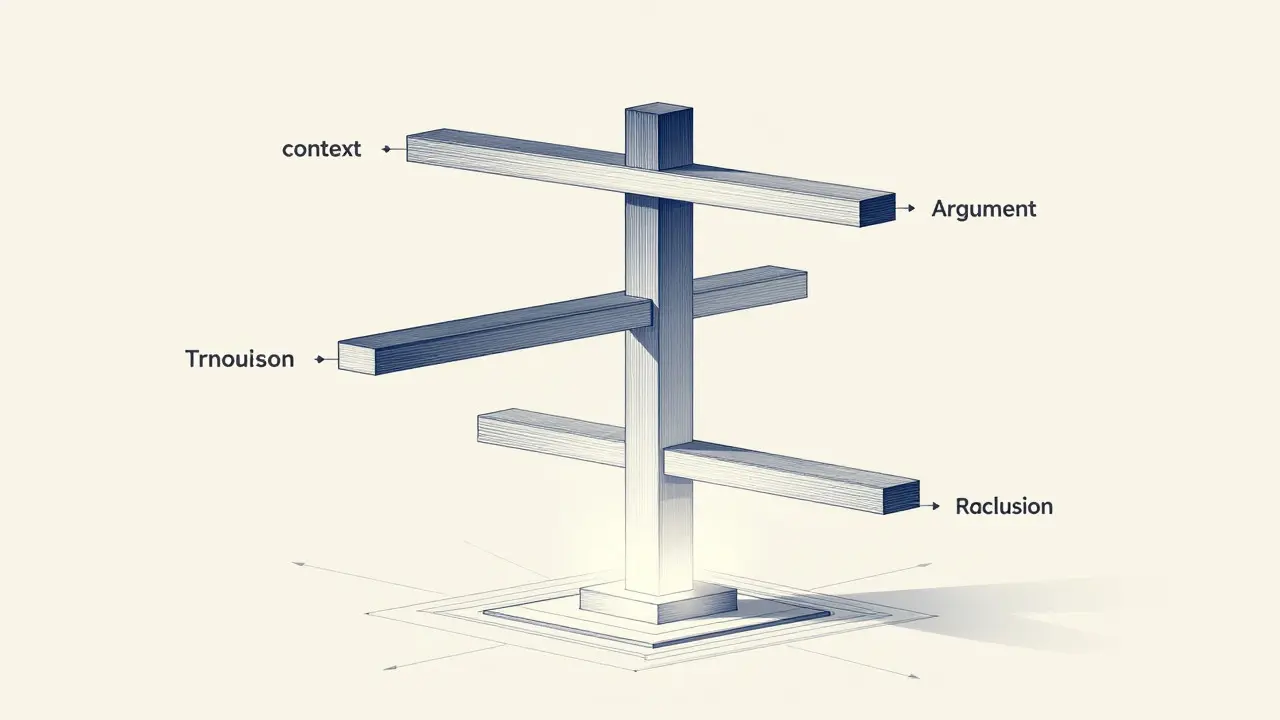
Crafting Conclusions That Resonate
The biggest mistake students make in conclusions is simply summarizing. A summary is redundant. The marker has just read your arguments. They don't need a recap. A high-scoring conclusion synthesizes. It takes the individual points made in the body paragraphs and weaves them together to show how they collectively support the thesis. Then, it expands the scope slightly to show the wider implications of your findings.
Think of the conclusion as the answer to the question: "So what?" Why does your argument matter beyond this specific essay? Does it challenge existing theories? Does it suggest new areas for research? Does it have practical applications? By answering this, you demonstrate critical engagement with the material. The entity Synthesis refers to the process of combining different elements to form a coherent whole. In writing, synthesis means showing the connections between your points rather than just listing them again.
- Restate the Thesis: Don't copy-paste it. Rephrase it to reflect the journey of the essay.
- Summarize Key Points: Briefly touch on the main arguments, but focus on their collective impact.
- Broader Implications: Discuss the significance of your findings in a wider context.
- Final Thought: End with a strong, memorable statement that leaves the reader reflecting on the topic.
Common Pitfalls to Avoid
Even experienced writers fall into traps that lower their grades. One common error is introducing new evidence in the conclusion. Unless it's a minor clarifying point, any new fact or citation belongs in the body. Introducing new data at the end feels rushed and unverified. Another pitfall is being too definitive. Academic writing usually requires nuance. Using absolute terms like "always" or "never" can weaken your credibility unless you have overwhelming proof. Instead, use hedging language like "suggests," "indicates," or "appears to" when appropriate. This shows intellectual humility and awareness of complexity.
Vagueness is the enemy of both introductions and conclusions. Phrases like "It is important to note" or "Many people believe" add no value. Cut them out. Get straight to the point. Precision wins marks. Clarity builds trust with the marker.
| Element | Weak Approach | Strong Approach |
|---|---|---|
| Introduction Hook | "Climate change is a big problem today." | "Despite rising public awareness, legislative action on carbon emissions remains disproportionately slow in developed nations." |
| Thesis Statement | "This essay looks at solar power." | "Solar power viability is constrained less by technology than by outdated regulatory frameworks in the UK energy sector." |
| Conclusion Summary | "I talked about solar and wind. They are good." | "While renewable technologies advance rapidly, the bottleneck remains institutional. Addressing regulatory inertia is therefore more urgent than further technological R&D." |
| Tone | "Everyone knows that..." | "Current literature suggests that..." |

Practical Tips for Different Assessment Types
Different types of assessments require slight variations in approach. For a standard 2,000-word essay, keep the introduction under 150 words. For a dissertation, you might need 500-800 words to set up complex theoretical frameworks. In exams, where time is tight, skip the lengthy contextual background and go straight to the thesis. Markers in timed exams appreciate directness. In long-form projects, take the time to build the context carefully, as it demonstrates depth of research. Always check the specific module handbook. Some departments prefer a "roadmap" paragraph in the intro; others find it repetitive. When in doubt, ask your tutor for examples of past top-scoring work.
Frequently Asked Questions
How long should an introduction be for a 3,000-word essay?
Aim for approximately 10-15% of the total word count, which translates to 300-450 words. This allows enough space to provide context and state a clear thesis without dominating the piece.
Is it okay to use quotes in the introduction?
Yes, but only if the quote directly supports your framing or defines a key term. Avoid using quotes as a substitute for your own voice. The introduction should primarily be in your words to establish control over the narrative.
What is the difference between a summary and a synthesis in a conclusion?
A summary lists the points you made. Synthesis explains how those points work together to prove your thesis and what that means for the wider field. UK markers reward synthesis because it shows higher-order thinking.
Should I include recommendations in my conclusion?
Only if the assignment brief asks for them or if the topic is applied/practical. In theoretical humanities essays, recommendations can feel out of place. Stick to implications and future research directions unless instructed otherwise.
How do I avoid being too vague in my thesis?
Be specific about your variables and scope. Instead of saying "Technology affects society," say "The rise of algorithmic curation has narrowed political discourse among users aged 18-25 in the UK." Specificity forces you to commit to an argument, making it easier to defend.