Writing a CV for a part-time job or internship in the UK as a student can feel overwhelming. You don’t have years of work experience. You might not even have a formal job history. But that’s okay - UK employers know you’re a student. They’re not looking for a seasoned professional. They’re looking for someone who’s motivated, reliable, and ready to learn. Your CV doesn’t need to be fancy. It just needs to be clear, honest, and focused on what matters.
What UK Employers Actually Look For
Most UK universities have career services that tell students to "highlight leadership" or "show impact." But in reality, employers hiring students for part-time roles care about three things: reliability, communication, and willingness to learn. They’re not hiring you to run a team. They’re hiring you to answer phones, stock shelves, help customers, or assist in a lab. So skip the buzzwords. Instead, show up as someone who shows up on time, listens well, and doesn’t need constant hand-holding.
A 2024 survey by the UK’s National Union of Students found that 68% of part-time employers rated "punctuality" as more important than academic grades. Another 57% said they chose candidates based on how clearly they explained their past responsibilities - even if those were volunteer work or school projects.
Structure Your CV Like a Pro (Even If You’re New)
Your CV should be one page. Always. No exceptions. UK employers scan these in under 30 seconds. If it’s two pages, they’ll stop reading.
Here’s the exact order to use:
- Your full name and contact info
- A short personal profile (2-3 lines)
- Education (your current course)
- Work experience (even if it’s not "professional")
- Skills
- Extra activities (clubs, volunteering, sports)
That’s it. No photos. No hobbies like "reading" or "traveling." No fancy designs. Just clean, readable text in a standard font like Arial or Calibri, size 11.
Write a Personal Profile That Actually Means Something
This is your elevator pitch. It’s not a summary of your life. It’s a reason why an employer should pick you.
Bad example: "Hardworking student with a passion for learning and teamwork."
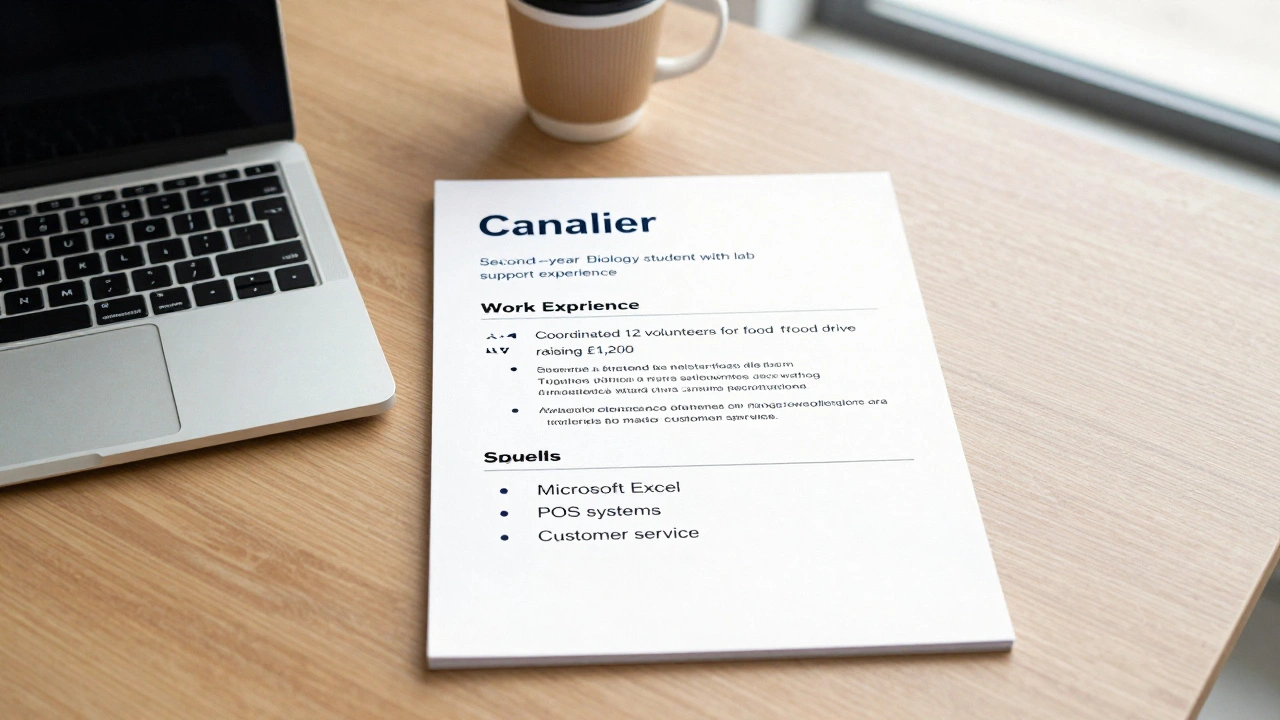
Good example: "Second-year Biology student with experience supporting lab sessions and managing student volunteer teams. Able to learn new systems quickly and work well under pressure during busy shifts."
Notice the difference? The good one names a role, a skill, and a trait that matches the job. If you’re applying for a retail job, swap "lab sessions" for "cashier experience" or "customer service in a campus shop." Tailor it every time.

Turn Your Student Life Into Work Experience
You don’t need a paid job to have experience. Think about what you’ve done:
- Helped organize a campus event? That’s project coordination.
- Tutored a friend in math? That’s teaching and communication.
- Volunteered at a food bank? That’s logistics and teamwork.
- Managed a group project? That’s leadership and time management.
Don’t write: "Helped with a charity event."
Write: "Coordinated a team of 12 volunteers for a campus food drive, managing schedules, donations, and distribution. Raised £1,200 in one week."
Numbers matter. Even small ones. They turn vague effort into proof of ability.
Skills Section: Be Specific, Not Generic
Avoid listing "good communication skills" or "team player." Those mean nothing. Instead, list tools, tasks, and systems you’ve actually used.
Good skills list:
- Microsoft Excel (data entry, basic formulas)
- Point-of-sale (POS) systems
- Google Workspace (Docs, Sheets, Calendar)
- Basic social media management (Instagram, Facebook)
- Customer service via phone and in-person
- Time management for balancing studies and shifts
Even if you’ve only used Excel once, list it. Employers know students aren’t experts. They just want to know you’re not afraid to try.
Extra Activities: Show You’re Engaged
This section is your chance to show personality - without being silly. Don’t write "I like movies." Write:
- Member, University Debate Society (2024-present): Prepared arguments, participated in weekly competitions
- Volunteer, Local Animal Shelter (2023-2025): Walked dogs, cleaned kennels, assisted with adoption events
- Student Ambassador, International Student Office: Helped new students settle in, led campus tours
These aren’t just hobbies. They’re proof you’re active, responsible, and engaged outside class. That’s exactly what UK employers want to see.
What to Leave Out
Here’s what makes your CV look amateur:
- Your photo - it’s not required and can lead to bias
- Your GPA unless it’s over 3.7/4.0 or equivalent
- High school details - if you’re in university, leave it out
- References like "Available on request" - they assume you’ll provide them
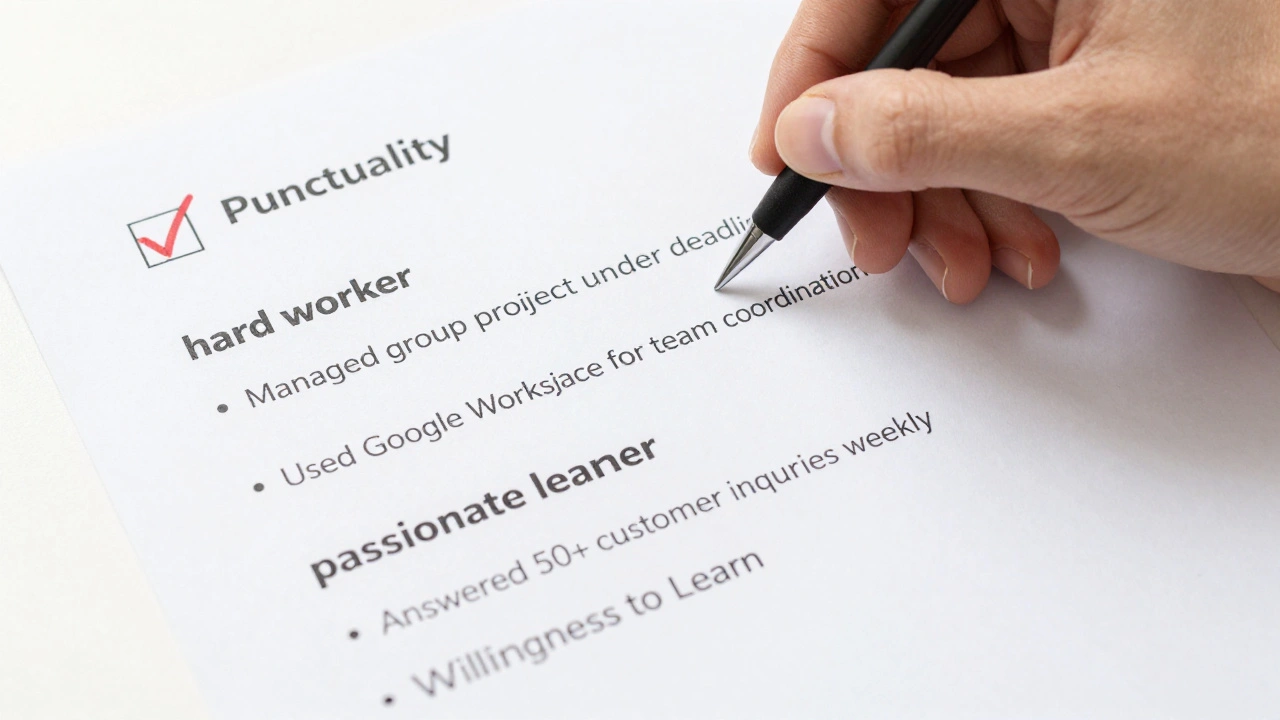
- Generic phrases: "hard worker," "detail-oriented," "passionate about learning"
Also, never copy a template from the internet. If your CV looks like 10 others, it gets ignored.
Proofread Like Your Future Depends on It
One typo can kill your chances. UK employers notice small mistakes - they see it as a sign of carelessness.
Read your CV out loud. Ask a friend to read it. Use free tools like Grammarly or Hemingway. Check spacing, punctuation, and verb tenses. If you wrote "I was helping," change it to "I helped." Past tense is better for completed tasks.
And always save it as a PDF. Never send a Word doc. Formatting breaks. PDFs don’t.
Final Tip: Match Your CV to the Job
Don’t send the same CV for every job. If you’re applying for a café job, highlight customer service. If it’s a research internship, focus on your lab experience or data collection skills.
Look at the job description. What words do they use? "Organized," "reliable," "detail-oriented," "fast learner"? Use those exact words in your CV - but back them up with real examples. Employers scan for keywords. If they don’t see them, your CV gets passed over.
Remember: Your CV isn’t about how much you’ve done. It’s about how clearly you can show you’re ready to do what they need.