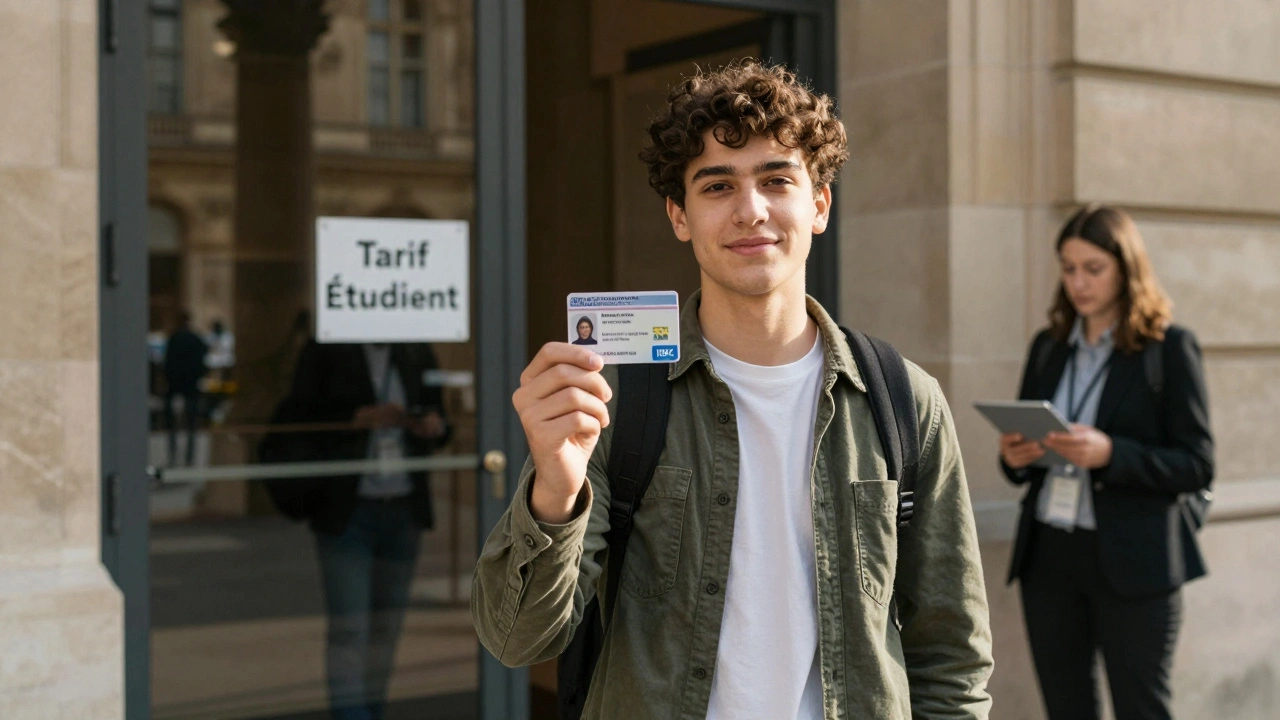
Traveling abroad as a student doesn’t mean you have to pay full price for everything. Whether you’re hopping between hostels in Berlin, taking a train in Tokyo, or exploring museums in Paris, your student ID can save you serious cash-if you know how to use it right. Many countries offer student discounts, but they don’t always advertise them clearly. You might walk into a museum in Rome and see a sign for "European students only" and assume you’re out of luck. But here’s the truth: student ID discounts aren’t just for EU students anymore. Most places worldwide accept international student IDs, as long as you know what to ask for and how to prove you’re eligible.
What Counts as a Valid Student ID Abroad
Not every student card is created equal. A university-issued ID from your home country might work in some places, but it’s not always enough. The gold standard for international use is the International Student Identity Card (ISIC) a globally recognized student identification card issued by ISIC Association, accepted in over 130 countries for discounts on travel, accommodation, food, and cultural attractions. It’s not free-it costs around $22 USD-but it’s one of the few cards that actually works everywhere. You can apply online through the official ISIC website, and it usually arrives in 5-7 business days. Some universities even give you a free ISIC card as part of your enrollment package.If you don’t have an ISIC, your school ID might still get you in. Many museums, theaters, and public transport systems in Europe, Canada, Australia, and parts of Asia accept any photo ID that clearly shows you’re enrolled in a recognized institution. Just make sure your name, photo, and current enrollment date are visible. A screenshot of your student portal won’t cut it-you need a physical card or a printed copy with the school seal.
Where Student Discounts Actually Work
You’d be surprised how many places offer student deals. Here’s where you’ll find them most reliably:- Museums and galleries-In Paris, the Louvre offers a 50% discount for students under 26 with valid ID. In New York, the Met charges $12 for students instead of $25. In Tokyo, most national museums give free entry to students with proper documentation.
- Public transport-In London, students get discounted Oyster card rates. In Berlin, the BVG student ticket costs €27/month. In Mexico City, students pay half price on Metro and Metrobús. Always ask at the ticket counter: "Do you offer student rates?" Even if there’s no sign, they might still have a local deal.
- Train and bus travel-In Europe, Eurail passes offer 25% off for students. In Australia, student discounts on Intercity trains range from 15% to 30%. In India, Indian Railways gives a 50% discount for female students and 40% for male students with valid ID.
- Accommodation-Hostels like Hostelworld and Booking.com often list "student rates". Some even require ISIC for the discount. Airbnb doesn’t have a universal student rate, but you can message hosts directly and ask if they offer discounts for long-term stays.
- Food and coffee-Starbucks in Canada and Australia gives 10% off with student ID. In Thailand, many cafes offer 20% off if you show your card. Even fast food chains like McDonald’s in Japan and South Korea sometimes have student promotions.
- Cultural events-Theatre tickets in London, film festivals in Toronto, and concerts in Seoul often have student pricing. Some even let you buy last-minute tickets for $5-$10 if you’re a student.
How to Ask for Discounts Without Sounding Awkward
Asking for a student discount can feel uncomfortable, especially if you’re not fluent in the local language. But here’s a simple script that works almost everywhere:"Hi, I’m a student. Do you offer any discounts for international students?"
That’s it. No need to over-explain. Most people will nod and say yes. If they hesitate, ask: "Is there a student rate?" or "Can I use my student ID for a discount?"
Pro tip: Carry your card in a visible spot. If you’re in a busy museum line, pull it out before you reach the counter. Staff are more likely to notice and act fast if they see the card before you even speak.
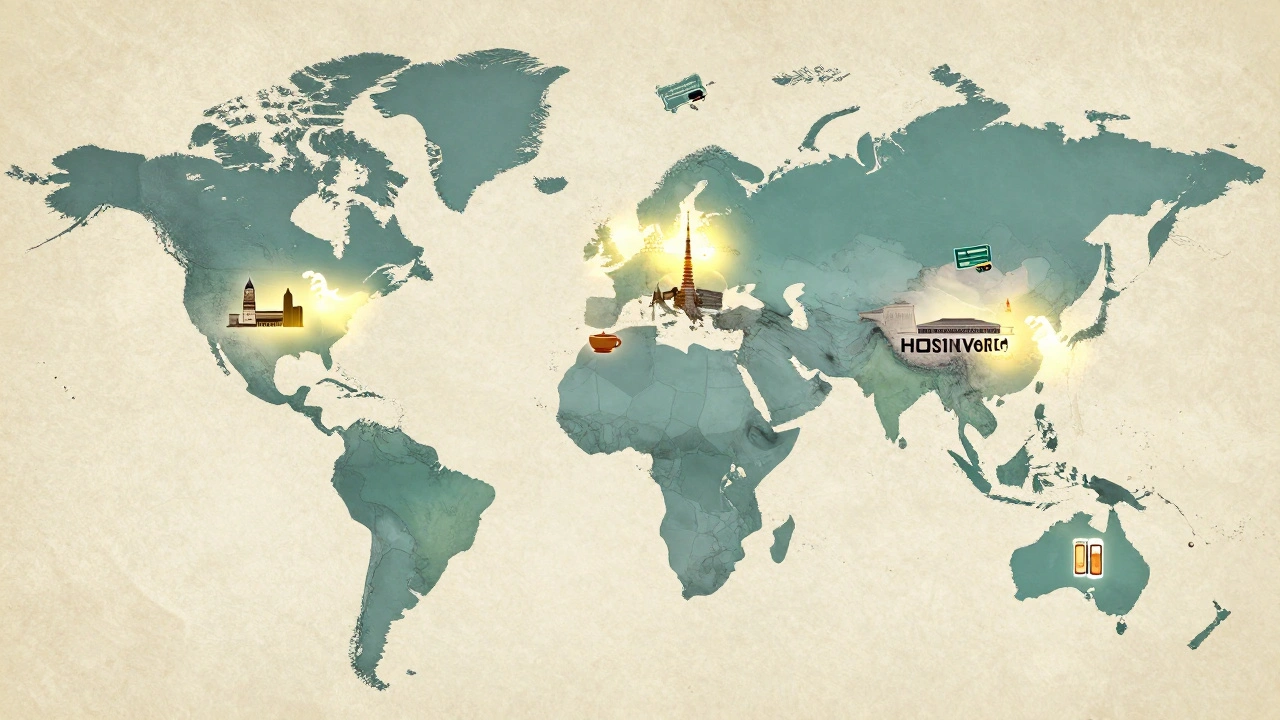
What Doesn’t Work (And Why)
Some students assume their school ID works everywhere. It doesn’t. Here’s what usually gets rejected:- Expired student IDs-Even if you’re still enrolled, if the card says "2023-2024," it might be refused. Always carry proof of current enrollment (like a recent class schedule or enrollment letter).
- Non-photo IDs-If your card doesn’t have a photo, some places won’t accept it for security reasons. An ISIC card always has one.
- Digital-only IDs-A screenshot on your phone won’t work at ticket booths or train stations. Print a copy or carry the physical card.
- Assuming all countries have the same rules-In Japan, student discounts are common. In Brazil, they’re rare unless you have an ISIC. Research before you go.
How to Get the Most Out of Your Student ID
Here are a few smart habits that save hundreds per trip:- Download the ISIC app-it shows real-time discounts in your location and lets you scan your card digitally.
- Check student travel sites like StudentUniverse a travel platform offering discounted flights, hotels, and insurance exclusively for students worldwide or UNI-Student a global network of student discount providers for travel, tech, and entertainment before booking anything.
- Join your university’s international office-they often have partnerships with local businesses abroad.
- Use your student email-Many companies offer exclusive deals if you register with your .edu address.
- Ask for combo deals-"Can I get a student discount on the museum ticket and the audio guide together?" Sometimes they’ll bundle it for extra savings.
What to Do If You’re Denied a Discount
Sometimes, you’ll be told "no"-even with an ISIC. Don’t panic. Here’s what to try next:- Ask if they accept International Youth Travel Card (IYTC) a discount card for travelers under 26, often accepted alongside ISIC for youth and student benefits. It’s cheaper than ISIC and works in many places.
- Check if they accept ITIC a card for teachers and educators, sometimes accepted as equivalent to student ID in certain countries. If you’re a teaching assistant, this might work.
- Speak to a manager. Frontline staff often don’t know the policy. A manager might override it if you’re polite and show proof of enrollment.
- Look for alternative discounts-some places offer group rates, early-bird pricing, or free entry on certain days of the week.
Real-World Example: A Student’s $800 Savings in One Trip
Last summer, a student from the University of Michigan traveled through 7 countries in Europe and Southeast Asia. She used her ISIC card and saved:- $120 on train tickets across 5 countries
- $85 on museum entries (Louvre, Uffizi, Tokyo National Museum, etc.)
- $60 on hostels
- $40 on coffee and meals
- $500 on flight upgrades using StudentUniverse
Total savings: $805. Her ISIC card cost $22. That’s a 3,500% return on investment.
Final Tips: Don’t Leave Home Without These
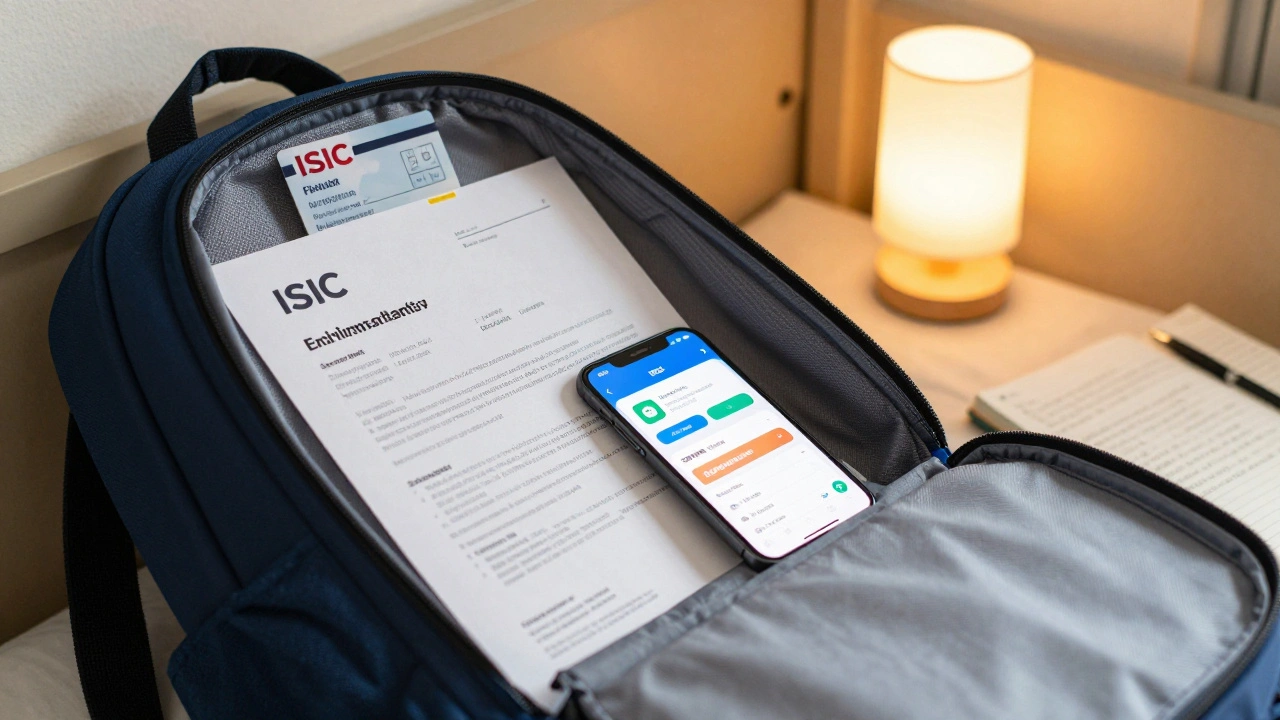
- A physical ISIC card (or printed copy)
- A backup photo of your university ID
- A printed enrollment letter with your university’s seal
- The ISIC app installed on your phone
- A list of top 5 discounts you plan to use in your destination
Student discounts aren’t a myth. They’re everywhere-if you know how to ask. The key isn’t having the fanciest card. It’s being prepared, confident, and ready to say: "I’m a student. Do you offer a discount?"
Can I use my U.S. student ID in Europe?
Yes, but it depends. Many museums, train stations, and hostels in Europe accept U.S. student IDs if they include your photo, name, and current enrollment date. However, for the best results, pair it with an ISIC card. Some places, like the Louvre or Eurail, only honor ISIC. Always carry your university’s official enrollment letter as backup.
Do I need an ISIC card if I already have a student ID?
Not always, but it’s highly recommended. Your school ID might work in some places, but ISIC is accepted in over 130 countries and is the only card universally recognized by transport systems, museums, and travel agencies abroad. If you travel often, the $22 investment pays for itself in one trip.
Are student discounts available in Asia?
Yes, especially in Japan, South Korea, Thailand, and India. Japan offers free entry to national museums for students with ID. In Thailand, cafes and temples often give 10-20% off. India’s railways give 40-50% discounts. Always ask directly-signage is rare, but staff usually know the policy if you mention "international student."
Can I get discounts on flights as a student?
Absolutely. Airlines like StudentUniverse, STA Travel, and even major carriers like Delta and United offer student fares that are often 10-20% cheaper than regular tickets. You’ll need your ISIC card or a valid .edu email to qualify. Book early and be flexible with dates for the best deals.
What if my school doesn’t issue student IDs?
If your school doesn’t issue physical IDs, contact your registrar’s office. They can print an official enrollment letter with your photo, name, and current term. Some universities also provide digital student verification through services like SheerID. Combine this with an ISIC card for maximum acceptance abroad.