
It’s week three of term time. You’ve just returned from a lecture at University College London, a premier research university in London, England, and you’re exhausted. The last thing you want to do is open your banking app. But there it is: the electricity bill for the month has arrived. It’s £142.50. There are five of you in the house. Simple division suggests £28.50 each. But wait-Sarah was away for a week visiting family. Mike works full-time during the day and only uses the kettle. Did they really use the same amount of energy as you? This isn’t just about math; it’s about fairness, friendship, and avoiding the awkward conversations that turn shared living into a nightmare.
For students in the United Kingdom, navigating the financial landscape of shared accommodation is a rite of passage. Unlike rent, which is usually fixed per person, variable costs like utilities, internet, and council tax can fluctuate wildly. Getting this wrong doesn’t just cost money; it damages relationships. This guide cuts through the noise to help you establish a system that feels fair, keeps everyone happy, and ensures no one gets left holding the bag when the winter heating bills spike.
The Core Principle: Fixed vs. Variable Costs
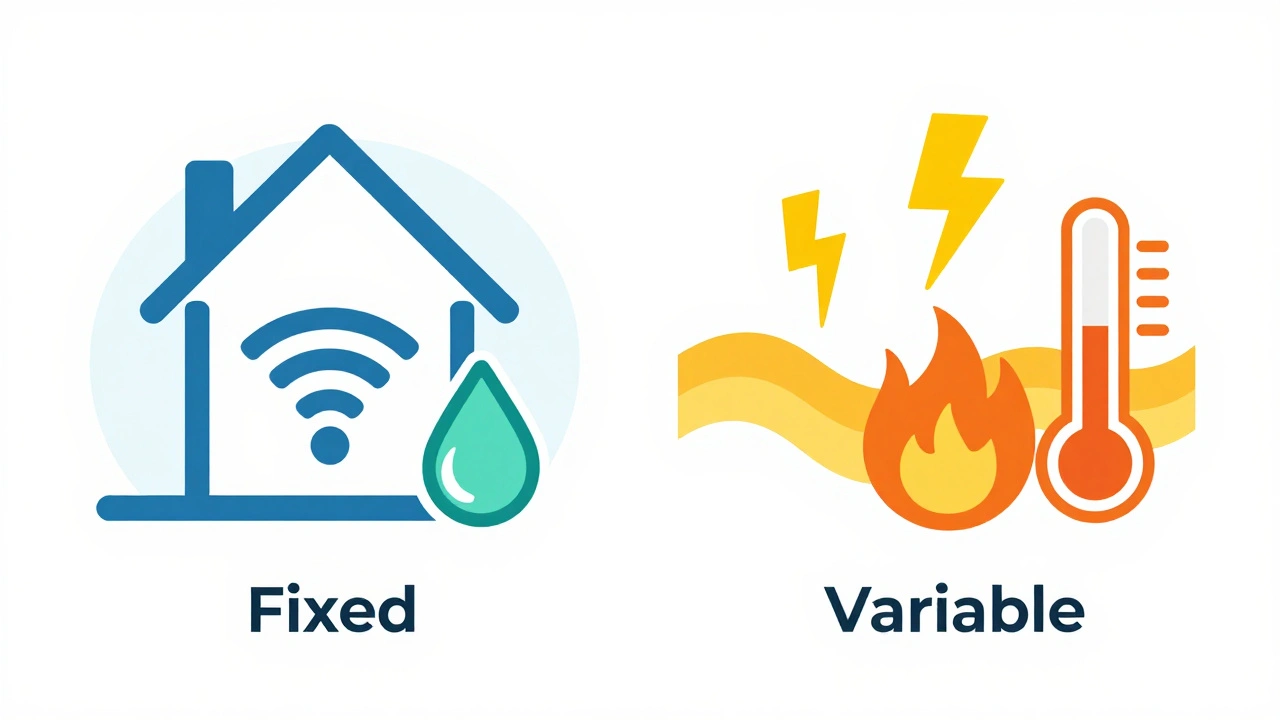
Before you pull out a calculator, you need to categorize what you are actually paying for. In a typical UK student house, expenses fall into two distinct buckets: fixed costs and variable costs. Treating them differently is the key to perceived fairness.
Fixed costs are expenses that remain constant regardless of individual behavior. Rent is the obvious example, but so is the basic subscription fee for broadband internet or the monthly payment plan for water if you are on a direct debit scheme with a provider like United Utilities, a water services company operating in North West England. These costs should almost always be split equally among all residents. Why? Because the benefit of having a roof over your head and high-speed Wi-Fi is equal for everyone, even if Sarah stays home more than Mike.
Variable costs change based on usage. Electricity, gas, and sometimes water (if metered) fall here. This is where disputes arise. If one person runs a space heater all night while others wear jumpers, an equal split feels unjust. However, tracking every kilowatt-hour used by each person is impossible without installing sub-meters, which landlords rarely allow. Therefore, the "fair" solution often involves a hybrid approach or a social contract rather than strict accounting.
Understanding Council Tax Exemptions
One unique aspect of UK student housing is Council Tax, a local tax charged on domestic properties in the United Kingdom. For full-time students, this is typically exempt. To claim this exemption, every resident must provide their landlord or local council with a valid Certificate of Enrollment, a document confirming a student's status at a higher education institution.
If even one person in the house is not a full-time student-for example, a partner working part-time or someone studying a non-qualifying course-the entire property may become liable for Council Tax. In these mixed households, the non-student resident is usually responsible for 100% of the bill, unless the tenancy agreement states otherwise. Always check your Tenancy Agreement, a legal contract between a landlord and tenant outlining the terms of occupancy before assuming exemptions apply. Misunderstanding this can lead to unexpected bills of hundreds of pounds.
Methods for Dividing Utility Bills
When it comes to electricity, gas, and internet, here are the three most common methods used by student houses, ranked by popularity and ease of implementation.
- The Equal Split (The Standard): Divide the total bill by the number of people. This is the simplest method and works best when everyone has similar habits. It minimizes administrative effort and reduces friction. Most student houses default to this because the complexity of tracking usage outweighs the monetary difference for most individuals.
- The Pro-Rata Adjustment: Adjust shares based on absence. If Sarah leaves for two weeks, she pays half her usual share. This requires keeping a record of who is present for how long. It feels fairer to those who are present but adds a layer of bureaucracy. Use a shared spreadsheet to track nights absent.
- The Usage-Based Estimate: Assign weights based on known high-consumption behaviors. For instance, if one person has a desktop PC and a gaming setup while others use laptops, they might agree to pay 10-15% more. This is subjective and prone to argument, so it should only be used if all parties explicitly agree beforehand.
Tools to Automate the Chaos
Manual calculations via WhatsApp messages are a recipe for disaster. Receipts get lost, payments are forgotten, and resentment builds. Instead, use dedicated apps designed for splitting bills. These tools automate reminders, calculate interest-free loans between friends, and provide a clear audit trail.
| App Name | Key Feature | Best For | Cost |
|---|---|---|---|
| Splid, a mobile application for managing shared household expenses | Visual graphs of spending trends | Houses wanting to see budget patterns | Free (Premium available) |
| Tricount, a app for calculating shared expenses among groups | Simplifies complex debts into few transactions | Large groups with frequent small purchases | Free |
| Splitwise, a popular expense-sharing platform used globally | Widely recognized interface | Students moving between different houses | Free |
Set up the group within the first week of moving in. Add everyone’s name and assign initial balances if anyone paid upfront for deposits or supplies. When a bill arrives, upload the photo, enter the amount, and let the app tell everyone exactly what they owe. Send a reminder notification once a week, preferably on payday.
Establishing a House Agreement Early
The biggest mistake student houses make is waiting until a dispute arises to discuss money. By then, emotions are high. Instead, hold a house meeting in the first month. Create a simple written agreement that covers:
- Payment Deadlines: Who pays the supplier? When do housemates reimburse them? (e.g., "Everyone pays the bill payer by the 5th of each month.")
- Grocery Sharing: Are staples like milk, bread, and toilet paper communal? If so, split equally. If personal items like specialty coffee or alcohol are kept separate, clarify this boundary.
- Guest Policies: Do guests staying over contribute to food or utility usage? Usually, short visits don’t count, but long-term partners might need to pay a portion.
- Dispute Resolution: What happens if someone consistently fails to pay? Agree on consequences early, such as losing access to shared Wi-Fi or being asked to leave the house.
This document doesn’t need to be legally binding, but it serves as a reference point. It removes ambiguity and sets expectations. Print it out and stick it on the fridge. It sounds formal, but it prevents 90% of conflicts.

Handling Late Payments and Non-Payers
Even with the best systems, someone will forget. Or worse, they won’t have the money. How you handle this defines the culture of your house.
If a housemate is late, send a polite, private message. Avoid public shaming in the group chat. Assume it’s an oversight. If it happens repeatedly, have a face-to-face conversation. Ask if they are facing financial hardship. In the UK, many students rely on maintenance loans that arrive in installments. Timing mismatches can cause temporary cash flow issues.
If someone refuses to pay or disappears, the remaining housemates are still liable to the utility providers. Landlords cannot withhold essential services like electricity due to unpaid bills, but suppliers can disconnect service. Protect yourself by ensuring the primary account holder is reliable. Consider setting up a joint bank account for household expenses, though this carries its own risks and requires trust.
Seasonal Variations and Budgeting Tips
Bills in the UK are not static. Winter heating costs can double compared to summer. Prepare your housemates for this reality. In September, set aside a small buffer fund. If your average summer electricity bill is £30, expect it to rise to £60-£80 in January. Communicate this increase proactively so no one is shocked.
To reduce overall costs, consider switching energy providers together. As a single household, you have negotiating power. Compare tariffs using comparison sites like Uswitch, a UK-based price comparison website for various services. Sometimes, simply turning down the thermostat by one degree can save significant amounts. Encourage energy-saving habits: switch off lights, unplug devices, and wash clothes at lower temperatures. These small actions add up and demonstrate collective responsibility.
Conclusion: Fairness Over Precision
Ultimately, splitting bills fairly is less about mathematical precision and more about mutual respect. No system is perfect. Someone will always feel they pay slightly more than their share. Accept this imperfection. Focus on transparency, communication, and consistency. When everyone understands the rules and follows them, the stress disappears. You’ll spend less time arguing over pennies and more time enjoying your shared home.
Do I have to pay Council Tax if I am a full-time student?
No, full-time students are exempt from Council Tax. You must provide your landlord or local council with a Certificate of Enrollment from your university to claim this exemption. If any resident is not a full-time student, the property may become liable.
What if one housemate earns significantly more than others?
Income disparity does not automatically change how bills are split unless agreed upon. Typically, fixed costs like rent and internet are split equally. Variable costs can be adjusted if the higher-earning individual consumes more resources, but this requires explicit agreement to avoid resentment.
Can we put utilities in one person's name?
Yes, but it creates risk for that individual. They become solely responsible for payments to the supplier. If other housemates fail to reimburse them, the account holder faces debt and potential disconnection. It is safer to have a clear repayment schedule and use apps to track contributions.
How do we handle groceries fairly?
Decide which items are communal (e.g., milk, bread, cleaning supplies) and which are personal (e.g., snacks, drinks). Communal items should be split equally. Personal items should be paid for by the purchaser. Use a shared list to avoid buying duplicates.
What should we do if a housemate moves out mid-term?
They should settle all outstanding bills up to their departure date. Check the tenancy agreement for notice periods. Remaining housemates may need to renegotiate rent splits or find a replacement tenant. Ensure utilities are updated to reflect the new occupancy count.