
You know that sinking feeling when the doorbell rings and you see an envelope with Energy UK or your local water company on it? Or worse, the dreaded text from your flatmate asking why they paid £150 for electricity while you only chipped in £40? Splitting bills in a student house is less about math and more about diplomacy. If you get it wrong, you don't just lose money; you lose sleep, friendships, and sometimes even your security deposit.
Most students think splitting bills means dividing the total by the number of people. That’s the biggest mistake you can make. It ignores usage patterns, room sizes, and who actually turns off the heating. This guide breaks down exactly how to handle utilities, internet, and council tax so you can keep your headspace clear for studying instead of arguing over pennies.
The Golden Rule: Equal Split vs. Proportional Split
Before you open Excel or download an app, you need to agree on the method. There are two main ways to do this, and neither is universally "right." It depends entirely on your living situation.
The Equal Split Method is the simplest. You take the total bill, divide it by the number of residents, and everyone pays that amount. This works best if:
- You all have similar schedules (e.g., everyone is full-time).
- Your rooms are roughly the same size.
- You share common areas equally.
- No one has a specific high-consumption habit (like running a server or gaming PC 24/7).
The Proportional Split Method assigns costs based on usage or benefit. This is fairer but harder to manage. You might split heating based on room size (bigger room = more heat loss/gain) or internet based on device count. Use this if:
- One person spends significantly more time at home than others.
- Room sizes vary drastically (e.g., a master bedroom vs. a tiny box room).
- Someone has a partner staying over frequently.
| Method | Best For | Pros | Cons |
|---|---|---|---|
| Equal Split | Uniform lifestyles, similar room sizes | Easy to calculate, no resentment over tracking | Unfair if usage varies wildly |
| Proportional Split | Different schedules, varying room sizes | Fairer regarding actual consumption | Requires constant monitoring and agreement |
| Hybrid Approach | Complex households | Balances simplicity with fairness | Can be confusing without clear rules |
Breaking Down the Big Three: Gas, Electricity, and Water
In the UK, most student houses are on standard domestic tariffs. Unlike commercial properties, you don’t usually pay business rates. However, energy prices fluctuate. In 2026, with the Energy Price Cap still influencing rates, your bills will change quarterly. Don’t assume last month’s bill predicts next month’s.
For gas and electricity, try to read the meters together once a week. Take photos of the readings. Why? Because if someone leaves the immersion heater on, you’ll spot the spike immediately. If you wait until the bill arrives, it’s too late to fix the behavior. Assign one person as the "Meter Reader" and rotate this role monthly so it doesn’t feel like a punishment.
Water is trickier. Many student houses have a single meter, but some older properties use rateable value charges. Check your tenancy agreement. If you’re on a meter, watch out for leaks. A dripping tap can cost hundreds per year. If you’re on unmeasured water, the cost is often fixed regardless of usage, making an equal split the only logical option unless someone is doing laundry daily.
Council Tax: The Exemption Loophole
This is where many students get caught out. Council Tax is not automatically split equally. Here is the rule: If every adult in the property is a full-time student, the house is exempt from Council Tax. You need to apply for this exemption using certificates from your university.
But what if one flatmate has graduated and is working part-time? They become "liable." The discount structure changes. A household with one non-student adult gets a 25% discount. With two or more non-students, there is no discount. This creates a massive imbalance. If three students live with one graduate, should the graduate pay 100% of the tax? Usually, yes, because the students aren’t liable. But legally, the liability falls on the adults present. Clarify this before moving in. If the graduate refuses to pay, the debt sticks to the property, potentially affecting the landlord’s credit, which makes them angry at all tenants.

Internet and TV: Shared vs. Individual
Should you bundle broadband or buy individual contracts? Bundling is cheaper. A standard BT Full Fibre package might cost £30-£40/month. Split four ways, that’s £7.50 each. Buying separate SIM-only deals with tethering might cost £15 each.
However, bundling requires trust. Who holds the contract? If the primary account holder moves out early, who takes over the remaining months? Ideally, put the contract in the name of the person staying longest, or create a joint responsibility clause in your house agreement. Also, consider streaming services. Netflix and Spotify are cheap individually (£10-£15). Splitting them saves little money but creates hassle. Often, it’s better to let people manage their own entertainment subscriptions to avoid arguments about whose profile got deleted.
Practical Tools to Stop the Fighting
Stop using cash. Cash gets lost, forgotten, or spent on beer before it reaches the pot. Use digital tools designed for sharing expenses.
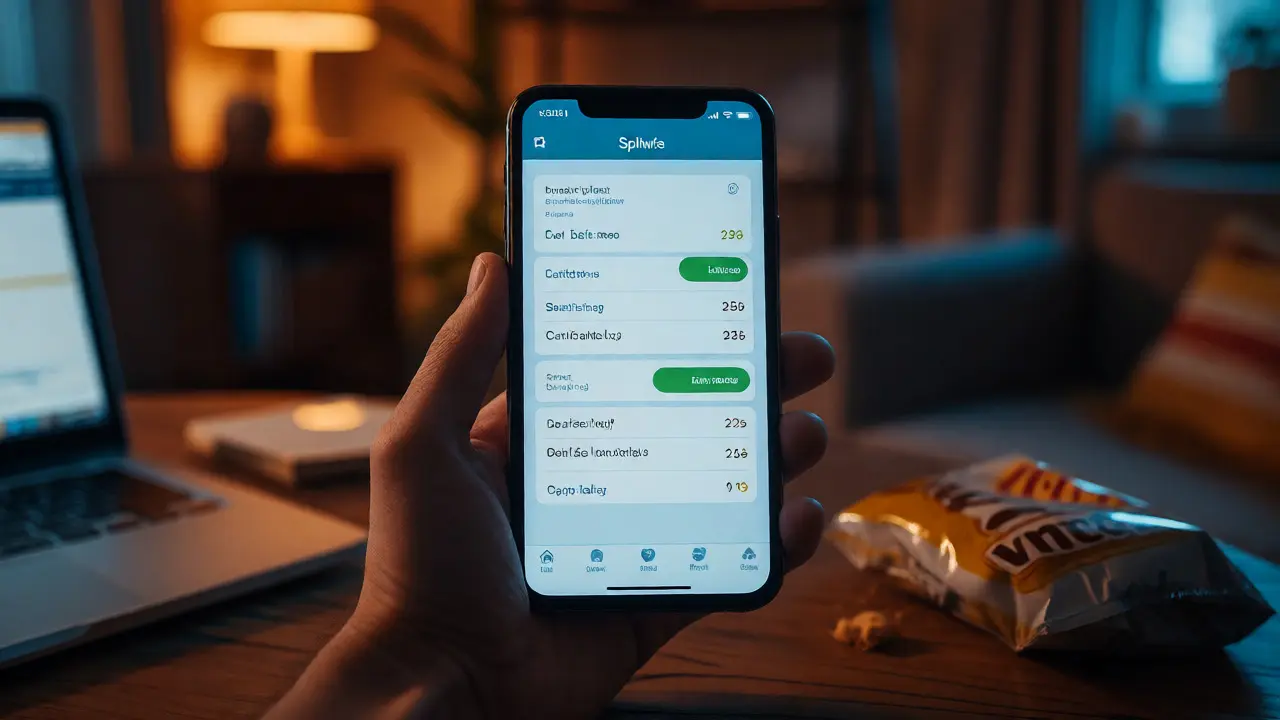
Splitwise is the industry standard for students. You add everyone to a group, log expenses, and it calculates who owes whom. It handles currency conversion if you have international flatmates. The key feature is "Settle Up," which minimizes transactions. Instead of five people paying five people, it figures out the fewest transfers needed.
Monzo or Starling Banks also have built-in split features. Since these accounts are linked to your debit card, you can instantly send money via bank transfer. This reduces friction. No more waiting for Venmo requests to be accepted.
If you prefer old-school methods, set up a Joint Bank Account. Everyone sets up a standing order of £X per month into this account. The account holder pays all bills directly. This removes the "who hasn't paid yet" stress. Just ensure everyone agrees on the buffer amount (add 10% extra for price hikes).
Common Pitfalls and How to Avoid Them
Pitfall #1: Ignoring the Deposit Deduction. At the end of the year, unpaid bills come out of the deposit. If one person didn’t pay their share of the final winter bill, the whole group loses money. Agree beforehand: any outstanding balance must be cleared 14 days before move-out.
Pitfall #2: The "Guest Factor." If your flatmate’s parents visit for a week, do they contribute to heating? Technically, guests increase consumption. Have a polite conversation: "Hey, since your folks stayed for 10 days, maybe chip in an extra £5 for hot water?" Keep it casual, not accusatory.
Pitfall #3: Changing Suppliers Mid-Term. Switching energy suppliers can save money, but it involves paperwork. If one person wants to switch to a cheaper tariff but others don’t care, the switcher does the work. Reward them! Let them pick the supplier, but require them to provide the new account details within 48 hours of confirmation.
A Sample Monthly Workflow
To make this stick, follow this routine:
- Week 1: Meter reader takes photos of gas/electric/water meters. Uploads to shared folder.
- Week 2: Bills arrive. Primary payer logs amounts in Splitwise or sends receipt to group chat.
- Week 3: Everyone settles up. Transfer funds to the primary payer or joint account.
- Week 4: Review upcoming known costs (e.g., TV license renewal, annual boiler service). Adjust next month's contribution if needed.
By systematizing this, you remove emotion from the equation. It becomes admin, not drama.
Do I have to pay Council Tax if I am a full-time student?
No, if you are a full-time student (studying at least 21 hours per week during term time), you are exempt from Council Tax. You must apply for the exemption through your local council using a certificate from your university. If everyone in the house is a full-time student, the entire property is exempt.
What happens if a flatmate refuses to pay their share of the bills?
First, communicate clearly and document everything. If they still refuse, check your tenancy agreement. Typically, the landlord is responsible for ensuring the property meets standards, but bill payment is a tenant obligation. You may need to cover their share temporarily to avoid disconnection, then deduct it from their deposit at the end of the tenancy. Mediation services offered by your university accommodation office can also help resolve disputes.
Is it better to have a joint account or use apps like Splitwise?
A joint account is simpler for managing large, recurring bills like rent and utilities, as it ensures funds are available when direct debits hit. Apps like Splitwise are better for tracking irregular expenses (like cleaning supplies or food) and calculating who owes whom. Many students use both: a joint account for major bills and Splitwise for smaller, shared costs.
How do we split bills if one person moves out mid-term?
Calculate the pro-rata cost for the period they lived there. For example, if they left after 3 months of a 12-month contract, they should pay 25% of the annual estimated bills for that period. Ensure the remaining tenants agree on how to cover the gap until a replacement is found. Often, the departing tenant’s deposit covers any shortfall.
Who is responsible for paying the TV Licence?
If the licence is registered to the address, it covers anyone watching live TV or BBC iPlayer in the house. It is usually considered a shared expense. However, if only one person watches TV, they could argue they should pay it alone. Most houses split it equally for simplicity, especially since the fine for non-payment applies to the household.