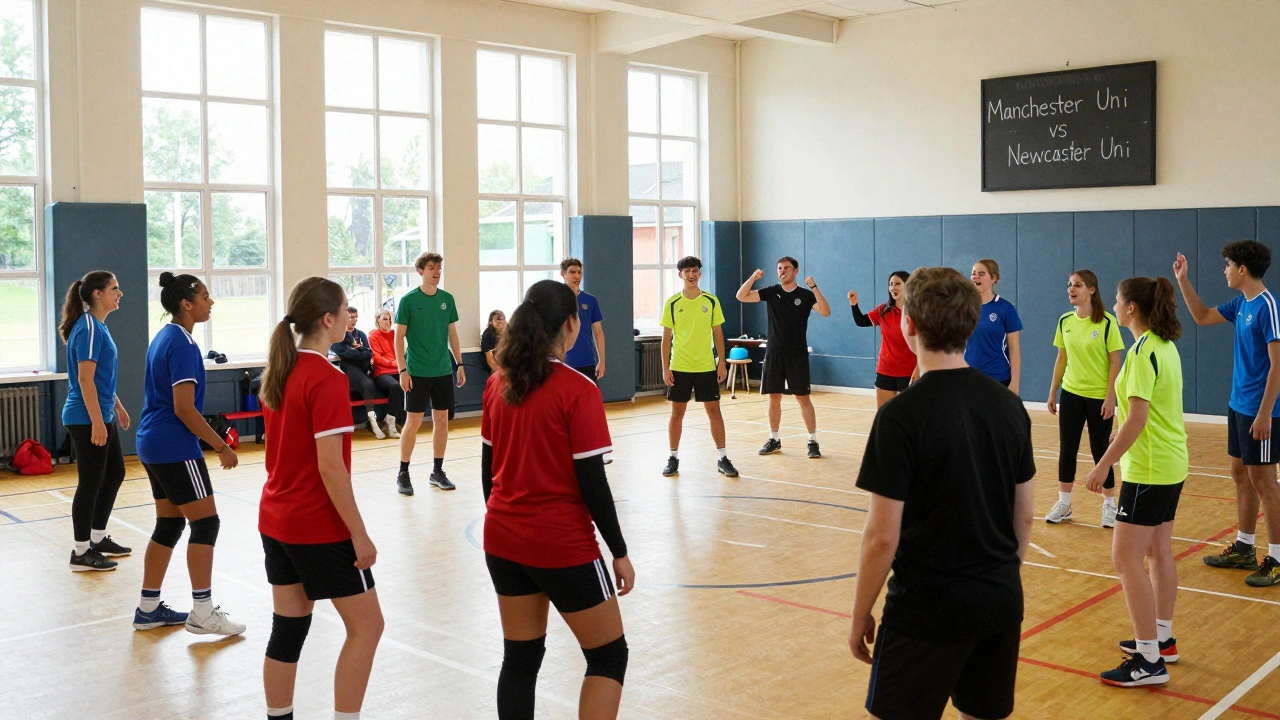
Running a competition or tournament for a student society in the UK isn’t just about organizing games. It’s about building community, keeping members engaged, and giving people a reason to show up week after week. Whether you’re managing a football team, a League of Legends squad, or a mixed martial arts club, the structure you put in place makes all the difference.
Start with a Clear Purpose
Why are you running this tournament? Is it to recruit new members? Keep active players coming back? Raise money for equipment? Or just give people something fun to do after lectures? Your goal shapes everything else.
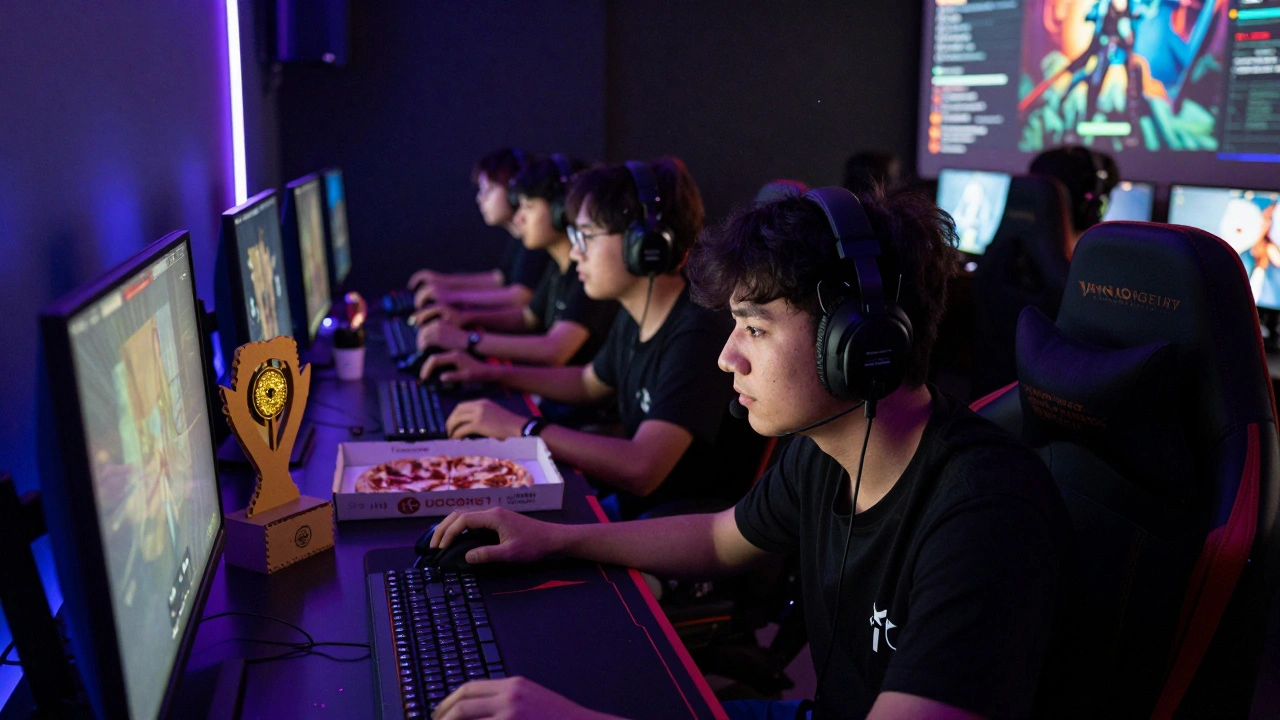
At the University of Manchester, the eSports society ran a fortnightly Valorant tournament just to fill empty seats after the main team left for nationals. Within three months, membership grew by 40%. Why? Because it wasn’t about winning-it was about showing up, chatting, and having a shared experience.
Don’t assume everyone wants to compete at a high level. Most students just want to play, laugh, and feel part of something. Keep the bar low for entry. No experience? No problem. Bring a friend? Even better.
Choose the Right Format
Not every sport or game works the same way. A 5-a-side football tournament needs a different setup than a Rocket League bracket.
For team sports like football, rugby, or netball, a round-robin group stage followed by knockout rounds works best. It gives every team at least three games, reduces the chance of one bad match eliminating you, and spreads out the scheduling over weeks.
For eSports, single-elimination brackets are faster and more exciting for spectators. But they can be harsh-if your team loses early, you’re done. To fix that, add a losers’ bracket or a consolation tournament. At Newcastle University, the CS2 society added a "Last Chance Qualifier" after the main bracket ended. It drew in 30 extra players who thought they were out.
For individual sports like chess, table tennis, or climbing, a Swiss system is ideal. Players face opponents with similar records each round. No one gets eliminated early, and the winner is the one with the most points after five or six rounds.
Keep It Simple Logistically
Overcomplicating logistics kills momentum. You don’t need fancy software, paid referees, or a full-time committee.
Use free tools:
- Google Sheets for match schedules and standings
- Discord for announcements, match reminders, and chat
- Sign-up Genius for volunteer roles (referees, scorekeepers)
- WhatsApp group for last-minute changes
At the University of Bristol, the badminton society ran a 6-week league with 12 teams. They used one shared Google Sheet. Each team captain updated their own results after matches. No one had to email the committee. No one got confused. Attendance stayed above 80% every week.
Set a fixed time and place. Every Tuesday at 6 PM in the student union gym. Every Friday at 8 PM on Discord. Consistency matters more than perfection.
Manage Participation and Inclusivity
One of the biggest mistakes societies make is assuming everyone plays the same way. Some people are competitive. Others just want to try it out. Some have disabilities, others have part-time jobs and can’t commit to every session.
Offer multiple divisions:
- Competitive (ranked, higher skill)
- Recreational (no rankings, just fun)
- Beginner (first-time players only)
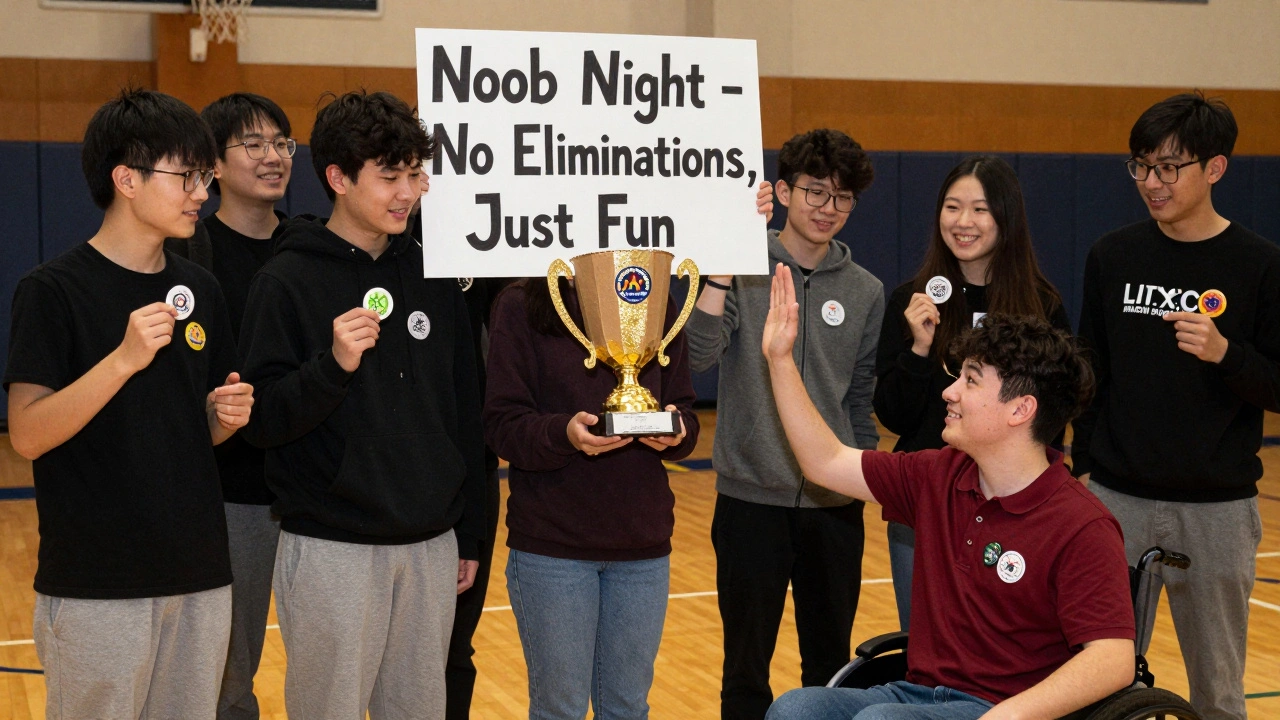
At the University of Edinburgh, the eSports society split their Dota 2 tournament into two tracks: "Pro League" and "Noob Night." Noob Night had no eliminations, no prizes, just voice chat and memes. It became the most popular session-because it felt safe.
Also, make sure your rules are clear about accessibility. Can someone join if they can’t stand for long? Can a wheelchair user play table tennis? Can someone with dyslexia use text-to-speech in a trivia-based eSports event? These aren’t afterthoughts-they’re core to running a fair society.
Handle Prizes and Motivation
You don’t need cash prizes. In fact, money often creates more problems than it solves-fights over splits, claims of unfairness, or people showing up just for the reward.
Small, meaningful rewards work better:
- Free pizza for the winning team
- Custom pins or stickers with the tournament logo
- A trophy made from a repurposed cardboard box and glitter
- First pick of next month’s game selection
- A shoutout on the society’s Instagram
At the University of Leeds, the climbing society gave the winner of their bouldering tournament a free month of gear rental. Not cash. Not a medal. Just access. And guess what? The winner brought three friends the next month.
Also, recognize effort, not just victory. Give out "Most Improved," "Best Sportsmanship," or "Most Likely to Try Something New" awards. These keep people coming back even if they don’t win.
Get Support from Your University
Student societies don’t have to do this alone. Most UK universities have a Students’ Union that offers funding, equipment, and space.
Reach out early. Ask for:
- Free room bookings for tournaments
- Access to sports equipment (nets, balls, VR headsets)
- Small grants (often £100-£500) for prizes or snacks
- Marketing help-posters, social media features
At the University of Nottingham, the eSports society got £300 from the Students’ Union to buy a second set of gaming mice and keyboards. That allowed two people to share one PC, doubling their tournament capacity.
Don’t be shy. Most unions want your society to succeed. They just don’t know you’re asking.
Build a Feedback Loop
After every tournament, ask two questions:
- What was the best part?
- What would make it better next time?
Use a simple Google Form. Keep it under five questions. Don’t overthink it. Then, share the results publicly.
"Thanks to your feedback, we’re moving the football tournament to Friday nights so more people can make it. We’re also adding a beginner bracket. You asked-we listened."
That kind of transparency builds trust. People feel heard. And when they feel heard, they stick around.
Keep It Going
The hardest part isn’t running the first tournament. It’s running the second, third, and tenth.
Rotate leadership. Don’t let one person burn out. Train two or three others to run the next event. Make a simple checklist: schedule, venue, equipment, announcements, feedback form.
Document everything. Save your Google Sheets, Discord logs, and photos. Next year’s committee will thank you.
And remember: the goal isn’t to run the biggest tournament. It’s to create a space where people feel welcome, excited, and connected. That’s what keeps societies alive long after the students graduate.
Do I need a budget to run a student society tournament?
No, you don’t need a big budget. Many successful tournaments cost nothing. Use free tools like Google Sheets and Discord. Ask your Students’ Union for small grants or equipment loans. Prizes can be as simple as pizza, stickers, or extra game time. Focus on experience, not expense.
How do I get more people to join my tournament?
Promote it where students already are: WhatsApp groups, university Facebook pages, noticeboards in halls, and your society’s Instagram. Offer a "bring a friend" rule-two people sign up together, they both get a free snack. Make the first event low-pressure. No rankings. No tryouts. Just show up and play.
What if no one shows up to the first tournament?
That happens. Don’t cancel it. Show up anyway. Play a match by yourself. Invite three people you know. Film it, post it, and say, "We’re here if you are." Often, people are waiting for someone else to show up first. Your presence signals it’s safe to join.
Can I run tournaments for both sports and eSports in the same society?
Yes, and many do. The key is separating the events clearly. Have one night for football, another for Valorant. Use different teams or captains. Don’t mix the cultures. But you can share resources-like using the same Discord server, or promoting both through the same social media. It broadens your membership and keeps energy high.
How often should we run tournaments?
Once every 2-4 weeks is ideal. Too often, and people burn out. Too rarely, and interest fades. Monthly events give people time to prepare, recruit friends, and look forward to it. Use term breaks to pause-don’t try to run tournaments during exam season.