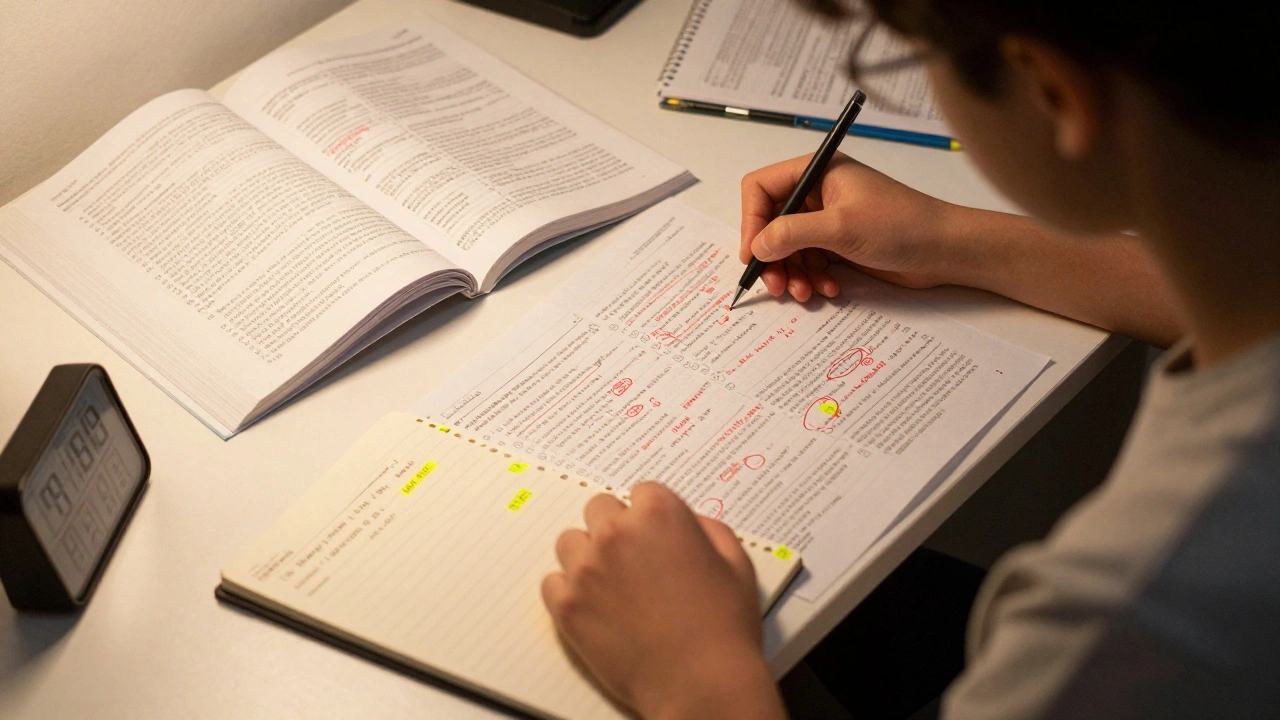
You bombed your mock exam. The score was lower than you expected. Maybe you didn’t even pass. Now you’re staring at the finals in a few weeks, wondering if it’s too late to turn things around. It’s not. Bad mock exams don’t define your final outcome-they just show you where to focus.
Stop beating yourself up
The first thing you need to do is stop punishing yourself. Guilt won’t help you remember formulas. Shame won’t make you understand the material better. You’re not behind-you’re informed. A bad mock exam is feedback, not failure. It’s telling you exactly what you need to fix before the real thing.Think about it: if your car’s check-engine light came on, would you ignore it? Or would you take it to the mechanic? Your mock exam is the check-engine light for your studying. Now you know where the problem is. That’s an advantage.
Break down what went wrong
Don’t just look at the score. Look at the details. Go through every question you got wrong. Categorize them:- Did you misread the question?
- Did you forget a key concept?
- Did you run out of time?
- Did you panic and blank out?
- Were you just guessing because you didn’t study that topic?
Write this down. Be specific. Instead of saying “I didn’t know the material,” say “I couldn’t solve three quadratic equations because I mixed up the signs in the formula.” That level of detail is what turns frustration into action.
Most students make the mistake of blaming “not studying enough.” That’s too vague. You need to know which parts you didn’t study enough-and why.
Rebuild your study plan around weak spots
Your old study plan probably treated everything as equal. Now you know that’s not true. Focus 70% of your time on the 30% of material that tripped you up. This is called the 80/20 rule in learning: a small portion of content causes most of the problems.Here’s how to do it:
- Make a list of your top 5 weak topics from the mock exam.
- Find your textbook chapters, lecture notes, or online videos that cover each one.
- Set a timer for 45 minutes per topic. No distractions. Just you and the material.
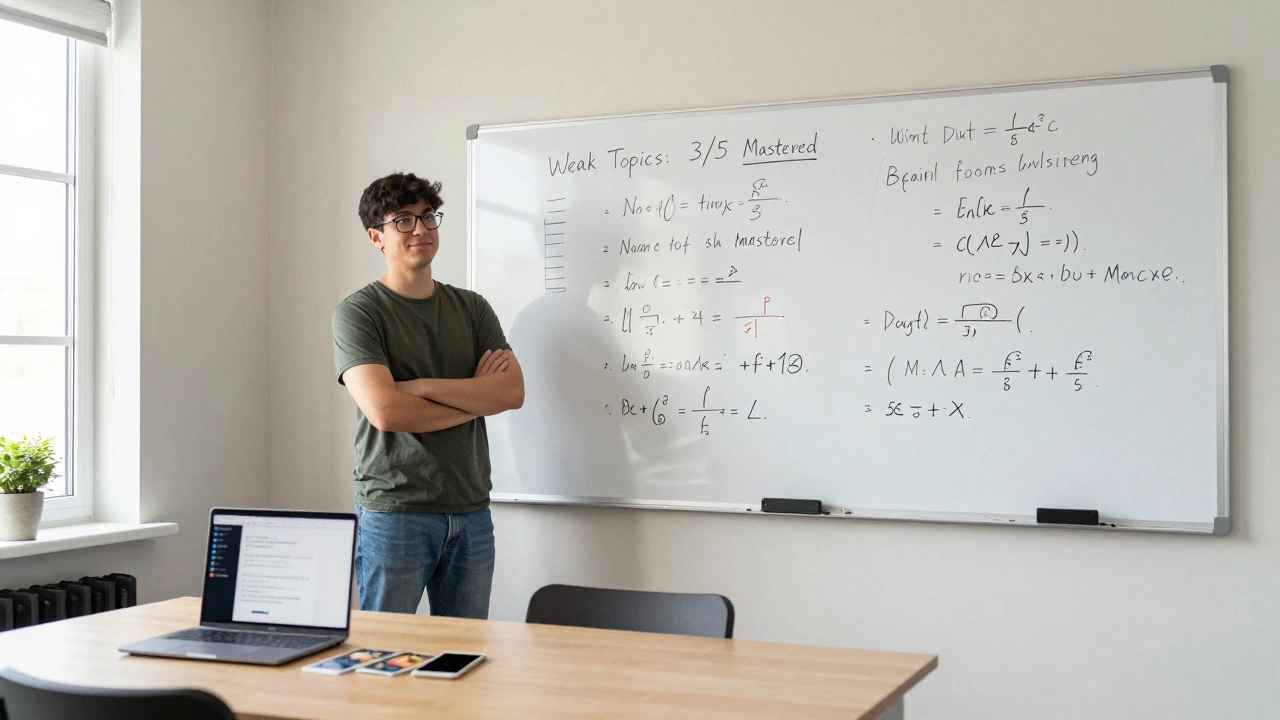
- After each session, write out the solution to one problem from scratch without looking at notes.
Don’t re-read. Don’t highlight. Do. Practice. Testing yourself is the only way your brain learns to recall under pressure.
Practice like the real thing
If you didn’t finish the mock exam on time, you need to train for speed. If you kept making calculation errors, you need to drill basics. If you froze when you saw a hard question, you need to build confidence through repetition.Take past final exams or create your own practice tests. Time yourself. No phones. No breaks. Sit at a desk. Pretend it’s the real thing. Do this at least twice a week. The goal isn’t to get perfect scores-it’s to get used to the pressure.
After each practice test, review every mistake again. Why did you get it wrong? Was it a trick? A rushed step? A formula you forgot? Write the fix in your own words next to the problem. This turns errors into memory anchors.
Change how you study-not just how much
Studying longer doesn’t help if you’re studying wrong. If you’ve been reading notes over and over, you’re fooling yourself. That’s passive learning. It feels productive, but your brain isn’t storing it.Switch to active recall:
- Close your book and ask yourself: “What are the three main points of this section?”
- Draw diagrams from memory.
- Teach the concept out loud to an empty room-or to a pet.
- Use flashcards with spaced repetition (apps like Anki work well).
Spaced repetition is key. Don’t cram. Study the same topic for 30 minutes today, then again in two days, then four days after that. Each time you recall it, the memory gets stronger.
Get help early
Don’t wait until you’re stuck. If a topic still doesn’t make sense after two tries, ask for help. Talk to your teacher during office hours. Join a study group. Watch a YouTube tutorial from a different teacher. Sometimes, one different explanation is all you need.Some students think asking for help is a sign of weakness. It’s not. It’s strategy. The smartest students know when to ask. They don’t waste hours spinning their wheels.
Manage stress, not just study time
Your brain can’t learn well when it’s flooded with stress. If you’re anxious, sleep-deprived, or constantly checking your phone, your focus will be shot.Here’s what actually helps:
- Sleep 7-8 hours a night. No exceptions. Your brain consolidates memory while you sleep.
- Move your body for 20 minutes a day. Walk, stretch, dance-anything that gets your blood flowing.
- Reduce screen time before bed. Blue light messes with your sleep cycle.
- Write down your worries for five minutes before studying. It clears mental clutter.
Stress doesn’t make you study harder. It makes you study slower. Taking care of your body isn’t a distraction-it’s part of your study plan.
Track progress, not perfection
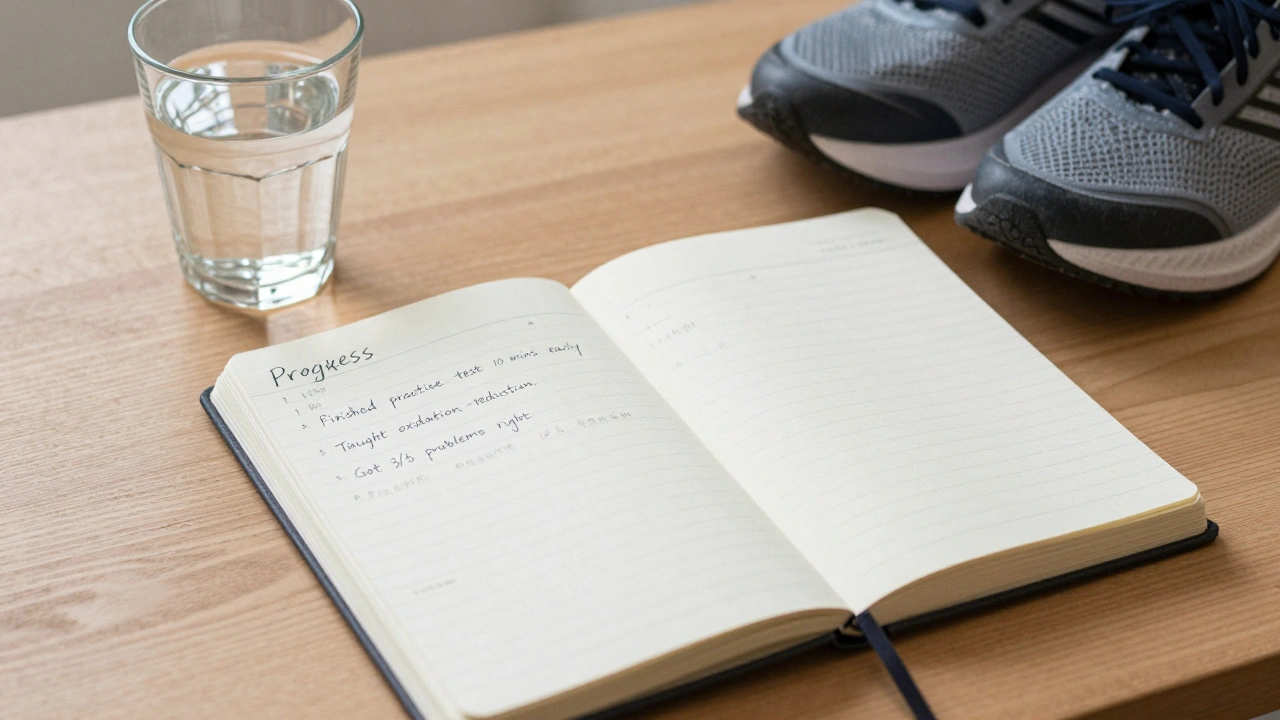
Every week, take a mini quiz on your weak topics. Don’t wait until finals to test yourself. Small wins build confidence. Even if you only improve by 10% each week, that’s a 60% gain in six weeks.Keep a simple log:
- Monday: Reviewed quadratic equations → got 3/5 problems right
- Wednesday: Did practice test → finished 10 minutes early
- Friday: Taught oxidation-reduction to a friend → they asked good questions
Seeing progress-even small-keeps you going. You’re not starting over. You’re upgrading.
You’ve got this
Mock exams are designed to be hard. They’re not meant to predict your final grade-they’re meant to show you where you need to grow. You’re not broken. You’re in the middle of a process. Thousands of students have been here. They didn’t give up. They adjusted. They studied smarter. And they passed.Finals aren’t about being perfect. They’re about being prepared. And right now, you’re doing exactly what you need to do: facing the problem, breaking it down, and fixing it-one step at a time.