
If you missed a deadline at a UK university, you’re not alone. Thousands of students face this every term. The panic hits fast-what if I fail? Will I get expelled? Is this the end of my degree? The truth is, missing a deadline is stressful, but it’s rarely the end of the road. Most universities have clear processes to help you recover, if you act quickly and the right way.
Understand Your University’s Late Submission Policy
Every UK university has a formal policy on late submissions. It’s not a secret. You can find it in your student handbook, on the university website under "Academic Regulations," or in your module guide. Don’t guess. Don’t hope it’ll be overlooked. Read it. The rules vary by institution, but most follow the same structure.Many universities allow late submissions up to 24 or 48 hours after the deadline with a penalty. For example, at University of Manchester, work submitted up to 24 hours late loses 10% of the mark. After that, it’s often capped at 40%-the bare pass mark. Some departments, especially in medicine or law, have zero tolerance. Others, like creative arts, may be more flexible if you provide evidence.
What matters most is whether your late submission is accepted at all. If you miss the grace period, you might still be eligible for a mitigating circumstances claim. This isn’t an excuse. It’s a formal process that lets you explain why you missed the deadline with proof.
Act Fast-Within 24 Hours
Time is your biggest ally. The moment you realize you’ve missed the deadline, stop scrolling, stop blaming yourself, and start acting. The next 24 hours are critical.First, email your module tutor or course administrator. Be direct: "I missed the deadline for [assignment name] on [date]. I’m submitting this email to request guidance on next steps." Don’t write a novel. Don’t over-apologize. Just state the facts and ask what to do.
Then, check if your department has an online portal for submitting mitigating circumstances forms. Most do. These forms usually ask for:
- What happened
- When it happened
- How it affected your work
- Proof (medical note, death certificate, counselling letter, etc.)
You don’t need a hospital admission to qualify. A doctor’s note for severe anxiety, a letter from your student wellbeing service, or even a statement from your GP confirming you were unwell for three days can be enough. Universities hear these stories every week. They’re not trying to punish you-they’re trying to support you.
Don’t Submit the Same Work Late
A common mistake? You panic, so you rush the same assignment and resubmit it. That rarely works. If your original work was weak, submitting it late won’t fix the grade. If it was strong, you still face penalties.Instead, use this as a chance to reset. If you’re allowed to resubmit under mitigating circumstances, ask if you can submit a new version. Many departments allow one resubmission after a successful claim. This isn’t a second chance to redo your whole degree-it’s a chance to show you’ve learned from the mistake.
For example, at King’s College London, students who get approved for mitigating circumstances can often resubmit the same assignment with a new deadline, up to 14 days later. The mark is capped at 40%, but you pass the module. That’s better than failing.

Use Academic Support Services
UK universities have teams built just for this. Student wellbeing, academic skills centres, disability services, and counselling units are there to help-not to judge.Book a meeting with your academic advisor. They’ve seen this before. They know which forms to fill out, who to contact, and how to get extensions approved. Don’t wait until you’re overwhelmed. Go in with a list of questions:
- Can I resubmit this assignment?
- Is there a deadline for submitting mitigating circumstances?
- Will this affect my funding or visa status?
Many universities also offer free workshops on time management, essay planning, and stress reduction. Even if you’ve missed the deadline, you can still attend them. These aren’t punishments-they’re tools.
Manage the Emotional Fallout
Missing a deadline isn’t just a logistical problem. It’s emotional. Shame, guilt, fear-these feelings are normal. But they’re not helpful. They make you avoid emails, skip appointments, and spiral.Here’s what works: write down three things you can control right now. For example:
- Email my tutor today
- Book a wellbeing appointment
- Set a timer for 20 minutes to draft my mitigating circumstances statement
Focus on those. Not on what you lost. Not on what others think. Not on the grade you might get. Just on the next small step.
Students who recover successfully don’t magically become perfect planners. They just stop hiding. They reach out. They ask for help. And they keep moving.
What Happens If You Don’t Act?
Ignoring it won’t make it go away. If you don’t submit anything or file a claim, you’ll get a zero. That could mean:- Failing the module
- Having to retake it next year
- Loss of funding or scholarship
- Impact on your visa (for international students)
At some universities, failing two modules in a year can trigger an academic review. That doesn’t mean expulsion-it means a meeting with a panel who will ask: "What happened? What are you doing differently?"
They’re not there to fail you. They’re there to see if you’re still capable of succeeding. And if you’ve taken steps to fix the problem, they’ll usually give you another shot.
How to Prevent This From Happening Again
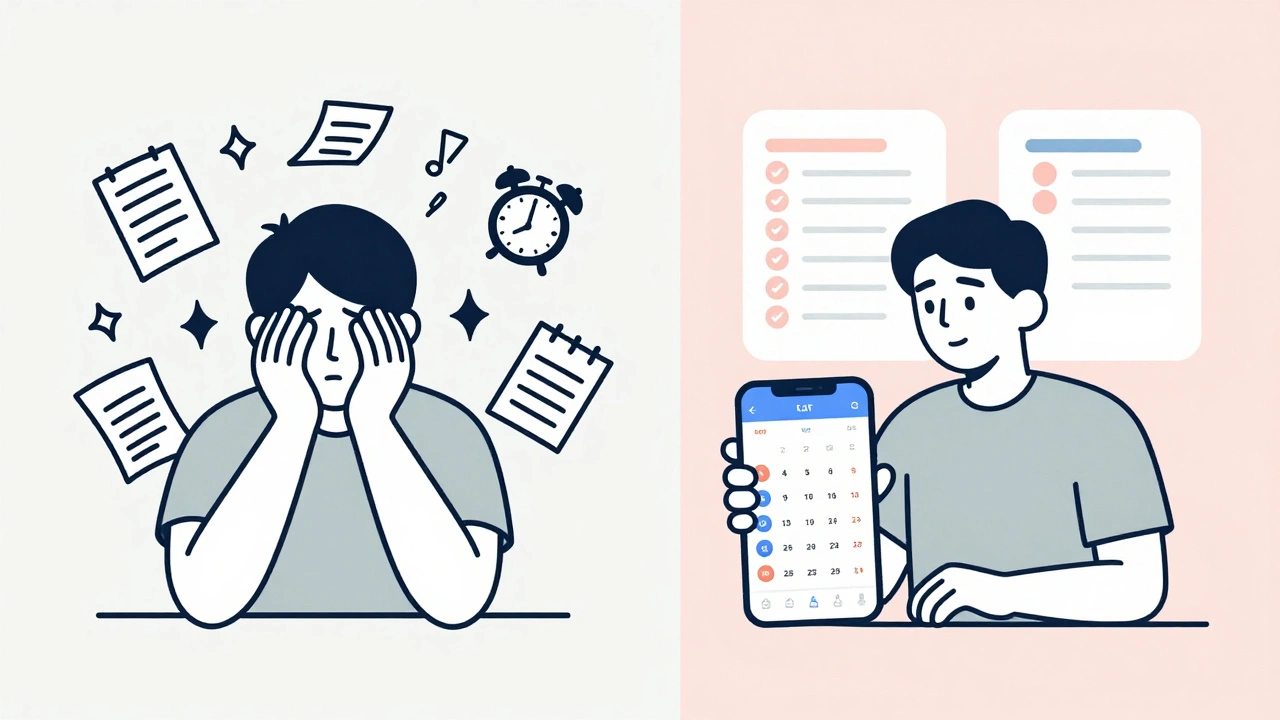
Once you’ve handled the immediate crisis, think about how to avoid this next time. Here’s what works for most students:- Use a digital calendar with alerts for every deadline-set them 3 days in advance
- Break big assignments into weekly tasks: research Monday, draft Wednesday, edit Friday
- Use the 2-minute rule: if a task takes less than two minutes, do it now
- Don’t wait for "motivation"-start when you feel 10% ready
- Find a study buddy to check in with weekly
Many students who miss deadlines aren’t lazy. They’re overwhelmed. They’re trying to do too much at once. The solution isn’t working harder. It’s working smarter.
At the University of Edinburgh, students who used the "Deadline Tracker" tool-built into their student portal-were 40% less likely to miss a deadline over two semesters. It’s free. It’s simple. And it’s there for you.
Final Thought: This Isn’t Your Whole Story
One missed deadline doesn’t define your degree. It doesn’t define your intelligence. It doesn’t define your future.Some of the most successful graduates I’ve spoken to missed deadlines. One student submitted her final dissertation three weeks late after a mental health crisis. She got a 2:1. She got into a top master’s program. She now works at a global NGO.
What made the difference? She didn’t hide. She asked for help. She used the systems in place. And she kept going.
You can too.
Can I still submit my work after the deadline without any penalty?
Usually not. Most UK universities allow a short grace period-often 24 or 48 hours-with a penalty, like losing 10% of your mark. After that, you typically need to submit a mitigating circumstances claim to get any consideration. Without a valid claim, late work is often not marked at all.
What counts as valid mitigating circumstances?
Valid reasons include illness (physical or mental), bereavement, family emergencies, or serious personal issues. You need evidence: a doctor’s note, counselling letter, police report, or official communication. Stress alone isn’t enough-but documented stress affecting your ability to work, backed by a professional, often is.
Will missing a deadline affect my visa as an international student?
Possibly, if you fail a module and don’t meet academic progress requirements. UK visa rules require international students to make satisfactory progress. Missing one deadline isn’t automatically a problem, but failing a module without mitigating circumstances could trigger a review. Always report issues to your university’s international student office-they can help you stay compliant.
Can I appeal if my mitigating circumstances claim is denied?
Yes. Most universities have an appeals process. You’ll need to show new evidence or prove the decision was made incorrectly. Don’t appeal just because you’re upset-appeals require clear grounds. Talk to your student union’s advice service first. They help students navigate this process for free.
How long do I have to submit a mitigating circumstances claim?
You usually have 10 working days after the deadline to submit a claim. Some universities allow up to 28 days if you can prove you were unable to act sooner. Always check your university’s policy. Waiting too long reduces your chances of approval.
Next Steps: What to Do Right Now
If you’ve missed a deadline today, here’s your action plan:- Open your university’s student portal and find the "Mitigating Circumstances" section
- Email your tutor with a short, clear message asking what to do next
- Gather any proof you have-medical note, email from a counsellor, even a text message from a family member confirming an emergency
- Book a 15-minute slot with your academic advisor or student wellbeing service
- Set a reminder for tomorrow to follow up on your email
You don’t need to fix everything today. You just need to start. One email. One form. One step. That’s how recovery begins.