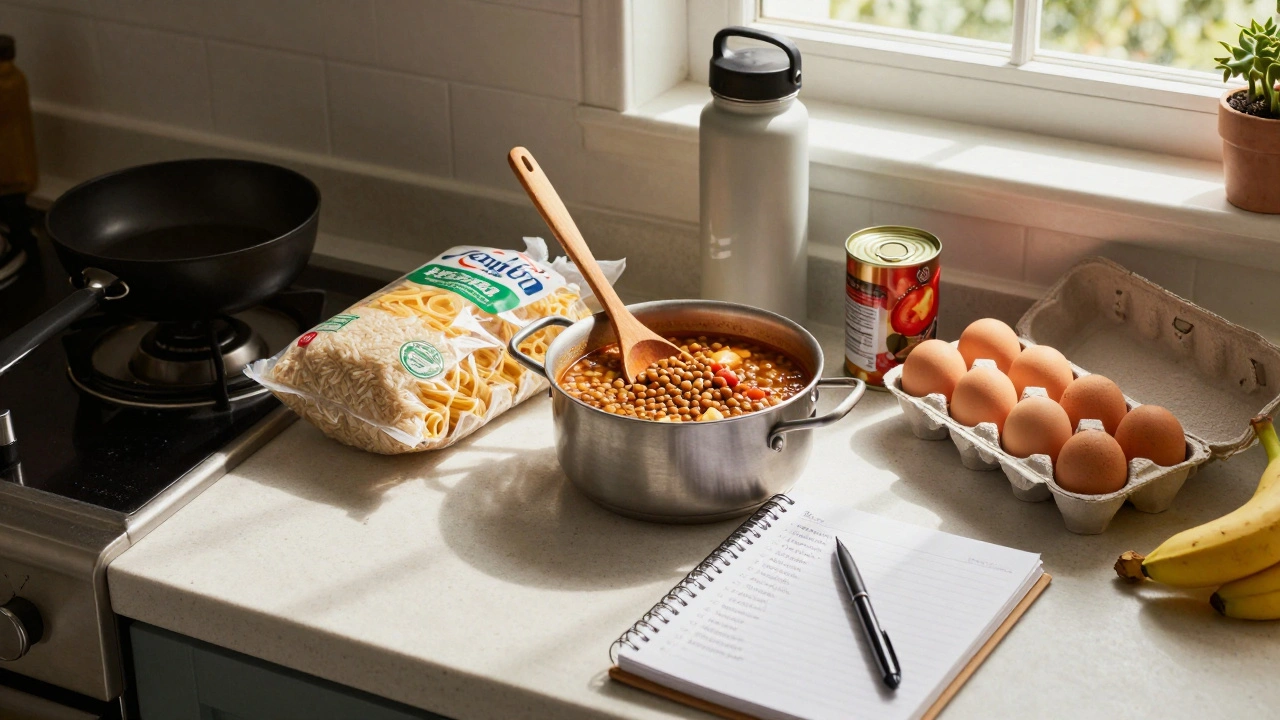
Feeding yourself for a week on £20 might sound impossible-if you’ve ever stared at a supermarket shelf wondering how to stretch a single bag of rice across seven dinners, you’re not alone. Many UK students are juggling rent, textbooks, and transport costs, leaving little room for food. But with a smart plan, you don’t need to survive on instant noodles every night. You can eat well, save money, and still have energy for lectures and late-night study sessions.
Start with what you already have
Before you even step into a store, empty your cupboard, fridge, and freezer. How many tins of beans do you have? Is there half a bag of pasta gathering dust? What about that jar of tomato sauce you bought last term and forgot about? Most students waste food because they don’t track what they own. A quick inventory can reveal 3-4 meals you already paid for but haven’t used. That’s free meals right there.Use a simple notebook or a free app like Too Good To Go is a UK-based app that lets students buy surplus food from local shops and cafes at up to 80% off to log what you’ve got. Don’t buy more until you’ve used what’s already there. This alone can cut your weekly food spend by £5-£10.
Build your plan around cheap, filling staples
The core of any budget meal plan is a few affordable, long-lasting ingredients. These aren’t fancy-they’re the backbone of student kitchens across the UK:- Rice - 1kg costs around £1.20 and makes 5-6 meals
- Pasta - £0.80 for 500g, lasts months, pairs with almost anything
- Dried beans and lentils - £1.10 for a 400g tin, high in protein, cooks fast
- Oats - £1.50 for 1kg, perfect for breakfast or even savoury porridge
- Carrots, onions, potatoes - £1-£2 for a bag that lasts a week
- Eggs - £2 for a dozen, versatile, filling, and protein-packed
- Tinned tomatoes - £0.70 per tin, base for sauces, stews, soups
- Spices - A £1 packet of paprika, cumin, or chilli flakes can transform bland food
These items form the base of 90% of your meals. Avoid pre-packaged meals, ready meals, or branded snacks-they cost 3-5x more per gram than raw ingredients. A £3 ready meal? You could make two full portions of pasta with beans and tomato sauce for £1.50.
Plan meals around one-pot cooking
One-pot meals save time, energy, and money. Fewer dishes to wash, fewer appliances to use, fewer ingredients to buy. Here’s a sample weekly plan built around just three core recipes:- Monday: Lentil and vegetable stew - Use lentils, carrots, onions, tinned tomatoes, and a stock cube. Cook in one pot. Serve with rice. Makes 4 portions.
- Wednesday: Bean and cheese pasta - Cook pasta, mix with canned kidney beans, grated cheese, garlic powder, and a splash of olive oil. Add spinach if you’ve got it.
- Saturday: Potato and egg fry-up - Boil potatoes, slice, and fry with onions and eggs. Add pepper and paprika. Eat with a side of toast.
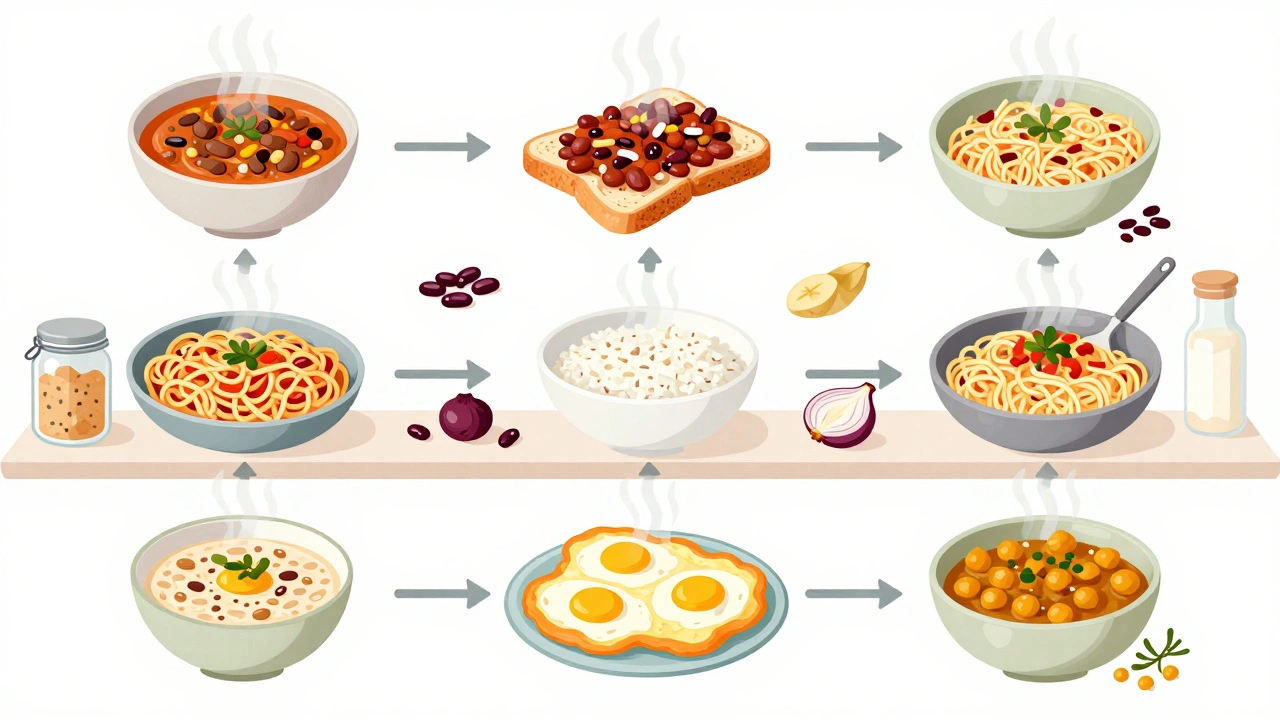
Fill the rest of the week with leftovers. Monday’s stew becomes Tuesday’s pasta sauce. Wednesday’s extra pasta gets reheated Thursday. Saturday’s fry-up? Add leftover beans and call it a burrito bowl. Leftovers aren’t a last resort-they’re part of the plan.
Shop smart: discount stores and seasonal buys
Don’t assume Aldi and Lidl are just for “cheap food.” They’re where most UK students shop. Their own-brand products are often identical to branded ones, but 40-60% cheaper. A £2.50 jar of pesto at Sainsbury’s? £0.99 at Aldi. Same brand, same factory, different label.Shop for seasonal produce. In winter, cabbage, Brussels sprouts, and apples are cheap. In summer, tomatoes, peppers, and berries drop in price. Avoid out-of-season fruit-it’s imported and overpriced. Buy frozen vegetables if fresh ones are too expensive. Frozen peas, broccoli, and sweetcorn are just as nutritious and last for months.
Also, avoid shopping when you’re hungry. You’ll buy snacks you don’t need. Stick to your list. And if you’re on campus, check if your university runs a food bank or student discount scheme. Many offer free or discounted groceries for those in need.
Batch cook and freeze
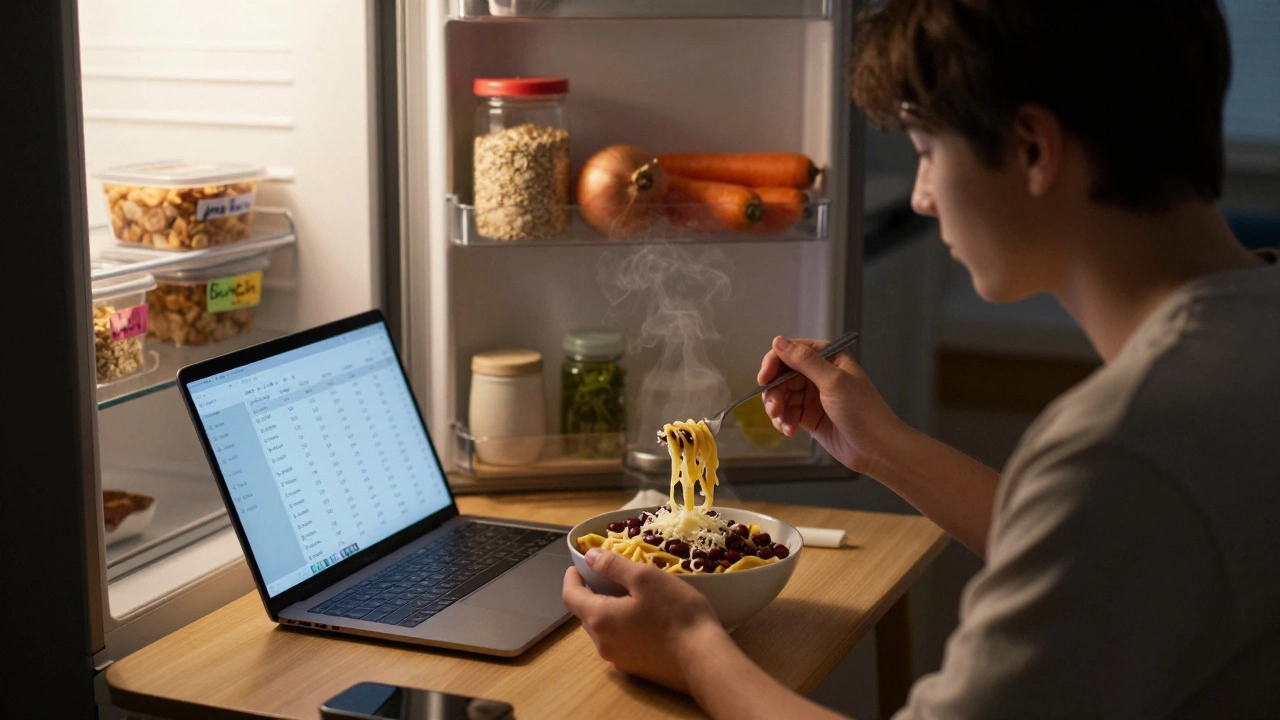
Cooking once and eating three times isn’t just a hack-it’s a survival skill. Spend one Sunday afternoon making three big pots: lentil stew, chickpea curry, and vegetable risotto. Portion them into freezer-safe containers. When you’re tired after a 9-hour lecture, you don’t need to cook. Just reheat.Freezing works for more than meals. Cook a whole pack of chicken breasts, slice them, and freeze in portions. Boil a dozen eggs and keep them peeled in the fridge for snacks. Make a big batch of oatmeal and store it in the fridge-you can microwave it with milk and banana in the morning.
Batch cooking cuts daily decision fatigue. You won’t be tempted to order a £12 Uber Eats meal when you’ve got something ready in the freezer.
Track your spending and adjust
Write down every food purchase for one week. Even the £1 bag of crisps or the £2 coffee. You’ll be shocked. Most students spend £15-£25 a week on impulse buys. Once you see the numbers, you’ll know where to cut.Use a free app like Yolt is a UK budgeting app that links to your bank account and shows spending by category, including food or even a simple spreadsheet. Set a weekly food budget-say, £20-and stick to it. If you spend £18 on food and have £2 left, celebrate. That’s £8 saved compared to last week.
What to avoid
These are the biggest money drains for student eaters:- Takeaway coffee - £3.50 a day = £24.50 a week. Brew your own. A £4 bag of ground coffee makes 40 cups.
- Pre-cut fruit and veg - A £2 bag of chopped carrots? Buy a whole bag for £1.20 and chop it yourself.
- Energy drinks and bottled water - £1.50 a pop. Buy a reusable bottle and tap water. For energy, eat bananas or eggs.
- Branded snacks - Walk down the snack aisle and you’ll see £2 packets of crisps. Buy a £1.20 bag of plain crisps and add salt.
Small habits add up. Skip one takeaway a week, and you save £10. Skip two coffees, and you save £7. That’s £17 you can use for a decent meal.
Real student example: £20 week challenge
Here’s what a real student in Manchester ate last week on £20:- Monday - Lentil stew with rice (£1.80)
- Tuesday - Leftover stew with toast (£0.30)
- Wednesday - Pasta with tinned tomatoes and beans (£1.10)
- Thursday - Leftover pasta with grated cheese (£0.20)
- Friday - Oats with banana and cinnamon (£0.70)
- Saturday - Potato and egg fry-up with toast (£1.40)
- Sunday - Chickpea curry with rice (£2.10)
- Snacks - Carrots, apples, boiled eggs (£4.50)
- Drinks - Tap water, homemade tea (£0.50)
Total: £12.60. Leftover: £7.40. That’s not just saving money-it’s building a habit that lasts beyond university.
It’s not about deprivation
Eating on a budget doesn’t mean eating boring food. It means being smart. A bowl of lentil stew with paprika and lemon juice tastes better than a £12 frozen pizza. A plate of fried eggs with onions and toast is comfort food that doesn’t cost a fortune.Students who plan ahead don’t just save money-they feel more in control. They’re less stressed about money. They sleep better. They have more energy. And they don’t have to skip meals because they ran out of cash.
You don’t need to be a chef. You don’t need fancy tools. You just need a plan, a little patience, and the willingness to cook once and eat twice.
Can I really eat well on £20 a week in the UK?
Yes. With careful planning, you can eat three balanced meals a day for £20. Focus on staples like rice, pasta, beans, eggs, and seasonal vegetables. Avoid pre-packaged and takeaway food. Batch cooking and using leftovers are key. Many students do it-your meals don’t have to be bland or boring.
What’s the cheapest protein source for students?
Dried lentils and beans are the cheapest, at around 20p per serving. Eggs are next-about 17p each. Tinned tuna and chicken are good if you can find them on sale. Avoid pre-cooked meats-they cost 3-4 times more per gram.
How do I stop wasting food?
Track what you have. Cook in batches. Use leftovers creatively. Freeze portions. If you’re not going to eat it in 3 days, freeze it. A lot of waste happens because food sits in the fridge and gets forgotten. A simple list on your fridge door helps.
Are frozen vegetables as good as fresh?
Yes. Frozen vegetables are picked and frozen at peak ripeness, so they often retain more nutrients than fresh ones that have been shipped and stored for days. They’re also cheaper and last longer. Use them in stews, curries, and pasta dishes.
Should I use meal prep apps?
They can help, but they’re not necessary. Apps like Yolt or Too Good To Go can track spending or save money on surplus food. But you can plan just as well with pen and paper. The key is consistency-not the app.
What if I don’t have a kitchen?
You can still eat well. Buy ready-to-eat tins (beans, chickpeas, tuna), instant oats, boiled eggs, and fruit. Use a kettle to make pasta or rice (cook it in a pot on the stove, then drain). Many student accommodations have microwaves-use them to heat up soups or stews. No oven? No problem.