
Going for a postgraduate degree in the UK is a big step - and it’s expensive. Tuition fees for international students can hit £30,000 or more per year. Living costs in London? Easily £15,000 annually. Without a solid funding plan, that’s a mountain of debt before you even start your thesis. But here’s the truth: you don’t have to pay out of pocket. Thousands of students fund their degrees through scholarships, government loans, and employer sponsorship. This guide cuts through the noise and shows you exactly how to get money for your UK postgraduate study - no fluff, just real options.
UK Government Postgraduate Loans
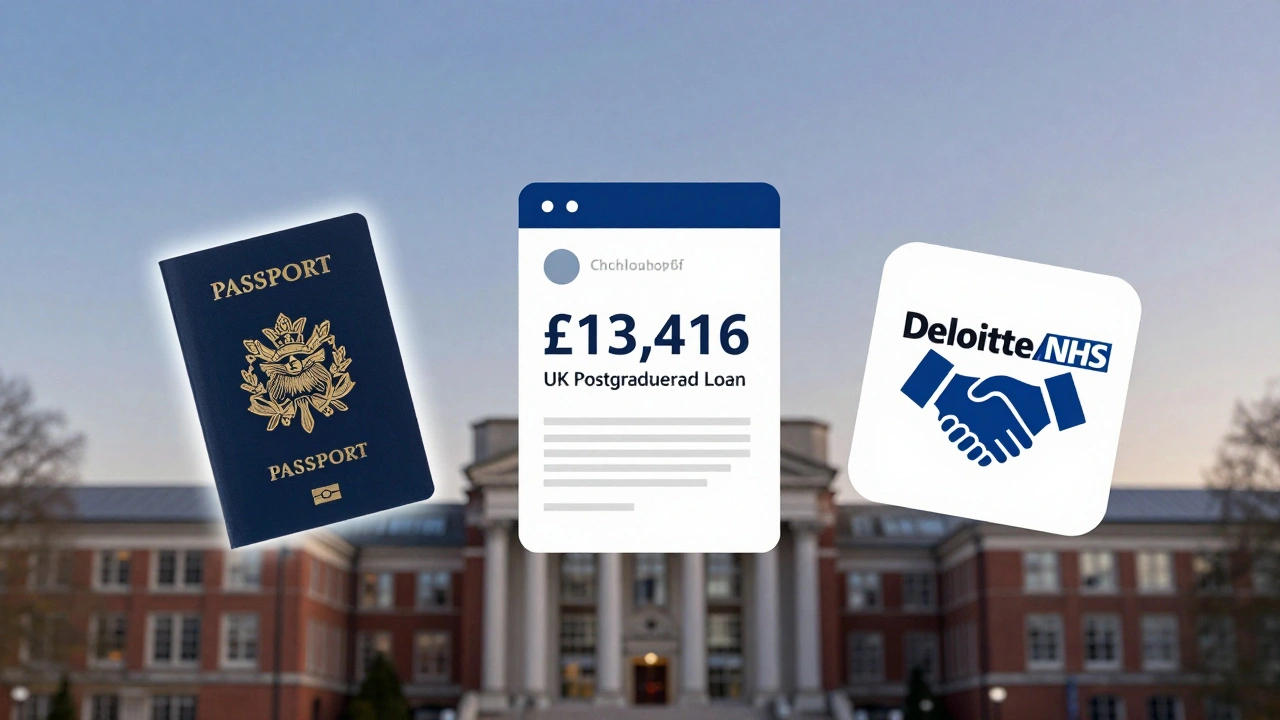
If you’re from the EU, Switzerland, Norway, Iceland, or Liechtenstein, you may still qualify for a UK government postgraduate loan. For the 2025/26 academic year, the maximum loan is £13,416. That’s not enough to cover everything, but it’s a solid base. You don’t need to prove financial need. Repayments start only when you earn over £21,000 a year, and the rate is 6% of everything above that. Interest is tied to inflation, not a fixed rate, so it’s predictable.
International students from outside these regions aren’t eligible for this loan. But don’t assume you’re out of options. Some UK universities offer their own loan programs for international students. For example, the University of Edinburgh has a Postgraduate Loan Scheme with interest-free repayment plans for students from low- and middle-income countries. Check your target university’s financial aid page - it’s often buried under "International Students" or "Funding" tabs.
UK Scholarships: What’s Actually Available
There are hundreds of scholarships for postgraduate study in the UK, but most are competitive. The big ones you should know:
- Chevening Scholarships: Fund one-year master’s degrees. Covers tuition, living costs, flights, and even a settling-in allowance. Open to applicants from over 160 countries. You need leadership experience and a clear plan for how your degree will benefit your home country. Applications open in August each year.
- Commonwealth Scholarships: For students from low- and middle-income Commonwealth countries. Covers full tuition, airfare, and a monthly stipend of £1,200-£1,500. Requires proof of commitment to development work after graduation.
- Erasmus Mundus Joint Master Degrees: Funded by the EU. You study across 2-3 European countries. Full tuition waiver, travel allowance, and monthly living grant. Applications open in October for September start.
- University-specific scholarships: Oxford, Cambridge, Imperial, UCL, and Edinburgh all offer merit-based awards ranging from £5,000 to full funding. Many are automatic - you don’t need to apply separately. Just submit your admission application by the deadline.
Pro tip: Don’t ignore smaller scholarships. A £2,000 award from your department or alumni fund might not sound like much, but if you land three of them, that’s £6,000 toward rent and groceries. Search for scholarships using the UK Council for International Student Affairs (UKCISA) database. It’s updated monthly and filters by country, course, and level.
Employer Sponsorship: The Hidden Path
Many professionals forget this: your job might pay for your degree. If you’re working full-time and your employer sees value in your postgraduate qualification, they might cover tuition, give you time off, or even pay your living expenses. This is common in fields like engineering, healthcare, IT, and finance.
How to ask for sponsorship:
- Build a case. Show how your degree will improve your performance - e.g., "Completing an MSc in Data Science will let me automate our reporting system, saving 15 hours a week."
- Propose a plan. Offer to stay with the company for 2-3 years after graduation.
- Start early. Talk to your manager before applying to programs. Some companies have formal sponsorship programs with set budgets.
Companies like BP, NHS, Deloitte, and Siemens have well-documented sponsorship schemes. Even mid-sized firms often have informal policies. Ask HR: "Do you support employees pursuing postgraduate study?" If they say yes, ask for the policy document. It’s more common than you think.
Private Loans and Alternative Funding
If scholarships and sponsorships don’t work out, private loans are your last resort. UK banks don’t lend to international students without a UK co-signer. But some international lenders specialize in this:
- MPOWER Financing: Offers loans to students from 200+ countries. No co-signer needed. Interest rates start at 7.9%. Repayment begins six months after graduation.
- Prodigy Finance: Focuses on postgraduate students at top UK universities. Loans up to 100% of tuition. Rates vary by country and program.
- Aspire: A U.S.-based lender that funds international students at UK institutions. Requires proof of future income potential.
These loans are expensive compared to scholarships. Use them only if you have a clear career path that guarantees high earnings after graduation. Always compare APRs - not just monthly payments. Some lenders charge origination fees or prepayment penalties.
How to Build Your Funding Strategy
Don’t rely on one source. The smartest students combine three:
- One scholarship (full or partial)
- One loan (UK government or private)
- One sponsorship or part-time job
For example: A student from Nigeria gets a Chevening Scholarship (covers tuition and £1,200/month), takes out a £5,000 MPOWER loan for books and travel, and works 10 hours a week on campus as a research assistant (£10/hour). Total monthly income: £1,500. Monthly expenses: £1,300. That’s a surplus - and zero debt after graduation.
Start early. Scholarship deadlines are 6-12 months before your course starts. The Chevening deadline is usually November. Commonwealth is October. University scholarships often close in January. If you’re applying in January for a September start, you’re already behind.

Common Mistakes to Avoid
- Applying only to the biggest scholarships. Smaller ones have less competition.
- Waiting until you’re accepted to start funding research. You need to apply for funding before you get your offer.
- Ignoring part-time work. International students can work 20 hours a week during term. That’s £100-£200/week extra.
- Assuming your home country’s government won’t help. Many countries - like Nigeria, India, Brazil - offer overseas study grants. Check with your embassy or ministry of education.
Also, don’t fall for "guaranteed funding" scams. If someone asks for money upfront to secure a scholarship, it’s fake. Legitimate scholarships never charge application fees.
Where to Find Reliable Info
Stick to official sources:
- UKCISA - The UK Council for International Student Affairs. Updated monthly with funding rules.
- GOV.UK - Official government pages on postgraduate loans and visas.
- Your university’s funding page - Always the most accurate source for internal scholarships.
- EducationUK - Run by the British Council. Lists scholarships by country.
Set up Google Alerts for terms like "UK postgraduate scholarship [your country]". You’ll get emails when new opportunities pop up.
Can I get a scholarship if I’m not from a Commonwealth country?
Yes. While Commonwealth scholarships are limited to member nations, many other options exist. Chevening is open to over 160 countries. University-specific scholarships don’t restrict by nationality - they’re based on merit. Erasmus Mundus accepts students globally. Always check the eligibility criteria carefully - many scholarships list eligible countries on their website.
Do I need to repay scholarships?
No. Scholarships are gifts - you don’t repay them. But some come with conditions. For example, Chevening requires you to return to your home country for at least two years after graduation. If you don’t, you may have to repay the award. Always read the fine print on obligations.
Can I work while studying to help pay for my degree?
Yes. International students on a Student visa can work up to 20 hours per week during term time and full-time during holidays. Many universities offer on-campus jobs - library assistant, lab technician, tutor - that fit around your schedule. These jobs pay £10-£15/hour. That’s £800-£1,200 extra per month if you work consistently.
Is it better to apply for multiple scholarships at once?
Absolutely. Apply to as many as you qualify for. Most scholarships don’t restrict you from holding multiple awards. In fact, combining a £5,000 university scholarship with a £3,000 departmental grant and a £2,000 external award is common. Don’t self-limit - if you’re eligible, apply.
What if I miss the scholarship deadline?
It’s tough, but not impossible. Some scholarships have rolling deadlines or late rounds. Check with your university’s international office - they sometimes have emergency funds or internal awards with later cutoffs. Also, consider applying for a loan first, then use it to cover costs while you apply for scholarships in your second term. Some students get funded retroactively after showing academic excellence.
There’s no magic formula, but there’s a clear path. Start early. Research relentlessly. Combine sources. And don’t assume you can’t afford it - the money is there. You just have to find it.