
If you're heading to university in the UK and need a place to live, you're not alone. Thousands of students search every year for affordable, safe, and social housing. Traditional student portals and letting agents often charge fees, show outdated photos, or list places that don’t match what you actually want. But there’s a better way: Facebook Groups. Thousands of active, student-run groups across the UK connect renters with landlords, offer real-time room availability, and help you find people who actually want to live with you-not just share a roof.
Why Facebook Groups Work Better Than Other Platforms
Let’s be honest: websites like Rightmove or Zoopla are built for professionals, not students. They’re cluttered with long-term rentals, high deposits, and hidden fees. Facebook Groups, on the other hand, are live, local, and honest. Students post real-time updates: "Room available in Leeds flat next Monday, £550 inc bills," or "Looking for someone to replace me in Manchester for January." No agents. No application forms. Just direct messages and real conversations.
Groups like "UK Student Housing 2025-2026" or "Birmingham Student Flats & Rooms" have over 50,000 members. These aren’t bots or ads-they’re real students, recent grads, and even small landlords who rent out spare rooms. The group rules usually require photo verification, so you can see who you’re talking to before you meet.
How to Find the Right Facebook Groups
Not all groups are created equal. Some are full of spam, scams, or outdated posts. Here’s how to find the real ones:
- Search for: "[Your City] Student Housing" or "[University Name] Accommodation"
- Look for groups with 10,000+ members and recent posts (within the last 24 hours)
- Check the group description-it should mention "no agents," "student-only," or "verified members"
- Read the pinned posts. Good groups have rules, move-in dates, and safety tips
- Join at least 3-5 groups for your target city and surrounding areas
For example, if you’re going to University of Edinburgh, search for: "Edinburgh Student Housing 2025," "Uni of Edinburgh Flats," and "Student Rooms Edinburgh". You’ll find 3-5 active groups with hundreds of posts each week.
What to Look for in a Listing
Not every post is trustworthy. Here’s what to watch for:
- Photos: Real listings include multiple photos of the room, kitchen, bathroom, and exterior. Stock photos or blurry images are red flags.
- Location: Use Google Maps to check distance to campus. Anything over 30 minutes by bus or bike is usually too far for daily classes.
- Bills included: Most student flats in the UK include water, electricity, internet, and council tax. If it doesn’t say "bills included," ask. Extra costs can add £100+ per month.
- Lease length: Most student rentals run from September to June. Avoid 12-month contracts unless you’re staying over summer.
- Deposit: Legally, it can’t be more than 5 weeks’ rent. If someone asks for £800 upfront, walk away.
Also, look for posts that say "no pets," "quiet hours," or "cleaning rotas." These show the group is well-moderated and serious about livability.

How to Find Housemates, Not Just Rooms
Living with strangers is stressful. The best way to avoid drama is to find people who match your lifestyle before you sign anything.
Use the group’s "Looking for Housemates" section. Post something like:
"Third-year Biology student, looking for 2-3 housemates in Sheffield for September. No smoking, quiet nights, clean kitchen. Likes cooking, Netflix, and hiking. Budget: £500-550 inc bills. Open to viewings this week."
Then reply to other posts that say "Looking for flatmates" with similar vibes. Message them directly. Ask:
- What’s your schedule like? (Night owl? Early riser?)
- Do you have guests over often?
- Who handles cleaning and shopping?
- Have you lived with others before?
Many students do video calls before meeting in person. It’s not creepy-it’s smart. You’re not just renting a room; you’re choosing your living environment for 9 months.
Avoiding Scams on Facebook
Scams are common. Here’s how to stay safe:
- Never send money before viewing: No exceptions. Even if the person says they’re "abroad" or "in a hurry."
- Don’t pay via gift cards or crypto: Legit landlords use bank transfers or PayPal Friends & Family.
- Verify the landlord: Ask for a copy of their ID or proof of ownership. Most will happily share it.
- Check the property address: Search the address on Google Street View. Does the building look like the photo? Is it even a student area?
- Use group moderators: Report suspicious posts. Good groups ban scammers quickly.
One student in Glasgow lost £600 to someone who sent fake keys and a photo of a different flat. He found out after he’d already booked his flight. Don’t be that person.
Timing Matters: When to Start Looking
Students who wait until July miss out. The best rooms go fast.
- January-March: Start joining groups. Browse. Learn the market.
- April-May: Begin messaging. Viewings start.
- June: Sign contracts. Pay deposit (only after viewing and signing a tenancy agreement).
- July-August: Move-in prep. Arrange utilities, get a TV license, buy cleaning supplies.
Top universities like UCL, Manchester, and King’s College London have 70% of rooms rented by May. If you’re late, you’ll end up paying more for worse places.
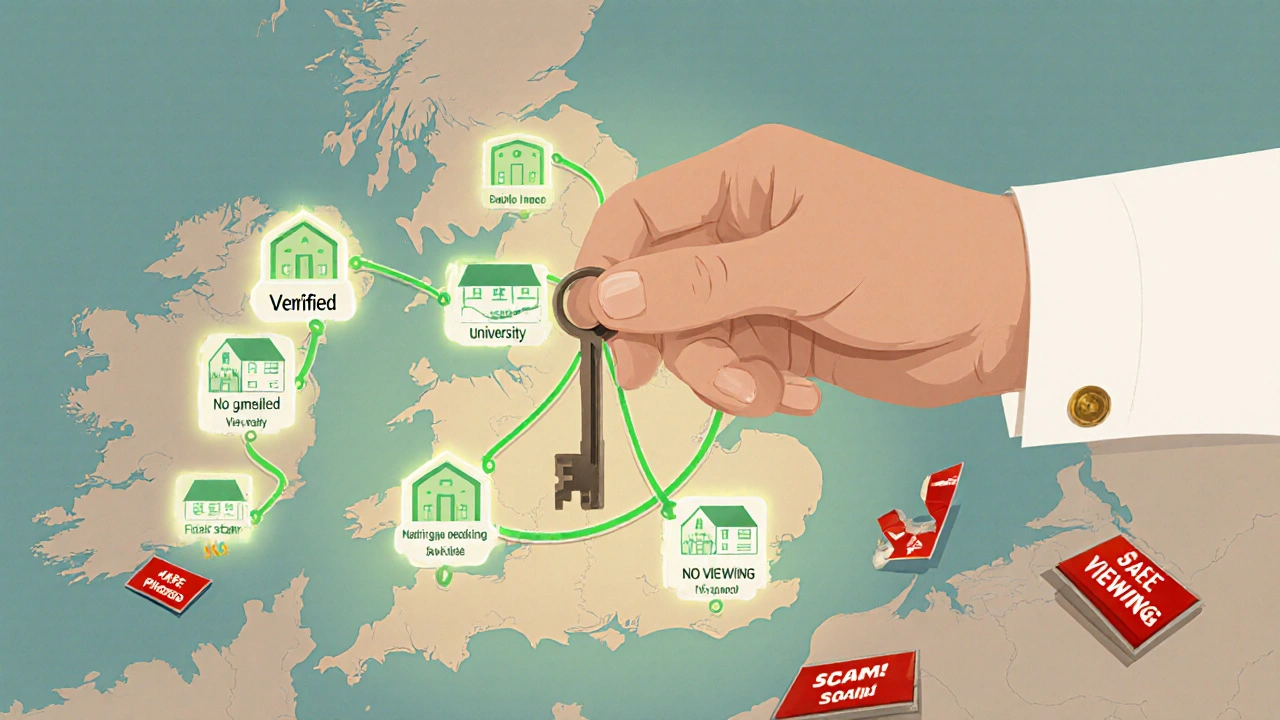
What to Do After You Find a Place
Don’t just sign and move in. Do this:
- Get a copy of the tenancy agreement. It should list everyone’s name, rent amount, deposit, and rules.
- Take photos of the property on move-in day-walls, floors, appliances. Send them to your housemates.
- Set up a group chat for bills, cleaning, and emergencies.
- Register with your GP and get a council tax exemption (you’re exempt as a full-time student).
- Buy a lock for your room. Even if it’s "safe," personal items disappear.
One student in Brighton forgot to check if the fridge worked. It broke two weeks in. Because she had photos of the condition, her deposit wasn’t withheld. Small steps matter.
What If You Can’t Find a Place?
Don’t panic. Try these backups:
- Ask your university’s accommodation office-they often have a list of private landlords who rent to students
- Join the "Student Housing Swap" group on Facebook-people sometimes trade flats mid-year
- Look at university halls for late availability. Some rooms open up in August
- Consider sharing a room with a friend. Splitting rent cuts costs in half
And if you’re still stuck, message your coursemates. Someone always has a spare couch or knows someone who does.
Are Facebook Groups safe for finding student housing in the UK?
Yes, if you follow basic safety rules. Stick to groups with active moderation, never send money before viewing, verify identities, and use group chat to communicate. Most students use these groups successfully every year. Scams exist, but they’re avoidable with caution.
Can I find furnished rooms in Facebook Groups?
Absolutely. Most student rooms in the UK are fully furnished-bed, desk, chair, wardrobe, and sometimes even a fridge or microwave. Look for posts that say "furnished," "move-in ready," or "everything included." If it doesn’t say, ask before viewing.
How much should I expect to pay for student housing in the UK?
Prices vary by city. In London, expect £800-£1,200/month. In cities like Liverpool, Newcastle, or Sheffield, £450-£650/month is common. Always check if bills (electricity, water, internet, council tax) are included. That’s the biggest cost-saver.
Do I need a guarantor to rent through Facebook Groups?
It depends. Private landlords often require a UK-based guarantor (usually a parent) who agrees to pay rent if you can’t. Some student landlords skip this if you’re on a university contract or show proof of student finance. Always ask upfront.
Can international students use Facebook Groups for housing?
Yes, and many do. Some groups are even labeled "International Student Housing." Make sure to ask about visa requirements, deposit refunds, and whether the landlord accepts overseas bank transfers. Most are happy to help if you’re clear and polite.
Next Steps: Start Today
You don’t need to wait until summer. Open Facebook. Search for your university and city. Join two or three groups. Scroll through the last 50 posts. Notice the prices, the photos, the questions students are asking. That’s your real-world housing market.
Then, write your own post. Be clear. Be honest. Say what you want. You’ll get replies. You might even find your future flatmates before you even pack your bags.