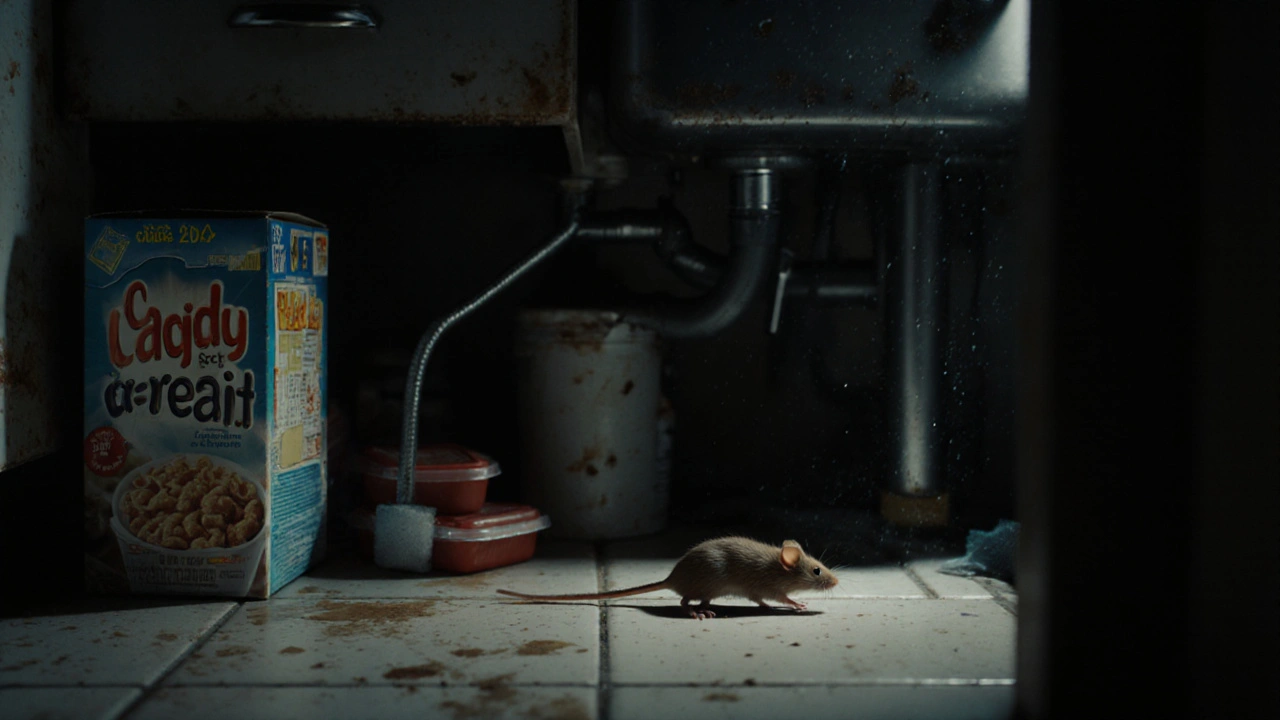
Imagine waking up to find a mouse scurrying across your kitchen floor, or spotting a cockroach near your microwave after midnight. For students in UK student housing, this isn’t rare-it’s routine. With shared kitchens, old buildings, and tight budgets, pest problems are one of the most ignored but biggest stressors in student life. And it’s not just about disgust. Mice carry bacteria, cockroaches trigger asthma, and insects like bed bugs can turn your room into a nightmare. The good news? You don’t need to live with it. Here’s how to actually fix it.
Why Pests Are So Common in UK Student Housing
UK student housing isn’t designed for cleanliness-it’s designed for occupancy. Many buildings are over 50 years old, with cracks in walls, gaps under doors, and poorly sealed pipes. Landlords often delay repairs because they know students won’t complain. Add to that: late-night snacks left out, takeaway containers stacked in the sink, and shared fridges where food goes missing-or forgotten. Mice love warm, dark spaces with easy access to crumbs. Cockroaches thrive on grease and moisture. Even a single forgotten chip bag can start an infestation.
A 2024 survey by the National Union of Students found that 37% of students in rented accommodation reported pest issues in the past year. Mice were the most common, followed by ants and cockroaches. Bed bugs showed up in 8% of cases, mostly in shared flats with poor hygiene habits. These aren’t myths. They’re real, documented problems.
Identifying the Culprits
Not all pests are the same. Knowing what you’re dealing with changes how you fix it.
- Mice: Small, brown or grey, with long tails. You’ll find droppings (rice-sized, dark), gnawed packaging, scratching sounds at night, or nesting material like shredded paper. They enter through gaps as small as a pencil.
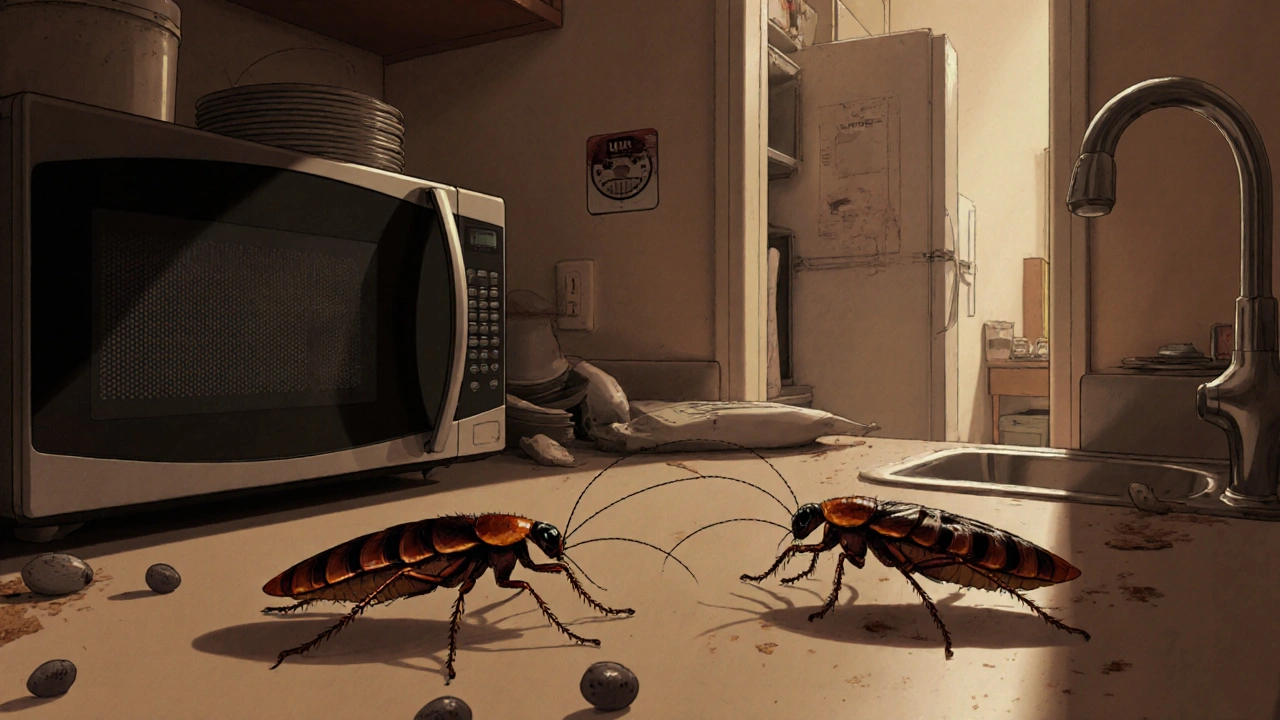
- Cockroaches: Usually German cockroaches in the UK-small, light brown, with two dark stripes behind the head. You’ll see them near sinks, fridges, or behind appliances. Look for egg cases (small, brown, capsule-shaped), a musty smell, or dark smears on surfaces.
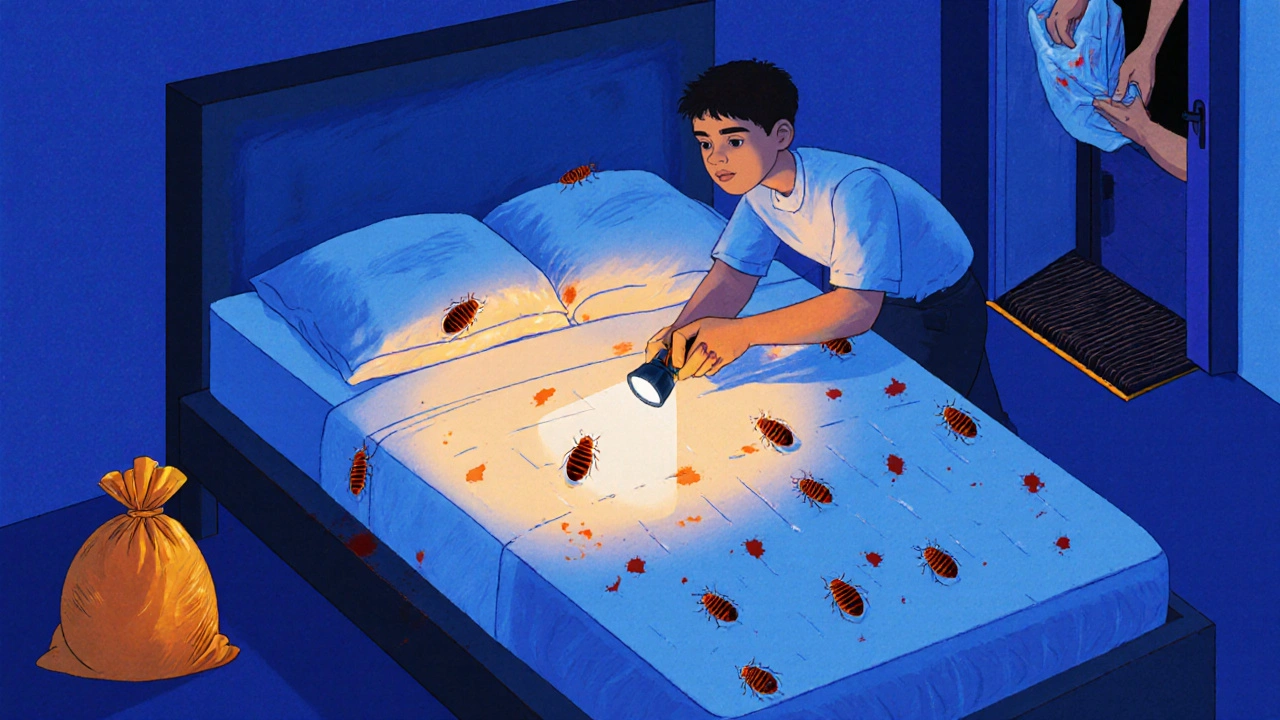
- Insects: Ants (especially sugar ants) follow trails to food. Silverfish hide in damp areas like bathrooms. Bed bugs are flat, reddish-brown, and bite at night-check mattress seams and headboards for tiny blood spots.
Don’t assume it’s one thing. It’s often a mix. A mouse nest might be near a cockroach hotspot. Ants might be drawn to crumbs left by someone who doesn’t clean up after ramen. You need to treat the whole space, not just what you see.
What to Do Immediately
Don’t wait. The longer pests stay, the harder they are to remove. Start here:
- Clear out all food. Empty your fridge, pantry, and cupboards. Throw away anything open, expired, or sticky. Store everything in airtight containers-glass or thick plastic. No more cereal boxes or plastic bags.
- Deep clean the kitchen. Wipe down every surface with vinegar and hot water. Clean behind the fridge, under the sink, and inside the microwave. Use a toothbrush for grime in corners. Mice and cockroaches hide in grease.
- Seal entry points. Check under doors, around pipes, and where wires enter walls. Use steel wool and caulk. Mice can chew through foam. Steel wool blocks them.
- Take out the trash every day. Use bins with tight lids. Don’t leave bags sitting overnight. If your building has communal bins, don’t let them overflow.
These steps alone will cut infestations in half. Most students skip the cleaning and sealing. That’s why problems come back.
Traps and Treatments That Actually Work
Chemical sprays and bug bombs don’t solve the root problem. They just make pests scatter. Here’s what works:
- For mice: Use snap traps (not glue traps-they’re cruel and messy). Place them along walls, behind fridges, and near food storage. Bait with peanut butter or dried fruit. Check daily. If you catch one, there are likely more.
- For cockroaches: Use bait stations (like Advion or Raid). Place them under sinks and behind appliances. Don’t spray. The bait gets carried back to the nest. It kills the whole colony over 1-2 weeks.
- For ants: Use borax mixed with sugar. Dab it near trails. Ants take it back to the queen. It’s slow but effective.
- For bed bugs: Wash all bedding in hot water (60°C+), dry on high heat, and encase your mattress in a certified bed bug cover. Vacuum daily, especially seams.
Don’t buy expensive pest control services unless you’ve tried these first. Most student housing providers have a maintenance team that will handle it for free-if you report it properly.
Talking to Your Landlord or Accommodation Office
Landlords in the UK are legally required to keep rented property pest-free under the Landlord and Tenant Act 1985. If pests are present, they must act. But you have to ask correctly.
Don’t say: “There’s a mouse in my kitchen.”
Say: “I’ve found mouse droppings in the kitchen cupboard, and I’ve taken photos. I’ve cleaned the area and sealed gaps. I need a professional inspection and treatment under my tenancy agreement.”
Send this via email. Keep a copy. If they don’t respond in 7 days, escalate to your student union or local council’s environmental health department. They can force action. Many students don’t know this-and end up living with pests for months.
How to Prevent It Next Time
Prevention is cheaper than treatment. Here’s how to stay pest-free:
- Store all food in sealed containers-even snacks.
- Wipe down counters after every meal.
- Never leave dirty dishes overnight.
- Take out trash daily, even if it’s not full.
- Check secondhand furniture before bringing it in. Bed bugs hide in seams.
- Keep doors and windows closed at night. Install door sweeps if allowed.
- Do a quick 5-minute clean every Sunday. It takes less time than dealing with an infestation.
One student in Manchester told me she started washing her mug after every use. Three months later, the cockroach problem in her flat disappeared. It wasn’t magic. It was consistency.
When to Call a Professional
Call a licensed pest controller if:
- You’ve tried traps and cleaning for 2 weeks with no change.
- You see more than 5 cockroaches in a day.
- Mice are active during the day (that means the nest is big).
- You suspect bed bugs and have bites that won’t go away.
Most student housing providers have a preferred contractor. Use them. Don’t hire someone from a random ad. Check if they’re members of the British Pest Control Association (BPCA). Avoid companies that push expensive “preventative” plans-you don’t need them if you’re cleaning properly.
What Not to Do
Stop doing these things-they make things worse:
- Using spray cans without sealing entry points (pests just move to another room).
- Leaving food out “just for tonight.” It’s never just one night.
- Ignoring the problem hoping it’ll go away. It won’t.
- Blaming your flatmates without fixing your own habits. Pests don’t care who’s at fault-they care about crumbs.
It’s not about being perfect. It’s about being consistent. One person cleaning up after themselves can stop an infestation before it starts.
Final Thought: You’re Not Alone
Thousands of students face this every year. It’s not your fault. It’s not because you’re messy. It’s because student housing is old, crowded, and under-maintained. But you have more power than you think. You can clean. You can report. You can demand action. And you don’t have to live with pests to survive uni.
Can I get my rent reduced if there are pests in my student housing?
Yes, under UK tenancy law, landlords must provide a habitable property. If pests are present and not fixed after formal notice, you can request rent reduction or compensation. Document everything-photos, emails, repair requests. Contact your student union or Citizens Advice for support. Some councils have housing enforcement teams that can intervene.
Are pest control services free for students in UK housing?
If the infestation is due to building defects or poor maintenance (like gaps in walls or broken pipes), your landlord must pay for pest control. You don’t pay. If the problem is caused by your own habits (like leaving food out), they might ask you to help cover costs-but only if they can prove it. Always get it in writing.
How do I know if it’s bed bugs or something else?
Bed bug bites are usually in lines or clusters, often on arms, legs, or neck. They itch badly and take days to fade. Look for tiny dark spots on sheets (their droppings), shed skins, or live bugs near mattress seams. Unlike fleas, they don’t jump. If you’re unsure, use a flashlight at night and check your bed frame. A professional can confirm with a detection dog or trap.
Can I use natural remedies like essential oils or vinegar?
Vinegar can clean surfaces and remove odors, but it won’t kill mice or cockroach colonies. Essential oils like peppermint may repel ants temporarily, but they don’t eliminate nests. These can help as part of cleaning, but they’re not replacements for traps, baits, or professional treatment. Don’t waste time or money on gimmicks.
What if my flatmates won’t clean up?
Start by talking to them calmly-show them the evidence (photos, droppings). If that doesn’t work, report the issue to your accommodation office as a shared hygiene problem. Many universities have codes of conduct for flatmates. If the whole flat is infested, the landlord must act regardless of who’s at fault. You’re not responsible for others’ habits.
Next Steps
Right now, open your kitchen cupboard. Look for open food. Check under the sink. Look at the floor near the fridge. If you see anything unusual-crumbs, droppings, a sticky spot-clean it. Seal any gaps. Take out the trash. Do it today. You don’t need to wait for a perfect solution. You just need to start.