
Most students think budgeting is just about cutting out coffee and skipping takeout. But here’s the truth: if your budget doesn’t account for the real rhythm of student life, it will fail before semester two even starts. You don’t need to live on ramen. You need a budget that matches your income spikes, your class schedule, your rent due dates, and the surprise costs no one talks about.
Let’s walk through what a real student budget looks like - not the Pinterest version, but the one that actually gets used. This breakdown is based on data from over 2,300 U.S. college students surveyed in 2025 by the National Student Financial Wellness Study. We’re using a typical full-time undergrad living off-campus in a mid-cost city like Asheville, with a part-time job, federal aid, and occasional parental support.
Month 1: Set the Foundation
This isn’t about spending. This is about mapping your money. Start by listing every dollar that comes in. For most students, that’s:
- Part-time job: $800-$1,200/month (15-20 hours/week at $12-$15/hour)
- Financial aid disbursement: $1,500-$2,000 (usually once per semester, split into two payments)
- Parental support: $0-$500 (don’t assume this is guaranteed)
Now list every fixed cost:
- Rent: $500-$700 (shared apartment, utilities included)
- Student health insurance: $30-$60 (often bundled with tuition)
- Phone plan: $40-$60 (T-Mobile or Mint Mobile)
- Transportation: $25-$50 (bus pass, bike maintenance, gas if you have a car)
- Textbooks and supplies: $50-$100 (buy used, rent, or use library reserves)
Total fixed costs? Around $700-$900. That leaves you $300-$800 for variable spending. But here’s where most budgets break: people forget that rent isn’t due every month. Financial aid hits in August and January. So Month 1 is about building a buffer. Put $200 into a separate savings account - not a savings account you check. A hidden one. This is your emergency fund for when your car breaks down or your laptop dies.
Month 2: Track Everything - Even the $3 Coffee
Stop guessing. Start recording. Use a free app like Mint or Goodbudget, or just a notebook. Write down every purchase. Yes, even the $3 coffee from the campus café. Why? Because small leaks sink ships. Students who track spending for 30 days find they’re spending $120-$180 a month on food and drinks they don’t even remember buying.
Break your variable spending into buckets:
- Food: $150-$200 (groceries + occasional meals out)
- Entertainment: $30-$60 (movies, events, streaming subscriptions)
- Personal care: $20-$40 (toiletries, haircuts, laundry)
- Random: $50-$100 (gifts, impulse buys, forgotten fees)
Here’s the trick: treat your random bucket like a game. If you spend less than $50 one month, roll the leftover into your hidden emergency fund. If you go over? Take $10 out of next month’s entertainment budget. No guilt. Just adjustment.
Month 3: The Mid-Semester Crunch
By March, financial aid from August is long gone. Your job hours haven’t changed. But now you’re facing:
- Textbook buybacks are over - no refunds
- Lab fees, field trip costs, club dues
- Winter heating bill spikes
- Spring break travel (even if it’s just a weekend trip)
Most students panic here. They max out credit cards or borrow from friends. Don’t. Instead, use your hidden emergency fund. That $200 you saved in Month 1? It’s not for emergencies. It’s for predictable surprises. If you’ve been tracking, you know these costs are coming. So you’ve already saved for them.
Pro tip: If you have a car, schedule oil changes and tire rotations in advance. A $60 maintenance cost in March is cheaper than a $400 breakdown in April.
Month 4: The Paycheck Surge
Here’s the golden moment: financial aid hits again. If you’re lucky, it lands in early April. This isn’t a bonus. This is your next month’s rent, groceries, and textbook money.
Don’t spend it all. Don’t even spend half. Instead, do this:
- Pay rent and utilities first - $700
- Refill your food budget - $200
- Replace your emergency fund - $200
- Save the rest - $500-$800
That last chunk? Put it in a separate account labeled “Summer Fund.” You’re not going to touch it until May. Why? Because summer jobs aren’t guaranteed. And if you don’t have one? You’ll be glad you saved.

Month 5: The Summer Reset
Summer isn’t a vacation. It’s your reset button. If you’re not working, your budget drops to zero income. So you need to stretch your savings.
Here’s what works:
- Move back home if you can - even if it’s just for June
- Work 20-30 hours a week - even if it’s at a grocery store or camp
- Use campus resources: free meals, laundry, Wi-Fi
- Cancel subscriptions you don’t use: Netflix, Spotify, gym
One student in Asheville saved $1,100 over summer by living with her parents and working 25 hours/week at the library. She didn’t feel deprived. She felt in control.
Month 6: Back to School - With a Plan
You’re back on campus. Your emergency fund is full. Your summer savings are gone. But now you know how your money moves.
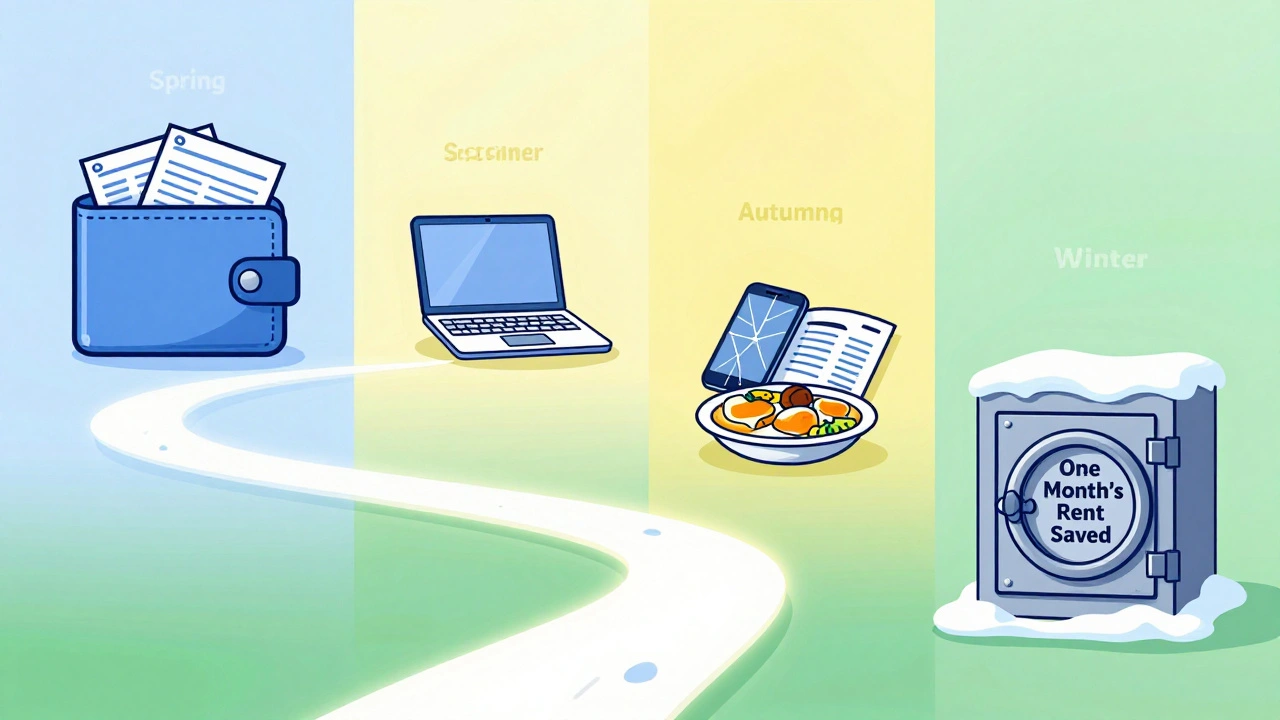
Here’s your new rule: Always have one month’s worth of fixed expenses saved. That means if rent is $600, keep $600 in your hidden account. If you lose your job? You’re covered. If your laptop dies? You’re covered. If you get sick and can’t work? You’re covered.
And here’s the best part: you’re no longer guessing. You know when your money comes in. You know where it goes. You’ve seen the pattern. And next semester? You’ll be ahead.
What Most Students Get Wrong
- They assume financial aid covers everything. It doesn’t. It covers tuition and fees. Not rent. Not food. Not a phone.
- They wait until they’re broke to start budgeting. Start before you need it.
- They think budgeting means deprivation. It means choice. You can still go out. You just choose when.
- They don’t plan for the middle. The quiet months between aid disbursements are where budgets die.
Tools That Actually Help
- Goodbudget: Uses the envelope system. Perfect for students who need visual control.
- Bank of America Student Checking: No monthly fees, free ATM access on campus.
- Library loaner laptops: Free for 30 days. Saves $300-$800.
- Textbook rentals from campus bookstore: 60% cheaper than buying.
- Student discount apps: UNiDAYS and Student Beans give 10-30% off Amazon, Spotify, Apple.
Final Rule: The 50/30/20 Rule - But Make It Real
Forget the classic 50/30/20. It doesn’t fit student life. Here’s the student version:
- 50% on needs: Rent, food, insurance, transport
- 30% on wants: Eating out, entertainment, shopping
- 20% on future you: Emergency fund, savings, student loan payments
Stick to this, and you won’t just survive. You’ll graduate with less stress, more confidence, and a habit that lasts long after college.
What to Do If You Fall Behind
You missed a month. You overspent. You’re in the red. Don’t panic. Do this:
- Stop spending. Not for a week. Just pause.
- Call your landlord. Ask for a payment plan. Most will work with you.
- Visit your school’s financial aid office. They have emergency grants - no application needed.
- Use campus food pantries. They’re free and open to all students.
- Work one extra shift. One. That’s all it takes to get back on track.
You’re not broken. You’re learning. And that’s the whole point.