Choosing the right supervisor for your PhD in the UK isn’t just about finding someone who knows your topic. It’s about finding someone who will actually help you finish your degree - on time, with confidence, and without burning out. Too many students pick a supervisor based on reputation alone, only to realize months later that their style doesn’t match their needs. Some supervisors are hands-off. Others micromanage. Some reply in days. Others take weeks. And if you’re unlucky, you end up stuck in the middle of a departmental power struggle.
Your supervisor is your main guide, your biggest critic, your occasional cheerleader, and sometimes your only lifeline during the lonely middle years of a PhD. So getting this right matters more than your research proposal, your grades, or even which university you pick. The institution opens the door. Your supervisor decides whether you walk through it - or get lost in the hallway.
Start with the research, not the name
Don’t start by looking at rankings or famous professors. Instead, scan recent publications. Go to Google Scholar. Type in keywords from your proposed topic. Filter by the last five years. Look for papers with UK affiliations. Who keeps showing up? Who’s publishing new work every few months? That’s your starting point.
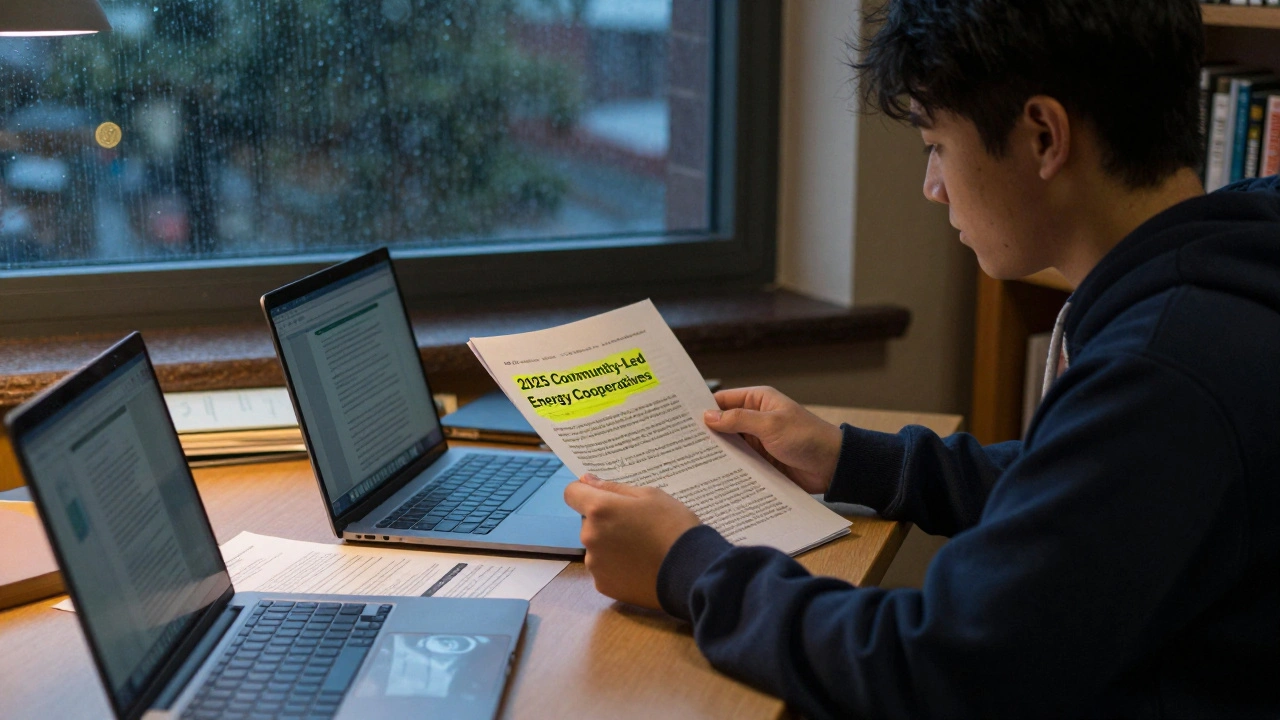
Here’s a real example: A student wanted to study how rural communities in Wales respond to renewable energy projects. They found three academics regularly publishing on energy justice in the UK. One was at Cardiff, another at Swansea, and a third at Aberystwyth. All three were solid. But only one had published a paper in 2025 on community-led energy cooperatives - the exact angle the student wanted to explore. That was the person to contact.
Supervisors who are actively publishing are more likely to be engaged. They’re connected to current debates, have funding opportunities, and know where the field is heading. Someone who hasn’t published since 2020 might be stuck in old methods, overburdened, or even planning to leave academia.
Check their supervision record
A great researcher isn’t always a great supervisor. Some academics publish like crazy but rarely finish a student’s PhD. Others have 15 students who took seven years each. You need data.
Most UK universities list PhD completion rates on their department websites. Look for the number of students who finished within four years. If it’s below 50%, that’s a red flag. Some departments hide this info. If you can’t find it, ask current or recent students. LinkedIn is surprisingly useful here. Search for people who did PhDs at that university in the last five years. Send a short, polite message: “Hi, I’m considering applying under Professor X. Did you find them supportive? How long did your PhD take?”
One student reached out to three former students of a well-known professor. Two said they were “amazing” and finished in 3.5 years. The third said they “never got a reply until the final draft.” The student chose someone else.
Match your working style
Do you need weekly check-ins? Or do you work best alone with monthly feedback? Some supervisors schedule formal meetings every two weeks. Others only respond when you email them. Some give detailed line edits. Others just say “this looks good.”
Think about how you learn. If you’re the type who needs structure, avoid supervisors who say things like “come see me when you’re ready.” If you’re independent and hate micromanagement, stay away from those who ask for weekly progress reports.
One student had ADHD and needed clear deadlines. They asked potential supervisors: “How do you help students stay on track?” One replied, “I send reminders every Monday and help break tasks into chunks.” Another said, “I assume you’ll manage your own time.” The student picked the first.

Ask the hard questions before you apply
Don’t wait until you’re accepted to ask these things. Email potential supervisors with a short, clear message. Include:
- Your research idea (one paragraph)
- Why you think they’re a good fit
- One specific question about their supervision style
Example: “I’m interested in your 2024 paper on digital literacy in adult learners. My project builds on that. I’d like to know how you typically support students through data analysis - do you help with methods, or do you refer them to specialists?”
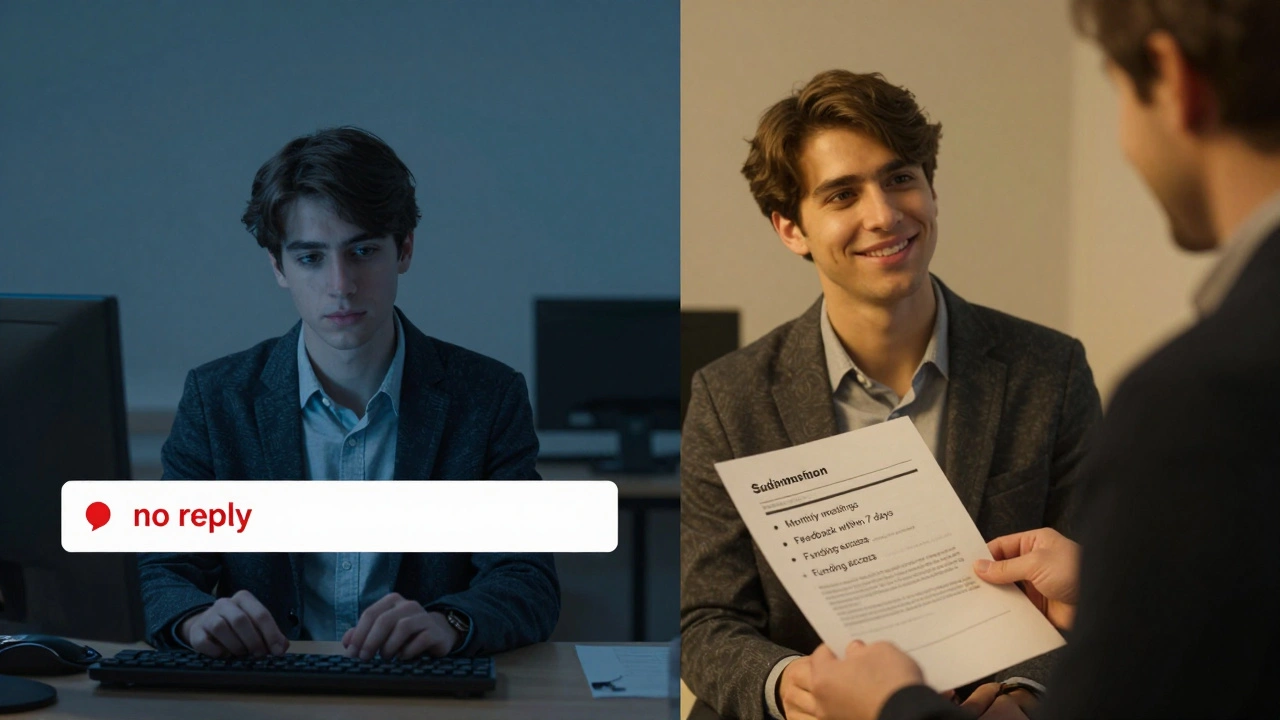
Responses vary. Some reply within 48 hours. Others don’t reply at all. That’s information too. Silence is a warning sign. A thoughtful reply - even if it’s “I’m not taking students this year” - is better than nothing.
One student emailed five supervisors. Three didn’t reply. One said, “I’m too busy.” The fifth replied in detail, shared a recent student’s thesis, and invited them to a virtual coffee. That was the one.
Don’t just email - schedule a chat
If someone responds positively, ask for a 15-minute Zoom call. Don’t make it formal. Say: “I’d love to hear your thoughts on this idea over a quick chat.”
During the call, pay attention to:
- Do they ask questions about your idea? Or just talk about their own work?
- Do they sound excited, or just polite?
- Do they mention funding, timelines, or support systems?
- Do they seem overwhelmed or calm?
One student noticed their potential supervisor kept checking their watch during the call. Later, they found out the person was juggling three PhDs, two postdocs, and a major grant application. They walked away.
On the other hand, another student met a supervisor who brought up a student who had struggled with anxiety. The supervisor said, “We adjusted deadlines and connected them with counseling. That’s part of the job.” That student knew they’d found the right fit.
Funding and resources matter more than you think
Supervisors with active grants often have money for conferences, equipment, travel, or even part-time research assistant roles. These aren’t luxuries - they’re lifelines.
Check if your potential supervisor has current funding listed on their university profile. Look for grants from UKRI, ESRC, or Wellcome Trust. If they’ve recently received funding, they’re more likely to have space for a new student.
One student chose a supervisor who had just won a £300,000 grant. That meant they could attend a key conference in Berlin, access expensive lab equipment, and even get paid for part-time research work. That made the difference between a stressful PhD and a supported one.
What to avoid
- Supervisors who say “I don’t supervise PhDs anymore” - they’re either lying or done.
- Those who only respond via their secretary.
- People who can’t name their current PhD students.
- Supervisors with no recent publications (last five years).
- Anyone who says “just send me your draft when it’s ready” - that’s a hands-off red flag.
Also, avoid choosing someone just because they’re famous. A Nobel laureate might be too busy to help you. A mid-career academic with two PhDs under their belt in the last three years? That’s a better bet.
How to approach them - email template
Here’s a simple, effective email structure:
Subject: PhD Inquiry - [Your Topic] - [Your Name]
Dear Professor [Last Name],
I’m preparing my PhD application and was very interested in your recent work on [specific paper or project]. My proposed research on [your topic] builds directly on your findings in [mention a specific point].
I’m currently exploring supervision options and would be grateful for any advice you might have on whether this project fits your current research direction. I’ve attached a one-page summary of my idea for your reference.
Would you be open to a short call in the coming weeks? I’d love to hear your thoughts.
Best regards,
[Your Full Name]
[Your University/Current Position]
[LinkedIn or Portfolio Link]
Send this email on a Tuesday or Wednesday morning. Avoid Mondays (too busy) and Fridays (people are winding down).
What happens after you get accepted
Even if you’ve chosen well, the first three months are critical. Set up a clear plan: What does your first month look like? What’s your next milestone? Who will you meet? What papers should you read?
Ask for a written supervision agreement. Many UK departments now offer these. It outlines meeting frequency, communication expectations, and how feedback will be given. If they don’t have one, ask to create one together. It’s not about control - it’s about clarity.
And remember: your PhD is your project. Your supervisor is your guide, not your boss. If you feel stuck, ask for help early. Most supervisors want you to succeed - but they can’t help if you never speak up.
Can I change supervisors after starting my PhD?
Yes, but it’s complicated. Most UK universities allow it if there’s a serious mismatch - like lack of communication, conflict of interest, or neglect. You’ll need to document the issue and get approval from your department’s postgraduate committee. It’s not common, and it can delay your degree by months. That’s why choosing carefully upfront matters so much.
What if my supervisor is too busy to reply?
If you’ve emailed twice with no reply over three weeks, try a polite follow-up: “Just checking in - I understand you’re busy. Would it be possible to schedule a quick 10-minute call?” If you still get no response, move on. A supervisor who doesn’t respond to a prospective student won’t respond to a current one. Don’t waste your time.
Do I need to have a fully formed research proposal before contacting them?
No. A clear, focused idea is enough. Most supervisors expect you to refine your proposal after you start. What they want to see is that you’ve done your homework - you know their work, you’ve thought about gaps in the field, and you’re curious enough to ask questions. A 1-page summary is often better than a 20-page document.
Is it okay to contact more than one potential supervisor?
Absolutely. In fact, it’s expected. Many students contact three to five people before applying. Just make sure each email is personalized. Sending the same message to ten people is easy to spot - and it hurts your chances. Tailor each message to the person’s research and style.
What if I don’t get any replies?
It happens. Don’t take it personally. Try refining your message. Make sure your research idea is specific enough. Reach out to PhD students in the department - they often know who’s actually taking students. Sometimes the problem isn’t you - it’s that the supervisor isn’t recruiting this year. Keep trying. One student emailed 12 people before getting a yes. The 13th was the right fit.
If you’re serious about finishing your PhD in the UK, your supervisor is the single most important factor. Don’t rush this decision. Do the digging. Ask the hard questions. Listen to the silence. And remember - the best supervisor isn’t the most famous one. It’s the one who shows up for you.