
Working part-time while studying full-time at university in the UK isn’t just common-it’s necessary for many students. With tuition fees, rent, groceries, and transport costs rising, over 60% of UK students take on some form of paid work, according to the Office for National Statistics. But juggling shifts, lectures, assignments, and sleep? That’s where things get messy. The good news? It’s doable. Not with magic, but with smart planning, realistic limits, and a few proven habits that actually work.
Know Your Limits Before You Say Yes
First rule: don’t overcommit. The average UK student works 15-20 hours a week. That’s the sweet spot. Go beyond 20 hours, and your grades start to slip. A 2023 study from the University of Manchester found that students working over 25 hours a week were 40% more likely to drop a module or fail an exam. That’s not a risk worth taking. Before you accept a job, ask yourself: Can I still get 7 hours of sleep most nights? Can I finish my reading before the weekend? Will I have time to eat properly? If the answer is no, walk away.
Some jobs are easier to balance than others. Campus jobs-like library assistant, lab monitor, or student ambassador-often offer flexible hours and understand your timetable. Retail and hospitality? Those shifts can be unpredictable. You might get called in on a Tuesday night after a 9 a.m. lecture. That’s not sustainable long-term. Look for employers who let you swap shifts online or give you notice at least 7 days ahead. Many universities have job boards that only list student-friendly roles. Use them.
Map Out Your Week Like a Pro
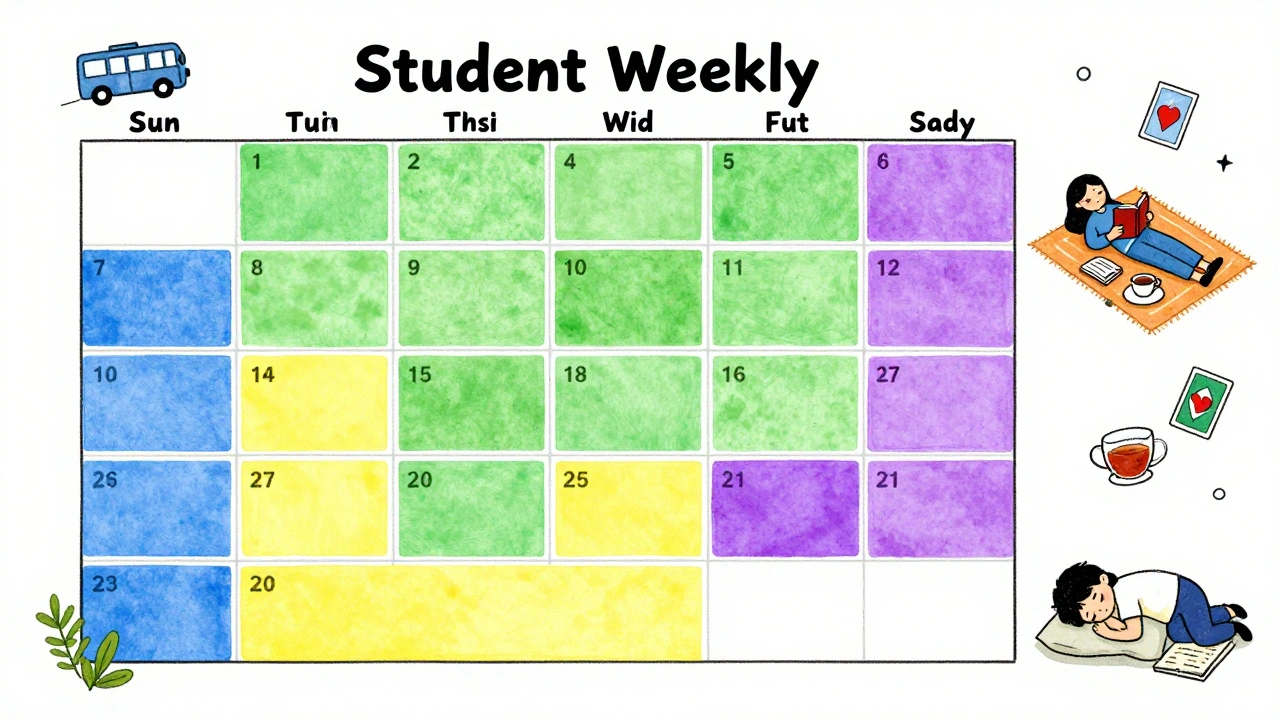
Forget using a phone calendar with 50 unread notifications. You need a real weekly plan. Grab a physical planner or use a free app like Google Calendar. Block out everything: lectures, labs, study sessions, meals, commute time, and sleep. Then slot in work shifts. Leave at least one full day free every week-no work, no studying. Just rest. That’s not lazy; it’s maintenance.
Here’s how one student, Jess, from Leeds Beckett University, does it:
- Monday, Wednesday, Friday: 9 a.m.-3 p.m. lectures
- Tuesday and Thursday: 4 p.m.-7 p.m. shift at campus café
- Saturday: 10 a.m.-2 p.m. supermarket job
- Sunday: No work. No studying. Just cooking, laundry, and calling home.
She studies in 90-minute blocks between classes. No all-nighters. No panic. She’s on track for a 2:1.
Study Smarter, Not Longer
You won’t have time to sit through 4-hour study marathons. So you need to make every minute count. Use active recall and spaced repetition. These aren’t fancy terms-they’re just methods that stick. For example:
- Instead of re-reading your notes, quiz yourself out loud.
- Use free apps like Anki to turn key facts into flashcards you review during your bus ride.
- Turn group chats into study groups. Three people explaining a topic to each other? That’s better than three hours alone.
Also, don’t wait for “free time.” Use the 15 minutes after class. Review one slide. Write one summary sentence. It adds up. One student told me they reviewed their economics lecture on the tram every day. By exam season, they’d already covered everything twice.
Protect Your Energy, Not Just Your Time
Working and studying isn’t just about hours. It’s about energy. And energy drains fast when you’re skipping meals, drinking too much coffee, or scrolling before bed. You need to treat your body like a machine that needs fuel.
Here’s what works:
- Eat at least one solid meal a day-no just snacks. Campus meal deals often cost £3.50 and give you a sandwich, fruit, and a drink. That’s cheaper than ordering Uber Eats after a shift.
- Drink water. Not soda. Not energy drinks. Water. Even mild dehydration makes you feel tired and foggy.
- Sleep. Seriously. Pulling an all-nighter to finish an essay after a 6-hour shift? That’s a trap. You’ll remember less, make more mistakes, and feel worse the next day.
And don’t feel guilty about saying no. If your flatmate wants to go out on a Thursday night and you have a 9 a.m. seminar? Say no. It’s not rude. It’s survival.
Use Your University’s Free Support
Most UK universities offer free services you’re probably not using. And they’re not just for emergencies.
- Student Money Advice: Get help with budgeting, hardship funds, or even negotiating rent. Many offer one-on-one sessions. No judgment.
- Academic Skills Centre: Free workshops on time management, essay writing, and exam prep. Sign up. They’re packed for a reason.
- Wellbeing Services: If you’re feeling overwhelmed, anxious, or burnt out, talk to someone. You don’t need to be in crisis to use these. Just showing up counts.
At King’s College London, over 1,200 students used the money advice service last year. Half of them had never heard it existed. Don’t be one of them.

Track Your Progress-But Keep It Simple
Every two weeks, ask yourself three questions:
- Did I meet my academic goals this term? (Did I pass all my assignments? Did I understand the core topics?)
- Did I earn enough to cover my essentials without going into debt?
- Did I feel like I had time to breathe?
If two out of three are “no,” it’s time to adjust. Maybe drop a few hours at work. Maybe switch to a higher-paying job. Maybe cut your subscription services. There’s no shame in changing course. What matters is you’re paying attention.
What to Avoid at All Costs
- Working on exam week: Even if you need the cash, don’t. You’ll regret it.
- Using credit cards for daily spending: That £200 balance grows fast. Use cash or a debit card.
- Comparing yourself to others: Some students work 30 hours. Others don’t work at all. Neither is better. Your path is yours.
- Ignoring your mental health: If you’re crying before class or skipping meals because you’re too tired, it’s time to pause and ask for help.
Final Thought: This Isn’t Permanent
Remember: you’re not building a career as a student worker. You’re building a foundation. The skills you’re learning now-how to manage pressure, how to prioritize, how to stay consistent-are worth more than the paycheck. You’ll carry them into your first job, your first apartment, your first big project.
So be patient. Be kind to yourself. And don’t let the grind make you forget why you’re here.
Can I work more than 20 hours a week as an international student in the UK?
No. If you’re on a Student Visa, you’re legally limited to 20 hours per week during term time. This rule applies to all universities and is strictly enforced by the Home Office. Working over this limit can lead to visa cancellation or deportation. During holidays, you can work full-time. Always check your visa conditions on the UK government website-don’t rely on your employer’s word.
How much should I aim to earn each month?
The average UK student earns between £800 and £1,200 per month from part-time work. That’s enough to cover rent (if you’re in a shared house), food, transport, and basic essentials-but not luxury spending. If you’re living in London or another high-cost city, aim for the higher end. Use the Student Budget Calculator on the Citizens Advice website to plug in your exact costs. Most students underestimate rent and overestimate how much they’ll earn.
What’s the best part-time job for a student?
The best job depends on your course and schedule. For science or engineering students, lab assistant roles offer flexible hours and relevant experience. For humanities or business students, campus library or admin roles often fit better. Tutoring-especially in subjects you’ve already passed-is another great option. Pay is usually £15-£25/hour, and you set your own hours. Avoid jobs with unpredictable shifts unless you’re confident you can manage them without sacrificing sleep or study time.
Should I take a break from work during exam season?
Yes, if you can. Even if you need the money, reducing your hours or taking a short break during exam weeks can make a huge difference in your performance. Many universities offer emergency hardship funds for students who lose income during exams. Talk to your student support office-they’ve helped thousands do exactly this. It’s better to earn less for a month than to fail a module and have to retake it.
How do I avoid burnout while working and studying?
Burnout doesn’t happen overnight. It builds slowly: missed meals, skipped sleep, constant stress. To avoid it, build in one non-negotiable rest day each week. No work. No studying. Just something that recharges you-walking, music, calling a friend, or doing nothing. Also, track your mood. If you’re irritable, exhausted, or numb more than two days a week, it’s time to cut back. You’re not a machine. Your mental health matters more than any paycheck.