
Going to university in the UK isn’t just about lectures, essays, and exams. It’s also about surviving long nights, financial stress, loneliness, and the pressure to perform. That’s where student wellbeing teams come in-quiet, often under-the-radar teams that are the first line of defense when things start to unravel.
What Exactly Is a Student Wellbeing Team?
A student wellbeing team isn’t a single person or a single service. It’s a network of trained professionals working together under one roof-usually in a campus wellbeing center. These teams include counselors, mental health advisors, disability support officers, welfare officers, and sometimes peer mentors. They’re not just there to help you through a breakdown. They’re there to help you avoid one.
At universities like University of Manchester, University of Edinburgh, and University of Birmingham, these teams have grown significantly over the last five years. In 2023, over 60% of UK universities reported a 40% or higher increase in student referrals to wellbeing services compared to 2019. The numbers don’t lie: more students are struggling, and universities are finally responding.
How They Help With Mental Health
When you’re overwhelmed, the last thing you want to do is make a phone call or fill out a form. That’s why wellbeing teams make access easy. Most campuses offer drop-in sessions-no appointment needed. You can walk in, sit down with a trained advisor, and talk. No judgment. No paperwork. Just someone listening.
Many teams now use a tiered approach. If you’re feeling low but not in crisis, you might get a 30-minute chat and a list of self-help tools. If you’re having panic attacks or thoughts of self-harm, you’re fast-tracked to a clinical psychologist. Some universities even have 24/7 crisis lines staffed by trained mental health professionals.
At King’s College London, students can book a free 15-minute ‘wellbeing check-in’ every week. It’s not therapy. It’s a quick way to say, ‘I’m not okay,’ and get pointed in the right direction. Over 12,000 students used this service in 2024 alone.
Support Beyond Mental Health
Wellbeing teams don’t just handle anxiety or depression. They help with housing issues, money problems, bullying, and even visa stress for international students. One student at the University of Leeds was struggling to afford rent after her part-time job hours were cut. Her wellbeing advisor didn’t just offer a listening ear-they connected her with the university’s hardship fund, helped her fill out the application, and followed up two weeks later to make sure the money came through.
At Cardiff University, wellbeing staff work directly with the campus food bank. Students who can’t afford groceries can get a free weekly food parcel without having to prove financial hardship. No stigma. No forms. Just a box of essentials.
Disability support is another big part of the job. If you have ADHD, autism, chronic pain, or a mental health condition that affects your studies, the wellbeing team can arrange exam accommodations, note-takers, or flexible deadlines. You don’t need a formal diagnosis to start the process. Many universities now offer ‘early intervention’ support based on self-reported needs.

How They Handle Crisis Situations
When a student is in immediate danger-whether from self-harm, suicidal thoughts, or a psychotic episode-the wellbeing team activates a safety protocol. This isn’t just calling 999. It’s a coordinated response: a welfare officer meets the student on campus, a mental health nurse assesses them, and if needed, they’re accompanied to A&E. The university contacts family only if the student agrees.
At the University of Nottingham, they’ve trained over 500 staff members in Mental Health First Aid. That includes librarians, security guards, and catering staff. If a student is found crying in the library, someone knows how to respond. They don’t try to fix it. They just stay with them until a wellbeing officer arrives.
Why Some Students Still Don’t Reach Out
Even with all these services, many students still suffer in silence. Why? A 2024 survey by the National Union of Students found that 62% of students who didn’t seek help feared being seen as ‘weak’ or ‘broken.’ Others worried about how it might affect their academic record or future job prospects.
But universities are changing that. Many now make it clear: using wellbeing services leaves no trace on your transcript. No notes are shared with lecturers unless you give written permission. Some schools even publish success stories-students who got help, turned things around, and went on to graduate with honors.
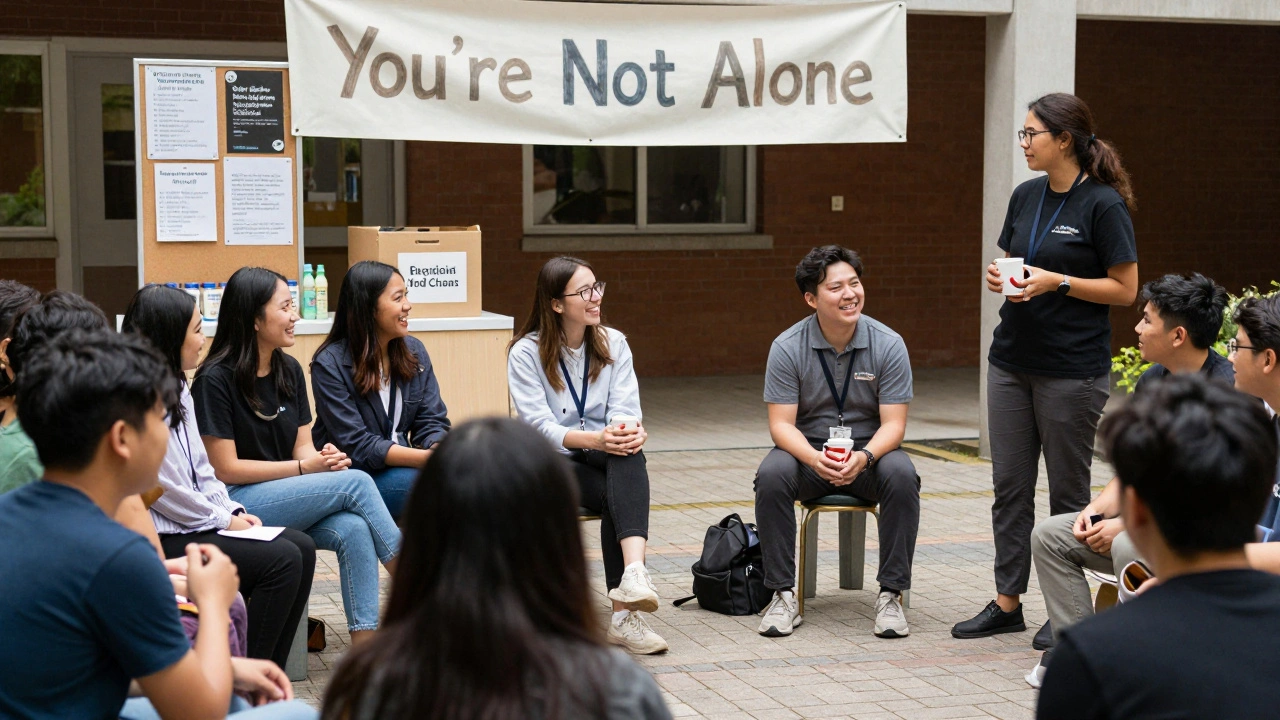
At the University of York, wellbeing staff host monthly ‘Coffee and Chat’ events. No agenda. No questions. Just free coffee and a chance to talk to someone who’s been there. Over 70% of attendees said they’d never have reached out otherwise.
What You Can Do Right Now
You don’t have to wait until you’re in crisis. Wellbeing teams are there to help you stay steady, not just recover. Here’s how to use them:
- Find your wellbeing center. Search your university’s website for ‘student wellbeing’ or ‘counselling services.’ Most have a map, opening hours, and contact info.
- Try a drop-in session. You don’t need to book. Just show up. Bring a notebook if you want to write down tips.
- Ask about peer support. Many campuses have student-run wellbeing groups. Talking to someone who’s been through it can be more comforting than talking to a professional.
- Use online tools. Universities often provide free access to apps like SilverCloud or Togetherall for anonymous, 24/7 mental health support.
- Don’t wait for ‘bad enough.’ If you’ve been feeling off for more than two weeks, it’s time to talk. You don’t need to be ‘that bad’ to deserve help.
What’s Changed in the Last Five Years
Before 2020, wellbeing services were often underfunded and overstretched. One advisor might be responsible for 5,000 students. Now, most universities have reduced caseloads to under 1,500 per advisor. Budgets have increased by an average of 65% since 2021.
There’s also more training. Staff now learn trauma-informed care, cultural sensitivity, and how to support neurodivergent students. At Imperial College London, wellbeing advisors complete 40 hours of mandatory training each year-more than many NHS therapists.
And they’re no longer hidden away in basement offices. Many wellbeing centers now have cozy lounges, quiet rooms, and even therapy dogs. The message is clear: your mental health matters as much as your grades.
Real Impact, Real Stories
One student at the University of Glasgow started having panic attacks during exams. She thought she was failing. She wasn’t. She was just overwhelmed. Her wellbeing advisor helped her apply for exam accommodations, taught her breathing techniques, and connected her with a support group. She graduated with first-class honors.
Another, a first-generation student from Somalia studying at the University of Sheffield, struggled with isolation and cultural pressure. The wellbeing team linked her with a cultural mentor and arranged weekly meals with other international students. She now runs the university’s international wellbeing network.
These aren’t exceptions. They’re becoming the norm.
Final Thought
University isn’t just about getting a degree. It’s about learning how to live. And if you’re struggling, that’s not a failure. It’s a signal. Student wellbeing teams are built for that moment-not to fix you, but to walk beside you until you find your footing again. You don’t have to do it alone. And you don’t have to wait until you’re broken to ask for help.
Do wellbeing services show up on my academic record?
No. Using wellbeing services does not appear on your transcript, degree certificate, or any official academic record. Your conversations are confidential unless you’re at risk of harming yourself or others. Even then, only the minimum necessary information is shared, and usually only with your consent.
Can international students access these services?
Yes. All UK universities offer wellbeing services to international students at no extra cost. Many teams have multilingual staff or access to translation services. Some universities even have dedicated advisors for international students who understand visa stress, cultural adjustment, and homesickness.
What if I don’t feel comfortable talking to a counselor?
You don’t have to talk to a counselor if you’re not ready. Many wellbeing teams offer alternatives: peer support groups, online chat platforms like Togetherall, mindfulness workshops, or even just a quiet space to sit and breathe. You can start with a coffee and a chat with a wellbeing officer-no therapy required.
Are wellbeing services free?
Yes. All student wellbeing services in UK universities are free for enrolled students. This includes counseling, crisis support, disability accommodations, and peer mentoring. There are no hidden fees or insurance requirements.
How do I know if I need help?
You don’t need to be in crisis to reach out. If you’ve been feeling persistently low, anxious, overwhelmed, or disconnected for more than two weeks-if you’re sleeping too much or too little, skipping meals, avoiding friends, or struggling to focus-it’s time to talk. You don’t need a reason. Just curiosity. Just a quiet voice saying, ‘I think I could use some support.’
Wellbeing teams are not a backup plan. They’re part of your education. And asking for help isn’t weakness-it’s one of the smartest things you’ll ever do.