
You’re juggling lectures, essays, and a part-time job that’s actually starting to pay well. Maybe you’re freelancing as a graphic designer, delivering food on weekends, or selling handmade goods online. It feels great to have your own cash flow, but there’s a nagging question in the back of your mind: does my side hustle income affect my student finance?
The short answer is yes, it can. But it’s not as scary as it sounds if you know how the system works. The UK student finance system, primarily managed by the Student Loans Company (SLC) and assessed by bodies like Student Finance England, Wales, Scotland, or Northern Ireland, uses your household income to determine how much maintenance loan you get. Your personal earnings from work usually don’t touch your tuition fee loan, but they can impact your maintenance grant or loan eligibility depending on who assesses you and what kind of income it is.
| Aspect | Impact on Finance |
|---|---|
| Tuition Fee Loan | No impact from your personal side hustle income. |
| Maintenance Loan | Can be reduced if assessed against parental income; your own earnings rarely reduce this directly unless specific grants apply. |
| Means-Tested Grants | Directly affected. High personal earnings can disqualify you from certain bursaries. |
| Parental Income | Still the main driver for most students. Your side hustle doesn't replace their assessment. |
Who Actually Assesses Your Money?
First off, let’s clear up a common confusion. When people say "student finance," they often mean the whole package. In reality, the assessment process differs slightly across the four UK nations. For most English students, Student Finance England is the government body responsible for assessing eligibility for student loans and grants based on household income. They look at your parents’ or partner’s income to decide your maintenance support. Your own income from a Saturday job or freelance gig generally doesn’t lower your maintenance loan amount because that calculation is tied to your household, not your individual bank account.
However, things change if you are applying for specific means-tested grants such as the Disabled Students' Allowance or specific hardship funds. These are different beasts. If you earn too much, you might lose eligibility for extra help designed for low-income students. This is where the line gets blurry. If you’re a mature student with no parental support, your own income becomes the primary metric. Suddenly, that lucrative side hustle could mean you receive less state support because you’re deemed capable of funding yourself.
The Difference Between Maintenance Loans and Grants
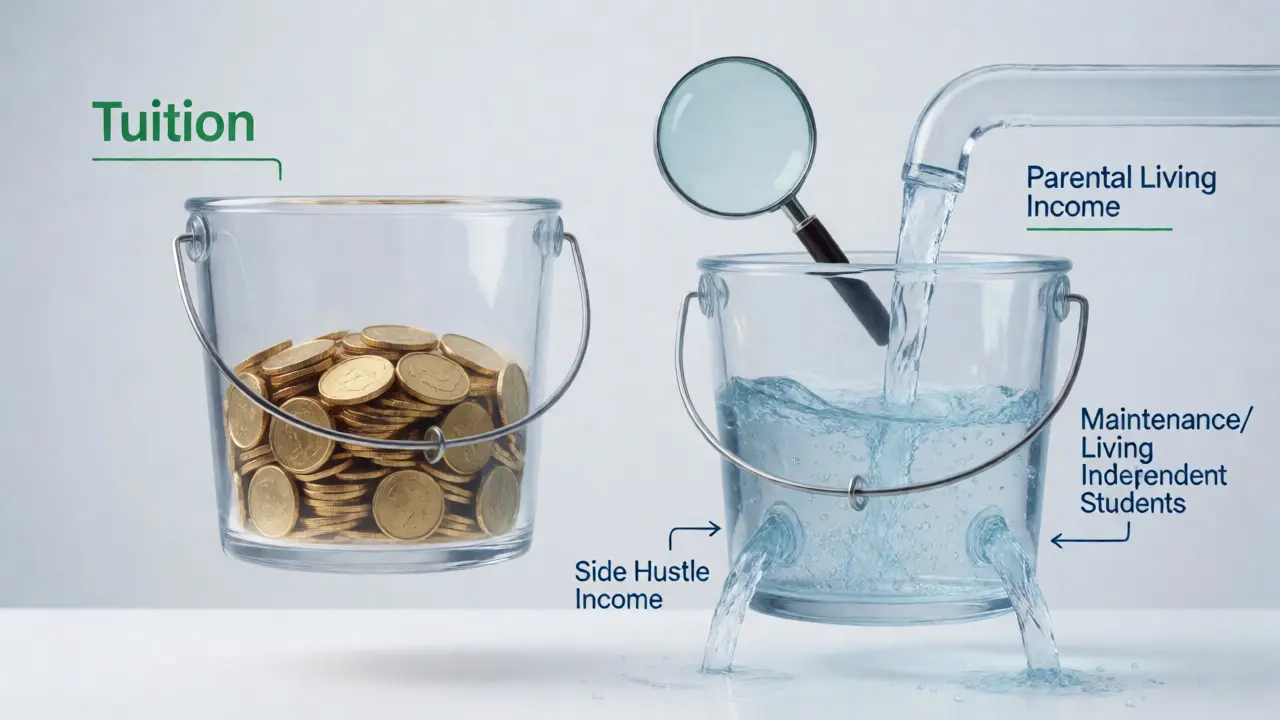
Think of your student finance package as two separate buckets. One bucket is for tuition fees, paid directly to your university. The other is for living costs, paid into your bank account. Your side hustle income has zero effect on the tuition bucket. You get the full amount regardless of whether you earn £500 or £5,000 a month from your business.
The living cost bucket is trickier. For standard undergraduate students under 25 without children, the maintenance loan is calculated based on parental income. Let’s say your parents earn £40,000 a year. You’ll get a partial maintenance loan. Now, imagine you start earning £1,000 a month from freelance coding. Does Student Finance England take that away? Usually, no. They don’t deduct your earnings from the maintenance loan itself. But here’s the catch: if you apply for additional non-repayable grants like the Childcare Grant or financial aid specifically for students with dependents or disabilities, those assessments often look at *your* financial situation more closely.
If you are an independent student-perhaps over 25, married, or having been out of education for three years-your own income matters massively. In this scenario, Student Finance will assess your taxable income. If your side hustle pushes you above certain thresholds, your maintenance loan drops significantly. For example, if you’re independent and earn over £25,000 a year, you might only qualify for a minimal contribution towards living costs.
Tax Implications You Can’t Ignore
Before you worry about losing student finance, you need to worry about HM Revenue & Customs (HMRC is the United Kingdom's tax, payments, and customs authority). Many students forget that just because you’re a student, you aren’t exempt from tax laws. If you set up as a sole trader for your side hustle, you must register for Self Assessment if your gross income exceeds £1,000 in a tax year. This is known as the Trading Allowance.
Here is where it gets interesting. If you declare your side hustle income to HMRC, does Student Finance see it? Not automatically. Student Finance England does not directly pull data from HMRC for your personal earnings in real-time during the initial application. However, if you are claiming benefits or specific grants, discrepancies between declared income and actual earnings can cause audits. More importantly, paying tax on your side hustle reduces your net profit. If you are an independent student whose finance is means-tested against your income, keeping accurate records of allowable expenses (like laptop wear and tear, internet bills, or travel) can lower your taxable profit, potentially preserving more of your student support.
How Different Types of Side Hustles Are Treated
Not all money coming in is treated equally. There’s a distinct difference between employment income and self-employment profits.
- Employment Income: If you work part-time for a company via PAYE (Pay As You Earn), your payslip shows gross and net income. For most dependent students, this doesn’t affect the maintenance loan calculation, which relies on parental figures. However, some universities have hardship funds that look at your total disposable income, including wages.
- Self-Employment/Freelancing: This is where the "profit" figure matters. If you make £10,000 revenue but spend £4,000 on software and equipment, your profit is £6,000. Independent students are assessed on this profit, not the revenue. Dependent students usually ignore this for SFE calculations, but again, check specific grant criteria.
- Rental Income: If you sublet a room in your house, this counts as income. If you live with your parents, they might be taxed on this rental income, which could inadvertently raise their assessed income, lowering your maintenance loan. This is a classic trap many students miss.
Strategic Timing and Reporting
When do you report this income? Typically, you fill out the application form once per academic year. You provide details of your household’s financial status. If you become independent mid-year, you might need to re-evaluate. But for the vast majority of undergrads, the key takeaway is this: keep doing your side hustle. The risk of losing significant student finance due to modest side hustle earnings is low for dependent students.
However, transparency is vital. If you are applying for a Discretionary Fund from your university, these funds are designed to help students facing unexpected financial hardship. If you tell them you have no income, but then buy a new MacBook Pro with cash from your side hustle, you might face scrutiny. Universities cross-reference applications with bank statements. Honesty saves you headaches later.

What Happens If You Don’t Declare?
Some students think, "I won’t mention my Uber driving." If you are a dependent student, Student Finance England likely won’t find out through automated checks for your maintenance loan. But if you are claiming Universal Credit alongside student finance, or if you are an independent student, hiding income is risky. Overpayments can happen. If Student Finance discovers you earned enough to disqualify you from a grant but didn’t declare it, they will ask for repayment. Interest accrues. It turns a small side hustle win into a long-term debt problem.
Consider the scenario of a Welsh student. Student Finance Wales offers grants rather than loans for some components. Their rules can differ slightly. Always check your specific national provider’s guidance notes. What applies in England might have nuances in Scotland or Northern Ireland regarding how "independent" status is verified.
Beyond Student Finance: Budgeting Realities
Even if your student finance isn’t cut, your side hustle affects your daily life. Earning extra money changes your spending habits. You might feel richer, leading to lifestyle inflation. But remember, student loans are repayable. If you rely on the loan to cover rent and use your side hustle for fun, you’re building a safety net. If you use the side hustle to cover rent and save the loan money, you’re investing in your future self.
A smart move is to separate accounts. Keep one account for student finance payments and another for business income. This makes tax time easier and helps you track exactly how much your side hustle contributes to your overall wealth versus how much comes from state support. It also prevents accidental mixing of funds, which can confuse bank transactions when applying for credit cards or renting post-graduation.
Frequently Asked Questions
Does working part-time reduce my student maintenance loan?
For most dependent undergraduate students in England, working part-time does not reduce the maintenance loan amount. The loan is primarily means-tested against parental income, not the student's own earnings. However, if you are classified as an independent student, your own income will directly reduce your entitlement.
Do I have to pay tax on my side hustle income while studying?
Yes, if your self-employment income exceeds the £1,000 Trading Allowance, you must register with HMRC and file a Self Assessment tax return. You will pay income tax and National Insurance on profits above the personal allowance threshold, which is currently £12,570 per year.
Will my parents' student finance assessment include my earnings?
Generally, no. The assessment for dependent students looks at the parents' or partner's income. Your personal earnings from jobs or businesses are typically excluded from this specific calculation for the maintenance loan, though they may be relevant for university-specific hardship funds.
What if I am an independent student?
If you are independent (over 25, married, or financially independent for 3+ years), Student Finance assesses your own taxable income. Higher earnings from side hustles will significantly reduce your maintenance loan and may eliminate eligibility for certain grants.
Does receiving child benefit affect my student finance?
Child Benefit is usually ignored in means-testing for student finance. However, if you have your own children, the Childcare Grant may be available, and your income level will determine how much of childcare costs are covered.