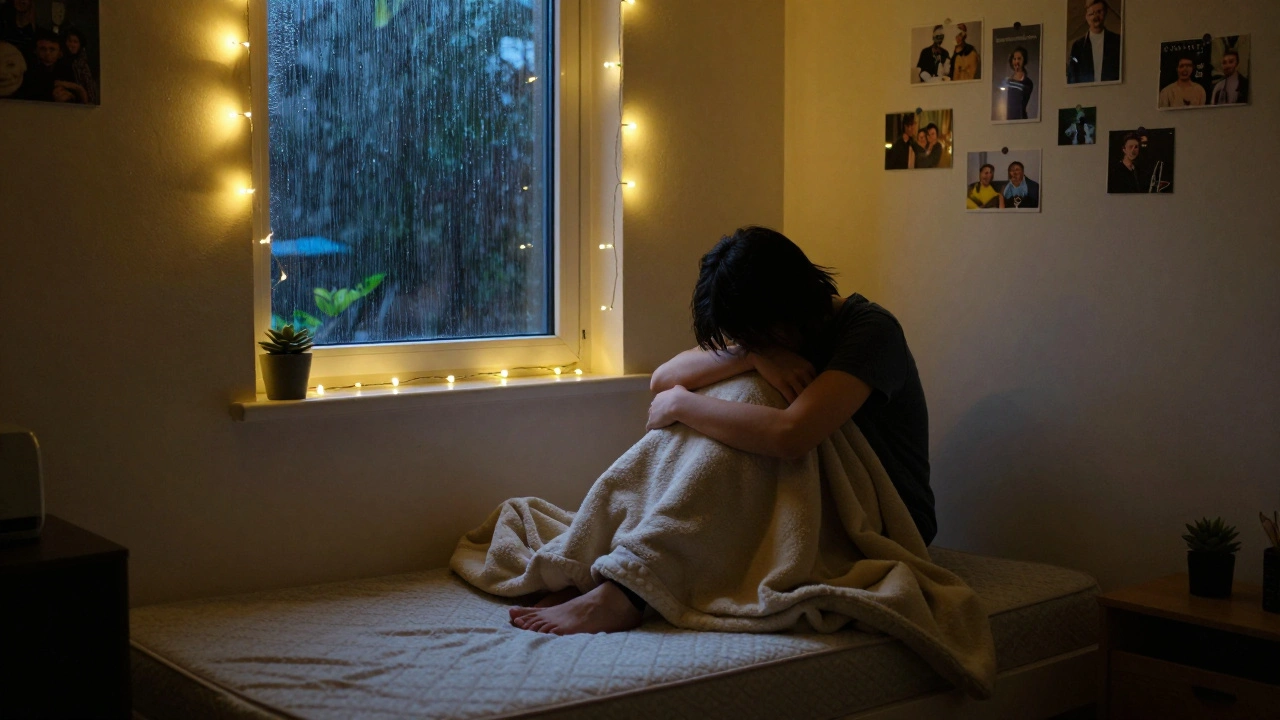
It’s 8 p.m. in London, and you’re sitting on your bed in a tiny room with a mattress that feels too thin, a desk that’s too small, and a window that doesn’t open all the way. Outside, rain taps against the glass. You haven’t heard your mom’s voice in three weeks. The smell of your favorite home-cooked meal is gone. All you have is a microwave, a packet of instant noodles, and a quiet that feels too loud. This isn’t just missing home-it’s homesickness, and it hits harder than anyone warns you about.
Why UK Student Halls Feel So Foreign
UK student halls aren’t like dorms in the U.S. or apartments back home. They’re often shared rooms, sometimes with strangers you’ve never met. Bathrooms might be on your floor, not in your room. Kitchens are communal, and someone always leaves their dishes in the sink. The noise level? It’s not a party every night, but it’s not silent either. You hear footsteps at 3 a.m., someone laughing in the hallway, or a flatmate’s alarm blaring at 6 a.m. on a Saturday.This isn’t laziness or bad manners-it’s just how it works. Most halls are built for efficiency, not comfort. You didn’t sign up for a luxury apartment. You signed up for a place to sleep while you study. But that doesn’t mean you have to live like a guest in someone else’s life.
Small Things That Make a Big Difference
You don’t need to redecorate your entire room to feel at home. Start small. A single photo of your family taped to the wall? That’s enough. A soft blanket you brought from home? Suddenly, your bed isn’t just a bed-it’s a safe spot. A candle with your favorite scent-vanilla, pine, or even that weird lavender soap your grandma used-can trigger memories and calm your nerves.One student in Manchester brought her grandmother’s embroidered pillow. She didn’t say why. She just slept with it every night. Three weeks later, she told her roommate, “It’s the only thing that makes me feel like I’m not alone.” That’s the power of a single object with meaning.
Hang up fairy lights. They’re cheap, legal in most halls, and instantly soften harsh fluorescent lighting. Put up a poster of a place you love-your hometown park, a beach from vacation, your dog’s face. These aren’t decorations. They’re anchors.
Creating Rituals, Not Just Routines
Routines keep you organized. Rituals keep you grounded.Every Sunday night, make tea the way your dad used to-two sugars, no milk. Sit by your window and call someone back home. Don’t text. Talk. Let yourself cry if you need to. Don’t rush it. That 20-minute call might be the only time you feel like yourself all week.
Or cook one dish from home every Friday. Even if it’s just rice and beans with a dash of cumin. Don’t worry if it’s not perfect. The smell alone will remind you: you’re still you. You didn’t leave your identity behind when you boarded the plane.
Some students keep a journal next to their bed. Not a diary. Just three lines every night: “One thing I’m grateful for,” “One thing I did well,” “One thing I miss.” It sounds simple. But after a month, flipping back through those pages shows you’ve survived more than you thought.

Building a New Kind of Family
You don’t have to replace your family. But you do need new people who get it.Join a club. Not because you’re good at it, but because you want to be around others who are also trying to belong. The badminton club? The baking group? The silent reading circle? Doesn’t matter. Show up. Say hi. Ask someone what they miss most from home. You’ll be surprised how many say the same thing you do.
One student in Edinburgh started a “Shared Meals” group on her hall’s WhatsApp. Every Thursday, someone cooks a dish from their culture. Last week, it was Nigerian jollof rice. The week before, it was Polish pierogi. No one was an expert. Everyone brought a container, a spoon, and a story. That’s how friendships start-not with big gestures, but with shared food and quiet conversations.
When the Feeling Won’t Go Away
Homesickness isn’t weakness. It’s proof you love something deeply. But if it’s keeping you from sleeping, eating, or going to class, it’s time to get help.Every UK university has free, confidential student counseling. You don’t need a referral. You don’t need to be “in crisis.” You just need to feel like you’re drowning. Walk into the student services office. Say, “I’m struggling to adjust.” That’s it. They’ve heard it a thousand times. They know what to do.
Some halls have peer support programs-trained students who’ve been through it. They’re not therapists. But they’re the ones who’ve cried in their own rooms too. They’ll say, “Me too.” And that one word can change everything.
It Gets Easier-But Not Because You Stop Missing Home
You won’t stop missing your family. You won’t stop craving your favorite food or the sound of your dog barking in the backyard. That’s okay. Homesickness doesn’t disappear. It changes.After six months, you might find yourself laughing with your flatmates about the time someone set off the fire alarm cooking pasta. You’ll start saying “we” instead of “I.” You’ll plan trips back home-and then plan trips to other cities with your new friends. You’ll realize you’re not just surviving university. You’re building a new life.
The day you realize you’ve started calling your hall “home,” you won’t feel guilty. You’ll feel proud. Because you didn’t give up on your old home. You just learned how to carry it with you-and make space for something new.
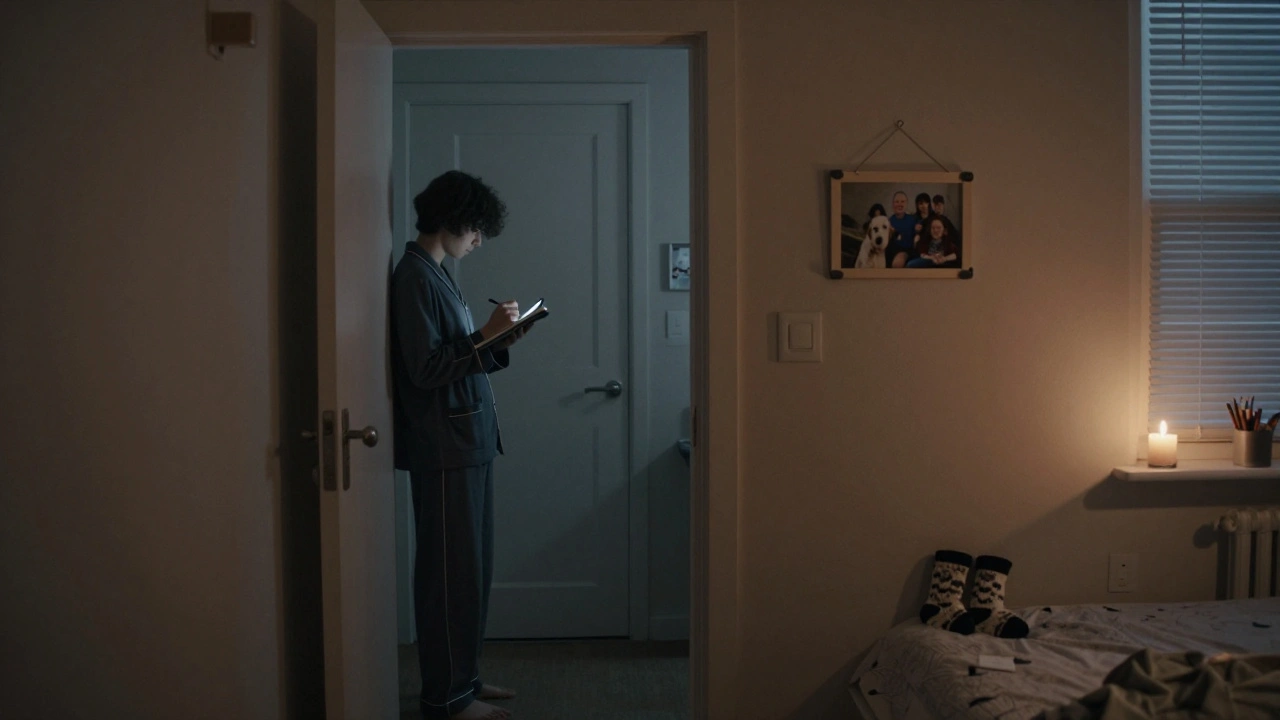
What to Pack Before You Arrive
Here’s what actually helps, based on what students have told us:- A soft blanket or quilt from home
- Photos of loved ones (printed, not just on your phone)
- A small candle or essential oil diffuser (check hall rules first)
- Your favorite snack from home (something you can eat alone when you need comfort)
- A small plant (succulents survive even if you forget to water them)
- A notebook and pen-not for assignments, but for your own thoughts
- A pair of cozy socks you only wear at night
- A playlist of songs that remind you of home
You don’t need to bring everything. Just bring what makes your heart feel a little lighter.
How Long Does It Take to Adjust?
There’s no magic timeline. Some students feel better in two weeks. Others take six months. Both are normal.Studies from the University of Bristol show that most students report feeling significantly less homesick after 8-12 weeks. But that doesn’t mean the sadness is gone. It means you’ve learned how to live with it.
The key isn’t to “get over it.” It’s to let it be part of your story-not the whole thing.
Is it normal to cry in student halls?
Yes. It’s completely normal. Many students cry in their rooms during the first few weeks. You’re adjusting to a new country, a new routine, and often, a new language. Crying doesn’t mean you’re weak-it means you’re human. Most universities have counselors who’ve heard this exact story hundreds of times. You’re not alone.
Can I decorate my room in UK student halls?
Most halls allow removable decorations like fairy lights, posters, and command strips. Avoid nails, tape, or paint. Check your hall’s handbook or ask the warden. Many students use washi tape, magnetic hooks, or adhesive photo frames. A few fairy lights and a photo can turn a cold room into a personal space.
What if my flatmates are rude or don’t clean up?
It happens. Not everyone has the same standards. Start with a polite conversation: “Hey, I know we’re all busy, but could we try to clean the kitchen after use?” If that doesn’t work, talk to your hall’s resident advisor. They’re trained to handle these issues. You don’t have to live with mess or disrespect.
Should I go home for holidays if I’m still homesick?
It’s okay to go home if you can. But don’t use it as an escape. Use the time to reflect: What made you feel better there? Can you bring that back with you? Sometimes, going home makes you miss your new life even more. Other times, it reminds you how far you’ve come. Either way, it’s part of the journey.
Do other international students feel this way too?
Yes. In fact, most do. International students often feel it more intensely because of language barriers, cultural differences, and distance. But even UK students away from home for the first time feel it. You’re not the only one. Look around-you’ll find others who are quietly struggling too. A simple “Hey, me too” can start a friendship.
What Comes Next
You won’t wake up one day and suddenly feel “fixed.” But you will notice small shifts. You’ll laugh at a joke you didn’t understand last month. You’ll find yourself recommending your favorite café to a new student. You’ll stop checking the time until your next call home.That’s when you know: you’re not just surviving. You’re growing. And that’s the quiet victory no one talks about.