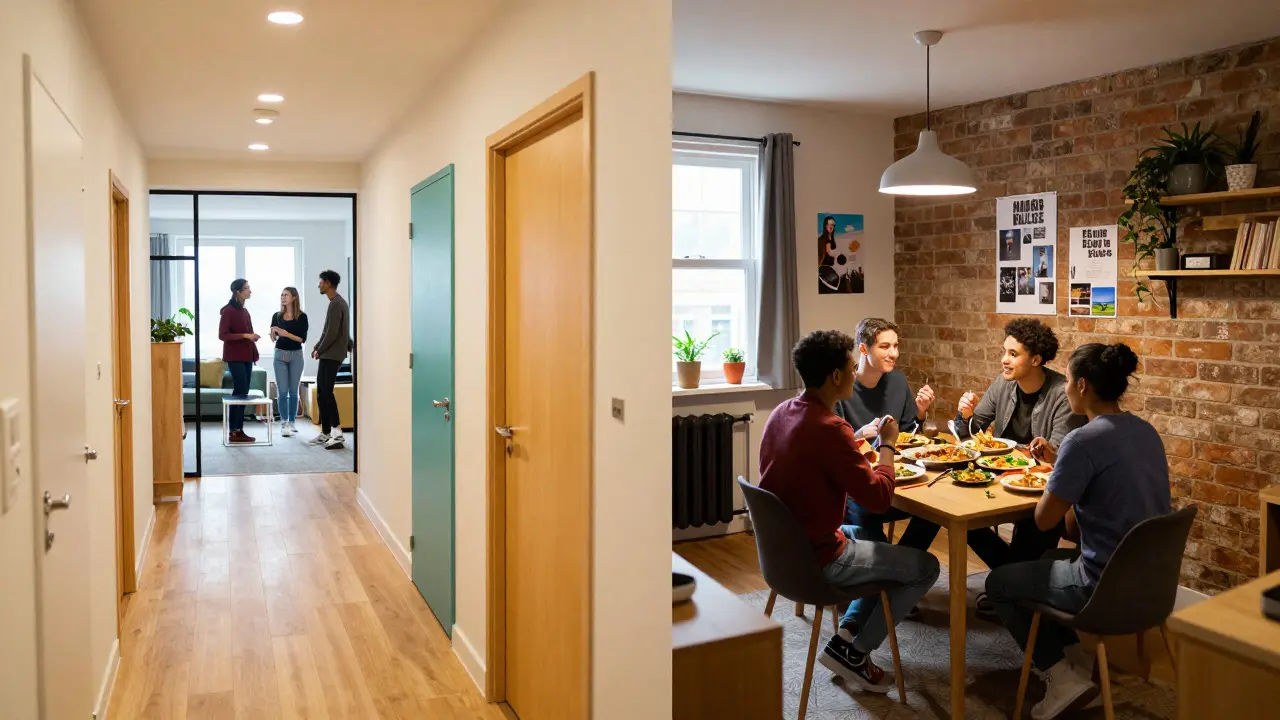
Choosing where to live as a student in the UK is one of the biggest decisions you’ll make before your first semester starts. It’s not just about finding a roof over your head; it’s about shaping your social life, your budget, and your daily routine. You’re essentially choosing between two very different worlds: the structured, communal environment of Halls of Residence is purpose-built student accommodation provided by universities or third-party operators, offering managed living spaces with shared facilities. On the other hand, Private Housing is rental properties such as flats, houses, or rooms let by individual landlords or agencies, requiring tenants to manage their own tenancy agreements and utilities.
The right choice depends on your personality, your financial situation, and how much independence you want in your first year (or beyond). Let’s break down exactly what each option offers so you can make a decision that fits your life.
Key Takeaways
- Halls of Residence are ideal for first-year students seeking community, safety, and all-inclusive billing, though they often come at a premium price.
- Private Housing offers more space, privacy, and flexibility, but requires managing bills, repairs, and potentially higher initial setup costs.
- Budgeting is critical: Halls usually include utilities and internet, while private rentals require separate payment for energy, water, and broadband.
- Social dynamics differ significantly; Halls foster instant community, while private housing relies on pre-existing friendships or local networking.
- Contract lengths vary: Halls typically offer fixed academic year contracts, whereas private leases can be flexible or long-term.
The Cost Breakdown: What Are You Really Paying?
Money is usually the first factor students consider. At first glance, Halls of Residence might seem expensive because the weekly rent is higher than a single room in a private flat. However, this comparison is misleading if you don’t look at the total cost of living.
In Halls, the rent is almost always an "all-inclusive" figure. This means your bill covers electricity, gas, water, Wi-Fi, and often cleaning services for common areas. You rarely need to worry about unexpected spikes in energy bills during winter. For example, a standard en-suite room in a major city like London or Manchester might cost around £180-£250 per week, but that number stays consistent throughout the term.
Private housing flips this model. You might find a room for £150 per week, which looks cheaper. But then you have to add your share of utility bills. In the UK, energy prices have been volatile, and splitting these costs among housemates can lead to disputes. Add in broadband, council tax (though students are usually exempt if all occupants are full-time students), and any required insurance, and the monthly total can rival or exceed Hall rates.
| Cost Category | Halls of Residence | Private Housing |
|---|---|---|
| Rent (per person) | £700 - £1,000 | £600 - £900 |
| Utilities (Electricity/Gas/Water) | Included | £100 - £200 (split) |
| Internet/Broadband | Included | £30 - £50 (split) |
| Cleaning/Maintenance | Included | Self-managed or Agency Fee |
| Initial Setup (Deposit/First Month) | Often reduced or spread | Usually 4-6 weeks rent upfront |
One hidden cost in private housing is the "setup fee." You often need to buy basic furniture, kitchenware, and bedding immediately, as most private rentals are unfurnished. Halls, conversely, are typically fully furnished with beds, desks, wardrobes, and sometimes even kettles and microwaves in the rooms.
Lifestyle and Social Environment
Your living space heavily influences who you meet and how you spend your evenings. If you’re coming from abroad or starting university without established friends, Halls of Residence are designed to solve this problem. They are built with communal kitchens, lounges, and event spaces that encourage interaction. Many operators organize orientation events, movie nights, and study groups specifically for residents.
Living in a Hall creates a "village" effect. You see the same faces in the laundry room, the dining hall, or the corridor every day. This proximity makes it easier to form deep connections quickly. For introverts, this can be overwhelming, but for extroverts, it’s a goldmine.
Private housing offers a different social dynamic. If you move in with friends you already know, you get guaranteed compatibility and peace. There’s no risk of clashing with strangers over noise levels or cleaning schedules. However, if you move into a private flat with people you’ve only met online or through a platform, the social friction can be high. You’re responsible for maintaining the relationship, and there’s no central authority to mediate conflicts.
Privacy is another key differentiator. In Halls, even "en-suite" rooms mean you share a bathroom with someone else, and walls are thin. Noise from neighbors is a constant background hum. In private housing, especially if you rent a whole flat or house, you control the noise levels. You can play music, host guests, or sleep in until noon without worrying about a complaint being filed with a warden.

Convenience and Daily Logistics
Consider the small things that eat up your time. In Halls of Residence, maintenance is handled by the provider. If your boiler breaks or a pipe leaks, you log a ticket, and a technician comes to fix it. You don’t need to know who the landlord is or chase them for repairs. This is invaluable when you’re busy with exams or work.
Location is also a strategic advantage for Halls. Most are located within walking distance of the main campus, lecture halls, and libraries. This saves you money on transport and time on commuting. Private housing, unless you pay a significant premium for central locations, often requires a bus or train ride to get to classes. In cities like Edinburgh or Oxford, this commute can easily add 30-45 minutes to your day.
However, private housing wins on freedom. You can renovate your space, hang pictures, cook elaborate meals without worrying about fire alarms triggering from smoke detectors calibrated for institutional use, and keep pets (if allowed). Halls often have strict rules about cooking, decorating, and visitors. Some even have curfews or quiet hours that feel restrictive to older students.
Who Should Choose Which Option?
There is no one-size-fits-all answer, but certain profiles fit better with specific options.
Choose Halls of Residence if:
- You are a first-year undergraduate or international student.
- You value safety and security (24-hour reception, CCTV, ID access).
- You want a predictable budget with no surprise bills.
- You struggle to make friends in new environments.
- You prefer minimal administrative hassle regarding repairs and contracts.
Choose Private Housing if:
- You are a postgraduate or returning student with established networks.
- You need maximum privacy and control over your environment.
- You plan to stay longer than one academic year (flexible leases).
- You have a larger budget for upfront costs but want lower monthly outgoings.
- You enjoy cooking, hosting, and customizing your living space.
Many students start in Halls for their first year to ease into university life, then move to private housing for their second and third years once they’ve built their social circle and gained confidence in managing their finances.

Pitfalls to Avoid
Regardless of which path you take, there are common traps to watch out for.
In Halls, read the contract carefully. Does the rent cover the entire academic year, including holidays? Some contracts exclude summer months, meaning you pay for empty space. Also, check the deposit policy. While Halls often have lower deposits, some charge non-refundable admin fees that can add up to hundreds of pounds.
In private housing, verify the landlord’s reputation. Use platforms like Rightmove or Zoopla to check reviews, but also ask previous tenants if possible. Ensure the property has a valid Gas Safety Certificate and EPC rating. A low EPC rating means poor insulation, leading to higher energy bills and colder rooms in winter. Finally, clarify who pays for what. Is the landlord responsible for structural repairs? Who fixes the washing machine if it breaks? Get everything in writing.
Frequently Asked Questions
Are Halls of Residence only for first-year students?
No, but they are primarily marketed to first-years. Many universities reserve the best rooms for incoming students, but second and third-year students can still apply. Postgraduates may have limited options depending on the institution's policies.
Can I sublet my room in a Hall of Residence?
Generally, no. Most Hall contracts prohibit subletting without explicit permission. If you need to leave early, you must find a replacement tenant approved by the operator, which can be difficult. Private housing leases are more flexible, allowing subletting or assignment if agreed upon by the landlord.
Which option is safer for international students?
Halls of Residence are generally considered safer due to 24-hour security, staff presence, and a close-knit community. The structured environment reduces risks associated with unknown landlords or isolated locations. However, private housing in well-reviewed, populated areas can also be safe if due diligence is performed.
Do I need to pay Council Tax in either option?
Full-time students are exempt from Council Tax in the UK. If you live in Halls, this is automatically handled. In private housing, you must register your exemption with the local council using your Student Status Letter. If you live with non-students, they will likely pay the tax, and you won't contribute unless you agree otherwise.
Is it harder to find private housing in popular cities?
Yes. Cities like London, Manchester, and Birmingham have high demand for private student housing. Rooms go fast, and prices rise. Applying early (June-July) is crucial. Halls also fill up quickly, but they have a set capacity, so waiting lists are less chaotic than the open market of private listings.