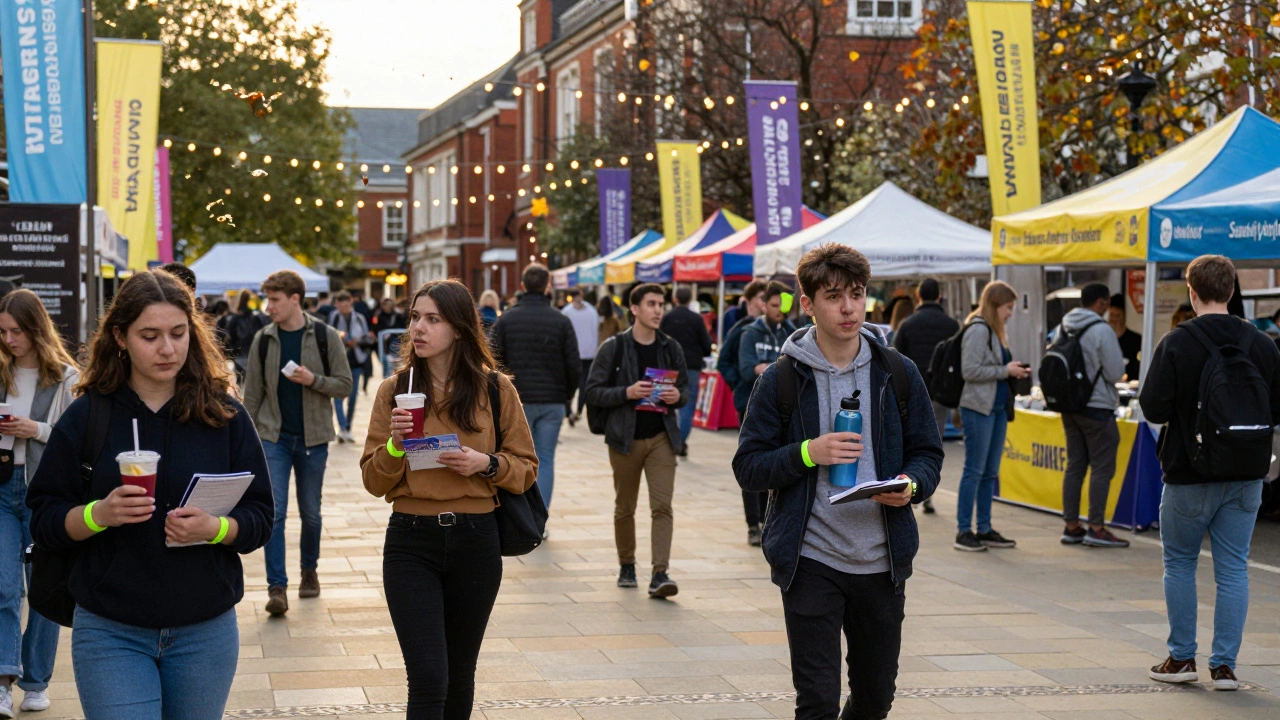
Picture this: you’ve just landed in the UK, suitcase half-packed, phone battery at 3%, and you’re standing in a crowded university square surrounded by people wearing neon wristbands and holding cups of free smoothies. Welcome to Fresher’s Week. It’s not a party. It’s not a test. It’s a full-on sensory overload designed to turn strangers into friends - and sometimes, into people you’ll remember for the rest of your life. Or at least until the second week of lectures.
What Actually Happens During Fresher’s Week?
Fresher’s Week isn’t just one event. It’s a week-long sequence of organized chaos. Universities plan it down to the minute: free food, club fairs, campus tours, alcohol-fueled welcome parties, and mandatory lectures on plagiarism and mental health support. You’ll get a student card, a lanyard, and a free T-shirt that says something like ‘I Survived Fresher’s Week 2026’ - even if you spent most of it in bed with a headache.
The goal? To make you feel like you belong. But the reality? You’ll feel lost more often than not. That’s normal. Almost everyone is just as confused as you are. The key isn’t to know everyone. It’s to show up - even when you’re tired, even when you’d rather stay in your room.
Surviving the First Social Events
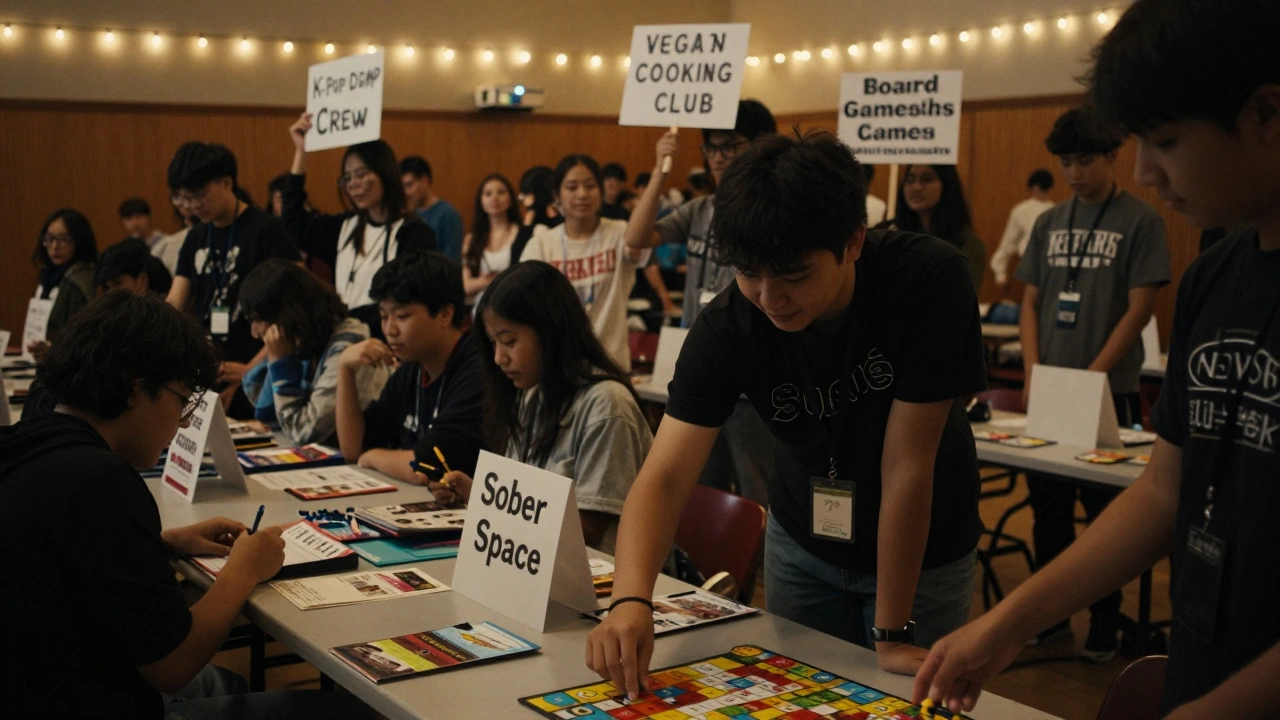
The first social event is usually a ‘Welcome Pub Night’ or a ‘Society Fair’ - a loud, crowded hall with 200+ student groups waving banners and handing out free pens. You’ll feel pressured to join five clubs at once: the Debating Society, the K-Pop Dance Crew, the Vegan Cooking Club, the Board Games Enthusiasts, and the ‘I Just Want to Chill’ Group (yes, that’s a real one).
Here’s the trick: don’t try to do it all. Pick one thing that genuinely interests you - something that makes you forget you’re nervous. Maybe it’s the film society that shows indie movies on a projector in the basement. Maybe it’s the hiking group that meets every Saturday. Don’t join because it looks cool. Join because you’d actually go.
And the parties? They’re not all wild. Some are just people dancing badly to 2010s pop songs in a student union room. Others? They’re loud, messy, and overwhelming. If you’re not into drinking, that’s fine. Many universities now host alcohol-free zones with board games, live music, or karaoke. Look for the signs that say ‘Sober Space’ or ‘No Alcohol Welcome Here.’ You’re not missing out. You’re choosing your own vibe.
How to Make Real Connections
People think you need to be loud or funny to make friends. You don’t. You just need to be present. Say hi to the person sitting next to you in the orientation lecture. Ask them where they’re from. If they’re from a place you’ve never heard of, ask them to tell you about it. Most students are desperate to talk to someone who actually listens.
Don’t wait for someone to approach you. Start small. Text someone from your hall: ‘Hey, want to grab coffee tomorrow?’ That’s it. No pressure. No script. If they say yes, great. If they say no, it’s not personal. They’re probably just as nervous.
And if you’re introverted? You’re not broken. Many of the most grounded people you’ll meet this year are quiet. They’re the ones who show up to the 7 a.m. study group, bring snacks, and never say much - but always remember your name. That’s the kind of friendship that lasts.
What to Pack (Beyond Clothes)
You’ve got your socks, your laptop, your favorite hoodie. But here’s what you won’t think to bring - until you need it:
- A reusable water bottle - free water is everywhere, but you’ll be walking a lot.
- Snacks - free food runs out fast. Granola bars, nuts, or dried fruit keep you from crashing after a long day.
- A small notebook - write down names, room numbers, and event times. You’ll forget them by lunchtime.
- A power strip - dorm rooms have one outlet. You’ll need it for your phone, laptop, and lamp.
- A sleep mask and earplugs - your neighbor might be blasting music at 2 a.m. and you’ll thank yourself later.
And don’t forget your ID. You’ll need it for everything: getting into events, buying food, using the library, even getting into your own hall sometimes.
When Things Get Too Much
It’s okay to feel overwhelmed. Some days, you’ll cry in the shower because you miss home. Or you’ll sit alone in your room wondering if you made a huge mistake. That’s not weakness. It’s human.
Every university has a student support team. They’re not just for crises. They’re for anyone who needs to talk - about loneliness, homesickness, stress, or just not knowing what to do next. You don’t need a diagnosis to walk in. Just say: ‘I’m struggling to adjust.’ That’s enough.
And if you’re not ready to talk to someone yet? Call someone back home. Or text a friend from school. Say: ‘Today was hard.’ You don’t need to explain why. Just say it.

What No One Tells You
Most students don’t make their best friends during Fresher’s Week. They make them in Week 4, when they’re both exhausted, studying for their first exam, and realize they’ve been sitting next to each other in the library for three days straight. That’s when real bonds form - not over free pizza, but over shared stress.
Also, the people who seem like they’ve got it all figured out? They’re probably just pretending. Everyone’s faking it a little. Even the ones who are dancing on tables at the party.
Fresher’s Week isn’t about being the life of the party. It’s about showing up, staying open, and giving yourself permission to be a little lost. You don’t need to remember every name. You don’t need to join every club. You just need to be there - even if it’s just for five minutes.
After the Week Ends
When Fresher’s Week is over, the music stops. The free food disappears. The neon wristbands get tossed in the bin. And suddenly, you’re left with a timetable, a pile of unread syllabi, and a quiet room.
That’s when the real work begins. But you’re not starting from zero. You’ve already done the hardest part: you showed up. You walked into a room full of strangers and didn’t turn around. That’s courage. And it’s the only thing you really need to start this chapter.
So breathe. You’re doing better than you think.
Do I have to go to every event during Fresher’s Week?
No. You don’t have to go to every event. In fact, trying to attend everything will leave you exhausted and overwhelmed. Pick one or two events per day that genuinely interest you. It’s better to show up fully to one thing than to half-heartedly attend five. Your energy matters more than your schedule.
What if I don’t drink alcohol? Will I be left out?
Not at all. Many universities now have dedicated alcohol-free social events - from movie nights to board game tournaments. You’ll find people who don’t drink, whether for personal, religious, or health reasons. You’re not the only one. Look for signs that say ‘Sober Space’ or ask the student union staff for non-alcoholic events. Your experience doesn’t need to revolve around alcohol to be meaningful.
How do I know if I’ve made the right choice of university?
You won’t know right away. The first week is about adjustment, not judgment. Give yourself time. Ask yourself: Do I feel safe here? Are there people who make me feel seen? Can I imagine myself studying here for the next year? Those are better questions than ‘Do I like the vibe?’ If the answer to those questions is yes, you’re on the right path - even if it feels strange at first.
What if I feel lonely during Fresher’s Week?
Feeling lonely is normal - and very common. You’re surrounded by people, but still alone in your thoughts. That’s okay. Reach out to one person. Text a classmate. Sit with someone at lunch. Say, ‘I’m new here - do you want to grab a coffee?’ Most people will say yes. If you’re not ready to talk to someone new, call someone you trust back home. You don’t need to fix it right away. Just let yourself feel it. It won’t last forever.
Are the free meals really worth it?
Yes - but not because they’re gourmet. They’re worth it because they’re a chance to sit with other students, even if you don’t know them yet. Use the free food as a reason to be in a shared space. You might end up talking to the person next to you about their hometown, their course, or how they’re surviving the first week. Those small conversations are the foundation of friendships. Plus, you’re saving money.