Every year, UK students throw away over 100,000 tonnes of food-enough to fill 40,000 wheelie bins. That’s not just money down the drain; it’s £300-£500 a year lost on food that never made it to your plate. The good news? You don’t need a fancy kitchen or a chef’s degree to cut that waste in half. You just need to freeze smarter, reuse leftovers better, and cook in batches. Here’s how real students are doing it-and saving cash while they’re at it.
Freezing Food Isn’t Just for Meals You Made Last Week
Most students think freezing means you’ve already failed-your groceries went bad, so now you’re stuck with a lump of mystery mush in the back of the freezer. But freezing isn’t a last resort. It’s a strategy. And it works best when you do it right from the start.
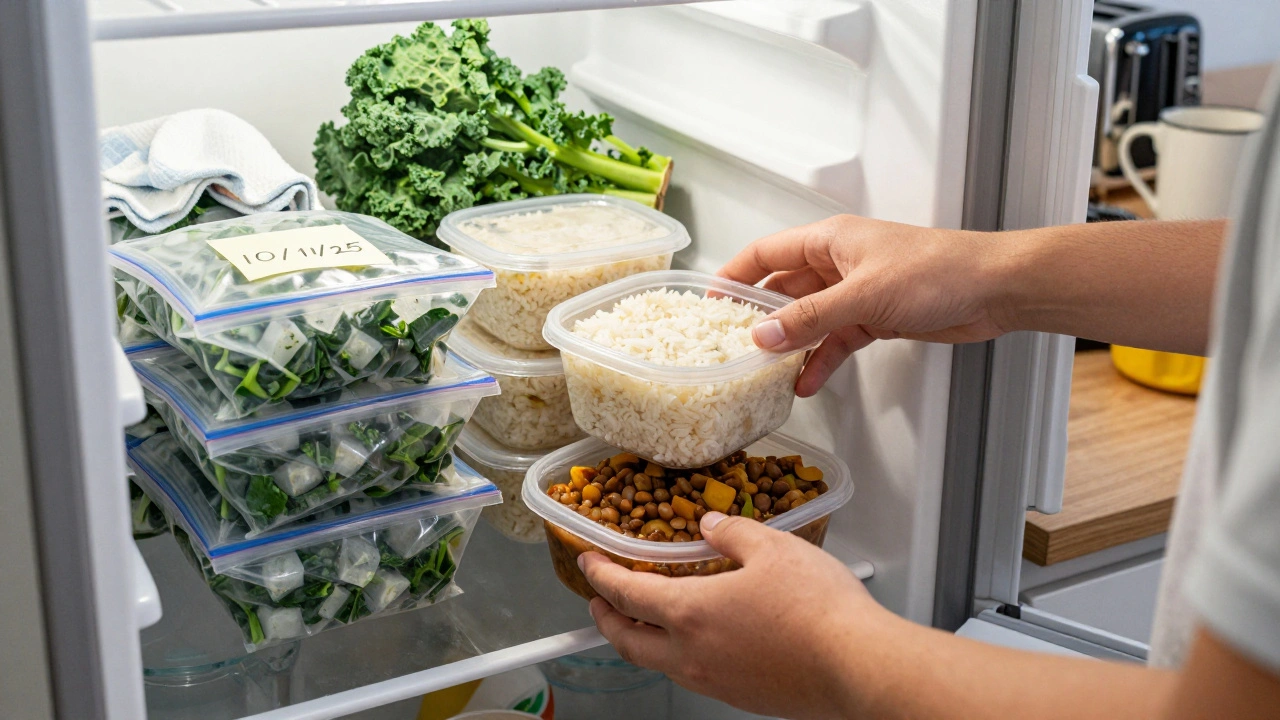
Take a bag of spinach. You only need a handful for your morning smoothie. Instead of letting the rest wilt, wash it, pat it dry, and freeze it in portions. No need to blanch. Just spread it on a baking sheet, freeze for an hour, then scoop into ziplock bags. You’ll have ready-to-blend greens for months. Same goes for herbs. Chop basil, parsley, or cilantro, mix with a splash of olive oil, and freeze in ice cube trays. Pop one out when you’re making pasta or soup.
Leftover cooked rice? Freeze it. Cold rice turns into rock-hard bricks, but frozen rice stays fluffy. Portion it into microwave-safe containers. When you’re rushing between lectures, just nuke it for 90 seconds. It’s better than instant noodles and costs less than £0.30 per serving.
Even bread gets a second life. Slice it, wrap it, freeze it. Toast straight from frozen. No need to defrost. You’ll never waste a loaf again.
Leftovers Aren’t a Burden-They’re Your Next Meal
“I cooked too much again,” you say. Good. That’s not a mistake. That’s planning.
Think of leftovers not as “yesterday’s dinner,” but as ingredients. A roasted chicken breast from Sunday? Shred it. Toss it into a wrap with some spinach, hummus, and a squeeze of lemon. Done in five minutes. Leftover mashed potatoes? Mix them with an egg, a pinch of salt, and fry them into crispy potato cakes. Serve with a fried egg and ketchup. You’ve turned waste into breakfast.
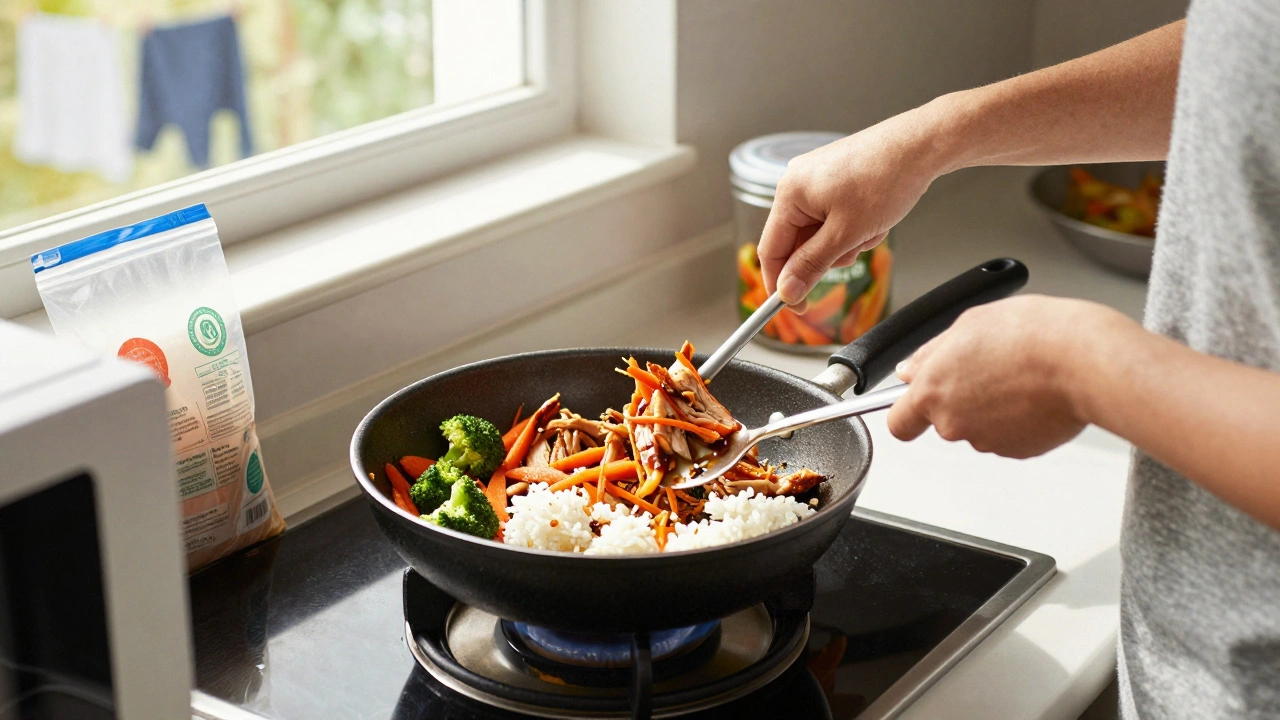
Stir-fries are your best friend. Any veggie that’s getting soft-carrots, broccoli, peppers, onions-chop it up. Toss it in a pan with soy sauce, garlic, and a splash of sesame oil. Add leftover rice or noodles. Done. You don’t even need a recipe. Just use what’s about to go bad.
One student in Manchester keeps a “leftover jar” on her fridge shelf. Every night, she dumps small bits of food into it: half a tomato, a spoonful of lentils, a few peas. On Sunday, she makes a big pot of soup. No waste. No stress. Just a warm, cheap meal.
Label everything. A sticky note with “Chicken + rice, 10/11/25” takes 10 seconds. That’s 10 seconds that saves you from throwing out something you could’ve eaten.
Batch Cooking: Cook Once, Eat All Week
Batch cooking sounds intimidating. You picture hours in the kitchen, spreadsheets, and meal prep apps. But it’s not that. It’s just cooking more than you need-once a week.
Start small. Pick one day-Sunday, maybe-and cook one big thing. A pot of lentil stew. A tray of baked sweet potatoes. A big pot of pasta sauce. That’s it. You don’t need five recipes. Just one.
Here’s what a real batch-cooking day looks like for a student in Leeds:
- Buy 2kg of brown lentils (£1.20), 3 onions (£0.60), 2 cans of chopped tomatoes (£0.80), a bag of carrots (£0.70).
- Chop everything, toss in a pot with water, bay leaf, garlic powder, and a pinch of cumin.
- Simmer for 45 minutes.
- Portion into six containers. Freeze three. Refrigerate three.
That’s £3.30 for six meals. That’s 55p per serving. Compare that to £4 for a takeaway curry. And you’re not eating plastic.
Do the same with rice and beans. Cook a big batch of rice. Cook a big batch of black beans (from dried-they’re cheaper than canned). Store them separately. Mix them together with salsa, cheese, and a squeeze of lime for tacos. Or add them to a salad. Or wrap them in a tortilla. You’ve got five different meals from one cooking session.
Pro tip: Use your oven. Roasting a whole tray of vegetables-sweet potatoes, cauliflower, red onions-takes 30 minutes. You can roast while you’re watching a show or doing homework. Then use them in wraps, grain bowls, or scrambled eggs the next day.
What You Shouldn’t Freeze (And What You Should)
Not everything freezes well. Some things turn to mush. Others get weird textures. Here’s the quick cheat sheet:
| Freeze This | Don’t Freeze This |
|---|---|
| Cooked rice, pasta, and grains | Raw lettuce, cucumbers, tomatoes |
| Broth, soups, stews | Yogurt, cream sauces |
| Raw chopped vegetables (except watery ones) | Hard-boiled eggs |
| Meat, poultry, fish (raw or cooked) | Fried foods (they get soggy) |
| Bread, muffins, pancakes | Whole onions or garlic |
For raw veggies that don’t freeze well, store them properly instead. Keep herbs in a glass of water like flowers. Wrap leafy greens in a damp cloth and store in a sealed container. Carrots and celery last longer in a sealed bag with a paper towel inside.
How Much Money Are You Really Saving?
Let’s do the math. The average UK student spends £180 a month on food. If you waste 20% of that-£36-you’re throwing away £432 a year. That’s a full term’s rent deposit. Or three round-trip train tickets home. Or a new laptop charger.
Students who freeze leftovers and batch cook regularly cut their waste by 60-70%. That means saving £200-£250 a year just by changing how they store and reuse food.
And it’s not just cash. You’re reducing your carbon footprint. Food waste in the UK produces more greenhouse gases than 3 million cars. By freezing one extra meal a week, you’re cutting your food-related emissions by nearly 10%.
Start Small. Win Big.
You don’t need to overhaul your whole life. Just pick one thing to try this week.
- Freeze the leftover pasta from last night.
- Make an extra portion of rice when you cook dinner.
- Chop one extra onion and roast it with your chicken.
Do that for seven days. Then check your bin. You’ll probably be surprised how much less is in there.
Food waste isn’t about being perfect. It’s about being aware. And once you start seeing your leftovers as ingredients instead of trash, you’ll never look at your fridge the same way again.
Can I freeze cooked pasta?
Yes, but only if it’s cooked al dente. Overcooked pasta turns mushy when frozen and reheated. Cool it quickly, toss it with a tiny bit of olive oil to stop sticking, then portion into containers. Reheat in the microwave with a splash of water or broth to restore texture.
What’s the best container for freezing food?
Glass containers with airtight lids or heavy-duty freezer bags work best. Avoid thin plastic containers-they crack in the freezer. For liquids like soups, leave an inch of space at the top to allow for expansion. Label everything with the date and contents using masking tape and a marker.
How long can I keep frozen leftovers?
Most cooked meals last 2-3 months in the freezer without losing quality. Soups, stews, and casseroles hold up better than delicate dishes like seafood or cream-based sauces. For best results, use within 6 weeks. The freezer doesn’t kill bacteria-it just pauses them. So if it smells off or looks weird, toss it.
Is batch cooking time-consuming?
Not if you keep it simple. One pot, one oven tray, one hour. That’s all you need. Most students who do it weekly spend 60-90 minutes on Sunday afternoon. That’s less than the time you spend scrolling through delivery apps. And you end up with five meals instead of five apps.
What if I live in a dorm with no freezer?
You can still reduce waste. Focus on using leftovers within 2-3 days. Make smaller portions. Cook only what you’ll eat. Buy fresh produce in smaller amounts. Use airtight containers and keep your fridge organized. Even without a freezer, you can cut waste by 40% just by planning meals ahead and eating leftovers within a day or two.
Next Steps: Try This This Week
Here’s your simple 5-day plan:
- Monday: Buy one extra portion of rice or beans when you cook dinner.
- Tuesday: Freeze any leftover cooked veg or meat.
- Wednesday: Use last night’s leftovers in a wrap or stir-fry.
- Thursday: Roast a tray of vegetables while you’re watching TV.
- Sunday: Cook one big pot of something-soup, chili, lentils-and freeze half.
That’s it. No apps. No rules. Just five small actions. Do them for a week. Then check your bin. You’ll see the difference before you even check your bank balance.