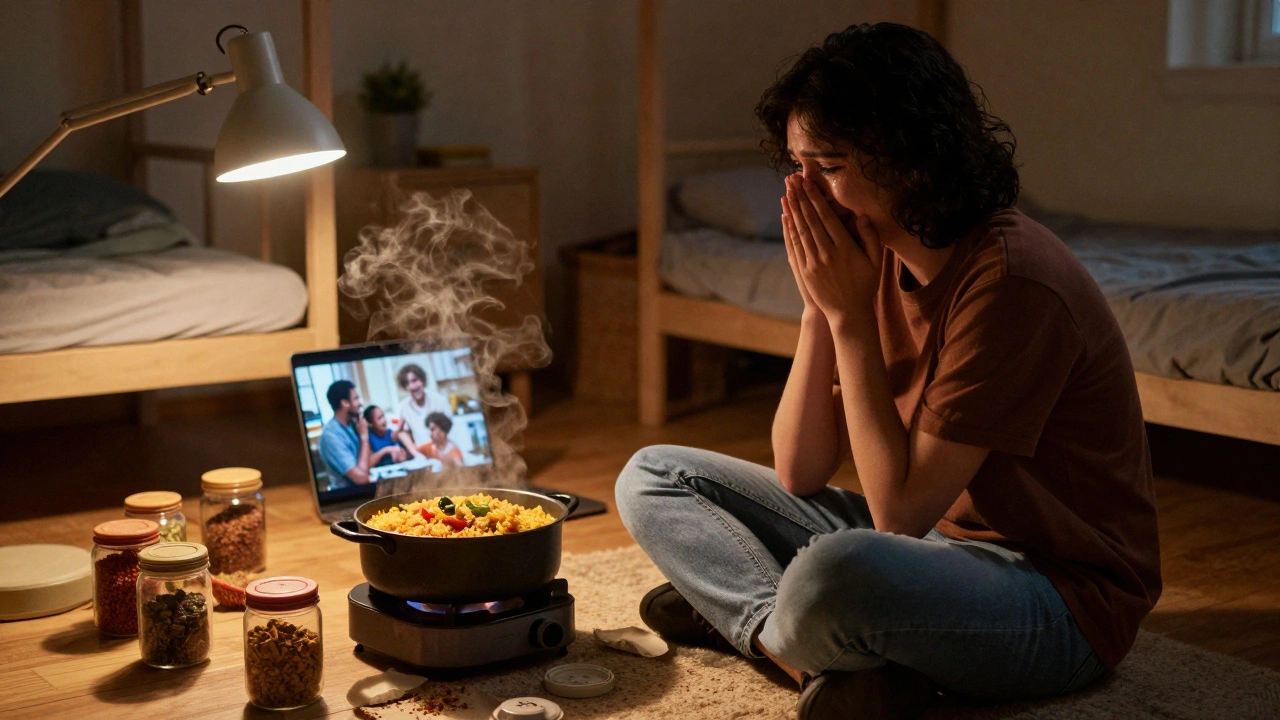
When you first land in the UK as an international student, everything feels new - the weather, the accents, the way people queue for buses. But for most of you, it’s not the rain or the public transport that hits hardest. It’s the food. Or rather, the lack of it. The smell of your mom’s curry, the crunch of your grandmother’s roti, the taste of that one street vendor’s dumpling you ate every Sunday back home - those are the things that stick with you. And when you can’t find them, or worse, when you try to recreate them and fail, it doesn’t just make you hungry. It makes you feel alone.
Food Isn’t Just Fuel - It’s Memory
Studies from the University of Cambridge in 2024 found that 68% of international students in the UK reported feeling intense emotional distress linked to food shortages from home. Not because they couldn’t afford to eat, but because the food they could find didn’t carry the same meaning. A bowl of pho in London might taste close, but without the steam rising from the bowl the way it did in Hanoi, without the way your aunt always added an extra spoon of chili oil, it’s just soup. And that’s the problem. Food is tied to identity. It’s tied to family. It’s tied to the rhythm of your life before you left.
One student from Nigeria told me she cried the first time she tried to make jollof rice in her dorm kitchen. She followed a YouTube tutorial, used the right rice, even bought the same brand of tomato paste she used back home. But the flavor was flat. It wasn’t the ingredients. It was the absence of her sister standing next to her, laughing as she burned the onions. That moment - the laughter, the chaos, the shared mistake - that’s what she missed. Not the spice blend.
Culture Shock Hits Where You Least Expect It
It’s not just food. It’s the silence in the cafeteria. The way people avoid eye contact on the tube. The fact that no one says "thank you" to the barista after getting their tea - they just nod and walk away. These small things pile up. You start wondering if you’re being rude, or if you’re just too loud, too expressive, too much. The British reserve isn’t hostility. It’s just different. But when you’re already feeling out of place, it feels like rejection.
Students from India and Pakistan often struggle with the lack of communal eating. Back home, meals are shared from one plate. In the UK, everyone has their own tray. It’s practical. It’s hygienic. But it’s lonely. One student from Lahore said she started bringing extra portions of dal and rice to her flatmates, just to recreate that feeling of sharing. "It wasn’t about feeding them," she told me. "It was about making them feel like family, even if they didn’t know how to ask for it."
How to Find Your Food Anchor
There are ways to fight this. Not by pretending you’re fine. Not by forcing yourself to like mushy peas. But by building small rituals that bring back pieces of home.
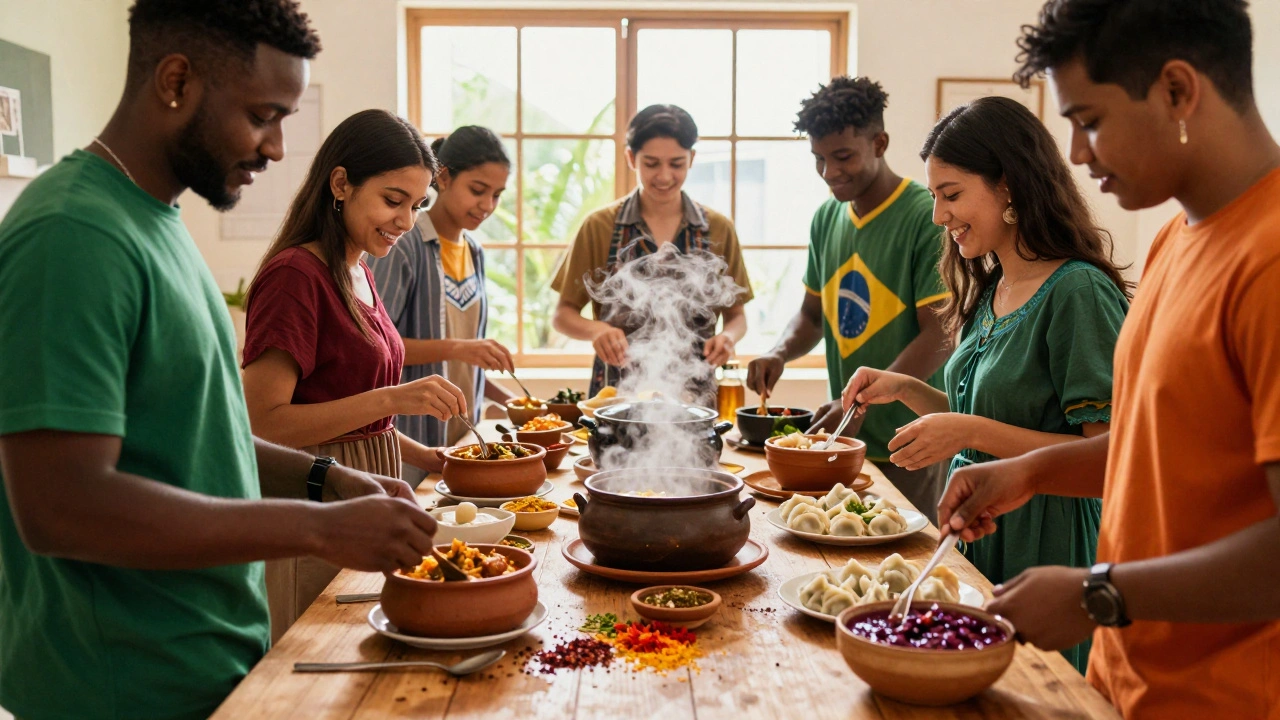
- Join cultural student societies. Most universities in the UK have Nigerian Food Clubs, Indian Cooking Circles, or Latin American Potluck Nights. These aren’t just about eating - they’re about talking, sharing stories, crying if you need to. One group in Manchester meets every Friday. They cook together. They play music from home. They don’t talk about exams. They just remember.
- Order from international grocery stores online. Stores like Asian Food Centre, MySupermarket, and Amazon Global ship spices, sauces, and snacks from over 80 countries. A 1kg bag of turmeric from Kerala costs £4.50. A jar of fermented black beans from Sichuan? £3.20. It’s not cheap, but it’s cheaper than therapy.
- Keep a food journal. Write down what you ate each day. What you missed. What you tried. What tasted like home. What didn’t. After a month, you’ll see patterns. You’ll notice that the smell of cumin on a rainy Tuesday makes you feel better. That’s data. And data helps you plan.
When the Loneliness Gets Heavy
It’s okay to admit you’re struggling. The NHS offers free, confidential mental health support for international students. You don’t need a GP referral. Just walk into your university’s student services office and say, "I need help with homesickness." They’ve heard it before. They’ll know what to do.
Some students find comfort in cooking with roommates from other countries. A girl from Brazil taught her Ukrainian roommate how to make pão de queijo. The Ukrainian taught her how to make borscht. Neither dish tasted like home. But they tasted like connection. That’s the point.
One of the most powerful things you can do is start a "home food day" - one day a week where you cook your favorite dish, play music from back home, and call someone you miss. No phone call? Watch a video of your family eating dinner. Even five minutes of that can reset your mood.
It Gets Better - But Not Because You Forget
You won’t stop missing your home food. And you shouldn’t. That’s not weakness. That’s love. What changes is how you carry it. You learn to make your own version. You start blending. You put soy sauce in your spaghetti. You add cardamom to your tea. You don’t replace home - you expand it.
By the end of your first year, you’ll find yourself in a multicultural kitchen, laughing with someone from Ghana as you try to fix your undercooked rice. They’ll tell you about their mother’s method. You’ll tell them about your grandmother’s spice mix. And for the first time, you’ll realize: you’re not just surviving abroad. You’re building something new. Something that holds pieces of everywhere you’ve loved.
The UK won’t ever taste like home. But you can make it taste like you.
Why does food make me feel more homesick than anything else?
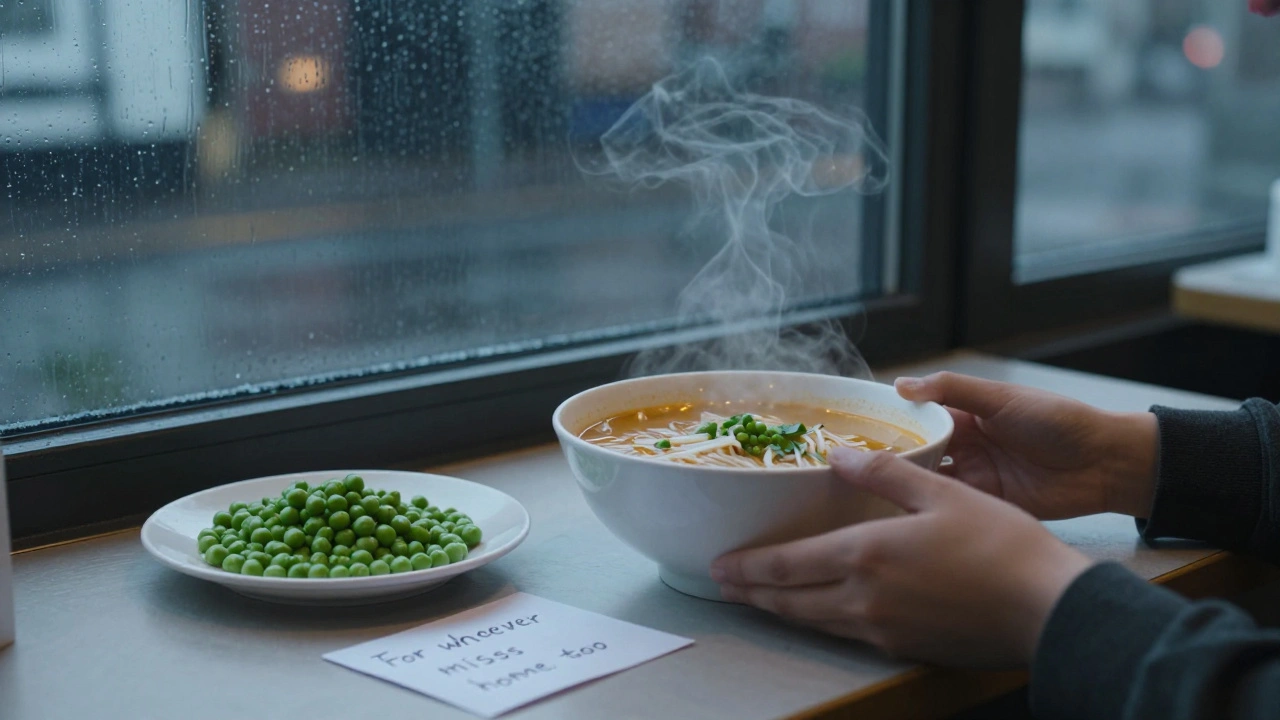
Food is tied to sensory memories - smell, taste, texture - that trigger deep emotional responses. Unlike photos or music, food activates the brain’s limbic system directly, linking it to childhood, family, and safety. When you can’t access those flavors, your brain doesn’t just miss the taste - it misses the feeling of being cared for. That’s why a simple bowl of soup can make you cry.
Can I find authentic ingredients in the UK?
Yes. Most major UK cities have dedicated international grocery stores. London has Brixton Market, Manchester has the Curry Mile, and even smaller towns have online suppliers like Asian Food Centre or Spices of India. Many supermarkets now carry global brands - Tesco’s "World Food" aisle includes items from over 40 countries. Check local Facebook groups too - students often sell bulk spices or leftovers from home deliveries.
What if my university doesn’t have a cultural food club?
Start one. All you need is three other students who miss home food. Email your student union for a meeting room, post on campus boards, or use Instagram to find others. Universities fund these groups because they reduce dropout rates. You’re not asking for permission - you’re offering a solution. Many students have done this. You’re not the first.
Is it normal to feel guilty for missing home?
Yes. Many students feel guilty because they think they should be "grateful" or "adapting fast." But homesickness isn’t a failure - it’s proof you loved something deeply. Guilt comes from comparing your inner experience to others’ outward smiles. You’re not behind. You’re human. The goal isn’t to stop missing home. It’s to carry it with you, not bury it.
How long does homesickness last?
For most students, the worst of it fades between 3 to 6 months. But it doesn’t disappear - it changes. You’ll still feel it during holidays, when you smell a familiar spice, or when you see a video of your family. But you’ll also start creating new rituals. You’ll have your own version of home now. That’s not replacement. That’s growth.