
Living in a student house in the UK isn’t just about lectures and libraries. It’s about the messy kitchen, the shared fridge, and the dinners that turn into late-night talks. These moments aren’t accidents-they’re the glue that holds student life together. But here’s the truth: flatmate dinners don’t just happen. They need planning, compromise, and a little bit of courage.
Why Flatmate Dinners Matter More Than You Think
It’s easy to think of meals as just fuel. But in a student house, dinner is where you find out who your flatmates really are. A 2024 survey of over 1,200 UK students found that 73% felt less stressed when they ate at least three meals a week with housemates. Not because the food was gourmet, but because the routine created connection. You learn who forgets to wash dishes, who brings extra spices, who sings off-key while chopping onions. These aren’t annoyances-they’re signals. They tell you who’s reliable, who’s generous, who just needs a little space.
Without shared meals, student houses become parallel lives. You see each other in the hallway, nod, and disappear again. With them, you build a home. Not just a place to sleep, but a place where you belong.
Start Small: The 3-Ingredient Rule
Don’t try to cook a three-course feast on week one. That’s how resentment starts. Instead, use the 3-ingredient rule: pick a dish that needs only three main things. Pasta with tomato sauce and garlic bread. Stir-fry with rice, soy, and frozen veggies. Baked potatoes with beans and cheese.
Here’s how it works:
- One person buys the pasta.
- Another grabs the sauce and herbs.
- Someone else picks up bread or veggies.
Splitting costs like this keeps it fair. No one feels like they’re paying for everyone else’s snack habit. And because the dish is simple, no one gets overwhelmed. You don’t need to be a chef. You just need to show up.
Rotate the Kitchen: No More Power Struggles
Who cooks every week? Probably the same person-the one who’s quiet, doesn’t complain, and always cleans up. That’s not teamwork. That’s burnout.
Create a simple rotation. Write names on a whiteboard or use a free app like Cozi or GroupMe. One person cooks Monday. Another handles Wednesday. A third takes Friday. Weekends? Optional. Let people choose if they want to cook or not.
Set one rule: whoever cooks doesn’t do the washing up alone. Everyone helps. No exceptions. If someone skips their turn, they owe the next person a takeaway coffee or a bag of crisps. Keep it light. Keep it fair.

Make It a Ritual, Not a Chore
Turn dinner into something you look forward to. Add a tiny ritual. Light a candle. Play one song you all know. Put on a silly hat. It doesn’t have to be fancy. Just different enough to feel special.
One house I spoke to started playing the same song-"Wonderwall"-every Friday night. No one knew why. But after a few weeks, it became a signal: dinner’s ready. Someone always sings it off-key. Everyone laughs. That’s the magic. It’s not about the food. It’s about the pattern.
Another house added a "compliment jar." After dinner, everyone writes one nice thing about someone else on a slip of paper. No names. Just: "Thanks for always taking out the bin." Or: "You made me laugh when I was having a rough day." They read them once a month. Some of those notes are still taped to the fridge.
Handle the Mess Without the Drama
Let’s be honest: the biggest reason flatmate dinners fail? The aftermath. Dishes pile up. The sink looks like a crime scene. Someone leaves their curry container in the fridge for three weeks.
Fix it before it starts. At your first house meeting, agree on a 30-minute cleanup rule. After dinner, everyone spends 10 minutes washing their own plates. Then, 20 minutes together to clear the counters, wipe the table, and take out the bin. No one gets to leave until it’s done. It’s not punishment. It’s respect.
And the fridge? Label everything. Use masking tape and a marker. "Sam - Chicken Curry - Jan 15". If something’s unlabelled after a week, it goes straight in the bin. No warnings. No arguments. Just a clean fridge.
What If Someone Doesn’t Join?
There’s always one. The person who says "I’m not hungry," or "I’ve got work," or "I don’t like group stuff." Don’t pressure them. Don’t make them feel guilty. But don’t stop inviting them.
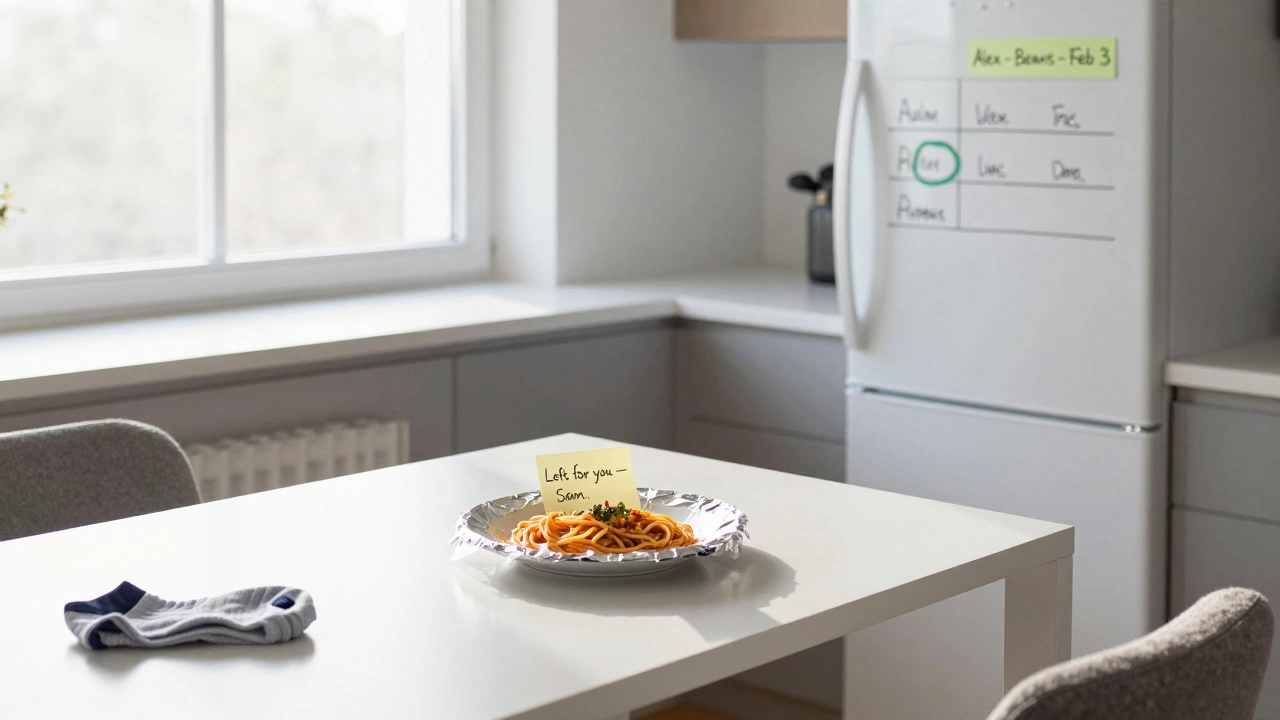
Leave a plate out. Ask if they want leftovers. Say, "We’re having pasta tonight. Thought you might like some." Make it easy. No expectation. Just inclusion.
Some people just need time. One student I talked to didn’t join dinners for six weeks. Then, one night, he showed up with a bag of chocolate bars. "I was scared," he said. "But I didn’t want to be the weird one." That night, he stayed for two hours. Talked about his dad’s illness. Didn’t say much. But he was there.
It’s Not About Perfection. It’s About Presence.
You won’t have perfect dinners. Someone will burn the rice. Someone will forget the salt. Someone will leave their socks on the couch. That’s fine.
What matters is that you keep showing up. Even when you’re tired. Even when you’re stressed. Even when you just want to be alone.
Because these dinners? They’re not about food. They’re about building a team. A real one. The kind that helps you through exams, breakups, and bad days. The kind that remembers your name when you’re too tired to say it yourself.
Start small. Keep it simple. Be consistent. And don’t wait for someone else to make the first move. You’re the one who can change the vibe. Just cook something. Set the table. Say, "Anyone else hungry?"
That’s all it takes.
What if my flatmates don’t want to cook together?
Start with one shared meal a week-no pressure to cook. Order a pizza and split the cost. Use it as a chance to talk, not to perform. Over time, people often relax and start offering to help. The key is consistency, not perfection. Even a monthly movie night with snacks builds connection.
How do I handle food allergies or dietary preferences?
Ask everyone upfront during your first house meeting. Write down preferences: vegan, gluten-free, nut allergies, halal, etc. Keep a shared list on the fridge. When planning meals, pick dishes that can be easily adapted-like tacos, stir-fries, or baked potatoes. Always label ingredients. If someone has a serious allergy, keep their food separate and clean surfaces before cooking. Respect is non-negotiable.
Is it okay to eat alone sometimes?
Absolutely. Everyone needs space. The goal isn’t to force everyone to eat together every night. It’s to create a culture where meals are an option, not an obligation. If you’re having a rough day, skip dinner. Just let people know. A quick text like "Heading to bed early tonight" goes a long way.
What if someone always brings cheap food or doesn’t contribute?
Address it calmly and privately. Say something like, "Hey, I noticed we’ve been using a lot of instant noodles lately. Would you be up for trying a simple shared recipe next week? I’ll handle the shopping if you help cook." Most people don’t realize they’re being seen as a burden. A gentle nudge usually fixes it. If not, rotate cooking duties so everyone gets a turn to bring what they can.
Can flatmate dinners help with loneliness in student housing?
Yes-research from the University of Manchester in 2025 showed that students who ate with housemates at least twice a week reported 40% lower levels of loneliness than those who didn’t. Regular meals create small, predictable moments of connection. These aren’t deep conversations every time, but they build trust. Over time, that trust becomes a safety net.