When you’re living away from home for the first time-whether in a student flat in Manchester or a shared house in Edinburgh-accidents don’t wait for office hours. A hot pan burns your hand. You slip on wet tiles and twist your ankle. Someone faints during a late-night study session. These aren’t rare events. They’re everyday realities for students living on their own. And knowing what to do in those first few minutes can make all the difference.
What Every UK Student Needs in a Home First Aid Kit
A basic first aid kit isn’t luxury. It’s as essential as a kettle or a microwave. The NHS recommends a minimum kit for households, and students should follow the same standard. Here’s what you actually need, not what looks nice on Amazon:
- 10 sterile adhesive dressings (plasters) in assorted sizes-small ones for fingers, larger for knees.
- 5 sterile eye pads-for cuts or foreign objects near the eye. Never use regular cotton.
- 6 triangular bandages-can be folded into slings or used to secure splints.
- 4 safety pins-to hold bandages in place without needing tape.
- 2 crepe roller bandages (7.5cm wide)-for sprains and support.
- 10 non-adherent sterile dressings-for burns or open wounds that shouldn’t stick.
- 1 pair of disposable gloves-nitrile, not latex, to avoid allergies.
- 1 antiseptic wipe or small bottle of chlorhexidine solution-clean cuts before covering.
- 1 pair of scissors-blunt-tipped, for cutting bandages without risk.
- 1 digital thermometer-no glass ones. They break too easily.
- 1 tube of paracetamol (500mg) and 1 tube of ibuprofen-for pain and fever. Keep them in their original packaging.
- 1 tube of hydrocortisone cream (1%)-for insect bites, rashes, or mild eczema.
- 1 bottle of oral rehydration salts-for vomiting or diarrhoea. Cheaper than buying bottles of electrolyte drinks.
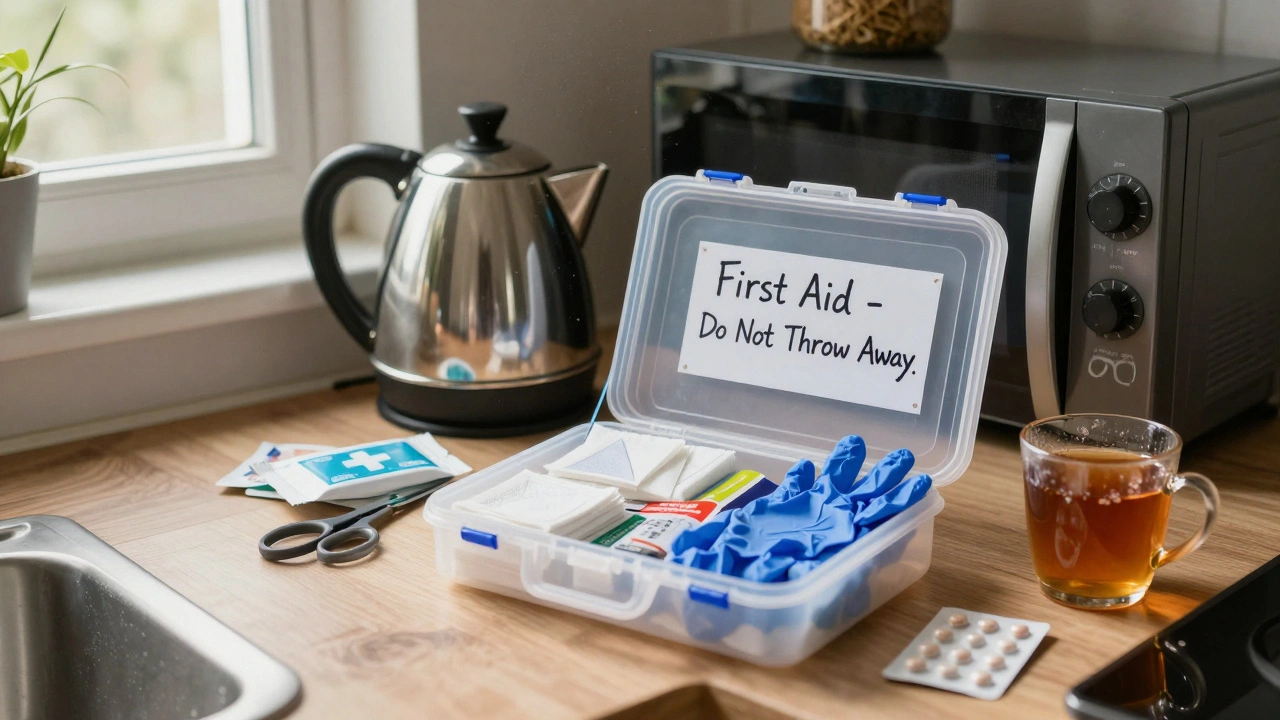
Store everything in a clear, waterproof plastic box with a lid. Label it clearly: "First Aid - Do Not Throw Away." Keep it in the kitchen or bathroom-somewhere you’ll remember, not buried under laundry.
Five Simple Steps for Common Emergencies
You don’t need to be a paramedic. You just need to know what to do in the first 5 minutes. These five scenarios cover 80% of student emergencies.
1. Minor Burns (from kettles, ovens, or hair straighteners)
Run cool (not ice-cold) water over the burn for at least 10 minutes. Don’t pop blisters. Cover loosely with cling film or a sterile non-stick dressing. Never use butter, toothpaste, or cream. Those myths cause infections.
2. Cuts and Scrapes
Wash your hands first. Press a clean cloth or dressing firmly on the cut for 5-10 minutes to stop bleeding. Once stopped, rinse gently with water. Apply antiseptic. Cover with a plaster. If the cut is deeper than 1cm, won’t stop bleeding, or has jagged edges-go to A&E. Stitches need to be done within 6 hours.
3. Sprained Ankle or Wrist
Follow the RICE rule:
- Rest-don’t walk on it.
- Ice-wrap an ice pack (or frozen peas) in a towel. Apply for 15 minutes every 2 hours for the first 48 hours.
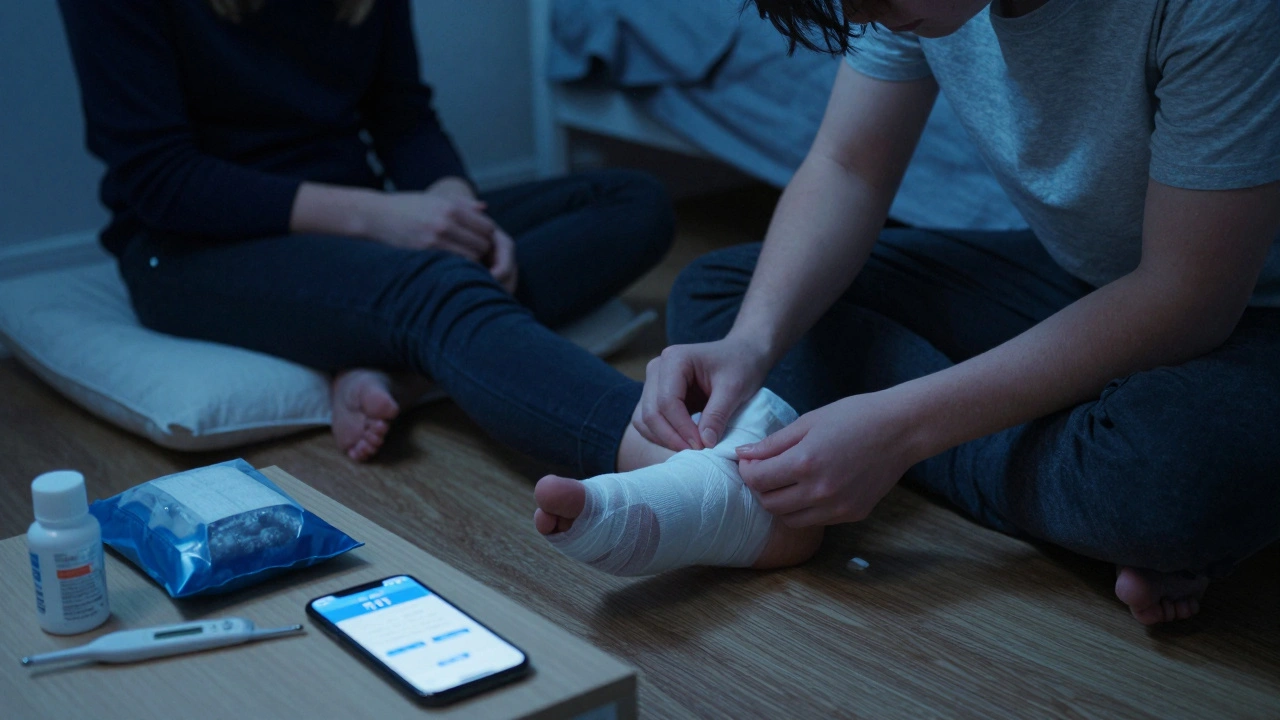
- Compression-wrap with a crepe bandage, not too tight. You should be able to slip a finger under it.
- Elevation-prop the limb up on pillows above heart level.
If you can’t put any weight on it after 48 hours, or it’s swollen and bruised badly, get it checked. Stress fractures are common in students who run or dance.
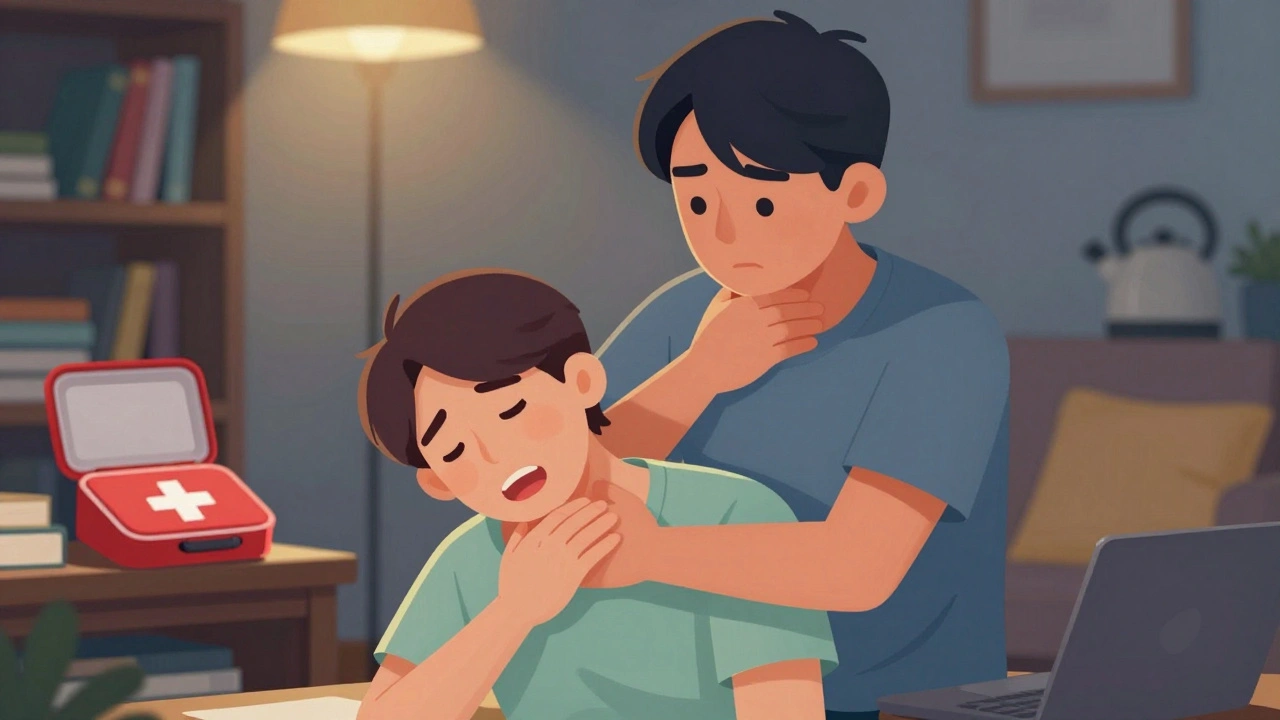
4. Choking (Someone Can’t Breathe or Speak)
If they’re coughing hard, encourage them to keep coughing. If they’re silent, gasping, or clutching their throat:
- Stand behind them and wrap your arms around their waist.
- Make a fist with one hand. Place it between the navel and ribcage.
- Grasp your fist with the other hand and pull sharply inward and upward-five times.
- If that doesn’t work, give five sharp back blows between the shoulder blades.
- Repeat cycles of 5 back blows and 5 abdominal thrusts until the object comes out or they lose consciousness.
If they collapse, call 999 and start CPR immediately.
5. Fainting or Dizziness
Students faint often-dehydration, skipping meals, stress, or standing too long in lectures. If someone feels dizzy:
- Help them lie down flat on their back.
- Elevate their legs slightly with a pillow or backpack.
- Loosen tight clothing around the neck.
- Don’t give them food or drink until they’re fully alert.
- If they don’t wake up within a minute, call 999.
What Not to Do
There are myths that cost time, money, and health.
- Don’t use alcohol or hydrogen peroxide to clean wounds-they kill healing cells.
- Don’t apply ice directly to skin-always wrap it. Frostbite is real.
- Don’t remove embedded objects (like glass or a pencil). Stabilize it and get professional help.
- Don’t give aspirin to anyone under 16-it’s linked to Reye’s syndrome.
- Don’t assume someone’s fine after a head bump. If they’re confused, vomiting, or have blurred vision-go to hospital.
Where to Get Training and Support
Most UK universities offer free first aid sessions during orientation week. If yours doesn’t, check with your student union or local St John Ambulance branch. Many run weekend drop-in workshops for students. You can also take a 2-hour online course from the British Red Cross-they’re recognized by NHS and cost under £15.
Download the NHS 111 app. It’s not just for calling-it gives step-by-step guidance for symptoms, tells you where to go, and even helps you find out-of-hours clinics. Keep it on your phone with a screenshot of your blood type and allergies.
When to Call 999
Don’t wait. Don’t hope it gets better. Call 999 if:
- Someone is unconscious or not breathing.
- There’s heavy bleeding that won’t stop.
- They’ve had a serious head or chest injury.
- They’re having chest pain or trouble breathing.
- They’ve swallowed poison or a large amount of medication.
- They’re having a seizure that lasts more than 5 minutes.
When you call, stay calm. Say your location clearly. Don’t hang up until the operator says so. Even if you’re scared, your voice is the most important tool right now.
Keeping Your Kit Updated
Check your first aid kit every 3 months. Throw out expired painkillers. Replace used plasters. Make sure gloves haven’t dried out. Write the date you last checked on the box. A kit that’s been sitting since your first week at uni is worse than no kit at all.
Keep a spare set of plasters and antiseptic wipes in your backpack or dorm room. Accidents don’t happen just at home.
Final Thought: Confidence Matters More Than Perfection
You don’t need to memorize every medical procedure. You just need to know how to stay calm, call for help, and do the basics right. In 2023, a University of Birmingham study found that students who had taken even a 90-minute first aid course were 60% more likely to help someone in an emergency-and less likely to panic.
That’s the real goal. Not to become a medic. But to be the person who acts when no one else does.
What’s the most common first aid mistake UK students make?
The biggest mistake is waiting too long to act. Many students think, "It’ll get better," or "I’ll just wait until morning." But with burns, cuts, or fainting, the first 10 minutes are critical. Delaying care can turn a minor injury into something serious. Acting fast-even if you’re unsure-is always better than doing nothing.
Can I use my university’s health centre for first aid emergencies?
University health centres are great for routine issues like colds, rashes, or prescription refills-but they’re not emergency services. If someone is unconscious, bleeding heavily, or having chest pain, go straight to A&E or call 999. University clinics often close after 6pm and on weekends. Don’t rely on them for urgent situations.
Do I need to buy a fancy first aid kit from a brand like Lifesaver or First Aid Only?
No. Expensive branded kits often include things you’ll never use, like burn gel or snake bite kits. Stick to the NHS-recommended list. You can buy all the items separately from a pharmacy for under £20. A clear plastic box from B&Q with the right contents works better than a pre-packed kit that expires in 6 months.
What if I’m allergic to latex?
Always use nitrile gloves-they’re just as effective and safe for latex allergies. Check all bandages and dressings too. Some older plasters contain latex adhesive. Look for "latex-free" on the packaging. Most UK pharmacies now stock latex-free options by default.
Should I keep my first aid kit locked away?
No. In an emergency, you need it instantly. Store it in a visible, easy-to-reach spot-like the kitchen cupboard above the sink. Just make sure it’s out of reach of young children or pets. A locked box defeats the purpose. If you’re worried about theft, keep a small travel kit in your bag with basics: plasters, antiseptic, and painkillers.