Quick Takeaways for Students
- Most UK universities have a wide array of faith groups, from large established ones to small, niche spiritual circles.
- Student-led societies usually operate under the umbrella of the Student Union, meaning they have access to funding and rooms.
- Joining a faith society is often a great way to find a supportive community and combat loneliness during the first term.
- Many groups welcome "seekers" or people who aren't sure about their faith but want to explore it.
The Landscape of Faith on Campus
In the UK, higher education institutions are melting pots of global perspectives. This means that religious groups aren't just a remnant of the old "chaplaincy" system; they are dynamic, student-led organizations. You'll find everything from the massive Christian Union (CU), which exists at almost every university, to specialized groups focusing on Sufism, Buddhism, or secular humanism.
The Christian Union is a type of independent society that usually focuses on evangelism and Bible study. Unlike a church, it's run by students for students. On the other hand, Islamic Societies (ISoc) are often some of the largest and most active groups on campus, providing not just spiritual guidance but essential practical support, like organizing Halal food options or prayer spaces in the library.
Then there are the smaller, perhaps more eclectic, spirituality groups. You might find a meditation circle focused on Mindfulness or a society dedicated to exploring the intersections of science and faith. These groups offer a lower-pressure environment for those who find organized religion too rigid but still crave a connection to something larger than themselves.
How These Societies Actually Work
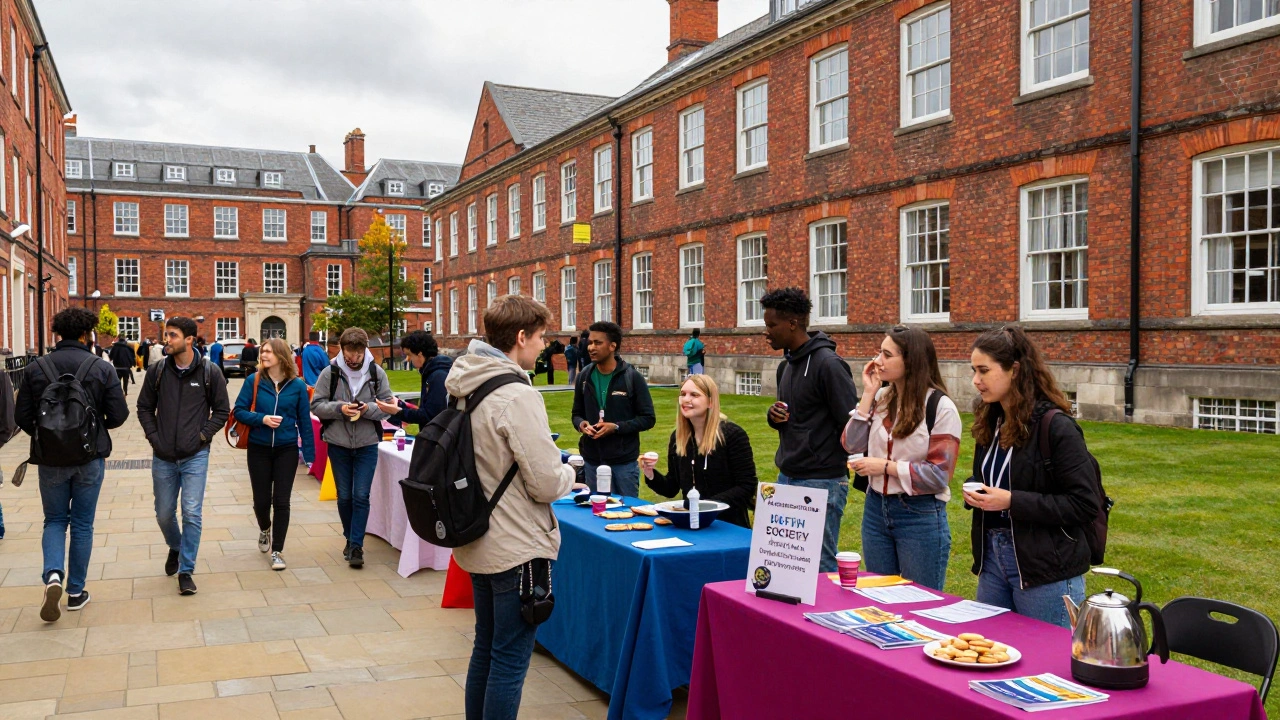
If you're wondering how to get involved, you need to understand the role of the Student Union (SU). The SU is the governing body that recognizes societies. To be "official," a group usually needs a certain number of members and a constitution. This gives them a budget, which they use to book rooms for weekly meetings, buy tea and biscuits (a staple of any UK society), and invite guest speakers.
Most faith groups follow a predictable but comforting rhythm. A typical week might look like this: a mid-week prayer meeting or scripture study, a social night (like a movie marathon or a pub quiz-yes, even some religious groups do these!), and a larger monthly event. Because these groups are student-led, the leadership changes every year. This means a second-year student might be the one deciding which theology professor to invite for a debate or how to organize a charity trip to a developing nation.
| Society Type | Primary Focus | Typical Activities | Vibe |
|---|---|---|---|
| Christian Union | Scripture & Evangelism | Bible study, worship nights | Community-driven, active |
| Islamic Society | Faith & Identity | Prayer coordination, socials | Supportive, highly organized |
| Jewish Society | Culture & Tradition | Shabbat dinners, cultural talks | Close-knit, celebratory |
| Spirituality/Zen Groups | Inner Peace & Philosophy | Meditation, open discussions | Calm, exploratory |
Finding Your Fit: The "Seeker" Experience
One of the biggest misconceptions is that you have to be "devout" to join these groups. In reality, many people join Faith-based Organizations specifically because they are confused. University is a time of massive transition. You're suddenly exposed to new ideas in sociology or physics that might clash with what you were taught in Sunday school or at home. This creates a "seeker" phase.
Many societies lean into this. For instance, some groups run "Question Everything" nights where the whole point is to challenge the faith from the inside. It's a safe space to ask, "If God is good, why is there suffering?" or "Can I be spiritual without being religious?" without feeling judged. This intellectual curiosity is what separates a campus society from a traditional place of worship. The goal isn't always conversion; often, it's simply companionship in the search for truth.
The Practical Side: Support and Advocacy
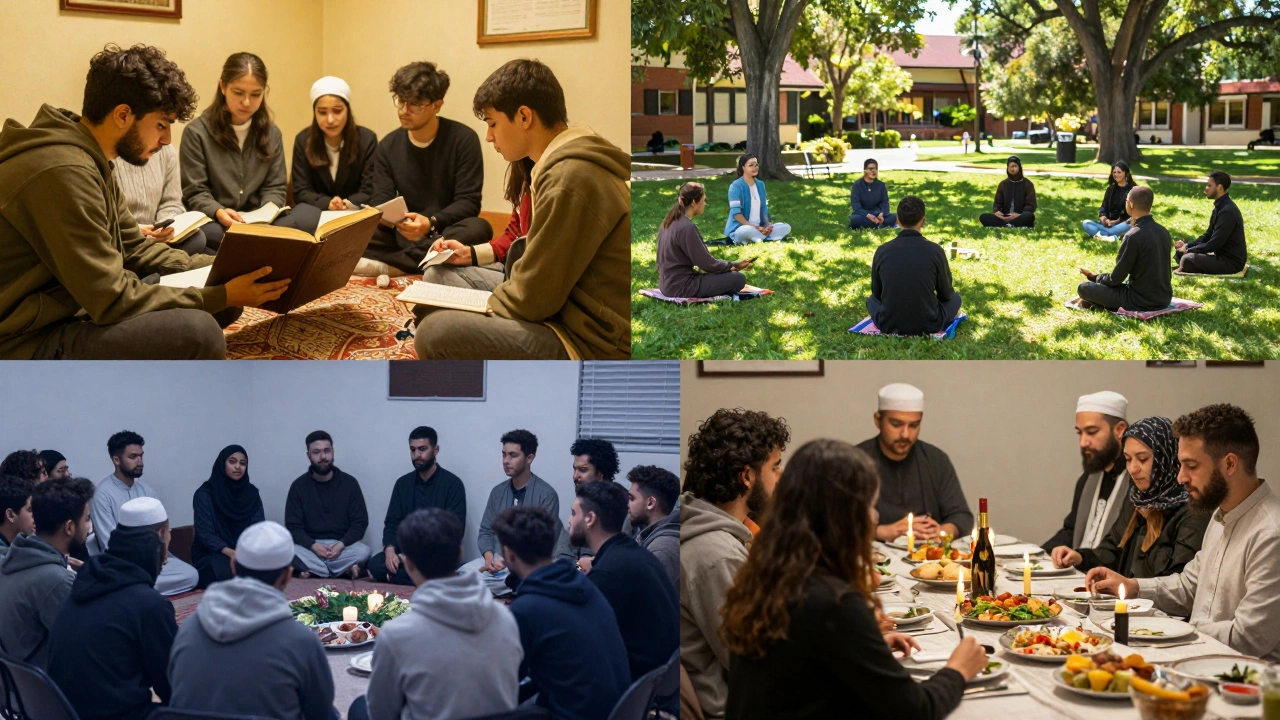
Faith societies do a lot of heavy lifting that the university administration might miss. Take the Islamic Society, for example. They don't just lead prayers; they advocate for the installation of wudu facilities (ablution stations) in campus mosques or push for extended hours in the prayer rooms during Ramadan. This is a form of student activism that ensures religious students aren't marginalized in a secular academic environment.
Similarly, Jewish Societies (often called JSocs) provide a critical network of support and a place to celebrate holidays like Hanukkah or Passover, which can feel lonely when your roommates are all eating pizza and ignoring the calendar. These groups provide a cultural anchor, ensuring that a student's identity isn't swallowed up by the generic "student experience."
Moreover, many of these groups collaborate. It's not uncommon to see an interfaith event where a Rabbi, an Imam, and a Priest lead a discussion on ethics or social justice. These moments are where students realize that despite different dogmas, most faith groups share the same core values: kindness, charity, and a desire to leave the world better than they found it.
Potential Pitfalls and Challenges
It's not all tea and transcendence, though. Joining a faith group can sometimes feel like joining a bubble. If you only hang out with people who think exactly like you, you're missing out on the primary benefit of university: being challenged. There's a risk of "echo chambers," where members reinforce each other's biases rather than engaging with the diverse perspectives offered in their degrees.
There's also the occasional tension between the society and the Student Union. Because SUs are committed to inclusivity and diversity, they might clash with a religious group over specific beliefs or the way the group recruits members. Navigating these boundaries-maintaining religious integrity while adhering to the SU's code of conduct-is a constant balancing act for society presidents.
Then there's the social pressure. In some very tight-knit groups, there can be an unspoken expectation to adhere to a certain lifestyle. Whether it's avoiding alcohol or following a strict dress code, the pressure to "fit in" can be intense. The best groups are those that offer a welcoming community without demanding total conformity.

Making the Most of Your Society Experience
If you're considering joining a group, don't just sign up at a stall during Freshers' Week and never go back. The real value comes from consistent engagement. Start by attending the "intro" events, but then push yourself to go to the smaller, more intimate gatherings. That's where the actual friendships are formed.
Try to use the society as a springboard. If you're in a Christian group, go to a debate hosted by the Atheist society. If you're in a meditation group, attend a talk by a philosopher. The goal is to integrate your spirituality with your academic life, not to use the society as a shield against the rest of the campus.
Finally, don't be afraid to start your own group. If you find that there isn't a society for your specific denomination or spiritual practice, talk to the Student Union. Most universities are surprisingly open to new groups as long as you can find a few other students who feel the same way. Creating a community from scratch is one of the most rewarding things you can do during your degree.
Do I have to be religious to join a faith society?
Not at all. Most UK university societies are open to everyone. Many people join as "seekers" or simply because they are interested in the culture and philosophy of a particular faith. In fact, many groups actively encourage people of all backgrounds to attend their discussions and social events.
How do I find out which societies are available at my university?
The best place to start is the Student Union (SU) website or their online society directory. During the first few weeks of the autumn term, universities hold a "Freshers' Fair" where every society has a stall. This is the primary way to meet the leaders and see which group fits your vibe.
Are these groups funded by the university or external organizations?
It varies. Most official societies get some basic funding from the Student Union based on their membership numbers. However, some groups (like the Christian Union) may be independent and receive support from external national organizations or donations from alumni.
What if my faith isn't represented on campus?
You can start your own society! Check your Student Union's handbook for the process of "affiliating" a new group. You usually just need a small number of interested students, a set of aims (a constitution), and a committee (President, Treasurer, Secretary).
Are religious societies only about prayer and worship?
Definitely not. While spiritual practice is a core part, these groups are also social hubs. They organize sports tournaments, movie nights, charity fundraisers, and academic debates. For many students, the social support and friendship they find are just as important as the religious aspect.
Next Steps for New Students
If you're feeling lost, start by visiting the Student Union office and asking for a list of all affiliated faith and philosophy groups. Don't just stick to one; attend a couple of different meetings to see where you feel most comfortable. If you're worried about the intensity of a group, look for those that mention "open discussions" or "exploratory sessions" in their descriptions.
For those who are already part of a society, consider how you can make your group more inclusive. Maybe organize an interfaith dinner or host a panel on how faith interacts with your specific field of study. The more you bridge the gap between your spiritual life and the wider campus, the richer your university experience will be.