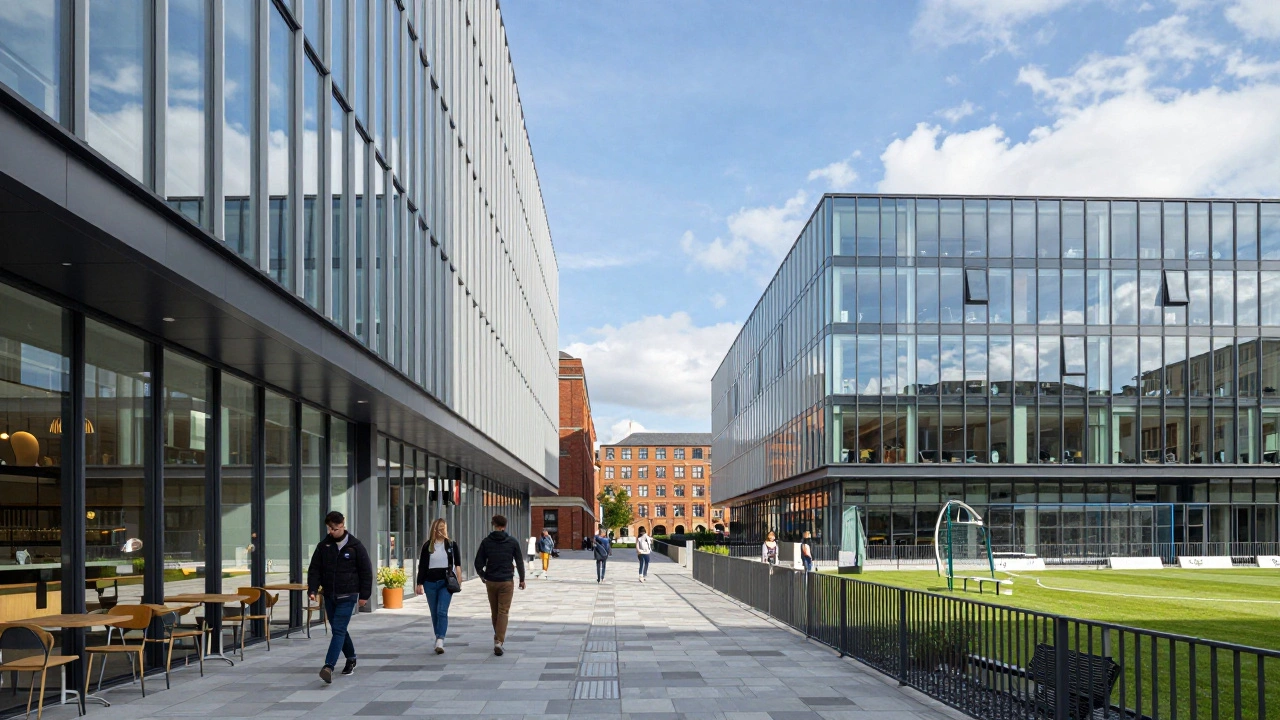
Walk through the campus of a top-tier UK university today, and you might feel like you’ve stepped into a tech startup or a luxury hotel. Glass facades reflect the sky, cafés serve artisanal coffee, and lecture halls look more like TED Talk stages than dusty classrooms. It’s easy to assume that these shiny buildings equal high-quality education. After all, if a university can afford such impressive facilities is the physical infrastructure and amenities provided by an educational institution, surely they must be investing heavily in teaching too, right?
Not necessarily. In fact, there is a growing disconnect between how much money UK universities spend on their estates-their land, buildings, and maintenance-and the actual academic outcomes students experience. As tuition fees have risen and competition for international students has intensified, many institutions are treating campus aesthetics as a marketing tool. But does a sleek library really improve your degree grade? Does a state-of-the-art gym translate to better career prospects? The answer is complicated, and it requires looking beyond the glossy brochures.
The Rise of Campus Real Estate as Marketing
In recent years, the landscape of UK higher education is the system of tertiary education in the United Kingdom, including Russell Group and post-92 universities has shifted dramatically. Universities are no longer just competing on research output or historical prestige; they are competing on lifestyle. For prospective students, especially those from abroad who may never have visited the country, the campus is the first tangible proof of value.
This trend has led to a surge in capital expenditure on new builds. We see this clearly in the expansion of student accommodation blocks that double as social hubs, the renovation of historic libraries with modern study pods, and the construction of innovation centers designed to attract industry partners. These projects often cost tens of millions of pounds. The logic is simple: a beautiful campus attracts applicants, which fills seats, which generates revenue. It’s a self-perpetuating cycle where architecture becomes a primary sales pitch.
However, this focus on "shininess" comes with risks. When budgets are tight, spending on visible assets can crowd out less glamorous but critical investments. Things like updating outdated IT systems, hiring enough teaching assistants, or maintaining smaller, older buildings often fall lower on the priority list. You get a stunning facade, but the plumbing leaks, the Wi-Fi drops during exams, and the lecture halls remain overcrowded.
What Does "Estates Spend" Actually Cover?
To understand whether shiny buildings mean quality, we need to define what goes into estates management is the strategic oversight of a university's physical assets, including maintenance, security, and sustainability. It’s not just about building new things. Estates spend includes:
- Capital Projects: New constructions, major renovations, and large-scale upgrades. This is the "shiny" part-new science labs, sports complexes, and residence halls.
- Maintenance and Repairs: Keeping existing buildings safe, warm, and functional. This includes fixing boilers, repairing roofs, and ensuring fire safety compliance.
- Sustainability Initiatives: Upgrading energy efficiency, installing solar panels, and reducing carbon footprints. This is increasingly important due to government regulations and student expectations.
- Security and Access: CCTV, card access systems, and campus policing. Safety is a huge concern for students and parents alike.
The problem arises when universities skew too heavily toward capital projects. A new building looks great in photos, but if the maintenance budget is slashed to pay for it, the rest of the campus suffers. You might end up with a brand-new engineering block next to a crumbling arts department building. This creates a two-tier experience where some students enjoy world-class facilities while others struggle with basic comforts.
The Link Between Facilities and Academic Outcomes
So, do better facilities lead to better grades? Research suggests a correlation, but it’s not a direct cause-and-effect relationship. A well-lit, quiet, and comfortable study environment can certainly reduce stress and improve concentration. Access to modern laboratories allows for hands-on learning that textbooks can’t replicate. Sports facilities contribute to mental health and overall well-being, which indirectly supports academic performance.
However, the strongest predictor of academic success remains the quality of teaching and support staff. No amount of glass and steel can replace a knowledgeable professor or a responsive tutor. In fact, some studies indicate that when universities prioritize estate spending over staffing, student satisfaction scores drop. Students notice when their tuition is going into bricks and mortar rather than into smaller class sizes or better pastoral care.
Consider the case of a post-1992 university (often called a "modern" university) that invests heavily in a new business school. If they don’t also hire enough experienced faculty to fill those rooms, the facility becomes an empty shell. Conversely, an older university with modest buildings but a strong tradition of teaching excellence might produce graduates who are just as employable, if not more so, because they’ve learned resilience and adaptability in less glamorous settings.

Comparing University Approaches to Infrastructure
| University Type | Primary Focus of Estates Spend | Impact on Student Experience | Potential Risks |
|---|---|---|---|
| Russell Group (Research-Led) | Specialized research labs and innovation hubs | High access to cutting-edge technology; strong industry links | Teaching facilities may lag behind research ones; undergraduate experience can feel secondary |
| Post-1992 (Modern) | Student accommodation and social spaces | Improved sense of community; attractive to younger demographics | May neglect academic infrastructure; high debt burden from construction loans |
| Single-Campus Specialists | Core teaching and library upgrades | Consistent quality across departments; focused learning environments | Limited extracurricular options; less "lifestyle" appeal |
This table highlights that different types of universities use their estates budgets differently. Research-led institutions like Oxford or Imperial College London focus on specialized equipment that drives discovery. Modern universities often focus on creating a holistic living-learning environment to compete for students who might otherwise choose older rivals. Neither approach is inherently wrong, but transparency is key. Students should know where their money is going.
The Hidden Costs of Maintenance
One of the biggest blind spots in the "shiny building" narrative is the long-term cost of maintenance. New buildings require constant upkeep. HVAC systems need servicing, glass needs cleaning, and smart technologies need updates. If a university doesn’t set aside sufficient funds for ongoing maintenance, the shine fades quickly. Within five years, a pristine building can look tired and neglected if repairs are deferred.
We’ve seen examples of this across the UK. Some universities built massive student unions or sports centers in the early 2010s, only to struggle with rising energy bills and repair costs during the economic downturns of the 2020s. This financial strain can lead to cuts elsewhere-perhaps fewer scholarships, reduced library hours, or frozen salaries for administrative staff. The initial excitement of a new build gives way to the reality of managing a complex, expensive asset portfolio.
Furthermore, there’s an environmental angle. Older buildings, while perhaps less photogenic, often have character and durability. Demolishing them to build new, energy-efficient structures has a significant carbon footprint. True sustainability involves retrofitting existing buildings rather than constantly replacing them. Universities that embrace this approach may look less "shiny" initially, but they demonstrate a deeper commitment to responsible stewardship.

How Students Should Evaluate Campus Quality
If you’re choosing a university, don’t let the photos fool you. Here’s how to dig deeper than the brochure:
- Visit in Person: Walk around the campus at different times of day. Are the libraries full? Do students look engaged? Check the condition of older buildings, not just the new ones.
- Check National Student Survey (NSS) Data: Look specifically at questions related to "Learning Resources" and "Feedback." High scores here suggest that facilities are actually supporting learning, not just sitting idle.
- Ask About Staff-to-Student Ratios: A fancy building means little if you’re stuck in a lecture hall with 300 people and no chance to ask questions. Prioritize institutions that invest in people.
- Review Graduate Outcomes: Do employers value degrees from this university? If yes, the facilities likely support practical skills development. If no, the buildings might just be window dressing.
- Look at Sustainability Reports:** Many UK universities publish annual sustainability reports. See if they mention retrofitting old buildings or reducing energy use. This shows long-term thinking.
Remember, the best university for you isn’t the one with the most Instagrammable staircase. It’s the one where you’ll feel supported, challenged, and prepared for life after graduation. Facilities play a role in that, but they are only one piece of the puzzle.
The Future of University Estates
Looking ahead, the definition of "quality" in university facilities is evolving. Post-pandemic, there’s a greater emphasis on flexible spaces that can adapt to hybrid learning models. Smart campuses that use data to optimize energy use and space allocation are becoming the norm. There’s also a growing demand for inclusive design-ensuring that facilities are accessible to students of all abilities.
Universities that succeed in the future will be those that balance aesthetics with functionality. They will invest in buildings that inspire, but they will also ensure those buildings are affordable to maintain and effective for teaching. The goal shouldn’t be to create a theme park, but to foster an environment where learning thrives. Shiny buildings can help, but they aren’t enough on their own.
As we move further into 2026, the pressure on university finances will only increase. With inflation affecting construction costs and enrollment numbers fluctuating, institutions must be strategic. Every pound spent on a new wing is a pound not spent on a new scholarship or a new course module. Students and parents need to hold universities accountable, asking tough questions about where the money goes and what it buys in terms of real educational value.
Does spending more on facilities guarantee better university rankings?
No. While good facilities can boost student satisfaction scores, which influence some rankings, academic reputation and research output carry more weight in major tables like the Times Higher Education or QS rankings. A university can have mediocre buildings but still rank highly due to strong teaching and research.
Why do UK universities invest so heavily in student accommodation?
Student accommodation is a major revenue stream. By providing on-campus housing, universities can charge premium prices and ensure steady occupancy. It also helps attract international students who prefer the convenience and safety of living near campus. However, this can sometimes come at the expense of other academic investments.
How can I tell if a university’s facilities are well-maintained?
Look for signs of wear and tear during visits, such as broken furniture, poor lighting, or outdated technology. Read reviews from current students on platforms like Reddit or student forums. Ask specific questions about IT support and library resources during open days. Well-maintained facilities usually reflect a broader culture of care within the institution.
Is it better to attend an older university with traditional buildings?
Not necessarily. Older universities often have historic charm and established reputations, but they may lack modern amenities. Newer universities might have better-designed spaces for collaborative learning. The key is to match the facilities to your learning style. If you need quiet, individual study spaces, check the library setup. If you thrive in group work, look for flexible seminar rooms.
Do shiny buildings affect graduate employability?
Indirectly, yes. Employers value candidates who have used industry-standard tools and worked in professional environments. If a university’s facilities mimic real-world workplaces, students gain practical experience. However, soft skills, networking opportunities, and internship placements matter far more than the aesthetic of the building itself.