
When you're a student drowning in deadlines, exams, and social pressure, the last thing you feel like doing is going for a run. But what if the thing you're avoiding is exactly what your brain needs? Science shows that movement isn't just good for your body-it’s one of the most effective, free, and accessible tools to fight anxiety and depression in students.
Why Movement Works on Your Brain
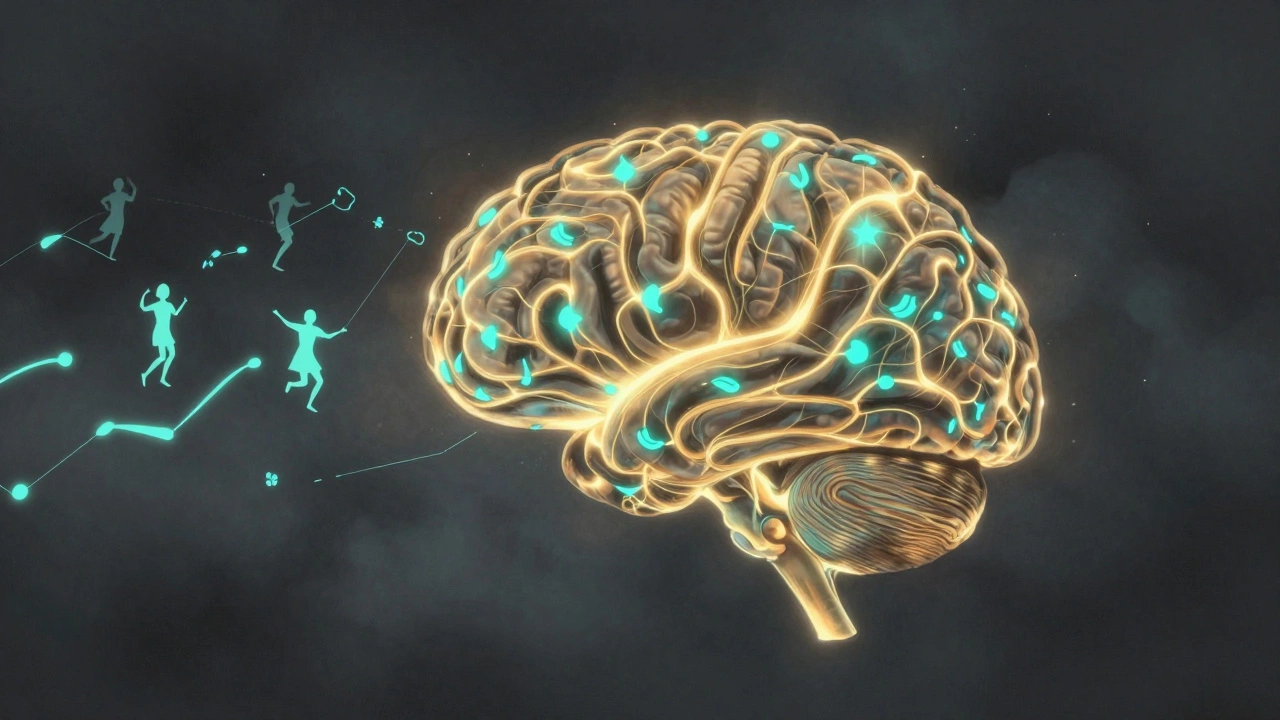
Your brain isn’t separate from your body. When you move, your muscles release chemicals called endorphins and endocannabinoids. These aren’t just feel-good hormones-they actually lower stress signals in your amygdala, the part of your brain that freaks out during anxiety. A 2023 study from the University of California tracked 1,200 college students over six months and found those who moved at least 150 minutes a week reported 42% fewer anxiety symptoms than those who didn’t.It’s not about running a marathon. Even a 20-minute walk between classes can reset your nervous system. Your heart rate goes up slightly, your breathing deepens, and your brain gets a signal: you’re safe now. That’s the same signal meditation tries to create-but movement does it faster and without needing silence or special equipment.
How Exercise Changes Depression Patterns
Depression in students often looks like staying in bed, skipping meals, or avoiding friends. It’s not laziness-it’s your brain stuck in a loop of low energy and negative thoughts. Physical activity breaks that loop.Exercise increases serotonin and dopamine, the same neurotransmitters targeted by antidepressants. A 2024 meta-analysis in Journal of Adolescent Health found that students who did regular movement (even just walking or dancing) had a 35% higher chance of seeing their depressive symptoms drop within four weeks. That’s faster than most therapy waitlists.
It’s not magic. It’s biology. When you move, your body tells your brain: you’re alive, you’re capable, you’re not helpless. That message starts to rewrite the story your brain tells you about yourself.
What Kind of Movement Actually Helps?
You don’t need a gym membership. You don’t need to love running. The best exercise for mental health is the one you’ll actually do.- Walking-even 10 minutes outside during lunch. Sunlight boosts vitamin D, which studies link to lower depression risk.
- Dancing-put on a song you like and move. No judgment. Just rhythm. It’s a full-body stress release.
- Bodyweight workouts-squats, push-ups, planks. You can do them in your dorm room. Ten minutes, three times a week, makes a measurable difference.
- Yoga or stretching-especially if you sit all day. Tight hips and shoulders store stress. Movement untangles it.
- Team sports or group classes-even once a week. Social connection + movement = double benefit.
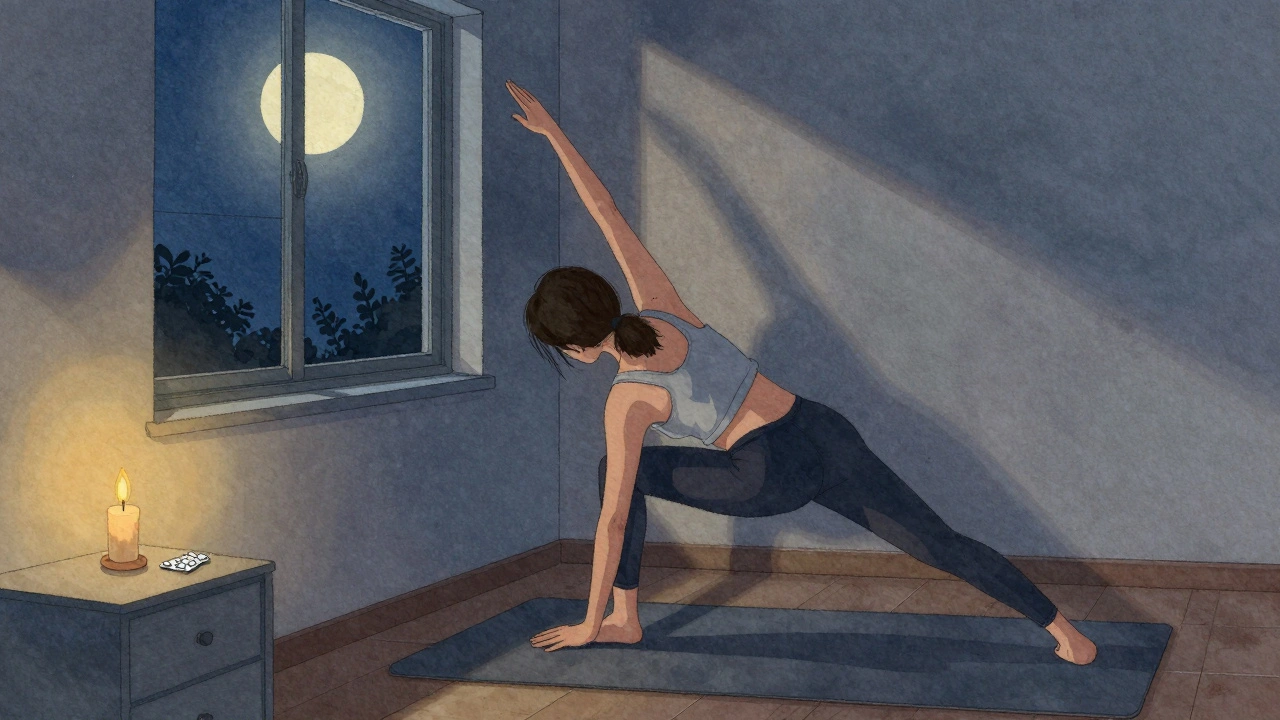
One student I talked to, Maya, 19, started doing 15 minutes of yoga before bed after panic attacks kept her awake. Within three weeks, she stopped needing her sleep aid. "It wasn’t the poses," she said. "It was the breathing. I finally felt like I could control something."
Why Students Skip Movement (And How to Start Anyway)
The biggest barriers? Time, energy, and guilt."I have too much to do," you think. But skipping movement makes your work harder. Anxiety slows your focus. Depression drains your motivation. Movement is the shortcut back to clarity.
Here’s how to start when you’re overwhelmed:
- Start with 5 minutes. Not 30. Not an hour. Five.
- Attach it to something you already do-right after brushing your teeth, before checking your phone in the morning, after your last class.
- Don’t aim for "perfect." Just show up. Even if you only walk to the mailbox and back, that’s a win.
- Track it with a simple checkmark on your phone or notebook. Seeing progress builds momentum.
- Forgive yourself if you miss a day. Mental health isn’t a checklist. It’s a practice.
One student, Jamal, started doing squats while waiting for his coffee to brew. Two weeks later, he added lunges while brushing his teeth. He didn’t join a gym. He didn’t buy gear. He just moved when he could.
The Real Cost of Not Moving
Skipping movement doesn’t just mean you miss out on feeling better. It means your brain stays stuck in high alert. Chronic stress from lack of movement raises cortisol levels, which weakens your immune system, messes with sleep, and makes you more reactive to stressors.Students who don’t move regularly are 2.3 times more likely to report poor academic performance, according to a 2025 survey by the American College Health Association. It’s not because they’re lazy. It’s because their brains are running on empty.
Think of your brain like a phone. If you never charge it, it dies faster. Movement is the charger. It doesn’t fix everything-but it gives you the energy to handle what’s left.
When Movement Isn’t Enough
Movement is powerful, but it’s not a cure-all. If you’re having daily panic attacks, can’t get out of bed for days, or feel hopeless, you need more than a walk.That’s okay. Talking to a counselor, seeing a doctor, or joining a support group isn’t failure-it’s strategy. Movement works best when it’s part of a toolkit, not the whole thing. Many campus health centers now offer free group walks, yoga sessions, and mental health coaching. Use them.
One student, Lena, started walking every morning and also signed up for weekly therapy. "The walk gave me the strength to show up for therapy," she said. "And therapy gave me the tools to make the walk matter."
Start Small. Stay Consistent.
You don’t need to transform your life overnight. You just need to move a little, more often. The goal isn’t to become an athlete. It’s to give your brain a chance to reset.Tomorrow, try this: Stand up. Walk to the window. Look outside for 30 seconds. Then take five steps. That’s it. That’s the beginning.
When your brain feels heavy, movement doesn’t ask you to be strong. It just asks you to be present. And sometimes, that’s enough to change everything.