
Walking into an exam room with your heart pounding and your hands shaking isn’t just stressful-it’s normal. But it doesn’t have to ruin your performance. Thousands of UK students sit exams every year under the same conditions: tight timing, silent rooms, and the weight of expectations. The difference between those who freeze and those who shine? Not intelligence. Not luck. It’s strategy.
Know the Exam Format Inside Out
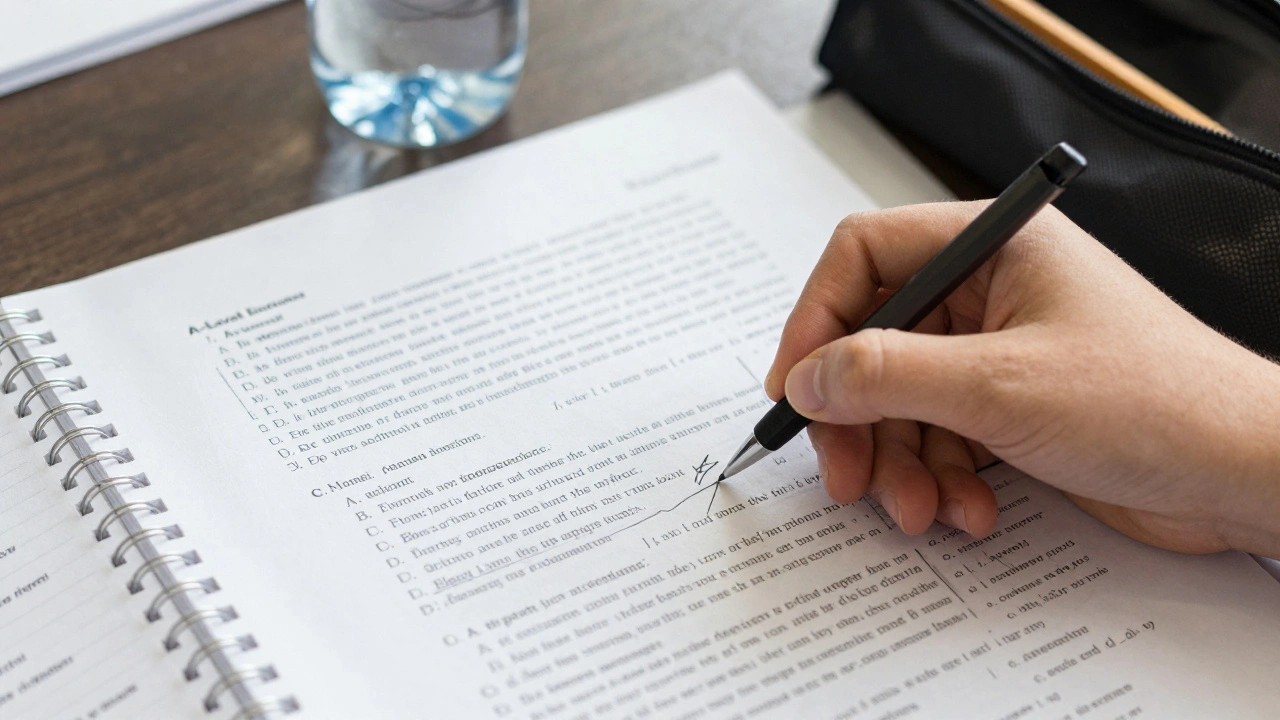
Many students spend hours memorizing facts but never bother to understand how the exam is structured. That’s like training for a marathon without knowing if it’s 5K or 42K. In UK exams, the format matters. A 2-hour A-Level paper with 10 short-answer questions and one 20-mark essay demands a completely different approach than a GCSE multiple-choice test.
Check past papers. Not just to practice answers, but to map out the pattern. How many marks are allocated to each section? Is there a required structure for essays? Do you need to show working for math questions? Knowing this lets you allocate time wisely. For example, if 40% of the marks come from one essay, don’t spend 10 minutes on it and rush the rest. That’s a common mistake.
Use the reading time. It’s not optional. In most UK exams, you get 5-10 minutes before the clock starts. Use it to scan the paper. Underline key words in questions. Sketch a quick outline for essays. Don’t start writing until you’ve planned. This single habit alone can boost your score by 15-20%.
Control Your Breathing Before You Start
Your body reacts to stress like it’s running from a lion. Your heart races. Your muscles tense. Your mind goes blank. That’s not weakness-it’s biology. But you can override it.
Before the exam begins, sit quietly. Close your eyes for 10 seconds. Breathe in through your nose for four counts. Hold for four. Exhale through your mouth for six. Repeat three times. This simple technique activates your parasympathetic nervous system-the one that calms you down. It’s used by elite athletes, firefighters, and surgeons. It works for students too.
Do this right after you sit down. Before you even pick up your pen. It doesn’t take long. But it changes your whole state. You’ll notice your hands stop shaking. Your thoughts will clear. You’ll feel more in control.
Write Smart, Not Just Hard
Writing more doesn’t mean writing better. I’ve seen students fill three pages with vague statements and still score poorly because they didn’t answer the question. UK examiners look for precision, not volume.
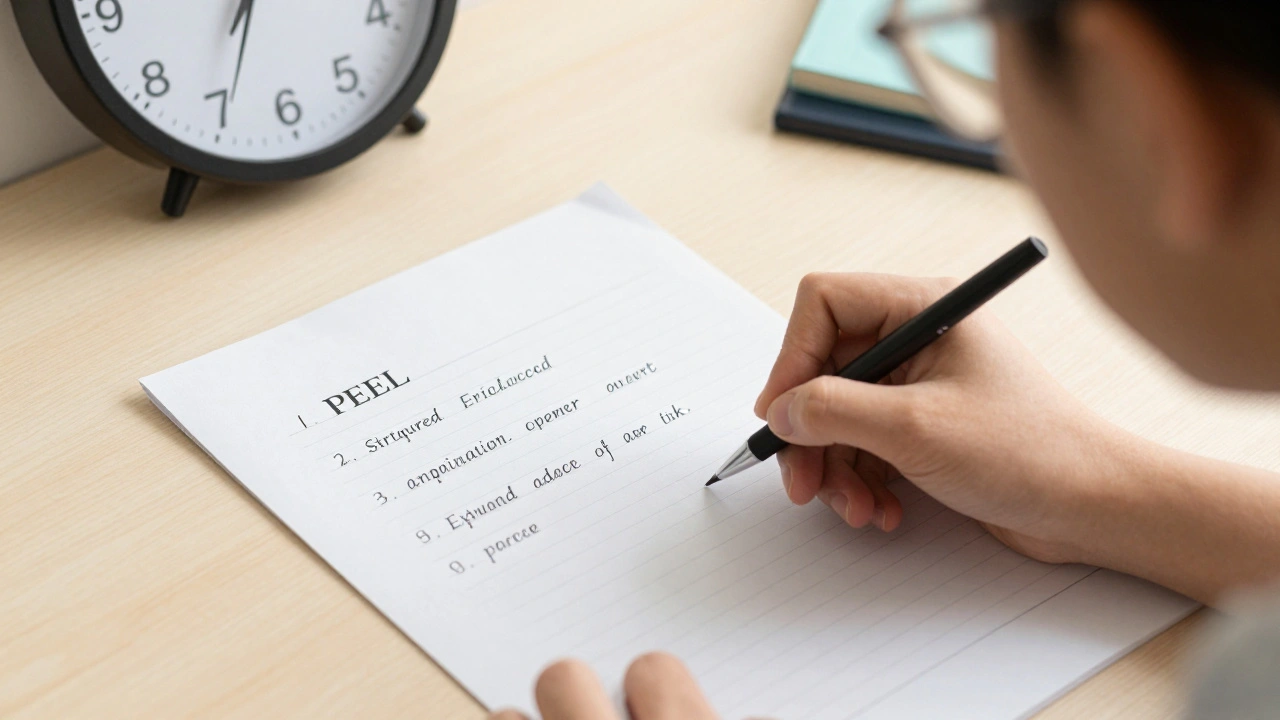
Use the PEEL method for essays and long answers:
- Point: State your answer clearly.
- Evidence: Give a fact, quote, or example.
- Explanation: Why does this matter? How does it connect?
- Link: Tie it back to the question.
This structure keeps you focused. It stops you from rambling. It makes your answer easy to mark. Examiners see hundreds of papers. If yours is clear and structured, it stands out-even if the content isn’t perfect.
For short-answer questions, be direct. No fluff. If the question asks for two reasons, give two. Not five. Not one. Two. Bullet points are fine if the exam allows them. Clarity beats cleverness every time.
Manage Your Time Like a Pro
Time pressure is the biggest cause of exam failure-not lack of knowledge. You know the material. But you run out of time because you got stuck on question 3 for 25 minutes.
Divide your time before you start. If it’s a 90-minute exam with 6 questions, give yourself 12 minutes per question. Add 5 minutes for review. Stick to it. If you’re stuck, move on. Leave a blank space and come back. You’ll get more marks by answering 5 questions well than 3 questions perfectly and leaving 3 blank.
Set mental checkpoints. At 30 minutes, you should be halfway through. At 60 minutes, you should be done with all questions and starting review. Use your watch. Don’t rely on the clock on the wall-it might be wrong.
What to Do When Your Mind Goes Blank
It happens. You stare at a question. Your brain freezes. Panic sets in. You feel like you’ve forgotten everything.
Here’s what to do:
- Stop. Put your pen down. Close your eyes for 5 seconds.
- Take three slow breaths.
- Look at the question again. Underline the key words: ‘Discuss’, ‘Evaluate’, ‘Compare’.
- Write down anything you remember-even a fragment. A name. A date. A concept.
- Build from there. You don’t need the full answer. You need to show you understand the topic.
Examiners give partial credit. Even one correct point can earn you a mark. Don’t leave it blank. That’s zero. Writing something-even messy-is better.
Prepare Your Body, Not Just Your Brain
Exam performance isn’t just mental. It’s physical. Your brain needs fuel. Sleep. Hydration. Movement.
Don’t cram all night. Studies show students who sleep 7+ hours the night before an exam score 10-15% higher than those who pull all-nighters. Sleep isn’t wasted time. It’s when your brain organizes what you learned.
Drink water. Dehydration by just 2% can reduce concentration and memory recall. Bring a clear water bottle to the exam. Sip slowly. No sugary drinks-they cause energy crashes.
On exam day, move. Walk for 10 minutes before you go in. Stretch your neck and shoulders. It reduces tension and increases blood flow to your brain. Don’t sit still for hours before the exam. Your body needs to wake up.
Practice Under Exam Conditions
Most students practice by reading notes. That’s not enough. You need to simulate the real thing.
Take a past paper. Set a timer. Sit at a desk. No phone. No music. No snacks. Treat it like the real exam. Time yourself strictly. Then mark it honestly. Where did you lose marks? Why? Did you run out of time? Did you misread the question?
Do this at least twice before the real exam. It trains your brain to perform under pressure. It builds confidence. You’ll walk into the room thinking, I’ve done this before.
Final Thought: You’re Not Just Taking a Test
Exams aren’t a measure of your worth. They’re a snapshot of your preparation on one day. You’ve studied. You’ve practiced. You’ve shown up. That’s already more than most.
When you sit down, remember: you’re not trying to be perfect. You’re trying to be clear. You’re not trying to impress. You’re trying to communicate what you know. One question at a time. One breath at a time.
The room will be quiet. The clock will tick. But you? You’ll be ready.