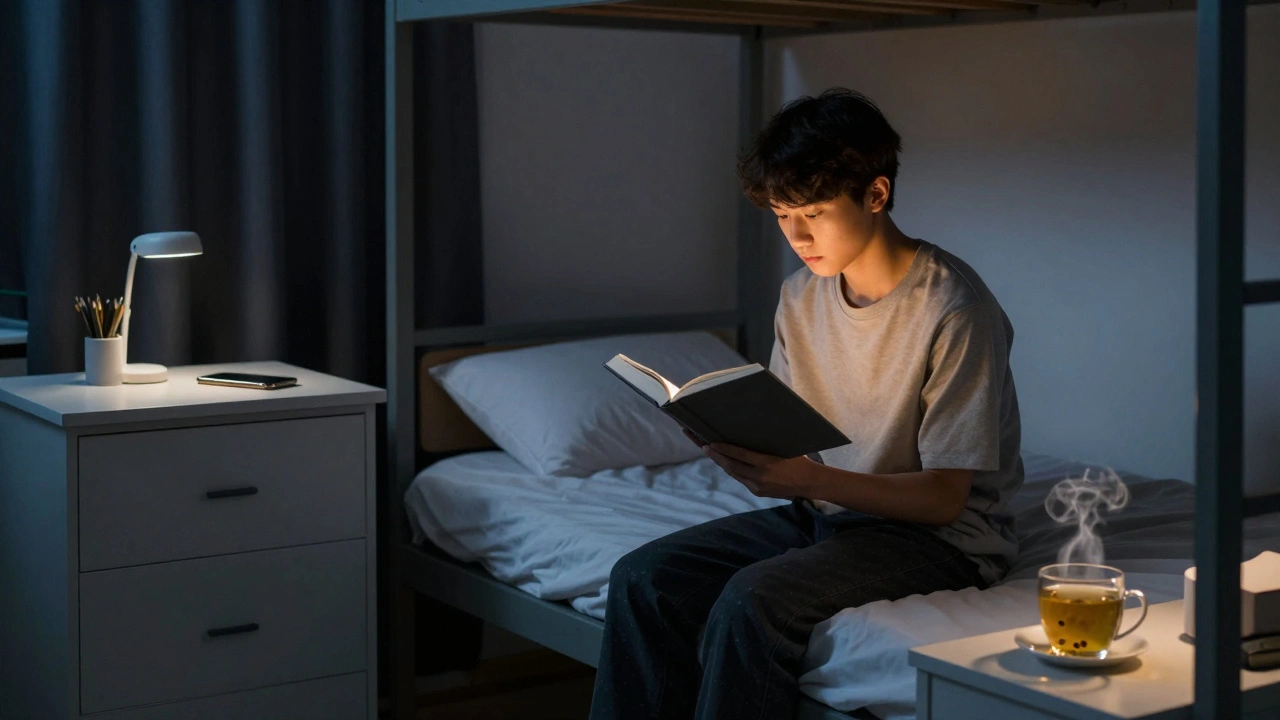
Most UK students think they need to squeeze in one more hour of revision before bed. They tell themselves they’re being productive. But what they’re really doing is sabotaging their sleep-and their grades. If you’re tossing and turning after midnight, waking up groggy, or forgetting what you studied yesterday, it’s not because you’re lazy. It’s because your evening routine is working against you.
Why your brain needs a wind-down
Your brain doesn’t flip off like a light switch. When you’re scrolling through TikTok, checking emails, or cramming formulas right before bed, your nervous system stays stuck in ‘alert’ mode. Cortisol, the stress hormone, stays high. Melatonin, the sleep chemical, doesn’t kick in. That’s why you feel tired but wired. A 2024 study from the University of Oxford tracked 1,200 university students over six months. Those who had a consistent 30-minute wind-down routine-no screens, no studying-fell asleep 22 minutes faster on average and scored 14% higher on memory tests the next day. It wasn’t about how much they studied. It was about how they ended their day.What a real wind-down looks like (not just ‘go to bed earlier’)
A wind-down isn’t about going to bed early. It’s about switching your brain from ‘do mode’ to ‘rest mode.’ Here’s how to do it, step by step:- Stop studying 60 minutes before bed. Your brain needs time to shift from active recall to passive relaxation. Flashcards at 11 p.m. don’t help-they just stress you out.
- Turn off screens 45 minutes before sleep. Blue light from phones, laptops, and tablets blocks melatonin. Even reading on a tablet counts. Use a physical book instead. If you must use a screen, switch to warm mode and lower brightness to 20%.
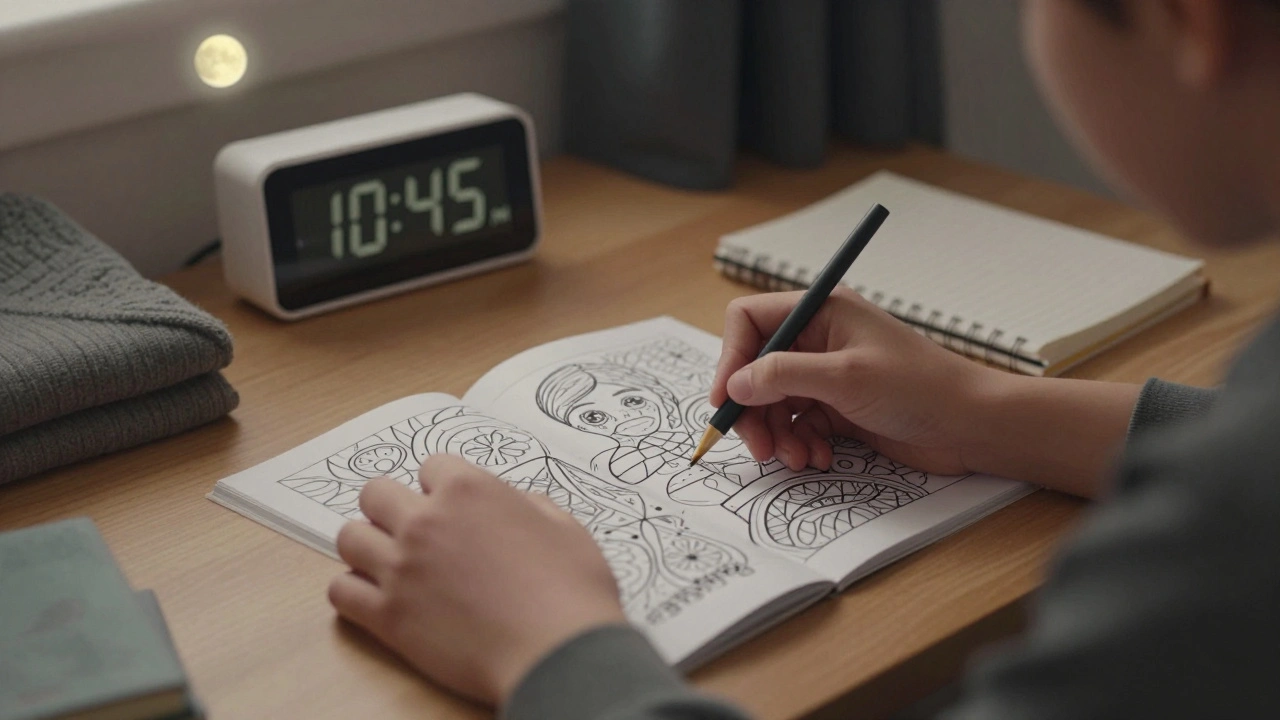
- Do something quiet and repetitive. This signals safety to your nervous system. Try folding laundry, coloring in an adult coloring book, or writing a short journal entry. One student in Manchester wrote down three small wins from her day. She slept better within a week.
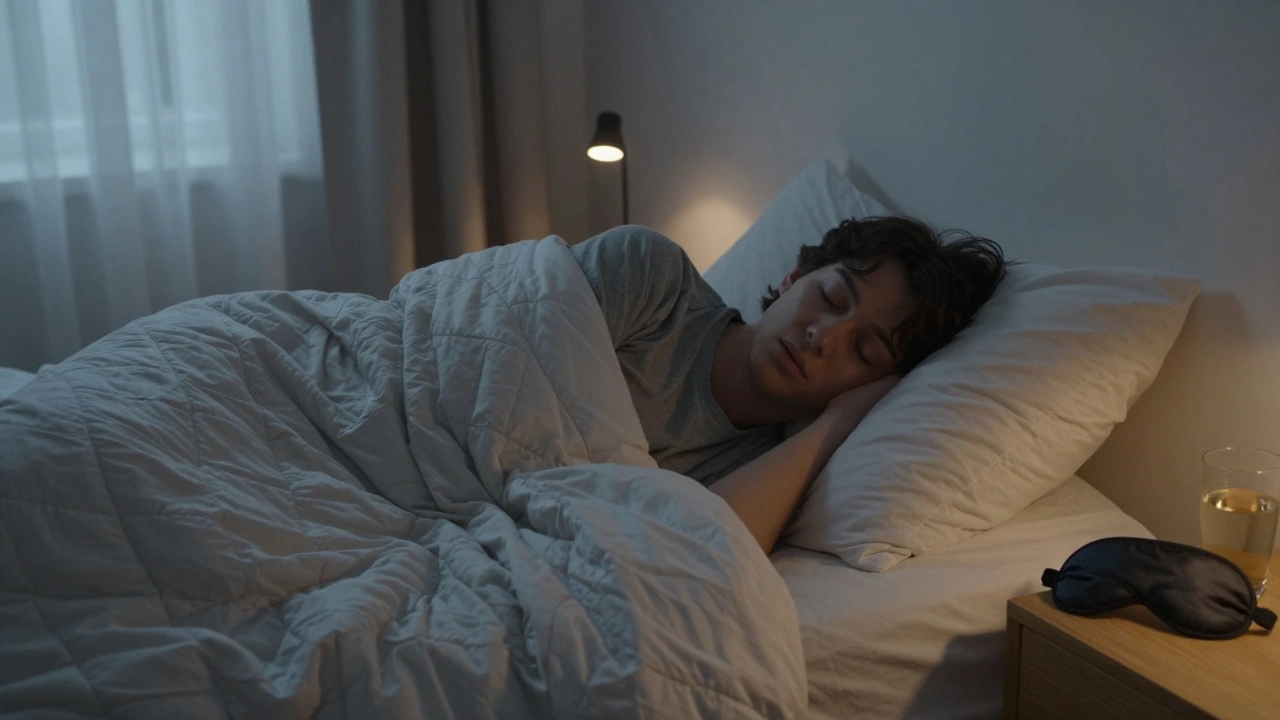
- Keep your room cool and dark. The ideal sleep temperature in the UK is between 16°C and 18°C. Use blackout curtains. If your room faces a streetlight, get a sleep mask. It’s not a luxury-it’s a necessity.
- Drink something warm, but not caffeine. Chamomile tea, warm milk with a pinch of turmeric, or just plain hot water with lemon. Avoid sugary drinks or alcohol. Alcohol might make you drowsy, but it shreds your deep sleep.
What not to do (the habits that ruin sleep)
You’ve probably heard the advice before. But here’s what actually breaks sleep for students:- Checking your phone for ‘just five minutes’. That’s how you end up scrolling for 45 minutes. Your brain doesn’t know when to stop. The algorithm doesn’t care if you have an exam tomorrow.
- Studying in bed. Your bed should be for sleep and sex only. If you’re doing essays or flashcards there, your brain starts associating your bed with stress. Get a desk. Even if it’s a small table by the window.
- Going to bed at different times every night. Your body runs on a clock. If you sleep at 1 a.m. on weekdays and 11 p.m. on weekends, your internal clock gets confused. That’s why you feel hungover on Monday mornings-even if you slept eight hours.
- Using caffeine after 3 p.m. Coffee, energy drinks, even dark chocolate can stay in your system for 8 hours. A student in Leeds cut afternoon caffeine and fell asleep 30 minutes faster within three days.
Make it stick: the 7-day challenge
You don’t need to overhaul your life. Start small. Try this for one week:- Day 1: Pick one thing to stop. No phone in bed. Just put it on charge in another room.
- Day 2: Start your wind-down 15 minutes earlier than usual. Sit quietly. Breathe.
- Day 3: Swap one screen activity for a non-screen one. Read a physical book instead of watching YouTube.
- Day 4: Write down one thing you’re grateful for. Doesn’t have to be big. ‘I finished my essay.’ ‘My flatmate made tea.’
- Day 5: Keep your room temperature at 17°C. Open a window if you need to.
- Day 6: Drink warm water instead of tea after 5 p.m.
- Day 7: Notice how you feel. Are you less anxious? Do you wake up easier? That’s your proof it’s working.
What happens when you stick with it
After two weeks of a consistent wind-down, students report:- Less anxiety before exams
- Faster recall during tests
- Less reliance on caffeine
- More energy in afternoon lectures
It’s not about perfection
Some nights, you’ll stay up late to finish a paper. That’s life. Don’t beat yourself up. The goal isn’t to be flawless. It’s to build a routine that makes sleep feel possible, not like another chore. Your brain needs rest to store what you’ve learned. Sleep isn’t the enemy of productivity. It’s the foundation.What if I can’t stop using my phone at night?
Start by putting your phone on airplane mode and charging it outside your bedroom. If that’s too hard, use a timer app that locks your screen after 10 p.m. Some students use old flip phones just for calls. It sounds extreme, but it works. Your brain will adjust faster than you think.
Can I nap during the day if I didn’t sleep well?
A 20-minute power nap before 3 p.m. can help. Longer naps or naps after 4 p.m. will make it harder to fall asleep at night. If you’re constantly napping, it’s a sign your nighttime sleep is still broken. Fix the evening routine first.
Does music help with sleep?
Soft, slow music without lyrics-like ambient sounds or classical piano-can help. But avoid playlists that make you feel emotions. If a song reminds you of a stressful exam, it’ll keep your brain active. Stick to neutral, repetitive sounds. White noise machines or apps like Rain Rain work well.
I’m always hungry at night. What should I eat?
A small snack is fine if you’re genuinely hungry. Try a banana, a handful of almonds, or a slice of whole-grain toast with peanut butter. Avoid sugary snacks or processed carbs-they spike your blood sugar and disrupt sleep. Don’t eat right before bed; give yourself 30 minutes to digest.
Why does my sleep get worse during exam season?
Stress spikes cortisol, which overrides your body’s natural sleep signals. The solution isn’t to study less-it’s to protect your wind-down even more. When everything feels urgent, your sleep routine becomes your anchor. Stick to it, even if you’re cramming. You’ll retain more in less time if you’re well-rested.