
Self-editing is the process of reviewing and refining your own academic work to improve clarity, structure, and accuracy before final submission. For UK university students, this step is not just about fixing typos; it is the difference between a solid grade and a top mark. Many students rush through their drafts because they are tired or stressed. This leads to avoidable errors that markers penalize heavily.
You have spent hours researching, arguing, and drafting. Do not let poor presentation undermine that effort. This guide breaks down a practical, step-by-step approach to editing your essays specifically for the UK higher education context. We will cover structure, argument flow, referencing standards like Harvard and OSCOLA, and the final polish.
The Gap Between Drafting and Polishing
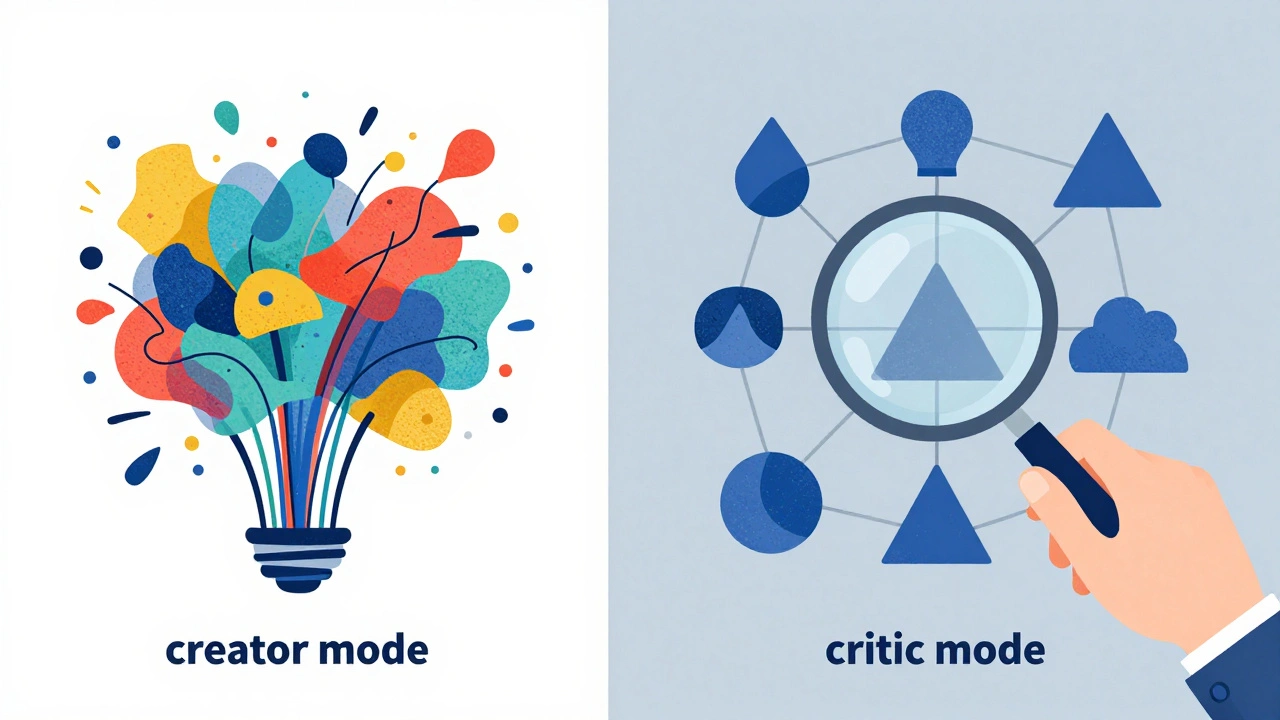
Writing and editing require different brain functions. When you write, you are in "creator mode," focused on getting ideas out. When you edit, you switch to "critic mode," looking for flaws. If you try to do both at once, you get mediocre results. You need distance. Ideally, finish your draft at least 24 hours before you start editing. If you are crunched for time, take a 30-minute walk. Your eyes need to reset so you can see the text as a reader would, not as the author who knows what they *meant* to say.
Consider this common scenario: You write a sentence quickly to meet a word count. It makes sense in your head because you know the context. On the page, however, it might be ambiguous or grammatically awkward. Distance helps you spot these disconnects.
Structural Integrity: The Macro Edit
Before you fix commas, check the skeleton of your essay. UK markers look for logical progression. Does your essay answer the specific question asked? In the UK system, questions often include directive verbs like "discuss," "evaluate," or "critically analyze." Each requires a different approach. "Discuss" means exploring multiple sides. "Evaluate" means judging the value or quality based on evidence.
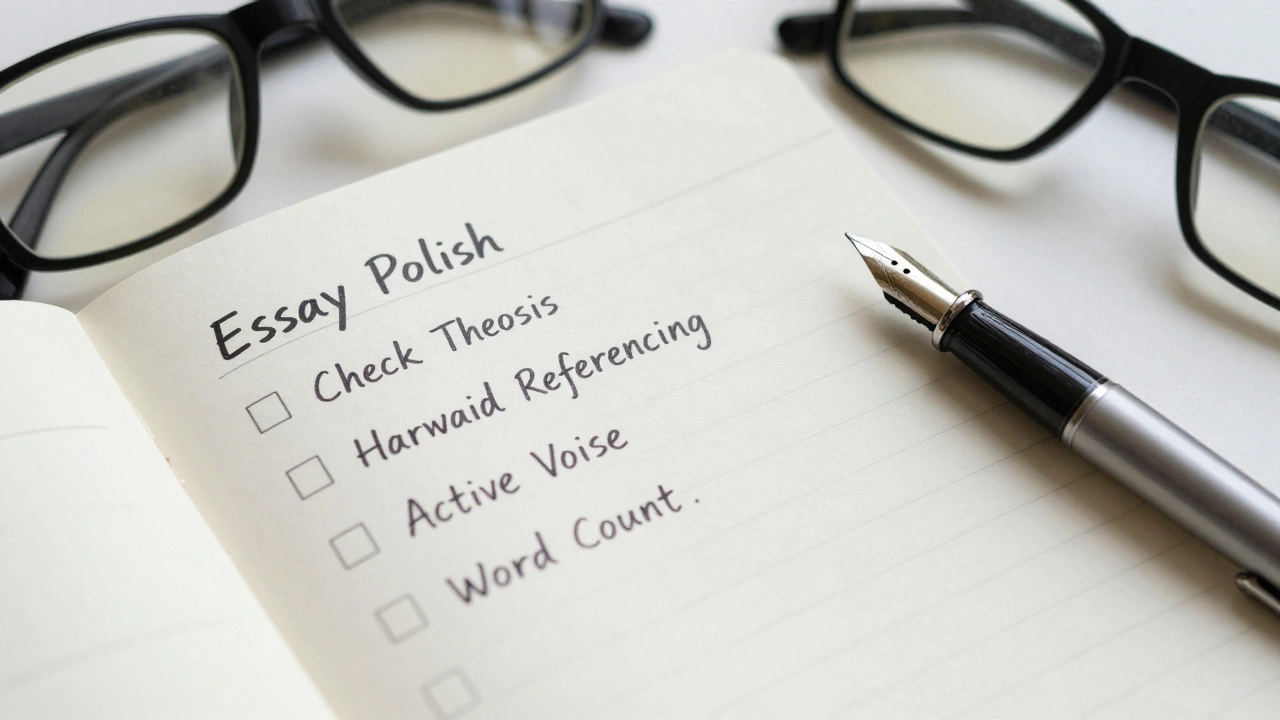
- Check the Introduction: Does it clearly state your thesis? Is there a roadmap of what follows?
- Paragraph Unity: Does each paragraph have one central idea? Use the topic sentence test: if you read only the first sentence of each paragraph, does the argument flow logically?
- Transitions: Are there abrupt jumps between ideas? Use linking words (however, consequently, furthermore) to guide the marker through your reasoning.
- Conclusion: Does it synthesize your arguments rather than just repeating them? It should leave the marker with a clear sense of your final position.
If the structure is weak, no amount of spell-checking will save the grade. Rearrange paragraphs if needed. Sometimes moving a section earlier strengthens the overall narrative.
Argument Depth and Critical Analysis
UK universities prioritize critical thinking over descriptive writing. A common mistake is summarizing sources without adding your own voice. Ask yourself: Am I describing what Smith said, or am I analyzing why Smith’s view matters in this context?
To deepen your analysis, use the "So What?" technique. After every claim or piece of evidence, ask yourself, "So what?" Why is this important? How does it support my thesis? If you cannot answer, that section may be fluff. Cut it or expand it with more insight. Markers reward students who engage with counter-arguments. Acknowledging opposing views and refuting them shows maturity and depth.
| Type | Example Sentence | Why It Works/Fails |
|---|---|---|
| Descriptive | Smith (2020) argues that inflation affects consumer spending. | Tells us what Smith thinks but adds no new insight. |
| Critical | While Smith (2020) links inflation to reduced spending, he overlooks the role of credit availability, which mitigates this effect in short-term cycles. | Evaluates Smith’s argument, identifies a gap, and integrates broader context. |
Referencing Standards: Harvard, OSCOLA, and APA
Incorrect referencing is a major pitfall for international and domestic students alike. Plagiarism accusations often stem from messy citations rather than intentional cheating. Different departments require different styles. Law students typically use OSCOLA (Oxford Standard for Citation of Legal Authorities). Social sciences often use Harvard or APA (American Psychological Association).
Here is how to check your references effectively:
- Consistency: Ensure every in-text citation has a corresponding entry in your bibliography. Conversely, every bibliography entry must be cited in the text.
- Formatting Details: Check italics, capitalization, and punctuation. In Harvard style, book titles are usually italicized, while journal article titles are in plain text. In OSCOLA, case names are italicized.
- Secondary Sources: If you cite a source quoted in another source, indicate this clearly (e.g., "as cited in..."). However, try to find the original source whenever possible.
- Use Tools Wisely: Reference managers like Zotero or EndNote help, but they make mistakes. Always manually verify the output against the official style guide.
A quick scan of your bibliography can reveal inconsistencies. Look for uniformity in date placement, author name formatting, and URL access dates.
Linguistic Precision: Tone and Vocabulary
Academic writing in the UK tends to be formal but direct. Avoid overly complex words when simpler ones convey the meaning better. Clarity is king. Also, watch out for colloquialisms. Phrases like "a lot of," "kids," or "get" are too informal. Replace them with "significant number," "children," or "obtain/acquire."
Be careful with hedging. While it is good to acknowledge uncertainty, excessive hedging ("it might possibly seem that perhaps...") weakens your argument. Use moderate hedges like "suggests," "indicates," or "likely" where appropriate. This shows academic caution without sounding unsure.
Another key area is passive voice. While some passive voice is acceptable in scientific methods sections, active voice is generally stronger and clearer. Instead of "It was found by the study that..." write "The study found that..." This makes your writing more engaging and concise.
The Final Polish: Micro-Editing
Now that the big issues are sorted, focus on the details. This is where you catch grammar errors, spelling mistakes, and awkward phrasing. Do not rely solely on spell-checkers. They miss homophones (their/there/they’re) and contextual errors.
- Read Aloud: This is the most effective trick. Your ear will catch run-on sentences and missing words that your eye skips over.
- Check Formatting: Ensure consistent font size (usually 12pt Times New Roman or Arial), line spacing (1.5 or double), and margins. Follow your university’s specific guidelines.
- Word Count: Check your word count strictly. Exceeding the limit by more than 10% can result in penalties. Trim unnecessary adjectives and adverbs.
- File Name: Save your file correctly. Often, submissions require a specific naming convention (e.g., StudentID_Module_Essay.docx). A wrong filename can cause administrative delays.
Finally, print your essay if possible. Reading on paper reveals different errors than reading on screen. Highlight any remaining doubts and resolve them before uploading.
How much time should I spend editing my essay?
Aim to spend at least 20-30% of your total writing time on editing. For a 3,000-word essay, if writing takes six hours, dedicate 90 minutes to two hours for structural review, referencing checks, and final polishing. Rushing this stage significantly lowers your potential grade.
What is the difference between proofreading and editing?
Editing involves larger changes: restructuring arguments, improving clarity, and strengthening analysis. Proofreading is the final step, focusing on surface errors like spelling, grammar, and punctuation. You should edit first, then proofread.
Can I use AI tools to edit my essay?
You can use AI for grammar checks or brainstorming, but never let it rewrite your arguments or generate content. UK universities have strict policies against AI-generated text. Using AI to alter your voice may constitute academic misconduct. Always verify any AI suggestions manually.
What if I don't understand the marking criteria?
Review the module handbook and rubric carefully. If unclear, attend office hours or ask your tutor for clarification before you start writing. Understanding what "critical analysis" means in your specific department is crucial for meeting expectations.
Is it okay to submit an unfinished essay?
Only if you have applied for an extension due to exceptional circumstances. Submitting incomplete work without permission usually results in a zero or a very low grade. It is better to submit a shorter, well-argued essay than a long, disorganized one.