
After Brexit, UK students lost automatic access to Erasmus+, the EU’s flagship student exchange program. But that doesn’t mean studying a Master’s in Europe is off the table. In fact, more UK postgraduates than ever are choosing European universities - just with a different path. The good news? You can still study in Europe for a fraction of the cost of US degrees, often with no tuition fees, generous scholarships, and real-world experience that boosts your career.
What Happened to Erasmus+ for UK Students?
Erasmus+ was a lifeline for UK students. Before 2021, over 10,000 UK postgraduates studied in Europe each year, with most paying no tuition and getting monthly grants of €300-€500. The UK officially left the program in 2021. But the government replaced it with the Turing Scheme, which offers similar funding - just with fewer destinations and less flexibility.
Here’s the catch: Turing only funds outbound mobility, not incoming. That means EU students can still come to the UK, but UK students can’t rely on Erasmus+ funding for EU placements. You’ll need to apply directly to universities, find scholarships, and sometimes pay international fees. But many European countries still offer low-cost or free Master’s degrees to international students - including UK citizens.
Where Can UK Postgraduates Study in Europe for Free or Cheap?
Not all European countries charge international students. Some still offer free or nearly free Master’s degrees to everyone, regardless of nationality. Here’s where UK students are going in 2026:
- Germany: Public universities charge no tuition for Master’s degrees. You pay around €150-€350 per semester for administrative fees. Cities like Berlin, Munich, and Heidelberg have English-taught programs in engineering, social sciences, and business.
- Norway: Still free for all international students, even post-Brexit. Universities like the University of Oslo and NTNU offer programs in environmental science, marine biology, and education.
- Finland: Some Master’s programs are free for EU/EEA students, but UK students now pay fees - typically €4,000-€8,000 per year. But scholarships cover up to 100% of tuition, and living costs are lower than in the UK.
- France: Public universities charge €2,770 per year for non-EU Master’s students. That’s less than half the cost of a UK postgraduate degree. Many programs are in English, especially in Paris, Lyon, and Grenoble.
- Italy: Tuition ranges from €900 to €4,000 per year based on income. Universities like Bologna, Milan, and Padua offer strong programs in art history, economics, and design.
Spain, Portugal, and Austria also offer affordable options. The key? Apply early. Many programs fill up months before deadlines.
How to Fund Your Master’s Without Erasmus+
Without Erasmus+, you’ll need to plan your funding differently. Here’s how UK students are making it work in 2026:
- University scholarships: Most European universities offer merit-based scholarships for international students. The University of Amsterdam gives out €5,000-€15,000 to top applicants. Lund University in Sweden offers full tuition waivers.
- Government grants: The UK government’s Turing Scheme gives up to £5,700 per year for living costs if you’re studying in Europe. You can combine this with university scholarships.
- Part-time work: In Germany and Finland, international students can work 20 hours a week during term and full-time during breaks. Minimum wage is €12/hour in Germany - that’s €960/month if you work full-time.
- Student loans: UK postgraduates can still apply for a Postgraduate Loan from Student Finance England, Wales, or Scotland - up to £13,414 for 2025/26. You can use it to pay for tuition abroad if the university is approved.
Many students combine two or three of these. One student in Berlin used a £10,000 UK loan, a €6,000 scholarship from Humboldt University, and part-time tutoring to cover all costs - and still saved €2,000.
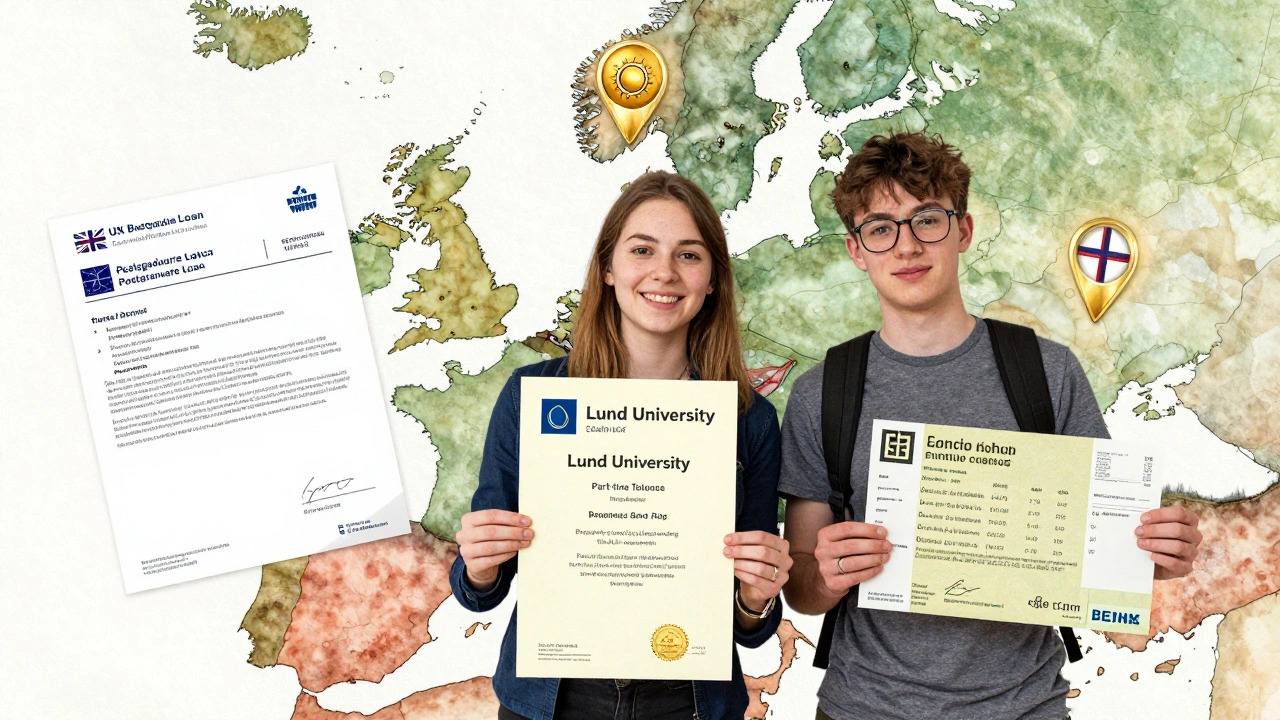
Which Master’s Programs Are Best for UK Students in Europe?
Not all degrees are equal when it comes to employability and cost. Here are the top Master’s programs UK students are choosing in 2026:
- Environmental Science: Norway and Finland lead here. Programs focus on climate policy, renewable energy, and sustainability. Graduates get jobs with the EU Commission, NGOs, and green tech firms.
- Computer Science & AI: Germany and France offer strong programs with ties to tech hubs like Berlin and Paris. Many include internships with Siemens, SAP, or startups.
- International Relations & European Studies: Universities in the Netherlands (Leiden, Utrecht) and Italy (Bologna) offer programs taught in English that explore EU policy, migration, and diplomacy.
- Education: Finland’s education system is world-famous. UK teachers are going there for Master’s in Teaching and Learning - and returning with qualifications recognized across Europe.
- Business & Management: Spain and Italy have strong business schools with low fees and high employability. IE Business School in Madrid offers scholarships for UK students.
These programs don’t just teach you. They connect you. Many include mandatory internships, industry projects, or study trips across EU countries. That’s real experience - and it shows up on your CV.
How to Apply: Step-by-Step Process
Applying to a European Master’s isn’t like applying to a UK university. Here’s how to do it right:
- Start 12-18 months early. Deadlines for autumn 2026 intake are already open for many programs.
- Find programs on Studyportals or DAAD. These sites let you filter by language, tuition, and country.
- Check if your degree is recognized. Use ENIC-NARIC to confirm your UK Bachelor’s meets entry requirements.
- Prepare documents: Transcript, degree certificate, CV, motivation letter, 2 references. Some schools want a research proposal.
- Take an English test: IELTS or TOEFL is usually required, even if you studied in English in the UK.
- Apply for scholarships. Most universities have scholarship pages - apply at the same time as your program.
- Apply for a student visa. Once accepted, you’ll need a residence permit. Germany and France process these in 4-8 weeks.
- Book accommodation early. Student housing fills up fast. Use university housing portals, not Airbnb.
Don’t wait until your final year of undergrad. Start researching now. The best programs get 500+ applications for 30 spots.
Life as a UK Student in Europe: What to Expect
Living in Europe as a UK postgraduate isn’t just about studying. It’s about adapting.
You’ll need to open a local bank account. In Germany, that’s easy with your enrollment letter. In France, you’ll need a proof of address - which means securing housing first. Health insurance is mandatory. Most countries require you to buy public insurance (€30-€100/month). In Germany, you can use the UK’s EHIC until it expires - then switch to local coverage.
Cost of living varies. A one-bedroom apartment in Lisbon costs €800/month. In Berlin, it’s €1,000. In Oslo, it’s €1,400. But groceries, public transport, and student discounts keep costs down. Many cities offer €20-€50/month public transport passes for students.
Language isn’t a barrier in most Master’s programs - they’re taught in English. But learning basic local phrases helps. A little German in Berlin or Italian in Bologna goes a long way in making friends and finding part-time work.

Will This Help My Career Back in the UK?
Yes. Employers in the UK value international experience. A Master’s from a top European university shows independence, adaptability, and cultural awareness - traits that matter in global industries.
Graduates from German universities are hired by Rolls-Royce, BP, and Deloitte. Those from French schools join the NHS, the Civil Service, and international NGOs. The EU’s Bologna Process ensures degrees are recognized across 48 countries - including the UK.
Plus, you’ll build a network across Europe. Many UK students stay in touch with classmates who now work in Brussels, Amsterdam, or Madrid. That’s a professional network no UK university can give you.
What Are the Risks?
It’s not all smooth sailing. Here’s what to watch out for:
- Visa delays. Apply early. Some embassies are backlogged.
- Hidden costs. Some universities charge extra for thesis supervision or lab access.
- Language barriers in daily life. Even if your course is in English, bureaucracy isn’t.
- Changes in policy. The UK government could cut Turing funding. Have a backup plan.
But these risks are manageable. Most students who plan ahead - and start early - have no major issues.
Final Thoughts: Is It Worth It?
Studying a Master’s in Europe as a UK postgraduate is harder than it was before Brexit. But it’s not impossible. It’s just different.
You’ll pay more attention to deadlines. You’ll need to apply for scholarships. You’ll have to navigate visas and bank accounts on your own. But you’ll also get a world-class education for less than half the price of a UK degree. You’ll live in a new country, speak a new language, and build connections that last a lifetime.
It’s not the same as Erasmus+. But for many, it’s better.
Can UK students still get Erasmus+ funding after Brexit?
No. The UK left the Erasmus+ program in 2021. The government replaced it with the Turing Scheme, which offers similar grants but with fewer partner countries and less flexibility. UK students can no longer join Erasmus+ exchanges, but they can still study in Europe using university scholarships, UK postgraduate loans, and part-time work.
Which European countries offer free Master’s degrees to UK students?
Germany and Norway still offer free tuition for Master’s degrees to all international students, including UK citizens. In Germany, you pay only a small semester fee (€150-€350). Norway has no tuition fees at public universities. Finland, France, and Italy charge fees but offer generous scholarships that can cover most or all costs.
How much does it cost to study a Master’s in Europe as a UK student?
Costs vary by country. In Germany and Norway, tuition is free - just pay €150-€350 in fees per semester. In France, tuition is €2,770/year. In Finland, fees range from €4,000-€8,000/year, but scholarships often cover 50-100%. Living costs are €800-€1,400/month depending on the city. Most UK students spend between €10,000-€15,000 total for a 1-2 year Master’s.
Can I use my UK student loan to pay for a Master’s in Europe?
Yes. UK postgraduate students can use their Student Finance loan (up to £13,414 for 2025/26) to pay for tuition at approved European universities. You must apply through Student Finance England, Wales, or Scotland, and the university must be on their list of eligible institutions. The loan covers tuition and part of your living costs.
Do I need a visa to study in Europe as a UK citizen?
Yes. Since Brexit, UK citizens need a student visa or residence permit to study in the EU for more than 90 days. Each country has its own process. Germany requires a student visa before arrival, while France allows you to apply after arriving with a long-stay visa. Always check the embassy website of your host country. Processing can take 4-8 weeks.
Are European Master’s degrees recognized in the UK?
Yes. All European countries are part of the Bologna Process, which ensures degree recognition across borders. UK employers, professional bodies, and the government accept degrees from accredited European universities. You can verify your degree through ENIC-NARIC if needed.