Living on a student budget in the UK doesn’t mean giving up hot, tasty meals. Between lectures, part-time shifts, and social plans, most students don’t have time to chop, sauté, or scrub pots. The good news? You can eat well without a kitchen, a stove, or even a microwave that works properly. Whether you’re in a dorm with shared facilities, a tiny flat with one hotplate, or just too tired to think about dinner, these three types of meals-no-cook, one-pot, and microwave-are your lifeline.
No-Cook Meals: Zero Heat, Zero Stress
You don’t need to turn on a single appliance to eat something satisfying. No-cook meals rely on shelf-stable ingredients that come ready to eat or need just a quick mix. Think of them as the ultimate lazy-day hack.
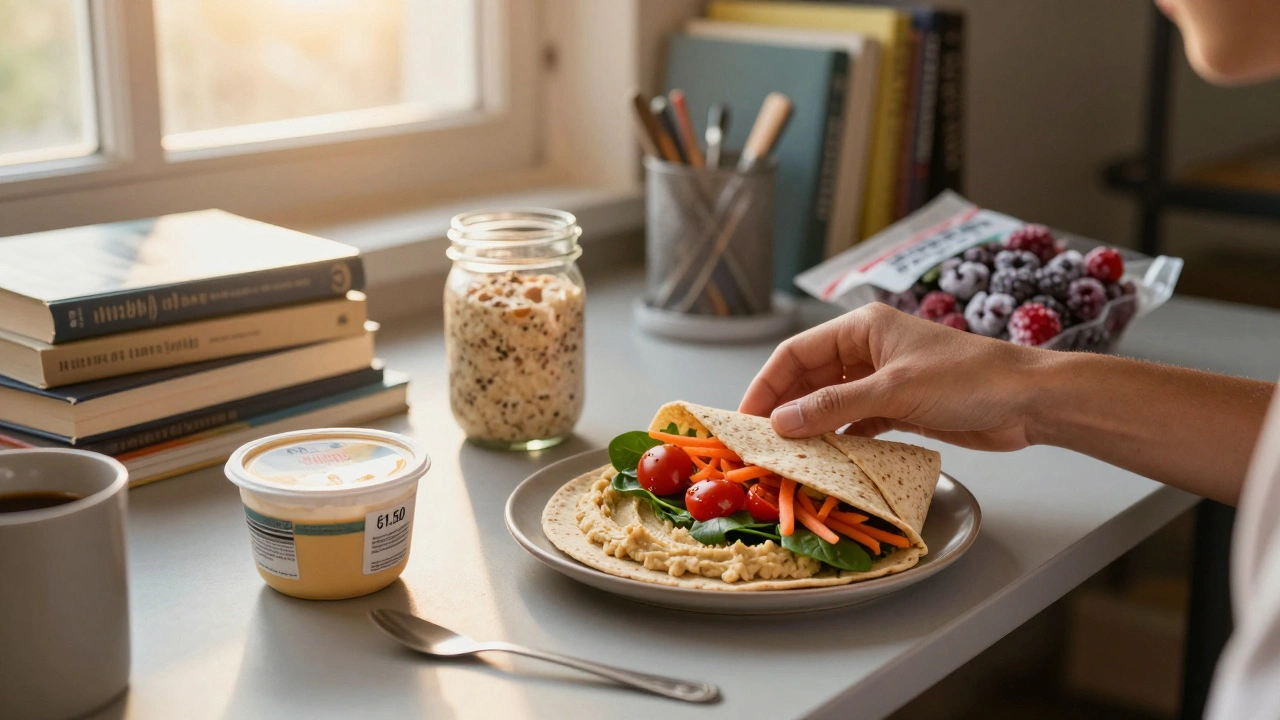
- Hummus and veggie wraps: Grab a whole wheat tortilla, a tub of hummus (around £1.50 at Tesco), and pre-washed baby spinach, cherry tomatoes, and shredded carrots. Spread the hummus, toss in the veggies, roll it up, and you’ve got a protein-packed meal that lasts all afternoon.
- Yogurt parfait: Buy a large tub of plain Greek yogurt (£2.20 for 500g) and a bag of frozen berries (they thaw in the fridge overnight). Layer them with granola from the bulk bin. Add a drizzle of honey if you’ve got it. No cooking. No mess. Just eat.
- Canned tuna salad: Drain a can of tuna (in water, not oil), mix it with a spoonful of mayo, a squeeze of lemon, and some chopped pickles or capers. Serve on crackers or in a bread roll. It’s got 20g of protein and costs less than £1.50.
- Overnight oats: Mix ½ cup rolled oats, ¾ cup milk (or plant-based), a spoon of chia seeds, and a dash of cinnamon in a mason jar. Leave it in the fridge overnight. In the morning, top with banana slices or peanut butter. You can even make five jars at once on Sunday.
These meals work because they use ingredients that don’t spoil fast and require zero heat. Even if your fridge is half-full and your pantry is just a box of instant noodles, you can build something real.
One-Pot Meals: One Pan, One Wash
If you’ve got a single saucepan, a gas ring, and a wooden spoon, you can make more than you think. One-pot meals cut down on cleanup, save time, and stretch your budget. Most students in the UK use a single burner or shared kitchen-so this method is not just convenient, it’s essential.
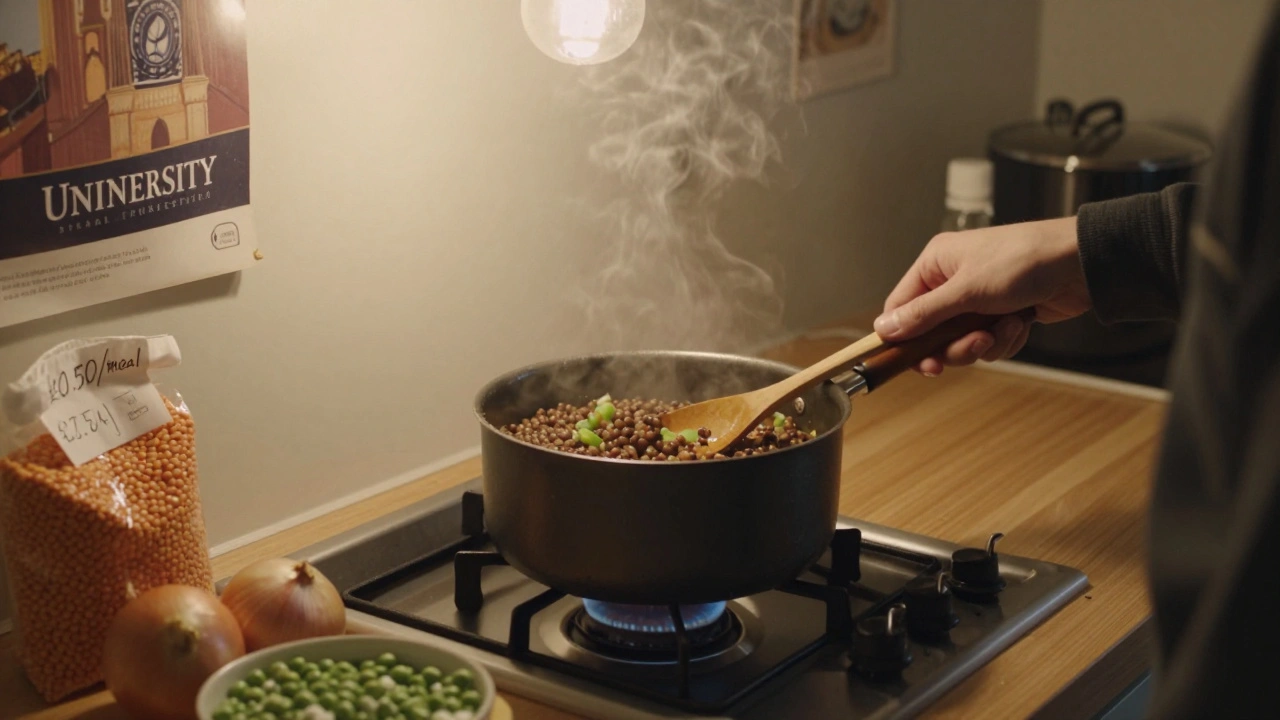
Try this simple recipe: One-Pot Lentil & Veggie Stew.
- Put 1 cup dried brown lentils (costs £0.80 per bag) into a pot.
- Add 2 cups of vegetable stock (or water with a stock cube) and 1 chopped onion.
- Toss in 2 chopped carrots, 1 chopped potato, and a handful of frozen peas.
- Bring to a boil, then simmer for 25 minutes. Stir once.
- Season with salt, pepper, and a pinch of paprika. Done.
You get 4 servings. That’s £0.50 per meal. And you only wash one pot. Lentils are high in protein and fiber, and they keep you full longer than pasta or rice alone. You can make this in under 30 minutes while watching a lecture recording.
Other one-pot winners:
- Spaghetti with jarred sauce: Boil pasta, add jarred tomato sauce (or pesto), stir in frozen spinach or canned beans. Done in 12 minutes.
- One-pot chicken and rice: Use leftover cooked chicken (or a cheap chicken breast from the discount section). Add 1 cup rice, 2 cups water or broth, a pinch of garlic powder, and a splash of soy sauce. Cover and simmer until rice is done.
- Breakfast hash: Dice a potato, toss it in the pan with a little oil, and cook until crispy. Add frozen mixed vegetables and a cracked egg. Cover for 5 minutes. The steam cooks the egg.
These meals don’t need fancy tools. A pot, a lid, and a spoon are enough. And they’re way cheaper than takeaways.
Microwave Meals: Fast, Foolproof, and Actually Good
The microwave is the most underrated kitchen tool in a student’s life. Forget the £7 ready meals with 12 ingredients you can’t pronounce. You can make real food in under 5 minutes using just a microwave and a few basic items.
Here’s how:
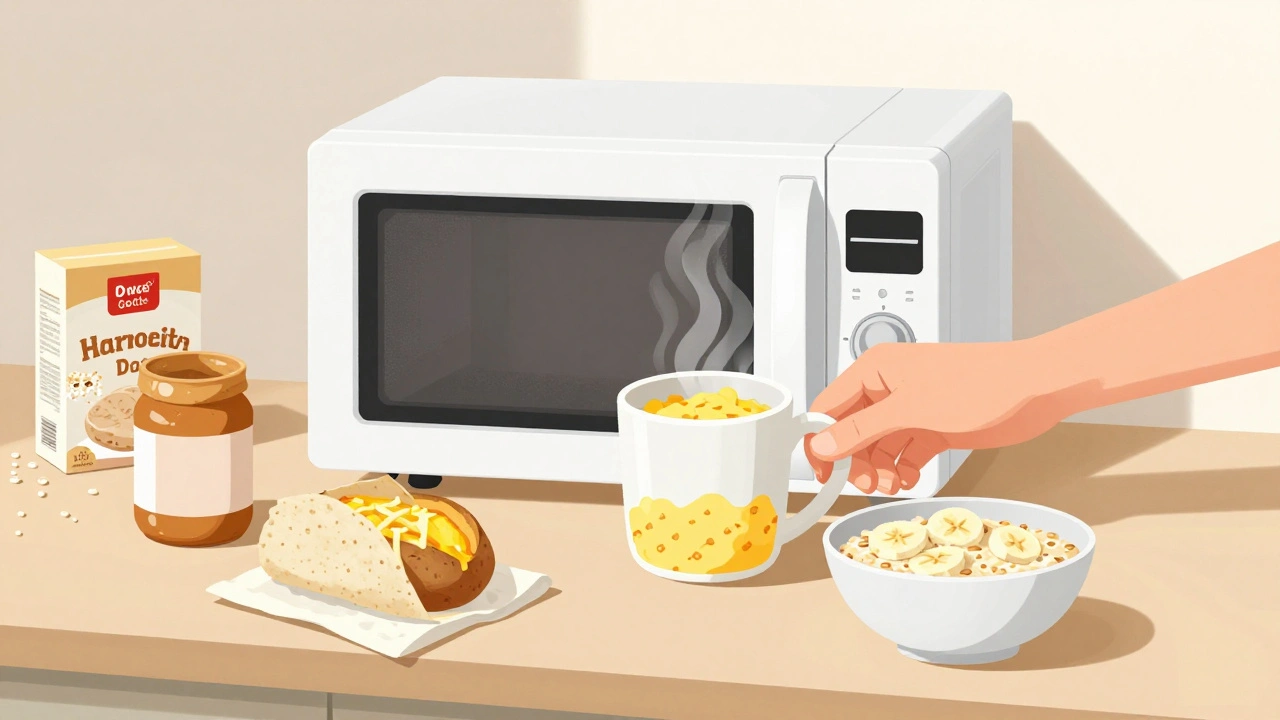
- Microwave scrambled eggs: Crack 2 eggs into a microwave-safe mug. Add a splash of milk, a pinch of salt, and a handful of grated cheese. Stir. Microwave on high for 1 minute, stir, then microwave another 30 seconds. It’s fluffy, filling, and beats cereal.
- Microwave baked potato: Wash a medium potato, poke it with a fork, wrap it in a damp paper towel, and microwave for 5-7 minutes. Split it open, add butter, salt, and a spoon of canned baked beans. Top with shredded cheese if you’ve got it. You get fiber, potassium, and protein.
- Microwave oatmeal: Put ½ cup oats and 1 cup water in a bowl. Microwave for 2 minutes. Stir. Add a banana slice and a spoon of peanut butter. Done. You can even make this the night before, refrigerate it, and reheat in the morning.
- Microwave mug cake: Mix 4 tbsp flour, 3 tbsp sugar, 2 tbsp cocoa powder, 1 egg, 3 tbsp milk, and 1 tbsp oil in a mug. Microwave for 90 seconds. It’s not a fancy dessert, but after a long day? It feels like a reward.
Some students think microwaves are only for reheating soup. But with the right tools-microwave-safe containers, a fork, and a little creativity-you can turn it into a real cooking station. The trick? Don’t overfill containers. Always cover with a plate or paper towel to avoid splatters. And never microwave metal. (Yes, people still try.)
What to Keep in Your Student Pantry
You don’t need a full kitchen. You need a smart list of staples that last, cost little, and work across all three methods.
- Dried lentils - cheap, high-protein, cook fast
- Rolled oats - for overnight oats, microwave bowls, and baking
- Canned beans - chickpeas, black beans, kidney beans (rinse before use)
- Canned tomatoes - base for sauces, stews, or even scrambled egg toppings
- Instant broth cubes - make soup, stews, or just hot drinks
- Peanut butter - spreads, sauces, or eat straight from the jar
- Hard cheeses - cheddar or mozzarella that lasts weeks in the fridge
- Frozen veggies - peas, corn, mixed stir-fry packs
- Whole grain tortillas - for wraps, quesadillas, or snacks
- Yogurt - plain Greek for protein, not sugary flavors
These 10 items cost under £25 total and can carry you for 3-4 weeks. You can build dozens of meals from them using just your microwave, a pot, or no heat at all.
Common Mistakes Students Make
Even with the best recipes, students still mess up. Here’s what goes wrong-and how to fix it.
- Buying too much fresh food - Lettuce wilts. Tomatoes go bad. Buy frozen or canned instead. They’re just as nutritious.
- Waiting until you’re starving - If you wait until 11pm to eat, you’ll order pizza. Prep one meal a week. Even just two jars of overnight oats on Sunday.
- Ignoring portion sizes - A bag of chips isn’t dinner. A can of beans with rice is. Learn to recognize real portions.
- Thinking you need recipes - You don’t. Mix what you’ve got. Tuna + rice + soy sauce = decent meal. Eggs + bread + cheese = breakfast. No recipe needed.
- Using the wrong container - Never microwave plastic takeout tubs. They leak chemicals. Use glass or ceramic. If you don’t have any, use a mug or a paper plate.
It’s not about being a chef. It’s about being smart. The goal isn’t gourmet. It’s to eat enough, stay full, and not spend £100 a week on Deliveroo.
Real Student Budget Breakdown
Let’s say you’re eating three meals a day for a week. Here’s what it costs using these methods:
| Meal Type | Example | Cost per Meal | Cost per Week (3 meals/day) |
|---|---|---|---|
| No-cook | Hummus wrap + yogurt | £1.20 | £25.20 |
| One-pot | Lentil stew | £0.50 | £10.50 |
| Microwave | Scrambled eggs + toast | £0.80 | £16.80 |
| Total | £0.83 | £52.50 |
Compare that to £7 per takeaway meal × 21 meals = £147. You’re saving over £90 a week. That’s a weekend trip, new headphones, or a month’s phone bill.
Can I really eat healthy without a kitchen?
Absolutely. Many student meals rely on canned, dried, or pre-washed ingredients that need no cooking. Hummus, yogurt, canned beans, oats, and hard cheeses are all nutrient-dense and require zero heat. You just need a fridge, a spoon, and a willingness to eat simple food.
What if my microwave is broken?
Then focus on no-cook and one-pot meals. A single hotplate or shared kitchen is enough. You can boil water for pasta, heat canned soup, or cook eggs in a pan. The microwave is helpful, but not required. Many students in the UK manage fine without one.
Are these meals filling enough?
Yes-if you include protein and fiber. A meal with lentils, beans, eggs, yogurt, or peanut butter will keep you full for hours. Avoid meals made of just carbs like plain pasta or bread. Add one protein source and one veggie (even frozen) to every plate.
Where can I buy cheap ingredients in the UK?
Check out Aldi, Lidl, and Tesco’s Value range. Frozen veggies and dried pulses are often cheaper than fresh. Look for the "reduced" section in supermarkets-items marked down for same-day sale. Also, bulk bins at health food stores sell oats, rice, and nuts at lower prices per gram.
Can I meal prep for a whole week?
Yes. Make a big batch of lentil stew or overnight oats on Sunday. Store in jars or containers. They last 4-5 days in the fridge. You can even freeze one portion. Reheat in the microwave or eat cold. It saves time, money, and stress.
Final Tip: Start Small
You don’t need to overhaul your eating habits overnight. Pick one method this week. Try one no-cook meal. Make one one-pot dish. Use your microwave for something new. Notice how much easier it is than ordering food. Then do it again next week. Slowly, you’ll stop thinking about food as a chore-and start seeing it as something you control. That’s the real win.