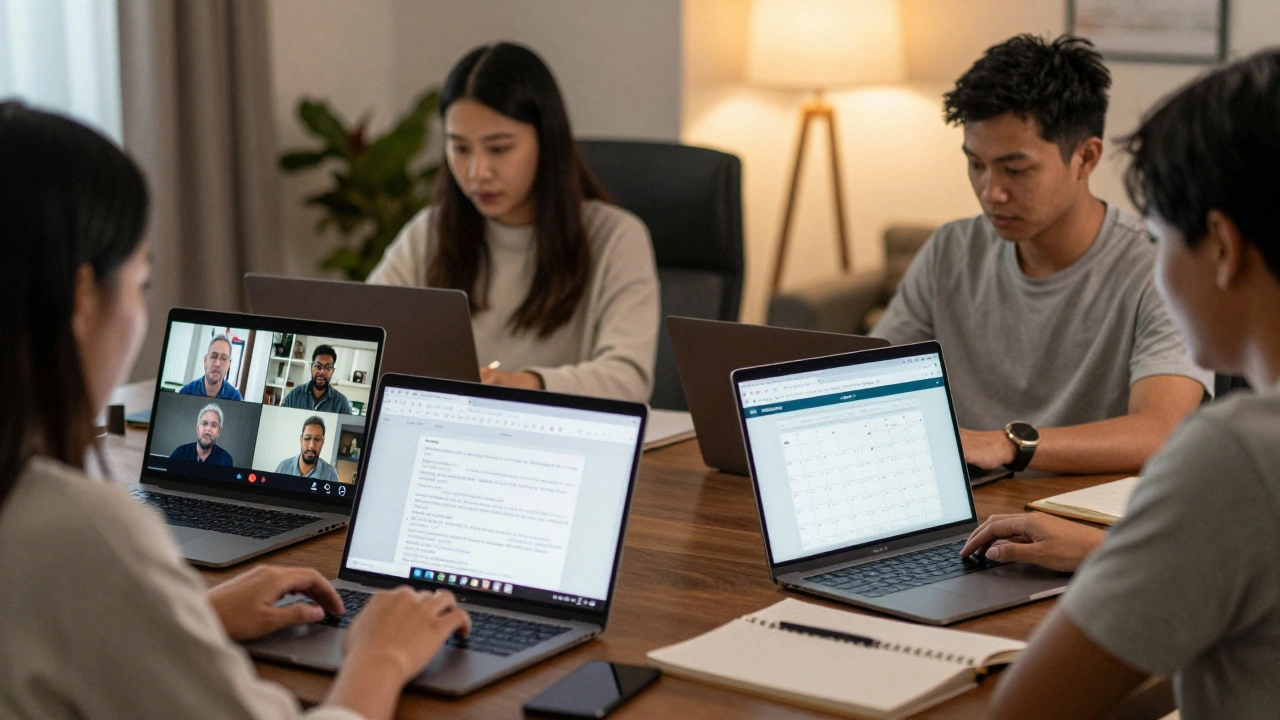
More than 120,000 international students enrolled in UK distance learning programs in 2025. That’s up 42% since 2020. If you’re thinking about doing a master’s or PhD while working, raising kids, or living abroad, you’re not alone. But online degrees aren’t just lectures uploaded to a website. They demand discipline, structure, and real strategy-especially when you’re juggling life outside the virtual classroom.
What Distance Learning Actually Looks Like at UK Universities
When you sign up for an online postgraduate course at a UK university, you’re not getting a watered-down version. Universities like the University of London, Open University, and University of Manchester offer the same degrees, same faculty, and same academic standards as their on-campus programs. You’ll access recorded lectures, live seminars via Zoom, discussion forums, digital libraries, and virtual labs. Some programs even require short in-person residencies-usually one or two weeks a year-for exams or group projects.
But here’s the catch: you won’t have a campus to walk to. No libraries to study in, no classmates to grab coffee with, no professors popping by your desk. Everything is self-driven. That’s why success comes down to one thing: how well you manage your time.
The Real Pros of Studying Online in the UK
Let’s start with the good stuff. The biggest advantage? Flexibility. If you’re working full-time in New York, caring for a toddler in Lagos, or recovering from an injury in Sydney, you can still earn a UK postgraduate degree without quitting your life. Courses are designed around your schedule. You can watch lectures at 2 a.m. or submit assignments during lunch breaks.
Cost savings add up fast. No relocation. No commuting. No campus fees. A typical online MSc at the University of Edinburgh costs around £12,000. The same degree on campus? £28,000 or more. You’re also saving on housing, meals, and local transport. For many, that’s the difference between starting the program and never starting at all.
And then there’s access. You can study under professors from Imperial College London while living in rural Thailand. You can join a global cohort of nurses, engineers, and teachers-all sharing the same readings, same deadlines, same challenges. That kind of diversity? It’s rare in traditional classrooms.
The Hidden Cons No One Tells You About
Here’s what they don’t show you in brochures: isolation hits hard. You might log in for three hours a day, five days a week, and never speak to another human outside your family. That’s not just lonely-it’s draining. A 2024 survey by the UK Council for International Student Affairs found that 61% of online postgraduate students reported feeling disconnected from their academic community.
Technical issues aren’t just annoying-they’re disruptive. A slow internet connection during a live exam, a software glitch with your submission portal, or a Zoom meeting that drops right before your group presentation? These aren’t minor inconveniences. They can cost you grades, deadlines, and confidence.
And then there’s the perception problem. While top UK universities have fully embraced online learning, some employers still don’t take it as seriously. A 2025 study by LinkedIn showed that 28% of hiring managers in the UK said they’d prefer a candidate with an on-campus degree-even if the curriculum was identical. It’s not fair, but it’s real. You’ll need to prove your skills harder than someone who walked into a lecture hall every morning.

Time Management: The Make-or-Break Skill
If you don’t master time management, you won’t finish your degree. It’s that simple.
Start by mapping your week. Block out fixed commitments: work hours, school runs, gym time, sleep. Then carve out three dedicated study blocks-minimum 90 minutes each. Treat them like appointments. If your boss cancels a meeting, you don’t cancel your study time. You protect it.
Use the Pomodoro Technique: 25 minutes focused work, 5 minutes break. After four cycles, take 30 minutes off. It keeps your brain fresh and prevents burnout. Apps like Toggl or Google Calendar work fine. You don’t need fancy tools.
Set weekly goals. Not just “study more.” Say: “Finish Module 3 readings by Wednesday. Post two forum replies by Friday. Submit draft of essay by Sunday night.” Write them down. Review them every Monday. If you miss a goal, ask why. Was it too ambitious? Did something unexpected come up? Adjust. Don’t punish yourself.
And here’s a trick most students miss: schedule downtime. Not just Netflix time. Real rest. Walks. Music. Talking to friends. Your brain needs recovery. Without it, you’ll lose focus, forget details, and start procrastinating more.
How to Stay Motivated When No One’s Watching
You won’t have a professor checking if you showed up. No one will notice if you skip a week. That freedom is powerful-but dangerous.
Create accountability. Join a virtual study group. Even if it’s just two people. Meet once a week on Zoom. Share progress. Talk about what’s hard. That tiny bit of social pressure keeps you honest.
Find your “why.” Write it down. “I’m doing this so I can get promoted.” “I’m doing this to switch careers.” “I’m doing this to prove to myself I can.” Stick it on your fridge. Say it out loud when you feel like quitting.
Track small wins. Finished a tough assignment? Celebrate. Got a good grade on your first essay? Treat yourself. Don’t wait for graduation to feel proud. Progress is fuel.
Who Should Avoid Online Postgraduate Study?
It’s not for everyone. If you need structure to thrive-like daily classes, campus routines, face-to-face feedback-you’ll struggle. If you’re easily distracted by social media, household noise, or TV, you’ll need to fix that first. No app can replace self-discipline.
Also, avoid it if you’re already overwhelmed. Adding a demanding master’s program on top of a high-stress job, chronic illness, or family crisis? That’s a recipe for burnout. Wait until you have a little breathing room.
And if you’re in it just for the piece of paper? You’ll quit. Online degrees demand real effort. The diploma means nothing if you didn’t learn anything.
Final Reality Check
Distance learning at UK universities is one of the most accessible paths to a world-class postgraduate degree. But accessibility doesn’t mean easy. It means you have to be your own professor, your own scheduler, your own motivator.
The students who succeed? They don’t wait for inspiration. They build systems. They show up even when they’re tired. They ask for help when they need it. And they treat their degree like a job-because it is.
If you’re ready to commit-not just to the coursework, but to the lifestyle-it’s possible. And it’s worth it.
Is a UK online degree respected by employers?
Yes, if it’s from a reputable university. Degrees from institutions like the University of London, University of Manchester, and the Open University carry the same academic weight as on-campus degrees. However, some employers still have biases-especially in traditional industries. To counter this, highlight projects, research, and skills gained, not just the degree title. A strong portfolio or LinkedIn profile can outweigh employer bias.
How many hours per week should I expect to spend on an online master’s?
Most full-time online postgraduate programs require 15-25 hours per week. That includes reading, assignments, discussions, and watching lectures. Part-time students typically spend 10-15 hours. If you’re working full-time, plan for 20 hours minimum. Underestimating this is the #1 reason students fall behind.
Can I do a PhD online in the UK?
Yes, but it’s rare and highly selective. Only a few universities offer fully online PhDs-usually in education, business, or social sciences. Most require regular virtual meetings with supervisors and at least one in-person residency. You’ll need a strong research proposal and prior academic experience. Don’t expect the same level of support as on-campus PhD students.
What tech do I need for UK online study?
You need a reliable laptop (Windows or Mac), a stable internet connection (at least 10 Mbps download), a good microphone or headset, and a quiet space. Most universities use Moodle, Blackboard, or Canvas. Zoom and Microsoft Teams are standard for live sessions. Check your program’s tech requirements before enrolling-some require specific software like SPSS or NVivo.
Are online degrees cheaper than on-campus ones in the UK?
Yes, significantly. Online postgraduate programs typically cost 40-60% less than on-campus equivalents. For example, an online MSc at the University of Birmingham costs £14,500, while the on-campus version is £27,000. You also save on housing, transport, and living expenses. Some universities offer payment plans or scholarships specifically for online students.