
You move into your first flat in the UK. You’re excited about independence, but then you see a bill on your door labeled "Council Tax." Panic sets in. Do you have to pay this? If you are a full-time student studying in the United Kingdom, the short answer is no. But getting that official exemption isn't automatic. The system doesn't know who you are until you tell it.
Council tax is a local tax used to fund services like rubbish collection, street lighting, and libraries. For most adults, it’s a mandatory monthly or annual payment. However, the government has carved out specific exemptions for students to ensure education costs don’t double with housing bills. Understanding how to claim this exemption correctly can save you hundreds of pounds a year.
Who Actually Qualifies for Student Exemption?
Not everyone living in a house with books qualifies. The definition of a "student" for council tax purposes is strict. To be exempt, you must be enrolled in a qualifying course at a recognized higher education institution or further education college.
Your course must meet three main criteria:
- Duration: The course must last more than six months. Short courses, summer schools, or part-time evening classes usually do not count unless they specifically qualify under certain distance-learning rules.
- Intensity: You must study at least 21 hours per week during term time. This includes lectures, seminars, tutorials, and supervised study. It does not typically include self-study time spent alone in the library.
- Status: You must be a full-time student. Part-time students generally do not qualify unless their course meets the 21-hour threshold and lasts over a year.
If you are doing a sandwich course (one with a placement year), you are still considered a student during your placement year, provided the placement is an integral part of your degree program. You will need separate confirmation from your university for this period.
The Golden Ticket: Your Certificate of Enrollment
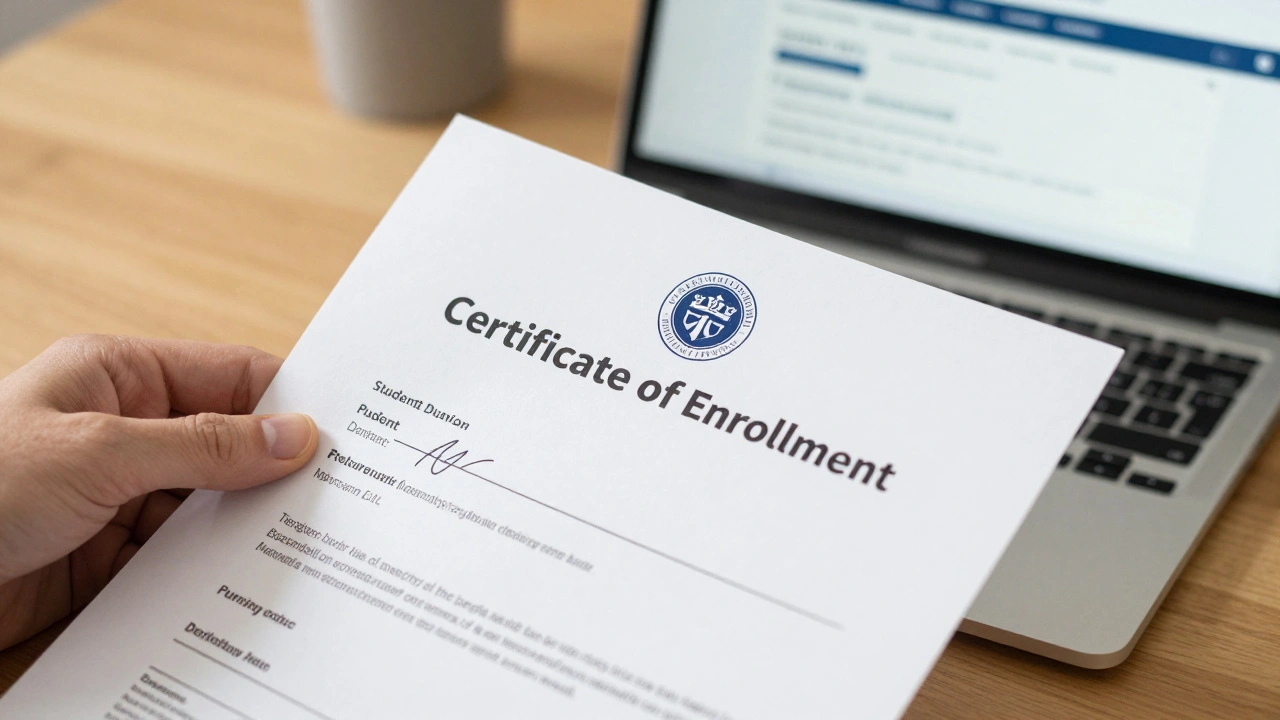
You cannot just say you are a student. You need proof. This proof comes in the form of a Certificate of Enrollment (often called a Council Tax Exemption Certificate). This document is issued by your university or college.
This certificate confirms your status as a full-time student for the academic year. It usually covers the period from September to August. Without this physical or digital document, the local council has no way to verify your claim. They will treat you as a standard adult resident liable for tax.
To get this certificate, log in to your student portal. Most universities have a dedicated section for administrative documents. If you can’t find it online, visit the student services center on campus. Ask specifically for a "Council Tax Exemption Letter." Make sure it includes:
- Your full name
- Your student ID number
- The dates of your enrollment (start and end)
- A statement confirming you are a full-time student
- An official stamp or signature from the registrar
How to Submit Your Claim to the Council
Once you have your certificate, you need to send it to your local council. Each borough or district in the UK has its own council website. Search for "[Your Local Council Name] council tax student exemption."
Most councils now allow online submission. You will upload a scan or photo of your certificate. Some older systems may require you to post the original document. Check the instructions carefully. If you mail it, use recorded delivery so you have proof it arrived.
Here is the step-by-step process:
- Locate your Council Tax Reference Number: This is found on any previous bill or correspondence from the council. If you haven’t received one yet, you might need to register your address first.
- Gather Documents: Have your Certificate of Enrollment ready. If you live with other students, each person needs to submit their own certificate.
- Submit Online or by Post: Follow the council’s specific portal instructions.
- Wait for Confirmation: Processing times vary. It can take anywhere from two weeks to two months. During this time, keep copies of everything.
Living With Non-Students: The 25% Discount Rule
What happens if you live with a partner who isn’t a student? Or if you share a house with someone working full-time? This is where things get tricky.
If you are the only adult resident in the property, you qualify for a 25% discount on your council tax. This applies even if the rest of the occupants are students. The logic is that one person living alone pays less than a household with multiple adults.
However, if there are two or more non-student adults in the house, the full council tax is due. The students’ exemptions disappear because the non-students make the property liable. In this case, the non-students must apply for the bill, and the students are effectively ignored in the calculation.
| Household Type | Liability Status | Action Required |
|---|---|---|
| All residents are full-time students | 100% Exempt | Everyone submits Certificate of Enrollment |
| One non-student, rest are students | 75% Payable (25% Discount) | Non-student applies for discount; students submit certificates |
| Two or more non-students | 100% Payable | Non-students pay full bill; students’ status irrelevant |
| Student + Dependent Child (under 18) | 100% Exempt | Student submits certificate; child is disregarded |
Common Pitfalls That Lead to Fines
Many students accidentally fall into debt because they assume the university notifies the council. It doesn’t. The burden of proof is entirely on you. Here are the most common mistakes:
Waiting too long: Don’t wait until the second bill arrives. Apply as soon as you move in or enroll. Late applications might mean you’ve already accrued interest or late-payment penalties.
Ignoring change-of-address forms: If you move between terms, you must update both your university records and your council tax registration. Failing to deregister from your old address can lead to back-bills.
Assuming part-time counts: If you drop a module and your hours fall below 21 per week, you might lose your exemption. Check your contract with the university if your course structure changes.
Losing the certificate: Keep a digital copy. You may need to re-submit it if the council loses your file or if you move to a new council area.

What If You Disagree With the Council?
Sometimes, councils reject claims incorrectly. Maybe they think your course is part-time when it isn’t. Or they lost your paperwork. If this happens, don’t just pay the bill and walk away.
First, call the council tax department. Speak to a human. Explain the error and offer to resend the documentation. Keep a record of the date, time, and name of the person you spoke to.
If the phone call doesn’t work, write a formal letter of appeal. Include copies of your enrollment certificate and any previous correspondence. State clearly that you are a full-time student entitled to exemption under the Local Government Finance Act 1992.
In rare cases, you can appeal to the Valuation Tribunal Service. This is an independent body that hears disputes about council tax liability. It’s free to use, but it takes time. Use this option only if the council refuses to correct an obvious error after repeated attempts.
International Students and Visa Holders
International students on Tier 4 (General) visas are treated the same as domestic students regarding council tax. As long as you are enrolled full-time in a qualifying course, you are exempt. Your visa status does not disqualify you.
Make sure your university issues the certificate in English. If your documents are in another language, provide a certified translation along with the certificate.
Do I have to pay council tax if I am unemployed but still a student?
No. Employment status does not affect your student exemption. As long as you are registered as a full-time student in a qualifying course, you are exempt regardless of whether you work part-time, full-time, or not at all.
Can my parents pay my council tax if I am exempt?
If you are fully exempt, there is no bill to pay. Your parents do not need to do anything. However, if you are eligible for only a 25% discount (living alone), the remaining 75% is your responsibility. Parents can choose to pay it on your behalf, but the legal liability remains with you.
What happens if I finish my course early?
You must inform your local council immediately. Your exemption ends on the date your course officially concludes. From that day forward, you become liable for council tax. Failure to notify the council can result in back-charges for the period after your graduation.
Does living in university halls of residence mean I pay council tax?
Generally, no. Most university-owned accommodations are exempt from council tax because they are classified as educational institutions. However, some private student accommodations operate as commercial landlords. Always check your tenancy agreement. If it’s a private hall, you may need to submit your student certificate to the landlord or council.
How long does it take to get a refund if I paid by mistake?
If you paid council tax before submitting your exemption certificate, you are entitled to a refund. Processing times vary by council, but refunds typically arrive within 4 to 8 weeks after approval. Ensure your bank details are up to date with the council to avoid delays.