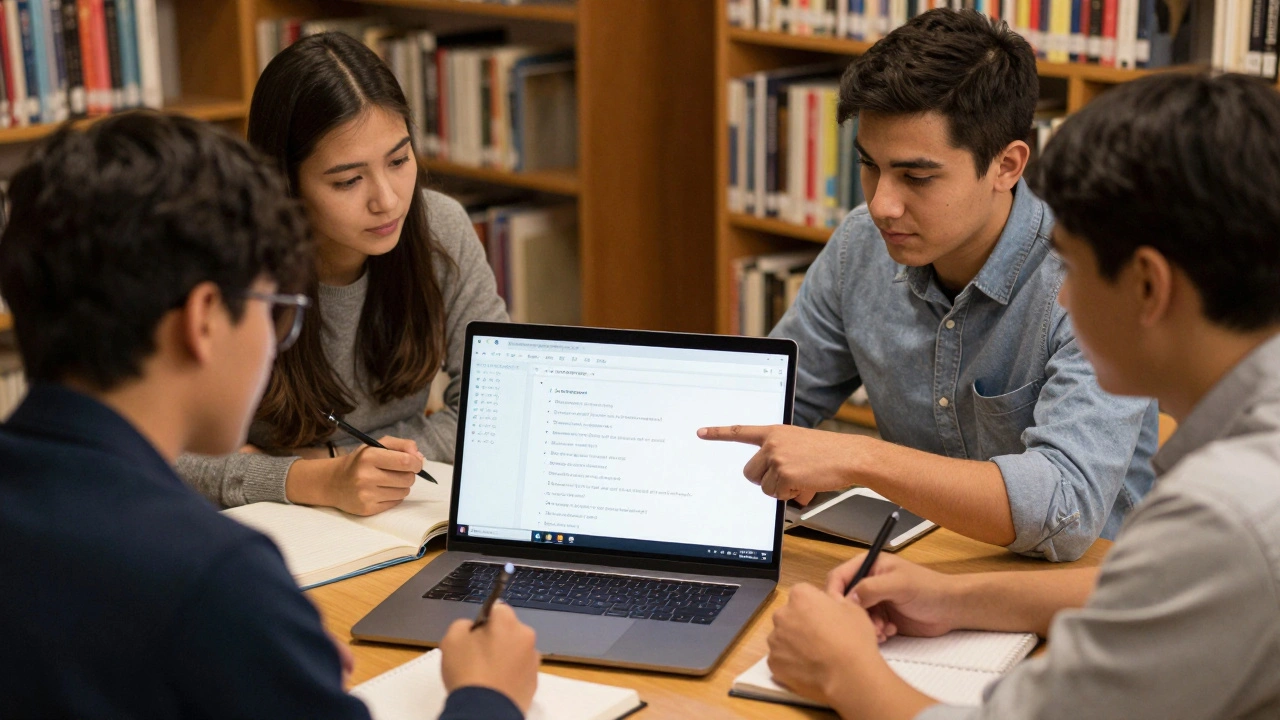
Group essays are everywhere in university. You’re assigned a topic, split into teams of three or four, and told to write a paper together. Sounds fair? It often isn’t. Some people do all the work. Others disappear. The final product feels like a patchwork quilt stitched together last minute. But it doesn’t have to be that way. When done right, collaborative writing can actually make your work better-faster, clearer, and more thoughtful. The secret isn’t luck. It’s structure.
Why Group Writing Often Fails
Most groups start with good intentions. Everyone says, “I’ll handle the intro,” or “I’ll research the data.” Then, deadlines creep up. One person finishes their section early. Another hasn’t opened the document. The last person submits a 300-word draft that reads like a text message. The result? A messy, inconsistent paper with mismatched tone, clashing citations, and half-baked arguments.
This isn’t about laziness. It’s about lack of process. Universities rarely teach students how to write together. They assume you just “figure it out.” But writing is a layered skill. When you add collaboration, you’re not just writing-you’re coordinating, negotiating, and synchronizing. Without clear steps, it falls apart.
How to Actually Make Group Writing Work
Start before you open a document. The first thing every group needs is a written agreement-not a handshake, not a WhatsApp message. Write it down. Use Google Docs. Title it “Group Writing Plan.” Include:
- Who writes what (specific sections, not just “research”)
- Deadlines for each draft stage (outline, first draft, revision, final)
- How feedback will be given (comments? track changes? weekly check-ins?)
- How conflicts will be resolved (if someone misses a deadline, what happens?)
This isn’t micromanaging. It’s fairness. A 2023 study from the University of Toronto tracked 187 student groups over two semesters. Those that used a written plan scored 22% higher on clarity and cohesion than those that didn’t. The difference wasn’t talent. It was structure.
Shared Documents: Tools That Actually Help
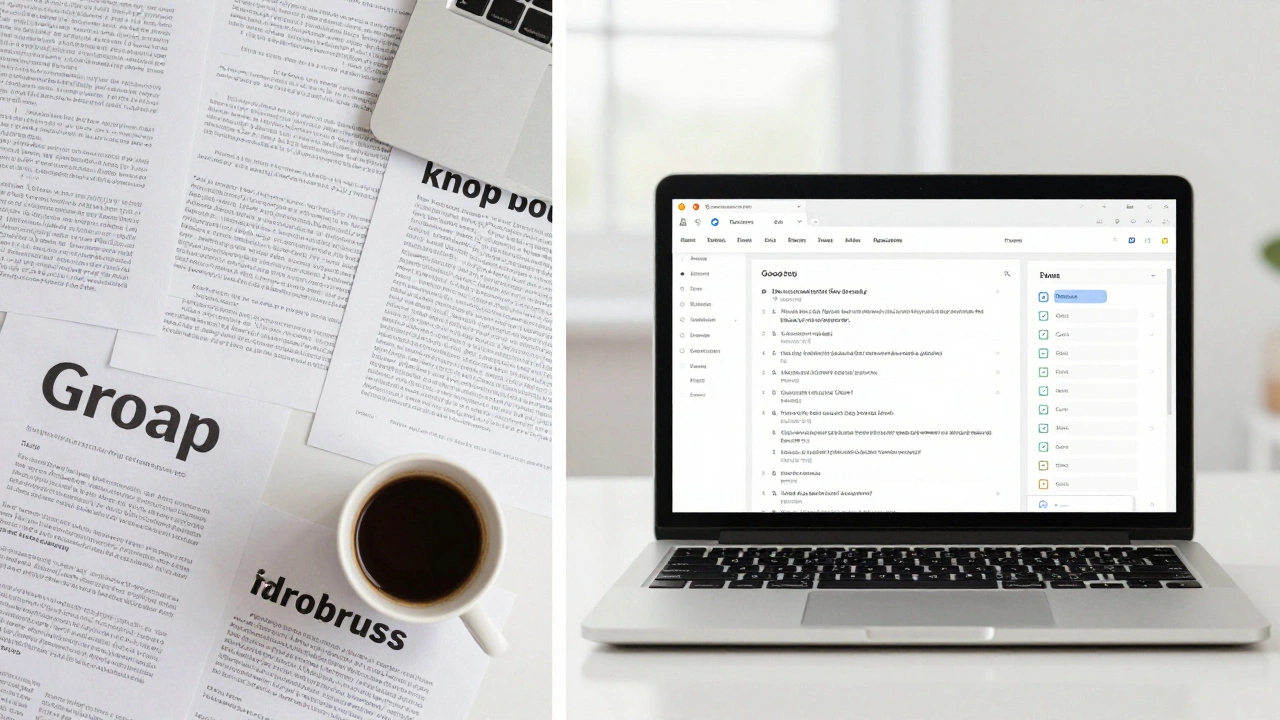
Not all shared documents are equal. Google Docs is the obvious choice for most students. It’s free, real-time, and works on phones. But here’s what most groups miss:
- Use comments, not just edits. Instead of rewriting someone’s paragraph, leave a comment: “Could we clarify this point with a source?” That invites discussion, not just overwrite.
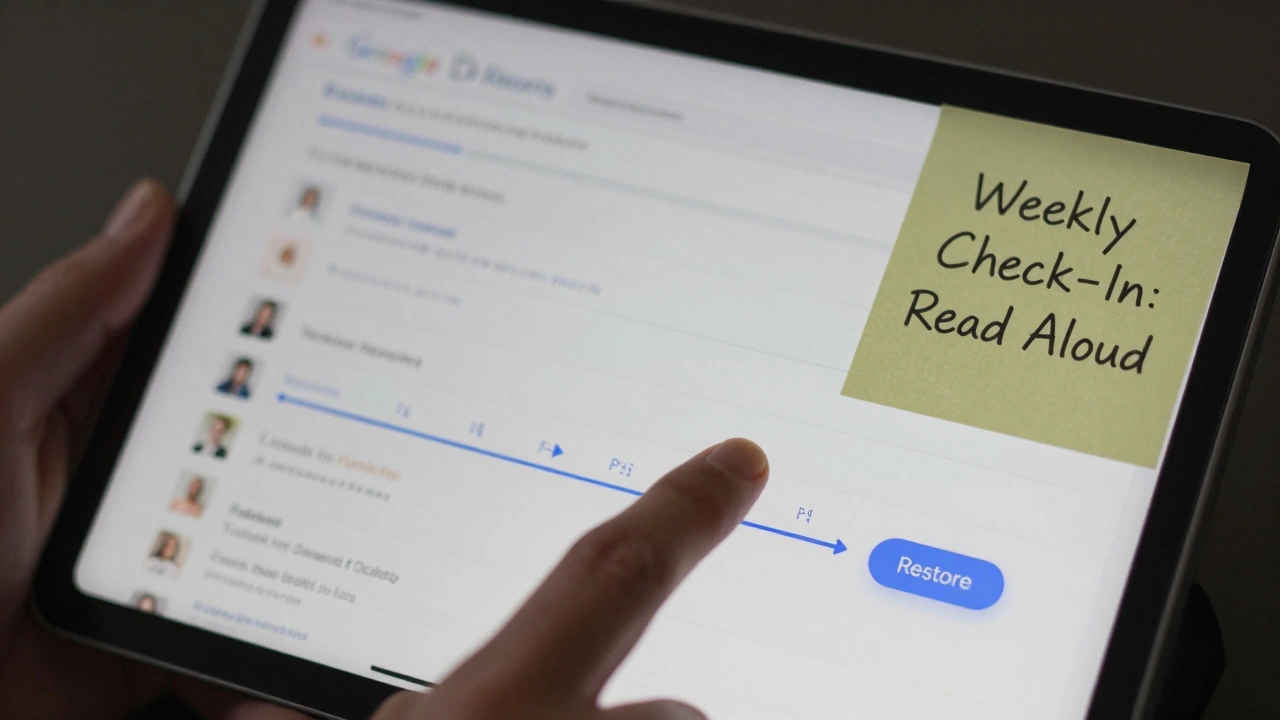
- Enable version history. If someone deletes half your section, you can restore it. Don’t wait until the night before to check.
- Use headings and styles. If everyone uses Heading 1 for their section, the final paper looks professional. If one person uses bold, another uses italics, it looks chaotic.
- Don’t share the link with the whole class. Only give access to group members. You don’t want someone else accidentally editing your draft.
Some groups try Notion or Microsoft Word’s co-authoring. Both work fine, but Google Docs wins for simplicity. The goal isn’t to use the fanciest tool-it’s to use one everyone understands and sticks to.
Writing Together, Not Just Writing Side-by-Side
The biggest mistake? Thinking collaboration means dividing the work and gluing it together. That’s not writing together. That’s writing alone, then hoping it fits.
True collaboration happens when you read each other’s drafts and say, “This part doesn’t connect to mine.” Or, “I found a study that could strengthen your argument.” Or, “Your conclusion doesn’t match the intro.”
Set up one 20-minute meeting per week. Not a Zoom call where everyone talks over each other. A quiet, focused session. Read one section aloud. Ask: “Does this flow?” “Is this clear to someone who didn’t write it?”
One group from McGill University started doing this. They recorded their meetings and listened back. They noticed something: when someone read their own section aloud, they caught 70% more errors than when they just read silently. The act of speaking it out loud exposed gaps no one saw on the screen.
Dealing With the Free Riders
It happens. Someone stops responding. They don’t show up to meetings. They submit nothing. What do you do?
Don’t wait until the last day. Talk early. Send a polite message: “Hey, we’re on track for the outline due Friday. Can you share your section by Wednesday so we can fit it in?” If they don’t reply, escalate: “We’ll need to adjust the workload. If we don’t hear from you by Monday, we’ll have to move forward without your section.”
Most students respond to that. A few don’t. That’s when you document everything. Save every message. Save the draft history. Email your professor before the deadline. Not to complain. To say: “We’ve tried to include everyone. Here’s what we’ve done. We’d appreciate guidance on how to proceed.”
Professors have seen this a hundred times. They’ll often let you submit the group work without the missing member’s name-and sometimes even adjust the grade accordingly. But only if you’ve shown you tried.
Why This Matters Beyond the Essay
University isn’t just about grades. It’s about learning how to work with others. In every job-engineering, marketing, healthcare, law-you’ll be part of a team writing reports, proposals, or presentations. The same skills apply: clear roles, deadlines, feedback, and communication.
Groups that learn to write well together don’t just get better grades. They build trust. They learn to listen. They become better editors of their own work because they’ve seen how others think. One student from McMaster told me: “I used to hate group essays. Now I ask for them. I learned how to argue my point without being pushy. And how to accept when someone else’s idea is better.”
Checklist: Your Group Writing Starter Kit
Before you start your next group essay, print this or save it:
- ☐ Assign specific sections (not vague roles like “research”)
- ☐ Set hard deadlines for each draft stage
- ☐ Use Google Docs with comments and version history
- ☐ Agree on citation style and formatting rules
- ☐ Schedule one short weekly check-in
- ☐ Read sections aloud to each other
- ☐ Document all communication and missed deadlines
- ☐ Talk to your professor early if someone drops out
That’s it. No magic. No genius. Just clear steps. The difference between a messy group paper and a strong one isn’t talent. It’s discipline.
What Happens When You Do It Right
Imagine this: You open the final document. Every section flows. The tone is consistent. The arguments build on each other. The citations match. No one had to fix half the paper.
That’s not luck. That’s collaboration done right.
And when you graduate, you’ll carry that skill with you. Because in the real world, no one writes alone. Not in business. Not in science. Not in government. The ability to write clearly with others isn’t a university requirement. It’s a career advantage.
Is it better to write a group essay together in real time or separately?
Writing separately is usually better for the first draft. Everyone needs space to think and write their part without pressure. Then, come together to edit. Real-time writing can lead to one person dominating the conversation or others freezing up. The best approach: write alone first, then edit as a team.
What if one person’s writing style is totally different from the others?
That’s normal. Don’t try to make everyone sound the same. Instead, focus on consistency in structure, tone, and citation style. If one person writes formally and another uses contractions, edit for clarity-not personality. The goal is a unified paper, not a uniform voice. Read the whole thing aloud. If it sounds like a patchwork, fix the transitions.
Can we use AI tools like ChatGPT to help with group writing?
Yes-but carefully. You can use AI to help brainstorm ideas, rephrase awkward sentences, or check grammar. But never let it write entire sections. Professors can spot AI-generated text. More importantly, you lose the learning. The point of group writing is to practice collaboration, critical thinking, and revision. AI can assist, but not replace, that process.
How do we handle conflicting opinions on the argument?
Conflict is good. It means you’re thinking deeply. Instead of avoiding disagreement, turn it into a research opportunity. Ask: “What evidence supports each view?” Then find a source that addresses both sides. The strongest essays don’t ignore conflict-they explain it. Your final argument might be a middle ground. That’s fine. In fact, it’s better.
What’s the best way to split the workload fairly?
Don’t split by pages. Split by tasks. One person might handle research, another the outline, another the first draft, and another the citations and editing. That way, everyone contributes meaningfully, even if they’re not writing the most words. Track who does what. If someone ends up doing 70% of the work, talk about redistributing before the final draft.