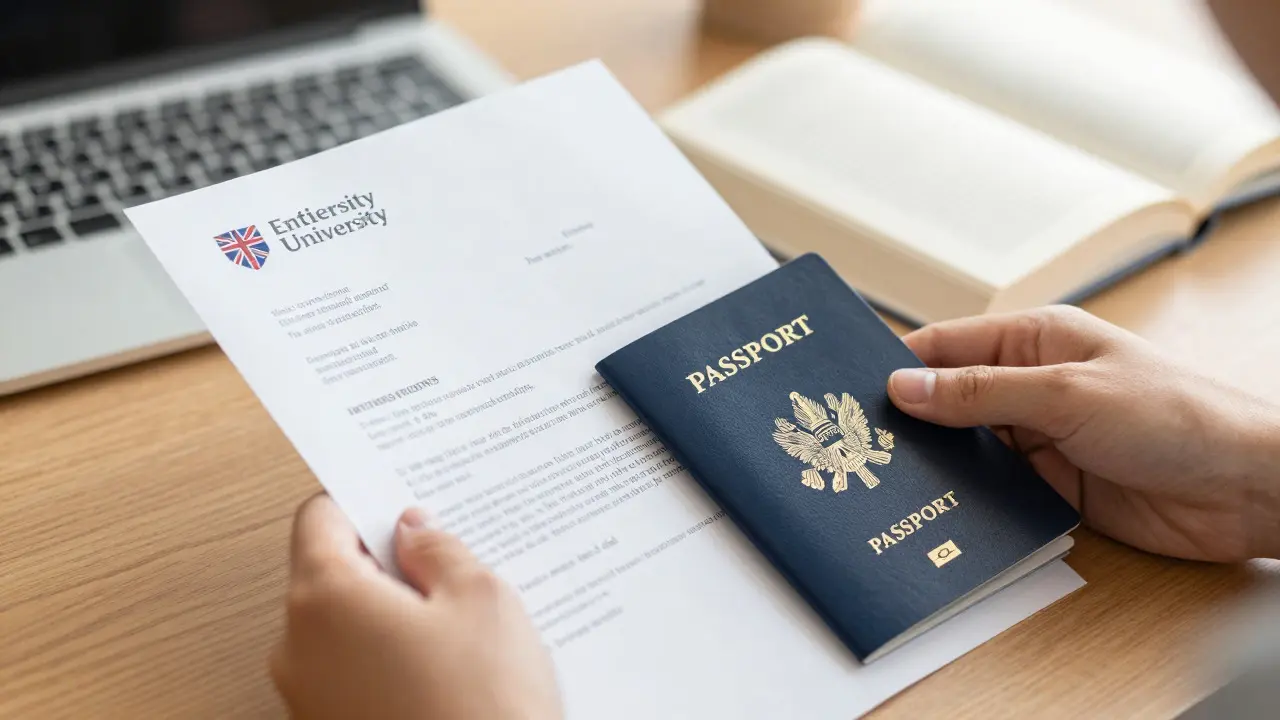
Imagine you have finally received an offer from your dream university in the UK. You are excited, but then you see a confusing term: CAS letter. If you are an international student planning to study in the UK, this document is not just a formality-it is the golden ticket that allows you to apply for your student visa. Without it, you cannot legally enter the country to start your studies.
A CAS (Confirmation of Acceptance for Studies) is a unique reference number and accompanying letter issued by a licensed Higher Education Institution (HEI) in the UK. It confirms that you have been offered a place on a course and that the institution is ready to sponsor your Student Visa. Think of it as a bridge between your acceptance and your legal right to live and study in Britain.
What Exactly Is a CAS Letter?
Technically, the "letter" is often just a digital record now, but the concept remains the same. The CAS contains specific details about your enrollment. When you receive it, you will get a unique 14-digit number. This number is what you will use when filling out your visa application form online with the UK Home Office.
The document includes critical information such as:
- Your full name and date of birth.
- The name of the university or college sponsoring you.
- The specific course title, level, and duration.
- The start and end dates of your program.
- The amount of maintenance funds required to prove you can support yourself.
- The total tuition fees payable.
It is important to understand that the CAS is not the same as your Offer Letter. An offer letter says you *can* study there. The CAS says you *will* study there, provided you meet all conditions. Once the CAS is issued, the university has officially registered your intent to enroll with the UK government’s sponsorship system.
Why Do International Students Need a CAS?
If you are from a non-EEA country, you need a Student Visa to study in the UK for more than six months. The UK Home Office requires proof that you are being sponsored by a trusted institution. This is where the CAS comes in. It serves as evidence that your university is a licensed sponsor and that they have verified your identity and academic eligibility.
Without a valid CAS, your visa application will likely be rejected. Even if you have paid your tuition fees and booked your flights, no CAS means no entry. For students from countries like India, China, Nigeria, or Pakistan, this step is particularly crucial because visa processing times can vary, and having the correct documentation ready speeds up the process.
How to Get Your CAS Letter: Step-by-Step Guide
Getting a CAS is not automatic after receiving an offer. You must actively complete several steps. Here is how the process typically works:
- Accept Your Offer: First, you must formally accept your place at the university. This usually involves paying a deposit or signing a contract via the university’s portal.
- Meet Conditions: Ensure you have met all conditions of your offer. This might include submitting final transcripts, English language test results (like IELTS), or proof of funding.
- Pay Tuition Deposit: Most UK universities require a partial payment of tuition fees before issuing a CAS. This proves your financial commitment.
- Submit Documents: Upload clear scans of your passport, ID, and any other requested documents to the university’s admissions team.
- Wait for Verification: The university’s compliance team checks your details against the UK government’s Student Record System (SRS). This can take anywhere from 5 to 20 working days.
- Receive the CAS: Once approved, the university issues the CAS. You will receive an email with a link to download your CAS statement and the unique 14-digit number.
Timing is everything. Apply for your visa as soon as you receive the CAS. Some universities issue CAS letters only within a certain window before the course starts, so don’t wait until the last minute.

CAS vs. Offer Letter: Key Differences
Many students confuse these two documents. While they look similar, their purposes are distinct. Let’s break down the differences to avoid confusion.
| Feature | Offer Letter | CAS Letter |
|---|---|---|
| Purpose | Confirms academic eligibility | Confirms visa sponsorship eligibility |
| Issued By | Admissions Team | Sponsorship/Compliance Team |
| Required for Visa? | No | Yes |
| Financial Proof | Not always required | Tuition deposit usually required |
| Validity | Until deadline to respond | Usually 90 days before course start |
Notice that the CAS is tied to the visa process. If your circumstances change-such as changing your major or deferring your entry-you may need to cancel your old CAS and request a new one. This is a common pitfall. Always check with your university if you make changes after the CAS is issued.
Common Mistakes to Avoid
Even experienced applicants stumble over a few technicalities. Here are the most frequent errors that delay or ruin the CAS process:
- Name Discrepancies: Your name on the CAS must match your passport exactly. A missing middle initial or different spelling can lead to visa rejection. Double-check every character.
- Outdated Passport: If your passport expires before your course ends, update your records immediately. The CAS reflects your current passport details.
- Ignoring Deadlines: Some universities stop issuing CAS letters 30 days before the course starts. Missing this window could mean waiting a whole year.
- Assuming Automatic Issuance: Just because you paid the deposit doesn’t mean the CAS is ready. Follow up with the sponsorship team if it takes longer than 10 working days.
Pro tip: Keep a digital folder with high-resolution scans of all documents you submit. If the university asks for clarification, you can send them instantly without hunting through emails.

What Happens After You Receive the CAS?
Receiving the CAS is a milestone, but the work isn’t done. Now you move to the visa application phase. You will need to log into the UK Government’s official website to fill out the Student Visa application form. You will enter your 14-digit CAS number here.
You will also need to gather:
- Proof of funds (bank statements showing maintenance money).
- Tuberculosis (TB) test results (if required for your nationality).
- Biometric appointment booking confirmation.
- Visa application fee payment receipt.
Once submitted, the Home Office reviews your application. Processing times vary by country but typically range from 3 weeks to 8 weeks. During this time, keep your phone reachable for any requests for additional evidence.
Frequently Asked Questions
Can I change my course after getting a CAS?
Yes, but you must inform your university immediately. They will likely cancel the old CAS and issue a new one with updated details. This process can take a few weeks, so plan ahead to avoid visa delays.
How long does it take to get a CAS letter?
On average, it takes 5 to 20 working days after you meet all conditions and pay the deposit. However, during peak admission seasons (May-July), it can take longer due to higher volume. Check with your specific university for their current turnaround time.
Do I need a CAS if I am studying for less than 6 months?
Generally, no. If your course is shorter than 6 months, you might qualify for a Standard Visitor Visa instead of a Student Visa, which does not require a CAS. However, rules can change, so verify with the UK Home Office or your university.
What if my name is spelled differently on my CAS and passport?
This is a serious issue. Contact your university’s sponsorship team immediately to correct it. A mismatch can lead to visa refusal or trouble at the border. Ensure the correction is made before you submit your visa application.
Is the CAS number the same as my student ID?
No. The CAS number is a unique 14-digit identifier used only for the visa application. Your student ID is assigned by the university once you arrive and register on campus. They are completely separate numbers.