
When you’re leading a student society at a UK university, it’s easy to think that just showing up and running meetings counts as leadership. But universities don’t just want you to be busy-they want proof you made a difference. A leadership portfolio isn’t a resume with fancy titles. It’s a clear, evidence-based story of what you changed, how you did it, and why it mattered.
What Counts as Real Leadership Impact?
Impact isn’t about how many people joined your society. It’s about what happened because of you. Did attendance go up because you redesigned the event schedule? Did membership grow because you fixed the onboarding process? Did you secure funding that let students travel to a national conference for the first time? Those are the moments that build your portfolio.
At the University of Manchester, the Students’ Union tracks leadership outcomes using a simple framework: Change → Action → Result. A student leading the Environmental Society didn’t just say, “I organized clean-ups.” They wrote: “I redesigned the event format to include local council reps, which led to a 40% increase in volunteer retention over two semesters and secured £5,000 in council funding for future projects.” That’s impact. That’s portfolio material.
Start with Your Role, Then Add the Proof
Don’t begin your portfolio with “President of Debating Society.” Start with the problem you solved. Maybe your society was losing members because events felt too formal. You introduced casual open-mic nights with pizza, ran a social media campaign targeting first-years, and tracked sign-ups with QR codes. Within three months, attendance jumped from 15 to 60 per event. That’s your story.
Write it down like this:
- Problem: Low engagement, declining membership
- Action: Launched informal monthly events with food and guest speakers from non-academic fields
- Result: Membership increased by 120% in one semester; 80% of new members stayed beyond their first year
This format works for any role-whether you’re treasurer, event coordinator, or outreach lead. The key is specificity. Instead of “managed finances,” say “negotiated with three vendors to reduce catering costs by 30%, freeing up £1,200 for student travel grants.”
Use Data, Not Hype
Universities see hundreds of leadership claims every year. Most say things like “improved team morale” or “boosted visibility.” Those mean nothing without numbers. Your portfolio needs hard evidence.
Here’s what works:
- Attendance stats before and after your changes
- Survey results (e.g., “85% of members rated events as ‘more inclusive’ after we changed the format”)
- Funding secured (amount, source, purpose)
- Partnerships created (e.g., “Collaborated with the Careers Service to host 3 employer-led workshops”)
- Media coverage (e.g., “Feature in student newspaper reached 8,000 readers”)
At King’s College London, students who submitted portfolios with data were 3x more likely to be selected for leadership awards. One student tracked how many society members applied for internships after attending career panels they organized. The result? A 55% increase in applications. That’s not just leadership-it’s measurable influence.
Don’t Forget the Human Side
Data tells the what. Stories tell the why. Your portfolio needs both. Include one short anecdote that shows the personal impact of your work.
For example: “A first-year student who joined our Mental Health Society told me she’d never spoken about her anxiety in public until she attended our open mic night. She later became a peer supporter. That’s the kind of change you don’t see in spreadsheets-but it’s why this work matters.”
Universities don’t just want leaders. They want leaders who understand people. A single sentence like this can turn a good portfolio into a memorable one.

Build It as You Go
Don’t wait until your final year to start your portfolio. Start collecting evidence from day one. Keep a simple folder (digital or physical) with:
- Screenshots of event sign-up sheets
- PDFs of budget approvals or funding letters
- Survey responses (use free tools like Google Forms)
- Photos of events (with permission)
- Feedback emails from members or staff
At the University of Edinburgh, the Students’ Union offers a free “Leadership Log” template that guides students to record one impact point per month. By the end of their third year, most students have 30+ documented achievements-not one big list crammed at the last minute.
How to Present It
When you’re ready to share your portfolio-whether for a job, scholarship, or graduate application-keep it simple. One page. Three clear sections:
- Leadership Role: Title, society, dates
- Key Impact: 2-3 bullet points using the Change-Action-Result format
- Why It Matters: One sentence on the human or institutional value
Example:
Role: President, International Students’ Network, University of Leeds (2024-2025)
Impact:
- Reduced isolation among international students by launching weekly cultural exchange lunches; attendance grew from 12 to 75 per session
- Partnered with the International Office to create a peer mentor program; 92% of mentees reported feeling “more connected” to campus life
Why It Matters: Helped create a more inclusive campus culture that led to the university adopting our model for all student groups in 2025.
Common Mistakes to Avoid
Here’s what doesn’t work:
- Listing every event you ever attended
- Using vague phrases like “helped improve communication”
- Forgetting to mention your role
- Not including dates or timeframes
- Writing in passive voice: “It was decided that events would change” → Change to “I redesigned the events”
One student at the University of Sheffield lost a scholarship because their portfolio said, “I was involved in fundraising.” That’s not leadership. That’s participation. They later resubmitted: “I led a 6-week crowdfunding campaign that raised £3,800 for student mental health resources, reaching 1,200 donors through social media and campus booths.” That’s leadership.
What Universities Actually Look For
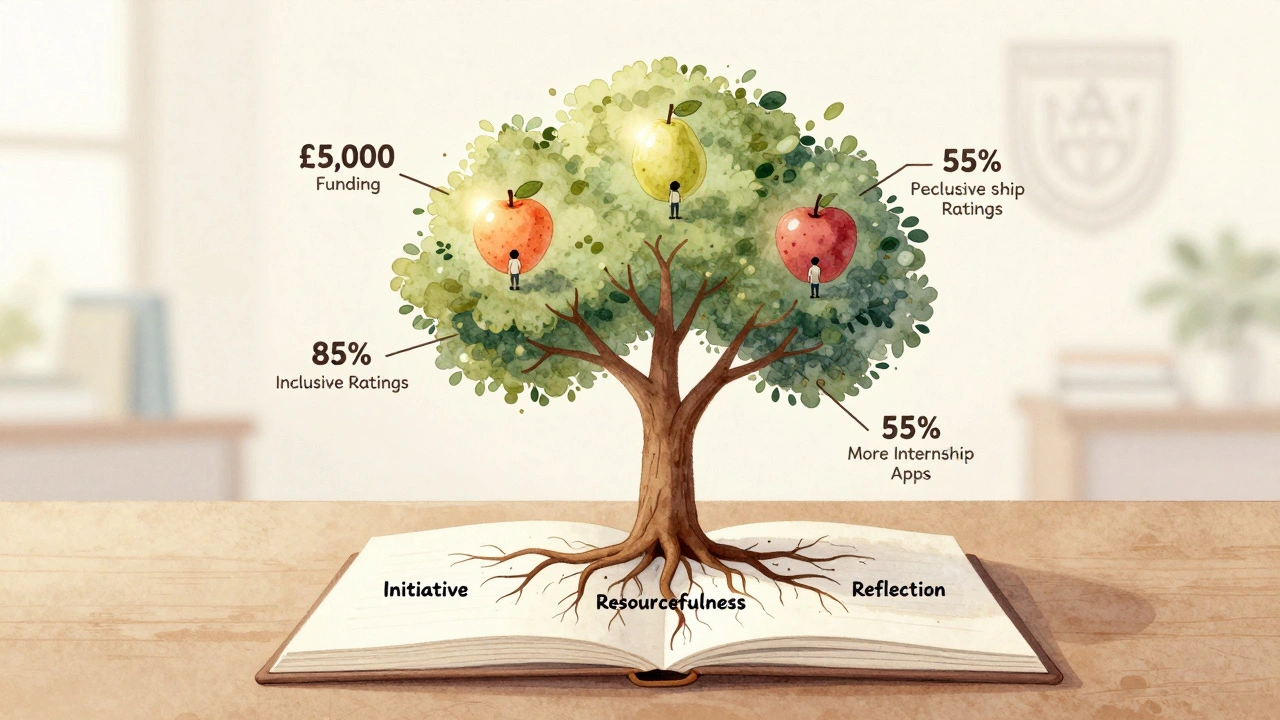
UK universities don’t want perfect leaders. They want leaders who can learn, adapt, and show results. Admissions officers and employers read dozens of these portfolios. They’re looking for:
- Initiative: Did you identify a problem and act?
- Resourcefulness: Did you make something happen with limited time or money?
- Reflection: Do you understand what worked-and what didn’t?
- Impact: Did your actions create a real, measurable change?
At Oxford, a recent study found that students who submitted strong leadership portfolios were 40% more likely to receive postgraduate funding-even if their grades were average. The reason? Leadership with proof shows you can drive outcomes, not just follow instructions.
Next Steps: Start Today
Right now, open a blank document. Answer these three questions:
- What’s one thing you changed in your society that made a difference?
- What data or feedback proves it?
- Why does that matter to the people involved?
Write those down. That’s your first portfolio entry. Do it again next month. In six months, you’ll have a portfolio that stands out-not because you were the loudest, but because you made things better, and you can prove it.
Do I need to be president to build a strong leadership portfolio?
No. Many of the most compelling portfolios come from people in roles like treasurer, events coordinator, or outreach lead. What matters is the impact you created, not your title. One student at Bristol University built a standout portfolio as the social media manager for their society-she grew their online following by 300% and used that reach to raise £2,500 for a charity partnership. That’s leadership, even without a president badge.
How many impact examples should I include?
Three to five strong examples are enough. Quality beats quantity. A portfolio with five detailed, data-backed achievements is far more powerful than one with ten vague statements. Pick the ones that show different skills-organizing, fundraising, communication, problem-solving-and make sure each one answers: What did you do? What changed? Why does it matter?
Can I use my leadership portfolio for jobs outside of university?
Absolutely. Employers care more about what you’ve done than where you did it. Your leadership portfolio proves you can lead projects, manage people, solve problems, and deliver results-all skills that transfer to any workplace. Many UK graduates use their society experience as their primary example in job interviews, especially if they lack formal work experience.
What if my society didn’t grow or get funding?
Impact isn’t always about growth. Maybe you improved member satisfaction, fixed a broken system, or created a safe space for students who felt excluded. One student at Cardiff University didn’t increase membership, but they redesigned their weekly meetings to be more inclusive for neurodivergent students. Survey results showed a 70% increase in comfort levels among attendees. That’s a powerful story-and it’s exactly what universities look for.
Should I include failures in my portfolio?
Not as a main point, but you can mention lessons learned. For example: “I planned a large-scale event that only drew 20 people due to poor timing. I learned to survey members first, and the next event-scheduled after a student poll-had 85 attendees.” This shows growth, not failure. It turns a setback into evidence of adaptability.
What to Do Next
Don’t wait for the perfect moment. Start today. Open your email and send one message to your society’s faculty advisor: “Could we schedule 15 minutes this week to review what impact looks like for our group?” That simple step can unlock feedback, resources, and even funding.
Then, write down one thing you’ve done that made a difference. Just one. That’s your first step toward a leadership portfolio that doesn’t just look good-it actually changes things.