Imagine walking into a crowded pub in Manchester, ordering a pint, and then standing there holding your drink while everyone else sits down. You just committed a minor social faux pas that screams "outsider." The UK is a country of subtle rules, unspoken codes, and polite pretenses that can confuse even the most well-traveled international students. It isn't about being stiff or formal; it's about understanding the rhythm of daily life so you don't accidentally offend someone or feel isolated.
Many students arrive with textbooks and visas but leave their cultural compass at home. They expect the UK to be like Hollywood movies-stiff upper lips and tea at four o'clock. Reality? It's messier, funnier, and more nuanced. This guide cuts through the stereotypes to give you the practical know-how to navigate queues, small talk, tipping, and university life without losing your mind. By mastering these few key areas, you'll move from feeling like a tourist to feeling like a local, which makes your entire study experience richer and less stressful.
The Sacred Art of Queuing
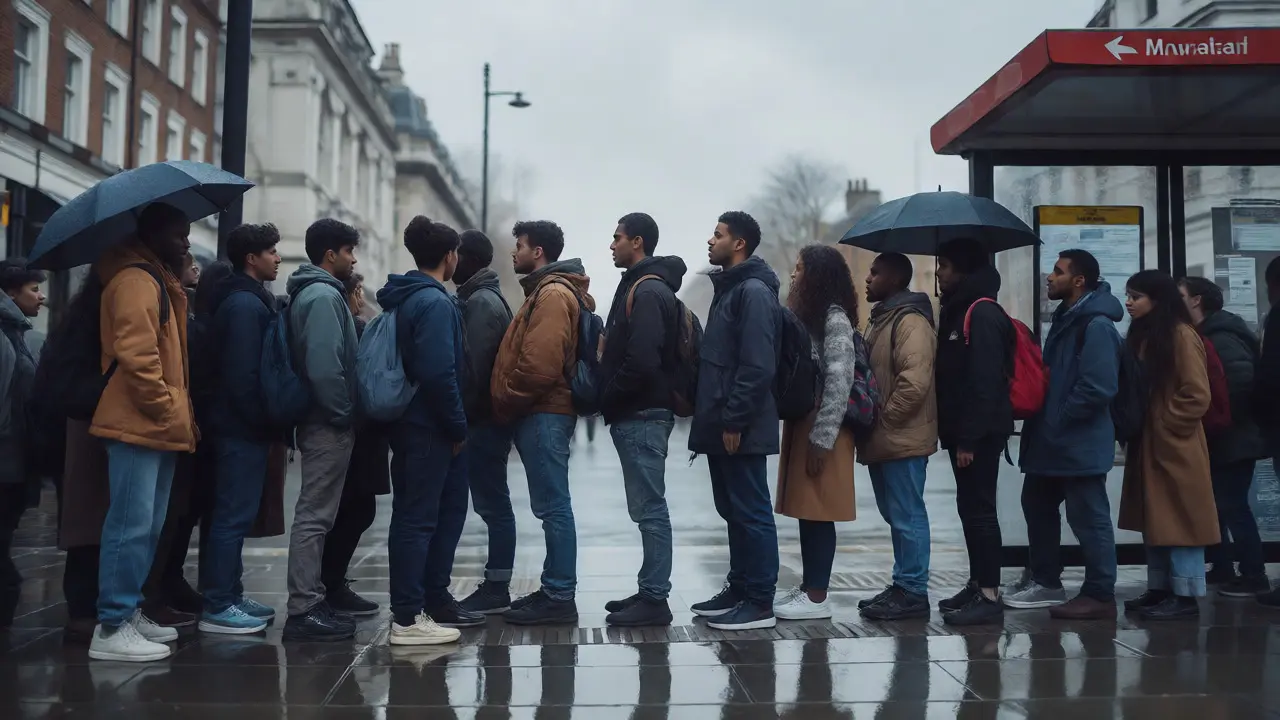
If there is one rule above all others in Britain, it is this: do not cut the line. Queuing is not just waiting; it is a national sport governed by strict, unwritten laws. Whether you are at a bus stop, a supermarket checkout, or buying coffee, you must join the back of the line immediately upon arrival. Do not wait off to the side until you are ready to order. If you step out of the queue to check your phone or chat with a friend, you risk breaking the chain, which causes genuine anger among locals.
Why does this matter? Because queuing represents fairness and order in British society. Cutting in front of someone is seen as aggressive and selfish. If you are unsure where the end of the line is, ask politely: "Excuse me, is this the back of the queue?" Never assume. Also, avoid pushing past people who have stepped aside briefly. The person who stepped aside usually intends to return to the same spot. Patience here pays off socially. Locals notice who respects the queue and who doesn't, and it shapes how they perceive your character before you've even spoken a word.
Small Talk and the Weather Obsession
You will hear about the weather constantly. It is not because Brits lack imagination; it is because the weather is unpredictable, making it a safe, neutral topic for breaking the ice. When someone says, "Bit nippy today," they aren't asking for a meteorological report. They are offering a handshake via conversation. Agreeing is the correct response. "Yes, proper cold," works perfectly. Arguing about whether it's actually cold or discussing climate change statistics too early can shut down the interaction.
Small talk in the UK often follows a specific pattern: observation, agreement, and exit. You observe something trivial (the rain, the delay on the train), agree with the other person, and then naturally drift away. Avoid overly personal questions early on. Asking "How much did you pay for that coat?" or "Why are you single?" can be seen as intrusive. Instead, stick to shared experiences. At university, talking about course loads, library hours, or local food spots creates instant common ground without crossing boundaries.
Tipping Culture: It’s Different Here
Coming from countries with high service charges or expecting large tips can lead to awkward moments. In the United Kingdom, tipping is appreciated but rarely mandatory unless specified. In restaurants, if a service charge (usually 10-12.5%) is already added to the bill, you do not need to tip extra. If no service charge is included, leaving 10% is standard for good service. For casual places like cafes or pubs, rounding up or leaving small change is sufficient.
| Scenario | Standard Practice | Notes |
|---|---|---|
| Restaurants (Sit-down) | 10-12.5% | Check bill for 'Service Charge' first. If present, no extra needed. |
| Pubs/Bars | Rounding up / £1 per round | No tip jar? Leave loose change. No pressure for large sums. |
| Cafés | Loose change / Rounding up | Optional. Only tip for exceptional service or frequent visits. |
| Taxis (Black Cabs) | Rounding up to nearest pound | Uber drivers may accept small tips, but it's not expected. |
| Hotel Porters | £1-£2 per bag | Cash preferred. Tip directly to the porter. |
Remember, cash is still king for tips in smaller establishments, though card terminals now allow tip adjustments. Don't stress over exact percentages. The gesture matters more than the amount. If you forget to tip occasionally, nobody will chase you down. But consistently ignoring tipping in sit-down restaurants might mark you as stingy rather than culturally unaware.

Pub Etiquette: More Than Just Drinking
The pub is the community hub of British life. For students, it's where networking happens, friendships form, and lectures are dissected over pints. The golden rule: buy rounds. If you are with a group, one person buys drinks for everyone, then the next person goes. This system relies on trust and reciprocity. If you join a group mid-way, offer to buy the next round immediately. Waiting for someone else to buy you a drink without contributing looks poor.
Another critical point: table service is rare. You go to the bar, order, pay, and take your drinks back to your seat. If you see empty tables, claim them quickly but politely. Shouting "Over here!" when friends arrive is acceptable; shouting across the room is not. Also, respect the space. Don't spread your bags, books, and jackets over three chairs if the pub is busy. Keep your footprint small. And please, never stand in front of the bar blocking the path while deciding what to order. Move to the side once served.
University Specifics: Politeness and Punctuality
British universities value independence and self-directed learning. Lecturers won't chase you for assignments. If you miss a deadline, the penalty is automatic and harsh. Punctuality is crucial. Arriving five minutes late to a seminar is noticeable; arriving ten minutes late requires an apology. Unlike some cultures where flexible time is accepted, the UK academic calendar runs on strict schedules.
When addressing professors, use their title and surname (e.g., Dr. Smith, Professor Jones) unless invited otherwise. Using first names too early can seem disrespectful. However, outside of formal settings, staff are generally approachable. Email etiquette is vital. Use a clear subject line, greet them properly, keep it concise, and sign off with "Kind regards" or "Best wishes." Avoid writing emails at 3 AM expecting an immediate reply; most academics work 9-to-5 and value work-life balance.
Everyday Manners: Sorry, Please, Thank You
Brits say "sorry" excessively. It’s not always an admission of guilt; it’s a social lubricant. Someone bumps into you? Say sorry. You bump into someone? Say sorry. Even if it’s their fault, saying sorry defuses tension instantly. Similarly, "please" and "thank you" are non-negotiable. Saying "cheers" instead of "thank you" is common in informal settings, especially after receiving a small favor or a drink. It’s friendly and quick.
Eating habits also differ. Keeping hands visible on the table (wrists resting on the edge) is considered polite. Elbows off the table. Chewing with your mouth closed is basic, but avoid slurping soup loudly. In shared housing, cleanliness is paramount. Leaving dishes in the sink for days is a major conflict trigger. Wash as you go. Respect quiet hours in student halls, typically 10 PM to 8 AM. Noise travels, and neighbors will appreciate your consideration.

Transport and Public Spaces
On buses and trains, giving up your seat for elderly, pregnant, or disabled passengers is expected. If you refuse, you’ll get judgmental stares. Stand on the right side of escalators in London Underground stations to let people walk past on the left. In other cities, this rule varies, so observe locals first. When traveling, keep conversations low-volume. Loud phone calls on public transport are frowned upon. Use headphones for music and videos.
Eye contact is tricky. Brief eye contact acknowledges presence; prolonged staring is intense. Smiling at strangers is common but not universal. A nod suffices. If you’re lost, asking for directions is welcomed, but start with "Excuse me" and end with "Thanks for your help." Brits are generally helpful but reserved. Don’t expect hugs or back-slapping from acquaintances. Maintain personal space; standing too close during conversation feels invasive.
Navigating Cultural Misunderstandings
Misunderstandings happen. Maybe you misinterpreted sarcasm (a staple of British humor) or thought an invitation was definite when it was tentative. "We should catch up sometime" often means "Goodbye for now." If you want to meet, suggest a specific date and place. Humor can be dry, self-deprecating, and ironic. If someone jokes about their terrible weather or bad luck, laugh along. Taking things literally can make you seem serious or confused.
Don’t try to mimic accents perfectly; it can sound mocking. Speak clearly and slowly if needed. Most Brits speak fast, so asking "Could you repeat that?" is fine. Avoid criticizing British culture harshly early on. Light teasing is okay; deep critique can feel like an attack. Show curiosity instead. Ask about local traditions, history, or sports. People love explaining their culture when asked respectfully.
Key Takeaways
- Queue discipline: Always join the back of the line; cutting in is a major offense.
- Weather talk: Use it as a neutral icebreaker; agree and move on.
- Tipping: Check for service charges first; otherwise, 10% is standard in restaurants.
- Pub rounds: Participate in buying rounds; don't freeload.
- Politeness: Overuse "sorry," "please," and "thank you" to smooth interactions.
- Academic punctuality: Be on time; deadlines are strict and penalties automatic.
Is it rude to eat with my hands in the UK?
It depends on the food. Burgers, sandwiches, pies, and crisps are eaten with hands. Formal meals require cutlery. In student canteens, eating with hands is common for quick meals. Observe what others are doing. If in doubt, use a fork.
How do I handle British sarcasm?
British sarcasm is often dry and delivered with a straight face. If someone says "Lovely weather" while it's pouring rain, they mean the opposite. Laugh along lightly. If unsure, ask "Are you being sarcastic?" with a smile. Context clues help: tone, facial expression, and situation usually reveal the intent.
Do I need to tip taxi drivers?
For black cabs, rounding up to the nearest pound is customary. For Uber, tipping is optional but appreciated for great service. You can add a tip in the app. If the driver helps with luggage, a small cash tip is nice. It's not mandatory, but it's a kind gesture.
What is the best way to address university staff?
Use their title and last name initially (e.g., Mr. Brown, Dr. Lee). Wait for them to invite you to use their first name. In emails, use "Dear Dr. Lee" or "Hi Dr. Lee." Being formal shows respect for their position. Once they say "Call me Sarah," switch to first names.
Is it okay to wear shoes inside homes?
Most British households remove shoes at the door, especially in winter or if carpets are light-colored. Look for shoe racks or mats near the entrance. If unsure, ask "Should I take my shoes off?" It's better to ask than to track mud onto clean floors.