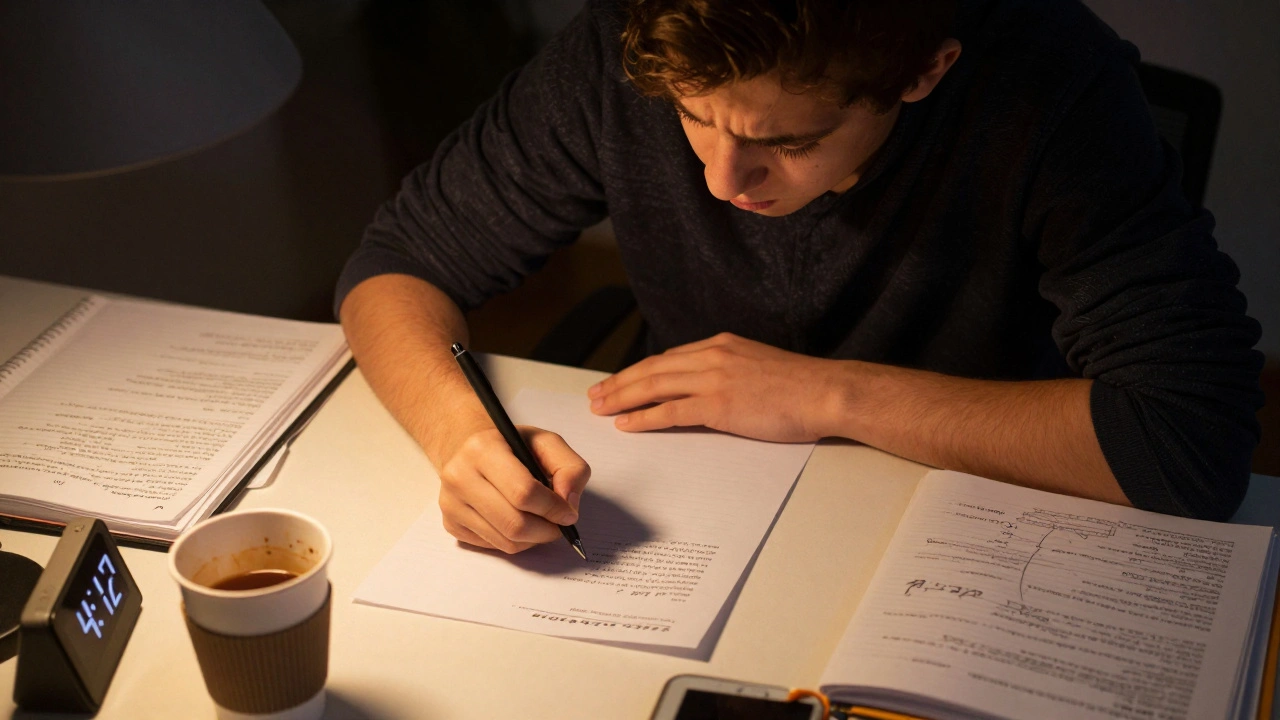
Imagine you’re staring at a stack of flashcards, rereading your notes for the third time, and still can’t remember what happened in 1917. You’re not alone. Most students think reviewing equals learning. But science says otherwise. The real magic happens when you blurting-forcing your brain to spit out answers without looking. It’s messy, it’s uncomfortable, and it works better than anything else.
What Is Blurting?
Blurting is simple: you open a blank sheet of paper, set a timer for five minutes, and write down everything you can remember about a topic-no notes, no books, no cheating. You don’t care if it’s messy, incomplete, or full of mistakes. You just write. Then you check your notes, fill in the gaps, and repeat.
This isn’t just summarizing. It’s not highlighting. It’s not rereading. It’s active recall in its rawest form. You’re not passively absorbing information-you’re digging it out of your brain like a treasure hunt with no map. And every time you do it, you strengthen the neural pathways that hold that knowledge.
Researchers at Washington University found that students who used blurting scored 30% higher on final exams than those who just reread their notes. Why? Because recalling something forces your brain to rebuild the memory from scratch. Rereading just makes it feel familiar. Familiar doesn’t mean remembered.
Why Blurting Beats Rereading
Here’s the cruel truth: rereading tricks your brain. When you see the same sentence twice, your brain says, “Oh, I know this,” and shuts off the effort. That’s called the illusion of competence. You think you’re learning because the words look familiar. But when the exam comes and you’re forced to produce the answer without the text in front of you-you freeze.
Blurting kills that illusion. There’s no safety net. If you can’t write it down, you don’t know it. And that’s the point. The struggle isn’t a bug-it’s the feature.
Think of your memory like a muscle. You don’t get stronger by watching someone lift weights. You get stronger by lifting them yourself, even if you drop the bar. Blurting is the weightlifting of memory. It’s hard. It’s exhausting. But it builds real strength.
A 2023 study from the University of California tracked 400 college students preparing for a biology final. Half used traditional review: rereading, rewriting, color-coding. The other half used blurting for 15 minutes a day, five days a week. The blurting group scored an average of 87%. The rereaders scored 69%. The gap didn’t come from intelligence. It came from technique.
How to Start Blurting (Step by Step)
You don’t need fancy tools. You don’t need apps. You just need paper, a pen, and the guts to face what you don’t know.
- Choose one topic-something you’ve studied but haven’t tested yourself on yet. Maybe it’s photosynthesis, or the causes of World War I, or how to solve quadratic equations.
- Set a timer for 5 minutes. No more, no less.
- Write down everything you remember. Don’t stop. Don’t erase. Don’t worry about spelling or structure. Just dump it all out.
- When the timer ends, stop. Don’t add anything.
- Open your notes or textbook. Highlight every missing fact, every wrong detail, every gap.
- Go back to your blank sheet. Rewrite the correct version from memory. Do this again tomorrow.
Repeat this process three times for each topic. By the third round, you’ll notice something: you’re remembering more. You’re connecting ideas. You’re not just memorizing facts-you’re building a mental map.
When to Use Blurting
Blurting works best when you’re past the first pass of learning. Don’t start blurting on day one. First, read the chapter. Take notes. Understand the big picture. Then, 24-48 hours later, hit the blank page.
Use blurting before bed. Studies show sleep helps consolidate memories formed during active recall. If you blurting before sleeping, you’re giving your brain the best chance to lock it in.
Use it for spaced repetition. Don’t blurting the same topic every day. Do it once, then again in two days, then four, then seven. Each time, you’ll find fewer gaps. That’s the sweet spot-just before you’re about to forget.
Blurting also pairs well with practice exams. After you’ve blurted a topic, try answering a past paper question without looking. Then blurting again. You’re not just recalling facts-you’re practicing how to use them under pressure.
Common Mistakes (And How to Fix Them)
Most people try blurting and give up because it feels too hard. Here’s why that happens-and how to fix it.
- Mistake: “I didn’t remember anything.” Fix: That’s normal. The first time you blurting, you’ll forget half of what you studied. That’s not failure-that’s data. The gaps tell you exactly where to focus.
- Mistake: “I just copied my notes.” Fix: If you’re looking at your notes while writing, you’re not blurting. Put them away. If you need to peek, wait until the timer ends.
- Mistake: “I only blurting one topic.” Fix: Mix it up. Blurting biology, then history, then math in the same session. Interleaving topics makes your brain work harder-and remember longer.
- Mistake: “I don’t have time.” Fix: Five minutes a day is all you need. That’s less time than scrolling Instagram. Do it while your coffee brews. Do it on the bus. Do it before your shower.
Blurting vs. Flashcards vs. Summarizing
Not all study methods are equal. Here’s how blurting stacks up against the most popular alternatives.
| Method | Effort Required | Memory Retention (6 Weeks) | Best For |
|---|---|---|---|
| Blurting | High | 85% | Deep understanding, long-term recall |
| Flashcards (active recall) | Medium | 72% | Factual recall (dates, terms, formulas) |
| Rereading Notes | Low | 30% | Quick review, not exam prep |
| Summarizing | Medium | 50% | Organizing ideas, not testing them |
| Highlighting | Very Low | 15% | None-mostly illusion of learning |
Flashcards are great, but they’re limited. You’re answering one fact at a time. Blurting forces you to connect ideas. You’re not just remembering “what happened in 1917”-you’re remembering how it led to the Russian Revolution, how it affected global trade, and why it matters today.
Summarizing helps you organize, but it doesn’t test you. You might write a perfect summary and still blank out on the exam. Blurting makes sure you can retrieve it when it counts.
Real Results From Real Students
A high school senior in North Carolina used blurting to go from a C to an A in AP Chemistry. She started by blurting one reaction mechanism every night. At first, she could only write two steps. After two weeks, she could write the full process from memory, including the electron movement and intermediates. On the AP exam, she got a 5.
A medical student in Texas used blurting to memorize 200+ drug mechanisms. Instead of making flashcards for each one, she blurted entire drug classes: “beta-blockers, ACE inhibitors, diuretics.” She’d write everything she knew, then compare. By exam week, she could list side effects, indications, and contraindications for each group without glancing at her notes.
These aren’t geniuses. They just stopped pretending they knew something until they could prove it.
Final Tip: Make It a Habit
Blurting doesn’t work if you do it once. It works when it becomes part of your routine. Link it to something you already do. After breakfast. Before bed. During your commute. Pick a time and stick to it.
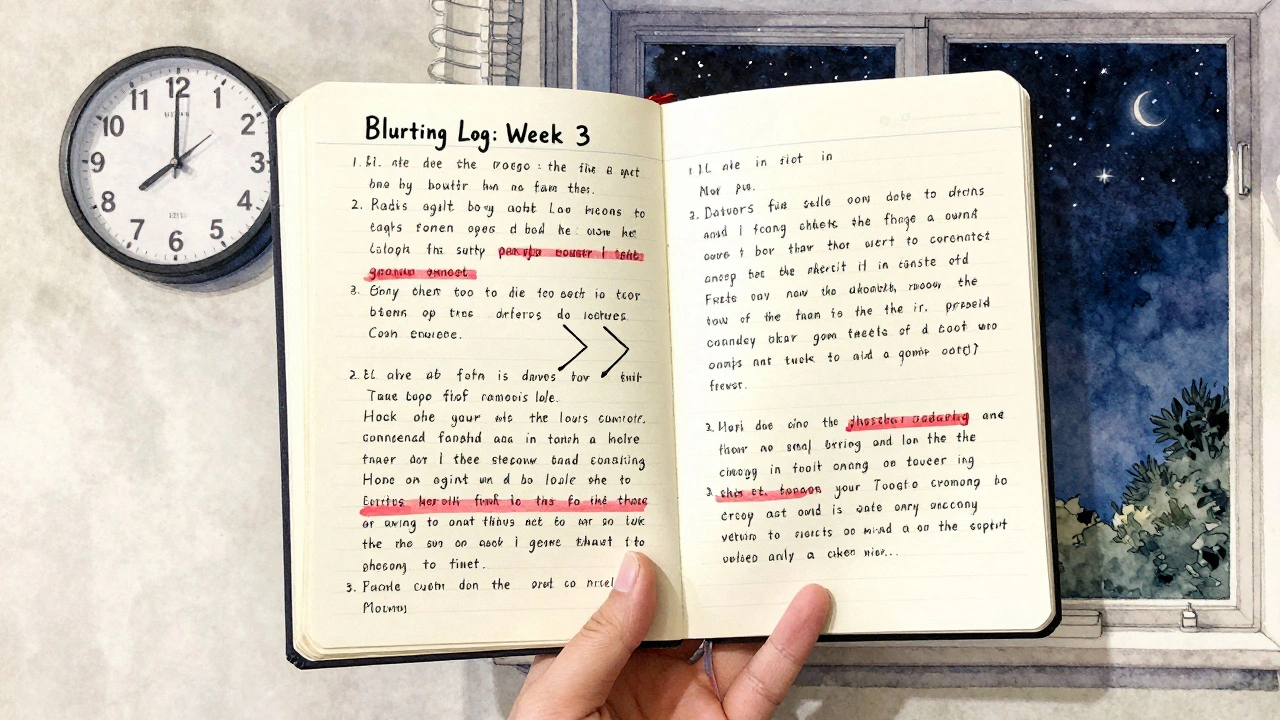
Keep a blurting journal. Write the date, the topic, and how much you remembered. Over time, you’ll see your gaps shrink. That’s progress. That’s confidence.
Exams don’t care how many times you read your notes. They care how many times you could write them from memory. Blurting is the fastest way to turn what you’ve studied into what you know.
Is blurting the same as flashcards?
No. Flashcards test single facts one at a time. Blurting forces you to recall entire topics without prompts, making you connect ideas and spot gaps in understanding. Flashcards are good for vocabulary; blurting is better for deep learning.
How often should I blurting for best results?
Once per topic, then space it out: day 1, day 3, day 7, day 14. This matches how memory fades and rebuilds. Don’t blurting the same topic every day-wait until you’re starting to forget. That’s when the recall strengthens the most.
Can I use blurting for math or science problems?
Absolutely. Instead of writing definitions, write out the steps to solve a problem from memory. For example: “How do I find the derivative of a composite function?” Write the chain rule, the steps, the common mistakes. Then check your textbook. This builds procedural memory, not just facts.
What if I blank out completely during blurting?
That’s normal-and useful. Blank spots tell you exactly what to study next. Don’t get discouraged. Just mark those areas, review them, and try again in 48 hours. The struggle is the learning.
Does blurting work for group study?
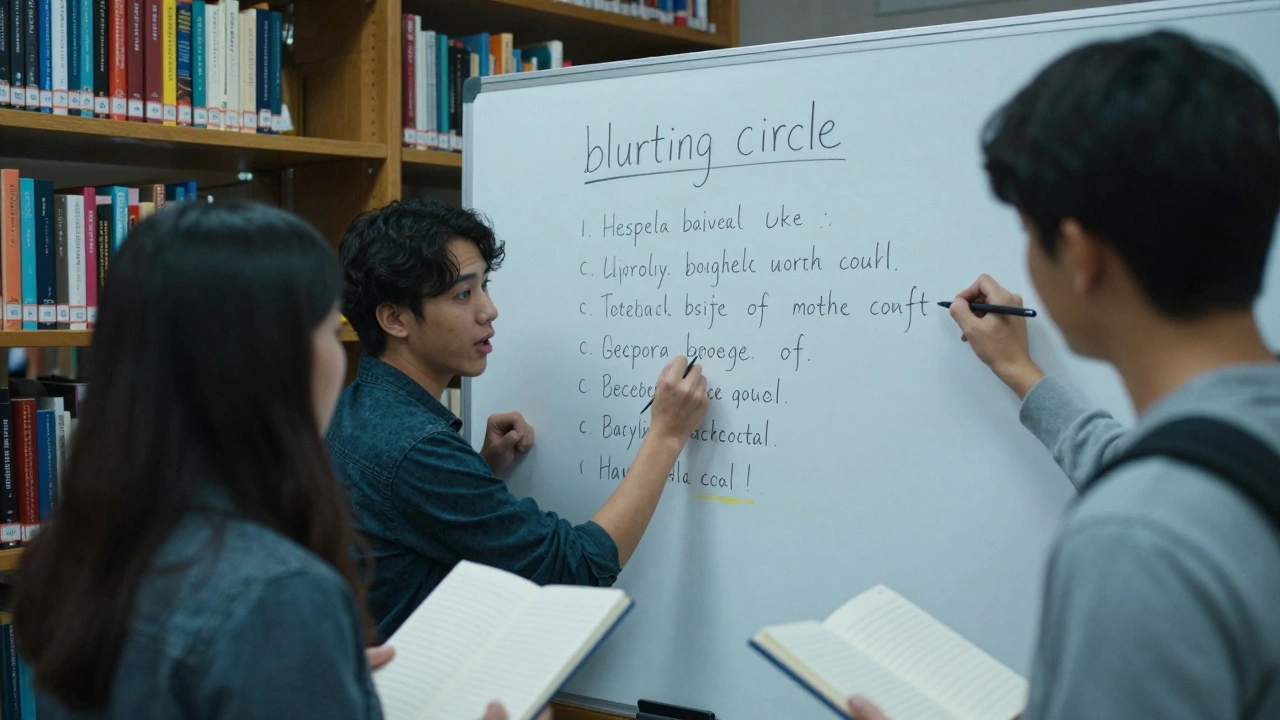
Yes. Try “blurting circles.” One person blurts for five minutes while others listen. Then the group discusses what was missed. It turns passive listening into active engagement. You’ll remember more because you’re explaining and hearing others’ gaps.
If you want to pass your next exam without cramming, stop rereading. Start blurting. It’s not glamorous. But it’s the only method that turns what you’ve studied into what you truly know.