
Working while studying at a UK university isn’t just common-it’s necessary for many. Over 60% of undergraduates take on some form of paid work, according to the Office for National Statistics. But when exam season hits, the pressure skyrockets. You’re juggling shifts, deadlines, and revision all at once. The good news? You don’t have to choose between earning money and passing your exams. With the right strategy, you can do both without burning out.
Know Your Limits Before Exam Season Starts
Most students think they can push through with 4 hours of sleep and 20 hours of work. That’s a myth. Your brain needs recovery time to store information, especially during revision. If you’re working 25 hours a week and already feeling drained by Wednesday, you’re not building stamina-you’re building exhaustion.
Before exams begin, sit down and map out your schedule. List every fixed commitment: your work shifts, tutor meetings, laundry days, even your weekly grocery trip. Then block out time for sleep, meals, and short breaks. What’s left? That’s your revision window. Be honest. If you only have 12 focused hours a week to study, plan for that-not the 20 you wish you had.
Turn Work Into Revision Time
Not all work is created equal. Some jobs actually help you study. If you work in a café near campus, use your quiet breaks to review flashcards. If you’re a library assistant, you’re already in a distraction-free zone-use your downtime to read lecture notes. Even if your job is physically demanding, like warehouse work, you can still listen to recorded lectures or revision podcasts during your commute.
One student at Manchester Metropolitan University recorded summaries of her biology lectures and listened to them while cleaning hotel rooms. She passed all her exams with first-class marks. The key wasn’t extra hours-it was using dead time productively.
Build a 15-Minute Revision Habit
You don’t need 3-hour study marathons to pass exams. In fact, they backfire. The brain forgets 70% of what it learns after 24 hours if it’s not reviewed. Instead, aim for short, daily bursts.
Set a timer for 15 minutes every day-right after breakfast, during your lunch break, or before bed. Use that time to quiz yourself on one topic. Use apps like Anki or Quizlet to make flashcards. If you’re studying economics, don’t reread your notes. Ask yourself: “What’s the difference between fiscal and monetary policy?” Say it out loud. Write it down. Then move on.
Consistency beats intensity. Five days a week, 15 minutes, adds up to 12.5 hours of focused revision in a month. That’s more than most students manage in a week of cramming.

Communicate With Your Employer
Your employer doesn’t need to know you’re cramming for a philosophy essay. But they do need to know you’re a student with exams coming up. Most UK employers are legally required to give reasonable adjustments for students during exam periods.
Go to your manager before exams start. Say something like: “I’ve got my final exams in three weeks and need to reduce my hours to 10 a week. Can we adjust my shifts to avoid evenings on Tuesdays and Thursdays?” Be specific. Offer to cover less busy shifts or help train someone to fill in. Most managers will say yes-especially if you’ve been reliable.
A survey by the National Union of Students found that 78% of students who asked for reduced hours during exams got them. Only 12% were refused. The rest didn’t ask at all.
Use Your University’s Free Support
UK universities offer more support than most students realize. You probably have access to:
- Free academic skills workshops on time management and revision techniques
- One-on-one tutoring for difficult subjects
- Wellbeing services that help with anxiety and sleep
- Peer mentoring programs where older students share their exam strategies
At King’s College London, students can book a 30-minute “Exam Prep Clinic” where they get a personalized revision plan. At the University of Edinburgh, there’s a 24/7 online study hub with pre-recorded revision videos for every module. Don’t wait until you’re overwhelmed. Book one session now. Even 30 minutes can reset your approach.
Protect Your Sleep Like It’s a Final Exam
Sleep isn’t a luxury. It’s your brain’s cleanup crew. While you sleep, your brain sorts through the day’s information and files what’s important. Without enough sleep, revision becomes useless.
Studies show students who get 7-8 hours of sleep before an exam score 15-20% higher than those who pull all-nighters. Even one night of poor sleep can wipe out a week of studying.
Set a hard bedtime. No screens 30 minutes before bed. Use a simple alarm to remind you. If you’re working late, nap for 20 minutes after your shift. It’s not laziness-it’s science.
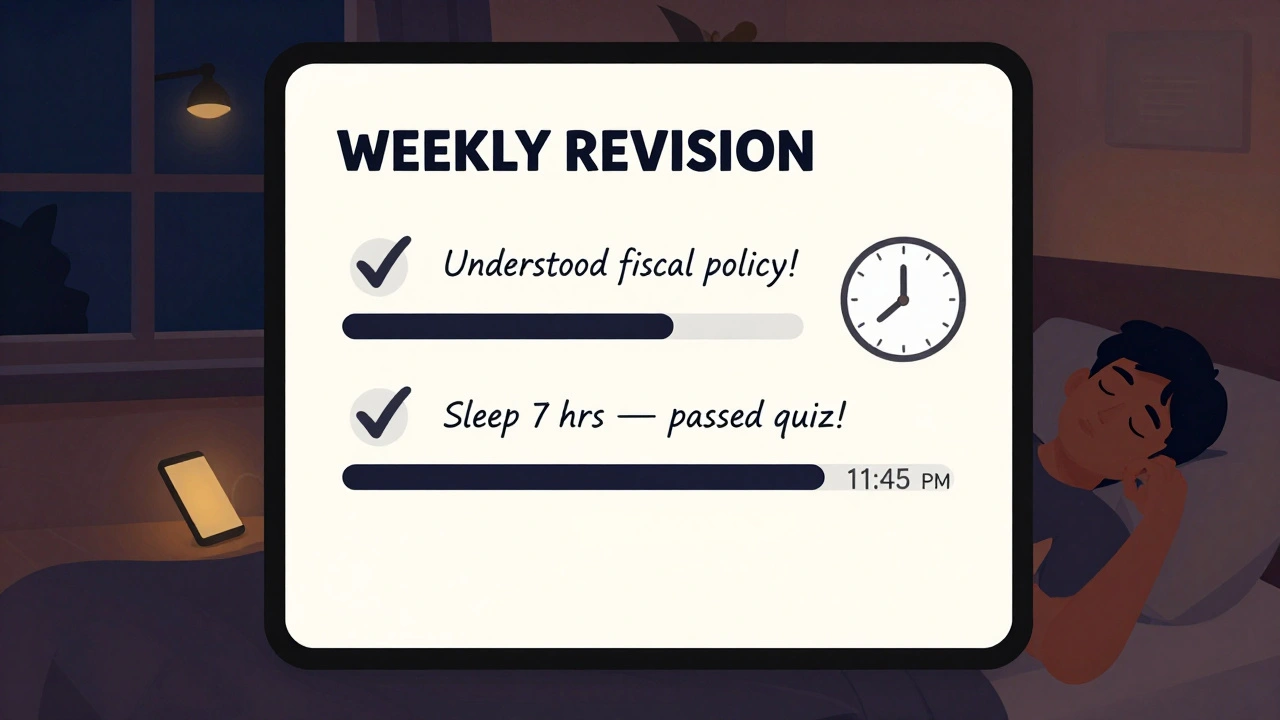
Track Your Progress, Not Just Hours
Don’t measure success by how many hours you sat at your desk. Measure it by what you actually learned. At the end of each week, ask yourself:
- What topic did I finally understand?
- Which practice question did I get right that I got wrong last week?
- What’s one thing I’m less stressed about now?
Keeping a simple revision log-even just in a Notes app-helps you see progress. And seeing progress keeps you motivated. When you feel like you’re falling behind, this log reminds you: you’re not. You’re moving forward, even if it’s slow.
What to Cut During Exam Season
Not everything needs to stay in your life during exams. Be ruthless.
- Cancel social events that drain you-unless they’re with a study buddy
- Pause gym workouts if they’re taking over 90 minutes a day-swap for 20-minute walks
- Limit scrolling on TikTok or Instagram to 15 minutes total per day
- Don’t cook elaborate meals-batch-cook rice, pasta, and soups on Sunday
It’s not about being perfect. It’s about being strategic. You’re not quitting your life-you’re pausing the noise so your brain can focus on what matters.
What Happens After Exams
Once exams are over, don’t just jump back into your old routine. Take three days to rest. Sleep in. Watch a movie. Eat without thinking about calories. Then, slowly rebuild.
Reassess your work hours. Maybe you don’t need to work 25 hours a week anymore. Maybe you can drop to 15 and still cover rent. Or maybe you’ve realized you need a different job-one with more flexible hours.
Use this time to reflect. What worked? What didn’t? Write it down. Next exam season, you won’t be starting from scratch-you’ll be starting from experience.
Can I work full-time and pass my exams in the UK?
It’s possible, but extremely rare and not recommended. Most full-time jobs (35+ hours) leave little room for sleep, meals, or effective revision. Students who try often end up failing one or more modules. The average successful student works 10-15 hours a week during exam periods. If you must work full-time, talk to your university’s student support team-they may offer emergency grants or reduced course loads.
What’s the best part-time job for students during exams?
Jobs with flexible shifts are best. Campus library assistant, tutoring, or admin roles in university departments are ideal because they’re often aligned with student timetables. Remote jobs like data entry or transcription also work well-you can fit them around your revision blocks. Avoid jobs with late-night or weekend-only shifts unless you can control your schedule.
How many hours should I work during exam season?
Aim for 10-15 hours per week. That’s enough to cover essentials like rent and groceries without stealing time from revision. If you’re in a demanding course (medicine, engineering, law), drop to 5-10 hours. Your priority is passing, not earning extra cash. Most students who cut back to 10 hours see their grades improve by at least one classification level.
Do universities in the UK give exam leave for working students?
Universities don’t grant official leave for work, but they do require employers to make reasonable adjustments for students. You’re protected under the Equality Act 2010 if your job affects your studies. If your employer refuses to reduce your hours, contact your student union-they can help you negotiate. Many universities also have templates for letters you can send to your employer.
Is it better to work fewer hours and get a grant, or keep working and risk failing?
Failing a module costs more than you think. You’ll pay extra fees to retake it, lose a year of funding, and delay graduation. Most UK universities offer hardship funds, bursaries, or emergency loans for students struggling financially. Apply for them. It’s not charity-it’s support designed for exactly your situation. Better to take a grant and pass your exams than to work more and repeat the year.
The truth is, balancing work and exams isn’t about being superhuman. It’s about being smart. You don’t need more hours. You need better hours. You don’t need to work less-you need to work smarter. And you don’t have to choose between survival and success. You can do both, if you plan ahead, protect your energy, and use every tool available to you.