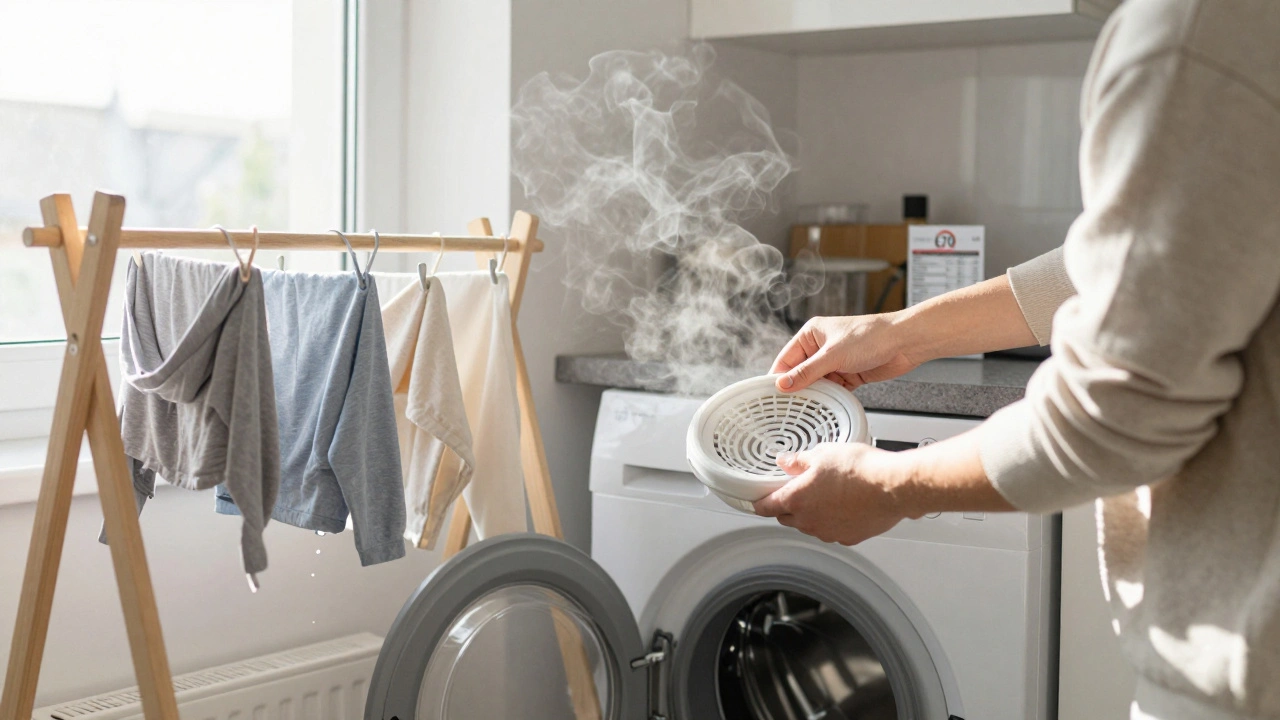
UK student houses are full of appliances that drain more than just electricity-they drain wallets. With rent and tuition already squeezing budgets, every extra pound on the utility bill hurts. And it’s not just the big bills that add up. It’s the little things: the dryer running for two hours because no one bothered to clean the filter, the kettle boiled five times for single cups of tea, the oven left on to warm the kitchen while the oven light did the job just fine.
Why Your Dryer Is Costing You More Than You Think
Dryers are the biggest energy hogs in student flats. A standard tumble dryer uses between 2 and 3 kWh per cycle. If you run it twice a week, that’s 208-312 kWh a year. At the UK’s average electricity rate of 28p per kWh in early 2026, that’s £58 to £87 just on drying clothes.
But here’s the fix: most students don’t realize their dryer’s efficiency drops fast when the lint filter is clogged. A dirty filter can increase energy use by up to 30%. Cleaning it after every load is free, takes 10 seconds, and saves you £15-£25 a year right there.
And if you’re using the dryer for small loads-just a few socks or one hoodie-stop. Air-dry those. Hang them on a rack by the window. Even in winter, UK indoor air is dry enough to dry clothes overnight if you’re not stuffing the room with wet laundry. A single air-drying rack costs £12 and lasts five years. That’s £2.40 a year. Versus £70 on electricity? Easy win.
The Kettle Trap: Boiling What You Don’t Need
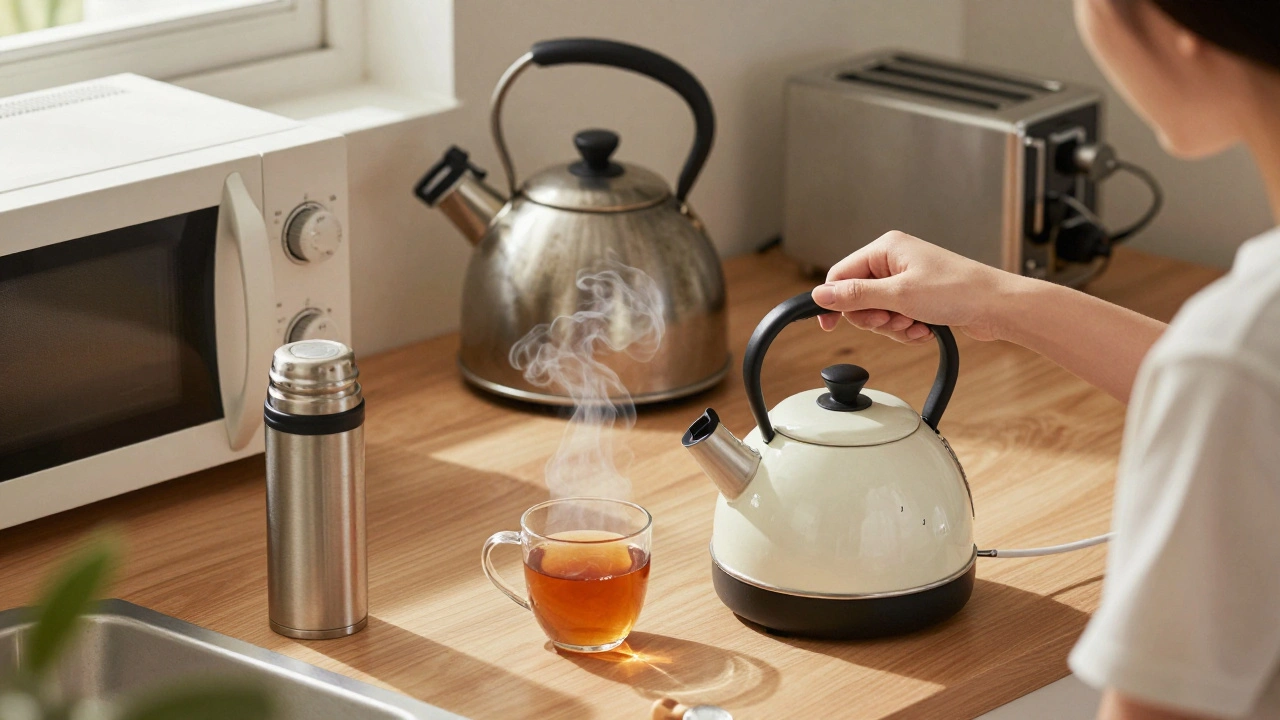
Kettles are the silent thieves of student energy budgets. A typical electric kettle uses 2.2 kW. Boil it full when you only need one cup? You’re wasting 60% of the energy. Boil it three times a day for solo tea? That’s 6.6 kWh per day. Over a month? 198 kWh. That’s £55 just for tea.
Here’s what works: fill the kettle only to the level you need. Most kettles have markings inside. Use them. If you don’t, buy a small kettle (1.2L) instead of the big 1.7L ones. They heat faster, use less power, and fit better in cramped student kitchens.
Also, stop reboiling water. Water that’s already hot doesn’t need another full boil. Keep a thermos. Boil once in the morning, pour into a thermos, and sip all day. One thermos costs £15. It pays for itself in two weeks if you’re boiling three times a day.
Ovens Are Not Heaters. Stop Using Them Like Ones.
How many times have you turned on the oven to warm up a room? Or left it on after cooking to dry out damp towels? The average electric oven uses 2.4 kW-more than a microwave, a toaster, and a kettle combined. Running it for one hour uses as much as leaving five LED bulbs on all day.
There’s a better way. If you need to warm a room, use a small space heater with a thermostat. Modern ones use 1.5 kW max and shut off automatically when the room hits 20°C. That’s 37% less energy than the oven. And if you’re drying clothes, use a radiator. UK flats usually have central heating radiators. Hang clothes on a drying frame over one. The heat rises, dries the fabric, and doesn’t burn holes in your budget.
Also, stop preheating the oven unless you’re baking. For roasting vegetables or reheating leftovers? Skip it. Put food in cold and add 10-15 minutes to the cook time. It works. The NHS and UK Energy Saving Trust both confirm it. You won’t ruin your food. You’ll save £30 a year.
Plug-in Power: The Hidden Drain
It’s not just what you use-it’s what’s left plugged in. A phone charger left in the socket uses 0.26W. Sounds tiny? Multiply that by 10 chargers, a games console on standby, a TV on quick-start mode, and a smart speaker always listening. That’s 3-5W continuously. Over a year? 26-44 kWh. That’s £7-£12 you didn’t need to pay.
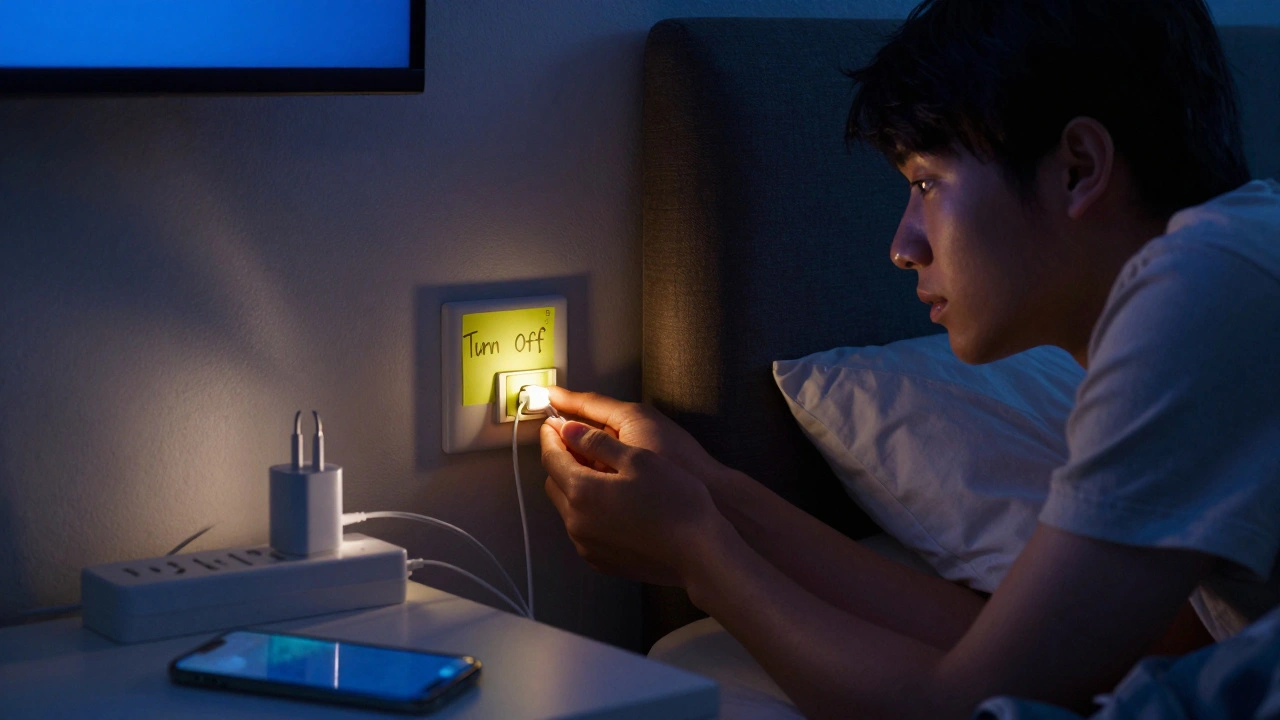
Use a cheap power strip with a switch. Plug everything into it-TV, games console, kettle, microwave. Flip the switch off before bed. No more phantom drain. You don’t need smart plugs. You just need to remember to turn it off.
Real Savings: What This Actually Adds Up To
Let’s say you’re a typical student in Manchester or Leeds. You:
- Switch from dryer to air-drying: save £70/year
- Boil only what you need and use a thermos: save £50/year
- Stop using the oven as a heater: save £30/year
- Turn off standby power with a strip: save £10/year
Total annual savings? £160. That’s £13 a month. Enough to cover a monthly bus pass, a few groceries, or a weekend trip home.
And you didn’t buy expensive gadgets. You didn’t switch energy suppliers. You just changed habits. That’s the real power here: small, daily choices that add up to real money.
What to Do Next
Start with one thing. Pick the biggest drain in your kitchen right now. Is it the dryer? The kettle? The oven? Fix that one thing this week. Then move to the next. Don’t try to change everything at once. That’s how people quit.
Put a sticky note on the kettle: "Only fill to the line." Tape a reminder on the dryer: "Clean filter every time." Put a power strip by the TV and make it part of your bedtime routine.
These aren’t tricks. They’re habits. And habits, once formed, don’t cost anything. They just save you money-every single day.
Do energy-efficient appliances cost more for students?
Not necessarily. A basic air-drying rack costs £12. A small 1.2L kettle is £25. A power strip with a switch is £8. These are one-time costs that pay for themselves in weeks. You don’t need a £500 energy-efficient dryer. You need to use what you have better.
Is it true that leaving appliances on standby doesn’t cost much?
It’s a myth. A single TV on standby uses 1W. Add a games console (1.5W), a soundbar (0.8W), and three phone chargers (0.26W each), and you’re at 4W continuously. That’s 35 kWh a year-worth £10. Multiply that by four roommates, and you’re talking £40 a year wasted. Turning things off at the plug is free money.
Can I save money by switching energy suppliers as a student?
You can, but it’s not the biggest win. Many student flats are on standard variable tariffs because the landlord chose the supplier. Even if you switch, the difference is usually £30-£60 a year. Changing how you use appliances saves more-£160 or more-with zero paperwork. Fix usage first. Then, if you’re still paying too much, look at switching.
Are smart plugs worth it for students?
Only if you forget to turn things off. A basic power strip with a switch does the same job for less than half the price. Smart plugs need Wi-Fi, apps, and setup. For most students, simplicity wins. Just flip a switch before bed. No login, no app, no glitch.
Does using a microwave instead of an oven save money?
Yes, and it’s faster. A microwave uses 0.8-1.2 kW. An oven uses 2.4 kW. Reheating leftovers in the microwave instead of the oven cuts energy use by 50-70%. It’s not just cheaper-it’s safer. No risk of burning the kitchen down because you forgot the oven was on.
Final Thought: It’s Not About Being Perfect
You don’t need to be an energy guru. You don’t need to track every watt. Just make one better choice today. Clean the dryer filter. Boil less water. Turn off the power strip. Do that every day, and you’ll be saving more than you thought possible. In a place where every pound counts, those small wins matter more than any big change ever could.