
Imagine walking into a campus cafeteria, hungry after class, and grabbing a sandwich. You don’t read the label. You never have to. But for thousands of students in the UK with severe allergies, that simple act could be life-threatening. At UK universities, managing food allergies isn’t just about caution-it’s about systems, training, and real-time access to life-saving tools like EpiPens. This isn’t theoretical. In 2024, a student at the University of Manchester required emergency hospitalization after eating a meal labeled ‘may contain nuts’-a warning that was overlooked. That incident sparked a campus-wide review of food labeling, staff training, and emergency protocols. If you’re a student with allergies heading to university in the UK, or a parent helping your child prepare, here’s what actually works-and what still falls short.
Food Labels: More Than Just a Warning
UK universities follow the same food labeling laws as restaurants and shops: the EU Food Information for Consumers Regulation (FIC), still enforced in the UK post-Brexit. That means 14 major allergens must be clearly listed if present. But here’s the catch: universities aren’t restaurants. Many still serve food from third-party caterers who don’t always label properly. A 2023 survey by Allergy UK found that 37% of students with food allergies couldn’t trust labels at campus dining halls. Some labels were faded, others were handwritten, and a few were just missing.
Top universities like Oxford, UCL, and Edinburgh now use digital labeling systems. QR codes on trays link to full ingredient lists, allergen filters, and preparation notes. At UCL, students can scan before they even reach the serving line. That’s not just convenient-it’s critical. One student with a history of anaphylaxis told us, “I used to avoid the cafeteria entirely. Now I eat there three times a day.”
But not every campus has upgraded. Smaller universities still rely on printed signs that get updated weekly-if at all. If you’re choosing a university, ask: Do they use digital labels? Can you filter meals by allergen online before you arrive? Is there a dedicated allergen-free kitchen? These aren’t luxury features. They’re safety basics.
EpiPens: Carry One. Know Where Others Are.
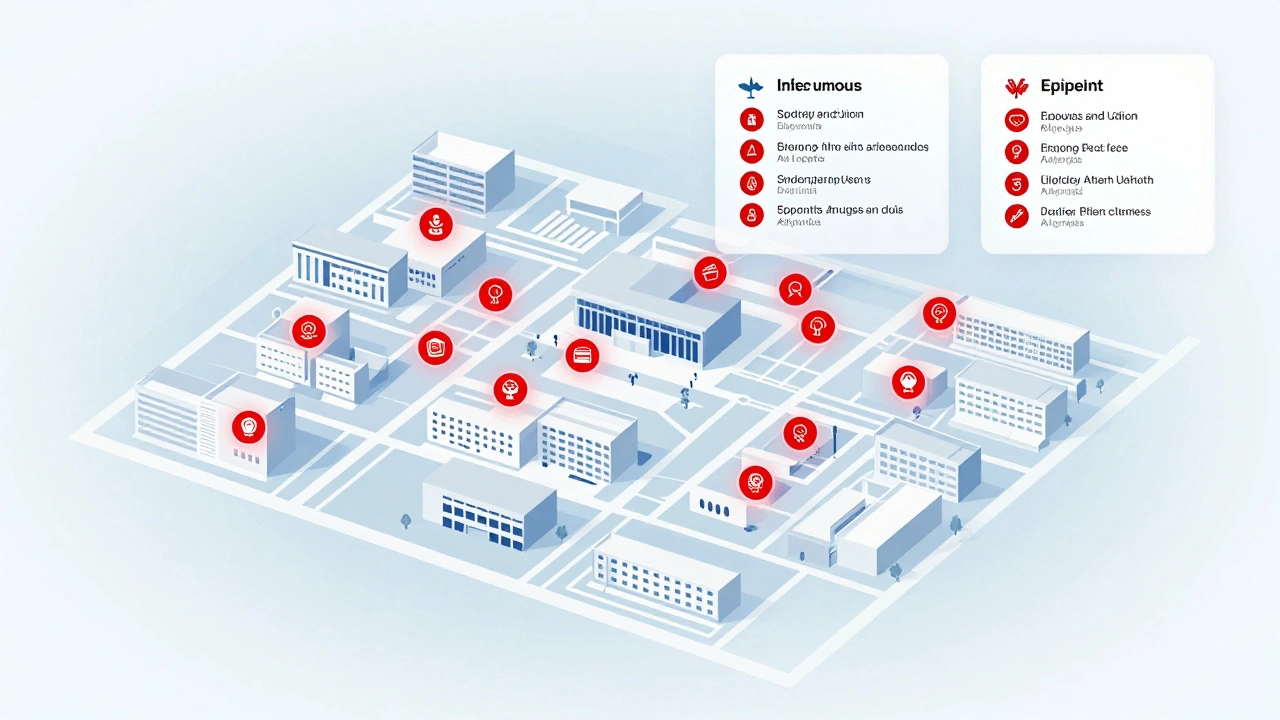
Carrying an EpiPen isn’t optional-it’s mandatory for anyone with a history of severe allergic reactions. But carrying it isn’t enough. You need to know where to get help fast. In 2025, the University of Bristol installed 87 EpiPen stations across campus: in student unions, libraries, labs, and dorm lobbies. Each station has two auto-injectors, a first aid guide, and a direct line to campus security.
Students are trained during orientation. First-year students with allergies are paired with a peer buddy who knows how to use an EpiPen. That’s not just a nice gesture-it’s backed by policy. The National Union of Students (NUS) now requires all UK universities to have a documented anaphylaxis response plan. That means: trained staff, accessible injectors, and a clear chain of command when someone goes into shock.
Still, many students don’t tell anyone. They’re afraid of being seen as “difficult.” Or they think they’ll be fine. But 60% of anaphylaxis incidents on campus happen because the student didn’t use their EpiPen quickly enough-or didn’t have one nearby. Don’t be one of them. Register with the student health center. Let your flatmates know. Keep your EpiPen in your bag, not your dorm room. And never, ever leave home without it.
Support Systems: From Health Services to Peer Networks
Most UK universities have a disability support office. But not all of them understand food allergies. Some still treat them like “mild preferences.” That’s outdated. Severe allergies are protected under the Equality Act 2010 as a disability. That means universities must make reasonable adjustments.
At the University of Leeds, students with allergies can request a personalized meal plan. A nutritionist meets with them to map out safe dining options. They can even get a private fridge in their dorm for their own safe food. At King’s College London, there’s a peer-led “Allergy Ambassadors” program-students trained to help others navigate menus, report unsafe labeling, and advocate for better policies.
These aren’t gimmicks. They’re lifelines. One student with multiple food allergies said, “I didn’t think I could survive university. Then I met my support officer. She didn’t just help me find safe food-she got the cafeteria to stop cross-contaminating gluten-free meals with regular ones.”
Don’t wait to be helped. Reach out early. Register with disability services. Ask for a meeting. Bring your medical documentation. If they say no, ask for the policy number. You have rights. Use them.

What Universities Are Doing Right (And What’s Still Broken)
Some schools are leading the way. The University of Manchester now requires all catering staff to complete an accredited allergen awareness course. Staff must pass a test before they can handle food. They also have a “No Cross-Contamination” policy-separate utensils, cutting boards, fryers, and even dishwashing lines for allergen-free meals.
At the University of Glasgow, students can request allergen-free dorm kitchens. They get a lockable fridge, microwave, and storage space. That’s huge for students who can’t risk eating shared meals.
But gaps remain. Many universities still don’t train cleaning staff on allergen risks. A janitor wiping down a table with a damp cloth can spread peanut residue. One student at Cardiff University had a reaction after sitting at a bench that had been cleaned with a non-allergen-specific wipe. No one thought to ask.
Also, emergency response varies. Some campuses have EpiPens everywhere. Others keep them locked in the health center. That’s unacceptable. If you’re having an allergic reaction, you don’t have time to wait for someone to find a key.
What You Need to Do Before You Arrive
- Register with student health services before orientation. Bring your allergy diagnosis, EpiPen prescription, and any past reaction records.
- Meet with the disability office and ask: “What’s your allergen policy?” Demand a copy. If they don’t have one, push for it.
- Test the food system during open days. Visit the cafeteria. Ask to see labels. Ask if you can scan QR codes. Ask if they have a dedicated allergen-free zone.
- Bring extra EpiPens. Keep one in your bag, one in your dorm, and one with a roommate. Set phone reminders to check expiration dates.
- Teach your flatmates how to use an EpiPen. Show them the instructions. Practice with a trainer pen. If they don’t know what to do, you’re not safe.
When Things Go Wrong
Even with all the right systems, mistakes happen. A label is wrong. A staff member forgets. A friend shares food without asking. If you have a reaction:
- Use your EpiPen immediately. Don’t wait to see if it gets worse.
- Call campus security or 999. Don’t rely on someone else to do it.
- Stay seated. Lie down if you feel dizzy. Don’t stand up.
- After the injection, still go to the hospital. EpiPens are temporary. You need monitoring.
Afterward, report it. Tell the dining service. Tell the disability office. Write it down. If this happens again, you’ll have a paper trail. That’s how policies change.
Final Thought: You’re Not a Burden
Some students feel guilty asking for special meals or extra EpiPens. They think they’re being “hard to serve.” That’s a lie. Allergies aren’t a choice. Safety isn’t a favor. You’re not asking for luxury-you’re asking for the same right to eat, learn, and live that every other student has.
UK universities are getting better. But they won’t get perfect unless students speak up. Your voice matters. Your safety matters. Use the tools. Demand the changes. And know this: you’re not alone. Thousands of students before you have done the same-and they made it through. So will you.
Do UK universities provide free EpiPens to students?
No, universities don’t provide free EpiPens. Students must bring their own, prescribed by a doctor. But many campuses now have publicly accessible EpiPens in emergency stations across buildings. These are for use in an emergency, even if you don’t have your own. Always carry your personal EpiPen-don’t rely on campus stations as your primary source.
Can I request an allergen-free dorm room?
Yes. Under the Equality Act 2010, universities must make reasonable adjustments. Many, like Glasgow and Leeds, offer allergen-free kitchen spaces in dorms. You may need to provide medical documentation, but you’re entitled to this accommodation. Ask the disability office early-spaces are limited.
Are food labels on campus legally required to be accurate?
Yes. UK law requires all food served to consumers-including university cafeterias-to clearly label the 14 major allergens. This is enforced by local councils and the Food Standards Agency. If a label is wrong or missing, you can report it anonymously through the university’s complaints system or directly to the FSA.
What should I do if a staff member refuses to accommodate my allergy?
Document the incident-date, time, what was said. Then contact the university’s disability support team. They’re legally required to intervene. If they don’t respond, escalate to the student union or file a formal complaint under the Equality Act. You have rights. Don’t stay silent.
Is it safe to eat food labeled ‘may contain traces’?
It depends on your allergy. For some, even trace amounts can trigger anaphylaxis. If you’ve had a severe reaction before, avoid anything with ‘may contain’ warnings. Universities are required to offer safe alternatives. Don’t gamble with your health. If the cafeteria doesn’t have a clear safe option, ask the nutritionist to prepare something for you.