
If you have ADHD and are starting university in the UK, you’re not alone-and you don’t have to figure it out on your own. Thousands of students with attention difficulties are enrolled in UK universities every year, and most of them get the help they need to succeed. But getting that help isn’t always obvious. It takes knowing where to look, what to ask for, and how to speak up. This isn’t about special treatment. It’s about equal access.
What kind of support can you get?
UK universities are legally required under the Equality Act 2010 to make reasonable adjustments for students with disabilities, including ADHD. That means if your attention difficulties affect how you learn, take exams, or manage deadlines, the university must change how things are done to level the playing field.
Common accommodations include:
- Extra time on exams (usually 25% or 50% more)
- Use of a quiet room or separate exam space
- Permission to record lectures
- Access to lecture notes or slides before class
- Flexible deadlines for assignments
- Breaks during long lectures or exams
- Use of assistive tech like speech-to-text software or text-to-speech tools
Some universities even offer one-on-one study skills coaching, weekly check-ins with a disability advisor, or access to ADHD-specific workshops on time management and organisation.
How to start the process
The first step is simple: contact your university’s disability services office. Don’t wait until you’re overwhelmed. The sooner you reach out, the faster support kicks in. Many students make the mistake of waiting until they’ve failed a test or missed a deadline. By then, it’s harder to get retroactive help.
Here’s what to do:
- Find the disability services page on your university’s website. Search for "disability support" or "student support services".
- Book an initial meeting with a disability advisor. Most offer drop-in sessions or online appointments.
- Bring any documentation you have. This could be a diagnosis letter from your GP, psychiatrist, or psychologist. If you were diagnosed as a child and have old reports, those still count.
- Be clear about what challenges you face. For example: "I struggle to focus during 2-hour lectures," or "I often miss deadlines because I get stuck starting tasks."
Don’t worry if you don’t have official paperwork. Many students get diagnosed during university. The disability office can guide you on how to get an assessment through the NHS or a private provider. Some universities even fund part of the cost.
What if you’re not diagnosed yet?
You don’t need a formal diagnosis to start getting help. If you suspect you have ADHD and it’s affecting your studies, you can still request temporary support while you wait for an assessment.
Universities often offer interim accommodations based on self-declaration. This might include:
- Permission to record lectures
- Access to digital notes
- Extended deadlines for a few assignments
These aren’t permanent, but they can keep you afloat while you go through the diagnostic process. In the UK, NHS waiting times for adult ADHD assessments can be long-sometimes over a year. Don’t let that stop you from asking for help now.
How to talk to your lecturers
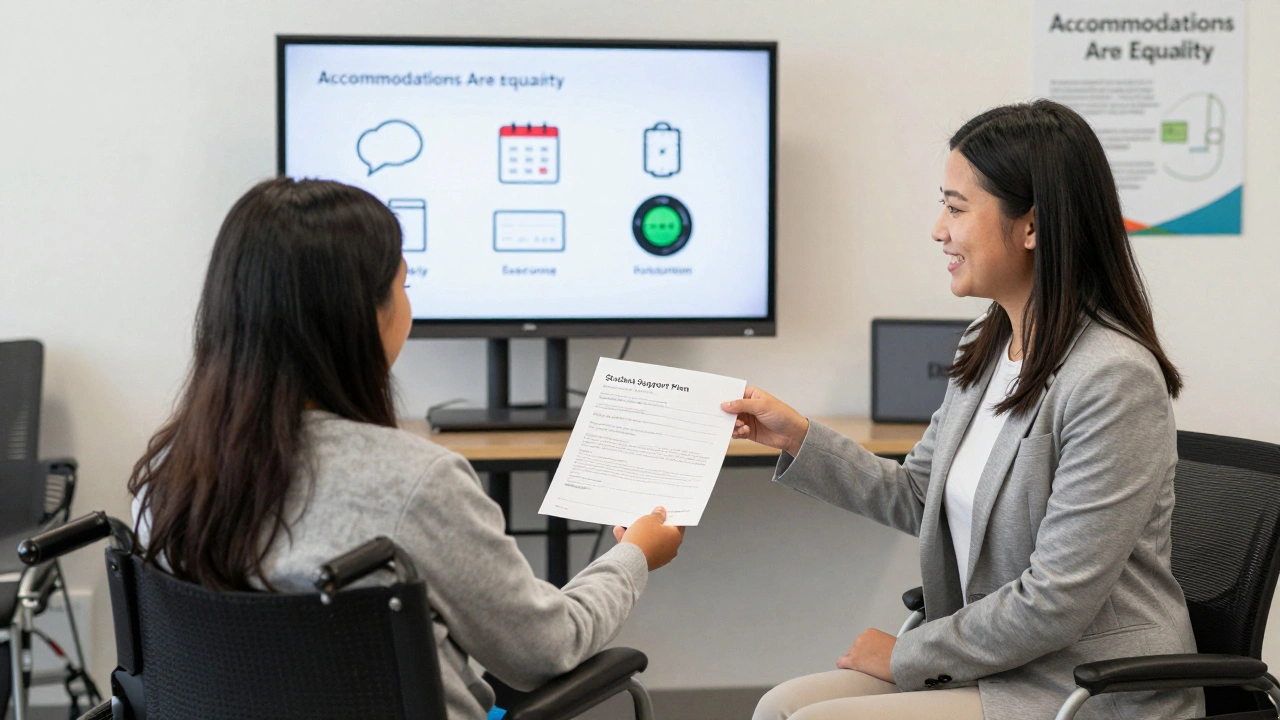
Once you’re approved for accommodations, you’ll get a Student Support Plan (SSP). This is a document that outlines what adjustments you’re entitled to. You’ll need to share this with your lecturers, usually at the start of each term.
Some students feel awkward doing this. They worry lecturers will think they’re making excuses. But here’s the truth: lecturers see this every term. They’re trained to handle it. Most are happy to help.
Here’s how to make the conversation easy:
- Email your module leader before the first class. Say something like: "Hi, I’m registered with disability services and have an approved support plan for ADHD. I’ve attached it for your records. I’d appreciate your help with [specific accommodation]."
- Keep it factual, not emotional. No need to explain your diagnosis in detail unless you want to.
- Ask if they can share slides in advance or allow you to submit assignments electronically if deadlines are tight.
Most lecturers will respond positively. A few might need a reminder. If they refuse an approved adjustment, go back to disability services. They’ll step in.

What doesn’t work
Some students try to manage ADHD alone. They think they should just "try harder" or that asking for help means they’re weak. That mindset leads to burnout. ADHD isn’t laziness. It’s a neurodevelopmental condition that affects executive function-planning, starting tasks, remembering deadlines, switching focus.
Other common mistakes:
- Waiting until exam season to apply for support
- Not keeping copies of your support plan
- Assuming all departments will automatically know your needs
- Trying to use accommodations only when it’s convenient
Accommodations are tools, not privileges. Use them consistently. If you get extra time on exams, use it. If you’re allowed to record lectures, do it. Don’t feel guilty. You’re not getting ahead-you’re catching up to where you should be.
Real student stories
Emma, 20, studied psychology at the University of Manchester. She was diagnosed with ADHD in her first year. She applied for accommodations after missing three deadlines in a row. She got extra time on exams, permission to record lectures, and weekly meetings with a study coach. She passed all her modules with a 2:1. "I didn’t think I could do it," she says. "But the support didn’t make me lazy. It made me capable."
James, 22, at King’s College London, didn’t get diagnosed until his second year. He’d been struggling silently for 18 months. After getting his support plan, he started using a digital planner with automated reminders. He also switched to submitting assignments in chunks instead of all at once. His grades improved by 30%. "I thought I was broken," he says. "Turns out, I just needed the right system."
Tools and apps that help
Technology can be a game-changer. Here are a few tools students with ADHD in the UK commonly use:
- Microsoft OneNote: Free with university accounts. Great for organising lecture notes, to-do lists, and reminders.
- Todoist or TickTick: Simple task managers with recurring tasks and priority levels.
- Focus To-Do: Uses the Pomodoro technique-25 minutes of work, 5-minute break. Built-in timer and rewards.
- Speechify: Turns text into speech. Useful for reading long articles or textbooks when focus is low.
- Notion: For students who like customisable dashboards. Can link calendars, notes, and assignments in one place.
Many of these are free for students through your university’s software portal. Check your student account or ask disability services for recommendations.
What about funding?
If you’re eligible for student finance in the UK, you might qualify for the Disabled Students’ Allowance (DSA). This is a non-repayable grant that covers costs related to your disability.
DSA can pay for:
- Specialist equipment (noise-canceling headphones, ergonomic chairs, speech-to-text software)
- Non-medical helpers (study coaches, note-takers, mentors)
- Travel costs if your disability makes commuting harder
- Software licenses you can’t get for free
You don’t need to be diagnosed to apply, but you’ll need evidence of your condition. Apply early-processing can take 8-12 weeks. Visit the official DSA page for details. Your university’s disability office can help you fill out the forms.
What if you’re struggling after getting support?
Even with accommodations, university can still feel overwhelming. ADHD doesn’t disappear just because you have a plan. You might still forget deadlines, feel stuck, or lose motivation.
That’s normal. The key is to keep reaching out.
- If you miss a deadline, contact your lecturer and disability services immediately. Explain what happened. You might still get an extension.
- If you’re feeling anxious or burnt out, book a session with your university’s counselling service. Many offer free, confidential support.
- If your current accommodations aren’t working, ask for a review. Your needs can change from term to term.
There’s no shame in needing more help. In fact, asking for it is one of the strongest things you can do.
Final thoughts
You don’t have to be perfect to succeed at university. You just have to be persistent. ADHD makes things harder, but it doesn’t make you less capable. The UK university system has the tools to help you. You just need to use them.
Start today. Email your disability office. Ask for your support plan. Try one new tool. Talk to one lecturer. Small steps add up. And you’re not alone-thousands of students before you have walked this path, and they made it through. So can you.
Do I need a formal ADHD diagnosis to get support at university in the UK?
No, you don’t need a formal diagnosis to start getting help. Universities can offer temporary accommodations based on your self-reported challenges. You can begin using support like extra time on assignments or lecture recordings while you wait for a diagnosis. A formal diagnosis is needed for long-term support and funding like the Disabled Students’ Allowance, but not to begin receiving adjustments.
How long does it take to get accommodations after applying?
It usually takes 2 to 6 weeks from your first meeting with disability services to having accommodations in place. Some universities can provide emergency support within days if you’re struggling with an upcoming deadline. Applying early-before term starts-is the best way to avoid delays.
Can I get help with group projects if ADHD makes it hard to coordinate?
Yes. Many universities allow students with ADHD to request modified group project arrangements. This could include being assigned a fixed role, getting written instructions from the lecturer, or having a designated point person to communicate deadlines. Disability services can help you negotiate these adjustments with your course team.
Will my ADHD status be kept confidential?
Yes. Your diagnosis and support plan are confidential. Only your disability advisor and the lecturers you choose to share your plan with will know. Your academic record won’t mention your ADHD. You control who sees your information.
What if my university says they can’t provide the accommodation I need?
If a university refuses an approved accommodation, they must explain why in writing. If the reason is cost or inconvenience, that’s not legally valid under the Equality Act 2010. Contact your student union or go back to disability services-they have the authority to challenge decisions and ensure compliance. Most issues are resolved quickly once the university realises they’re legally required to act.
Can I get help with mental health alongside ADHD support?
Yes. ADHD often comes with anxiety, depression, or low self-esteem. Most UK universities offer free, confidential counselling services separate from disability support. You can access both at the same time. Some students even get a mental health mentor who helps with both emotional well-being and academic organisation.
Next steps: Visit your university’s disability services website today. Book your first appointment. Write down one thing you want to change about your study routine. Then take that first small step. You’ve already done the hardest part-you asked for help. Now go get it.