
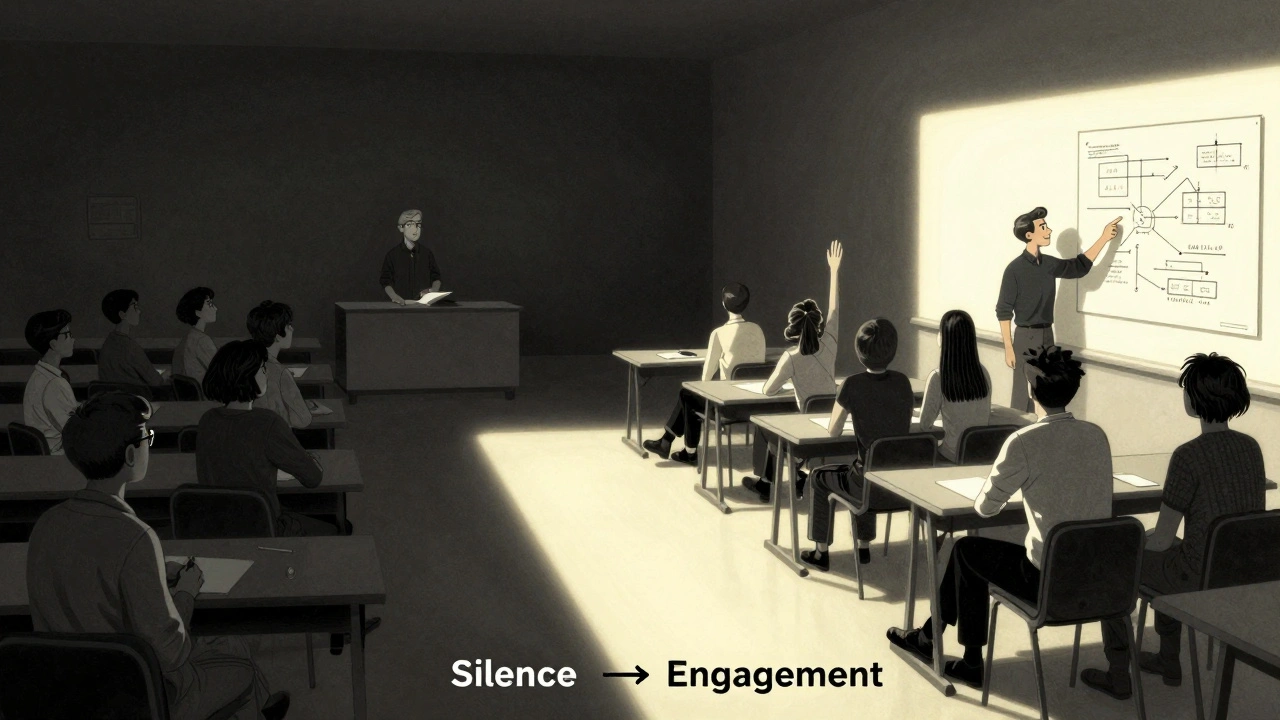
Most UK university seminars feel like silent rooms with one person talking - the tutor. But the best students? They don’t wait to be called on. They show up ready to ask, challenge, and connect. Active learning isn’t just a buzzword. It’s the difference between barely passing and truly understanding. And it’s not about being loud. It’s about being present.
What Active Learning Really Means in a Seminar
Active learning in seminars means you’re not just listening. You’re thinking out loud. You’re connecting what the tutor says to what you read, what you saw in a documentary, or even what happened in your last job. It’s not about memorizing quotes from Foucault or Keynes. It’s about asking: Why does this matter now? Or How would this work in a real community?
A 2024 study from the University of Edinburgh tracked 1,200 undergraduates across 18 disciplines. Students who regularly asked questions, challenged assumptions, or brought in outside examples scored 27% higher on critical analysis essays. Not because they were smarter. Because they were engaged.
The 3 Habits of High-Performing Seminar Students
There’s no secret formula. But there are three habits you can start tomorrow.
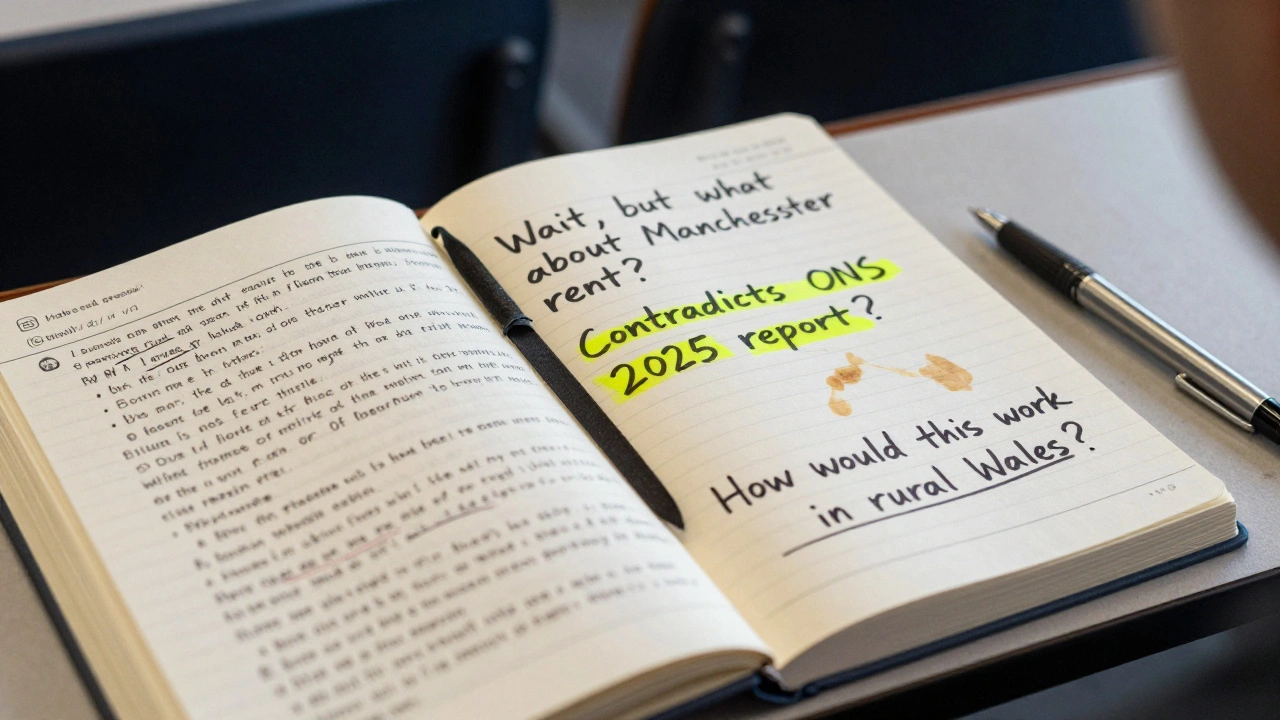
- Prepare with a question, not a summary. Don’t just write, “This article was about neoliberalism.” Instead, ask: “How would this theory explain the cost of rent in Manchester?” That one question changes everything. It turns you from a passive note-taker into someone who’s hunting for answers.
- Speak early, even if you’re unsure. The first person to speak in a seminar sets the tone. You don’t need to be right. You just need to start the conversation. A student at Bristol said, “I asked if the data in the paper made sense for rural Wales. I was wrong. But the tutor said, ‘That’s exactly why we need more regional studies.’” That moment turned her from shy to confident.
- Follow up within 24 hours. If something clicked - or didn’t - send a quick email. “I was thinking about your point on gendered language in policy. Did you see the 2025 ONS report on this?” Most tutors keep a list of students who follow up. They remember them.
Why Silence Kills Learning
Too many students think silence equals respect. It doesn’t. It equals disengagement. A 2023 survey of 500 UK seminar tutors found that 68% felt students were “unprepared or uninterested.” But here’s the twist: 82% of those same tutors said they’d give higher marks to students who asked one thoughtful question - even if the rest of the work was average.
Think about it. Your tutor has read the same 15 papers 20 times. They’re not grading you on how well you repeat them. They’re grading you on how well you push the conversation forward.
What to Do When You’re the Only One Speaking
You show up. You’ve read everything. You’ve got three solid questions. But the room is quiet. What then?
- Don’t panic. Silence is normal, especially in large seminars. It doesn’t mean you’re wrong.
- Use the “bridge” technique. Say: “I’m wondering if anyone else saw this differently? I thought about X, but maybe Y?” This invites others in without putting them on the spot.
- Ask for clarification. “Could you explain how this theory applies to the case study we just read?” This shifts the focus from you to the material - and often opens the door for others to jump in.
How to Turn Notes Into Conversations
Your seminar notes shouldn’t look like a textbook. They should look like a conversation. Try this:
- Write the tutor’s main point on the left side of the page.
- On the right, write your reaction: “Wait, but what about...?” or “This contradicts what I read in...”
- At the bottom, write one question you’ll ask next time.
This method turns passive reading into active dialogue. Students who use this method report feeling more confident speaking up - even if they’ve never done it before.
Why This Matters Beyond University
Active learning in seminars isn’t just about grades. It’s about training your brain for real-world work. In any job - healthcare, law, tech, even retail - you’ll be expected to:
- Spot flaws in a plan
- Ask the hard questions
- Connect ideas across disciplines
Companies like NHS England and Deloitte UK now use seminar-style discussions in their graduate assessments. They’re not looking for perfect answers. They’re looking for people who can think out loud.
Common Mistakes (And How to Avoid Them)
- Mistake: Waiting for the “perfect moment” to speak. Fix: The perfect moment doesn’t exist. Speak when you’re 70% ready.
- Mistake: Arguing to win. Fix: Aim to understand first. Say, “Help me see why you think that.”
- Mistake: Relying on Google during class. Fix: Jot down a keyword to look up later. Stay in the conversation.
What If Your Seminar Is Just a Lecture?
Some seminars feel like lectures because the tutor dominates. That’s frustrating. But you still have control.
- Ask one question at the end: “Could we explore how this applies to [specific example]?”
- Use the Q&A box if it’s online: type your question early. Tutors often read those before closing.
- Start a study group. Three of you discussing the same topic after class is still active learning.
Don’t wait for the system to change. Change how you show up.
Final Thought: You’re Not Here to Be Quiet
University isn’t a place to sit still. It’s a place to test ideas. To argue. To be wrong. To change your mind. The best seminars aren’t the ones where everyone agrees. They’re the ones where someone says, “Actually, I think this is backwards.”
That’s how knowledge grows.
What’s the difference between active learning and just participating in class?
Participating means answering when asked. Active learning means bringing your own questions, challenges, and connections to the table. It’s not about responding - it’s about initiating. A student who says, “This reminds me of what happened in my internship,” is doing active learning. A student who just says, “I agree,” is just participating.
Can active learning help if I’m shy or anxious?
Yes - and you don’t have to speak loudly to do it. Start small: write one question before class. Send an email after. Join a study group. These are all forms of active learning. Many students who struggled to speak in seminars found their voice through written follow-ups. It builds confidence over time. One student at Warwick said her first seminar contribution was a 14-word email. Two months later, she led a 20-minute discussion.
Do tutors really notice who speaks up?
Absolutely. Tutors remember who asks thoughtful questions, who follows up, and who brings in outside sources. It’s not about how often you speak - it’s about the quality of your input. One tutor at Oxford told students, “I can tell who’s really thinking. It’s not the loudest. It’s the one who makes me pause and say, ‘I hadn’t thought of that.’”
Is active learning only useful for humanities subjects?
No. In science seminars, active learning means questioning methodology: “Why did they use this sample size?” In engineering, it’s asking, “What would break under real-world stress?” In economics, it’s challenging assumptions: “Does this model account for informal economies?” The pattern is the same: you’re not accepting the material - you’re testing it.
What if my seminar group is too big to participate?
Large seminars (30+ students) are harder to break into - but not impossible. Use the “bridge” technique: “I agree with Sarah, but I wonder if we could also consider...” Or ask the tutor: “Could we break into smaller groups for 10 minutes?” Many tutors will say yes if you ask. If not, use the online Q&A, or start a group chat with 3 classmates to discuss the same topic after class.